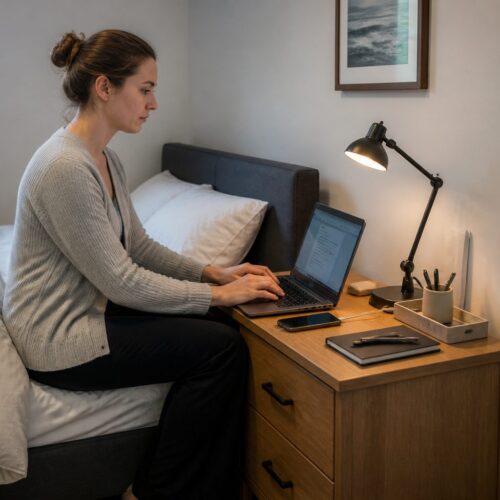

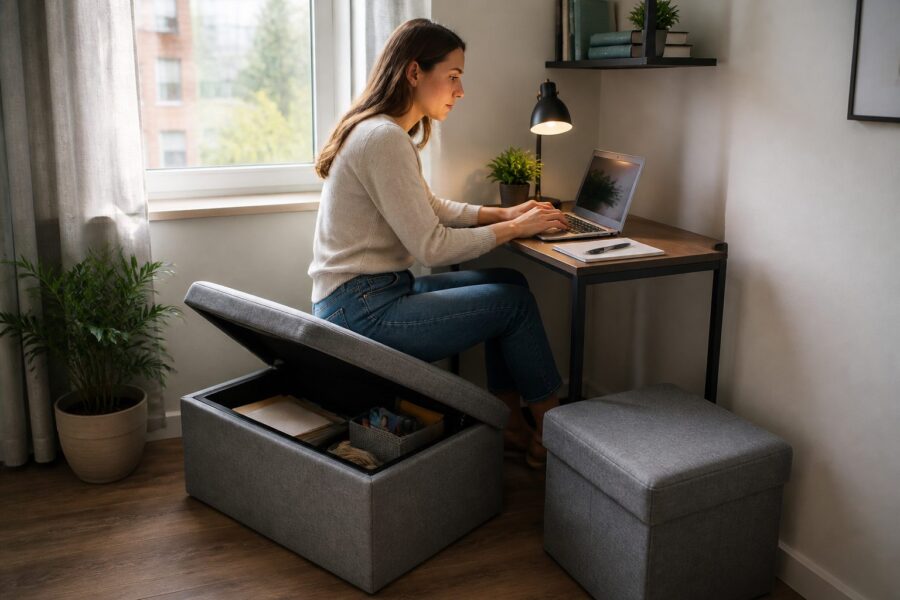
In smaller homes, every furniture piece must earn its keep, especially for a functional workspace. A storage ottoman is a surprisingly effective home office solution, offering more than a footrest. This versatile item maximizes space and provides practical benefits for productivity and organization.
Many struggle with seating or storage in compact work areas. The right storage ottoman addresses both, reducing clutter and offering flexible seating. It’s a smart choice to optimize a small office without compromising style or utility.
Beyond storage, an ottoman can transform a cramped corner into a dynamic workstation. We’ll explore how this multi-purpose furniture can revolutionize your small workspace. Rethink what a simple ottoman can do for your daily grind.
What makes a storage ottoman useful in a home office context
Storage ottomans offer unique functionality often lacking in traditional office furniture. They take minimal floor space but deliver maximum impact for comfort and organization, ideal for tight quarters.
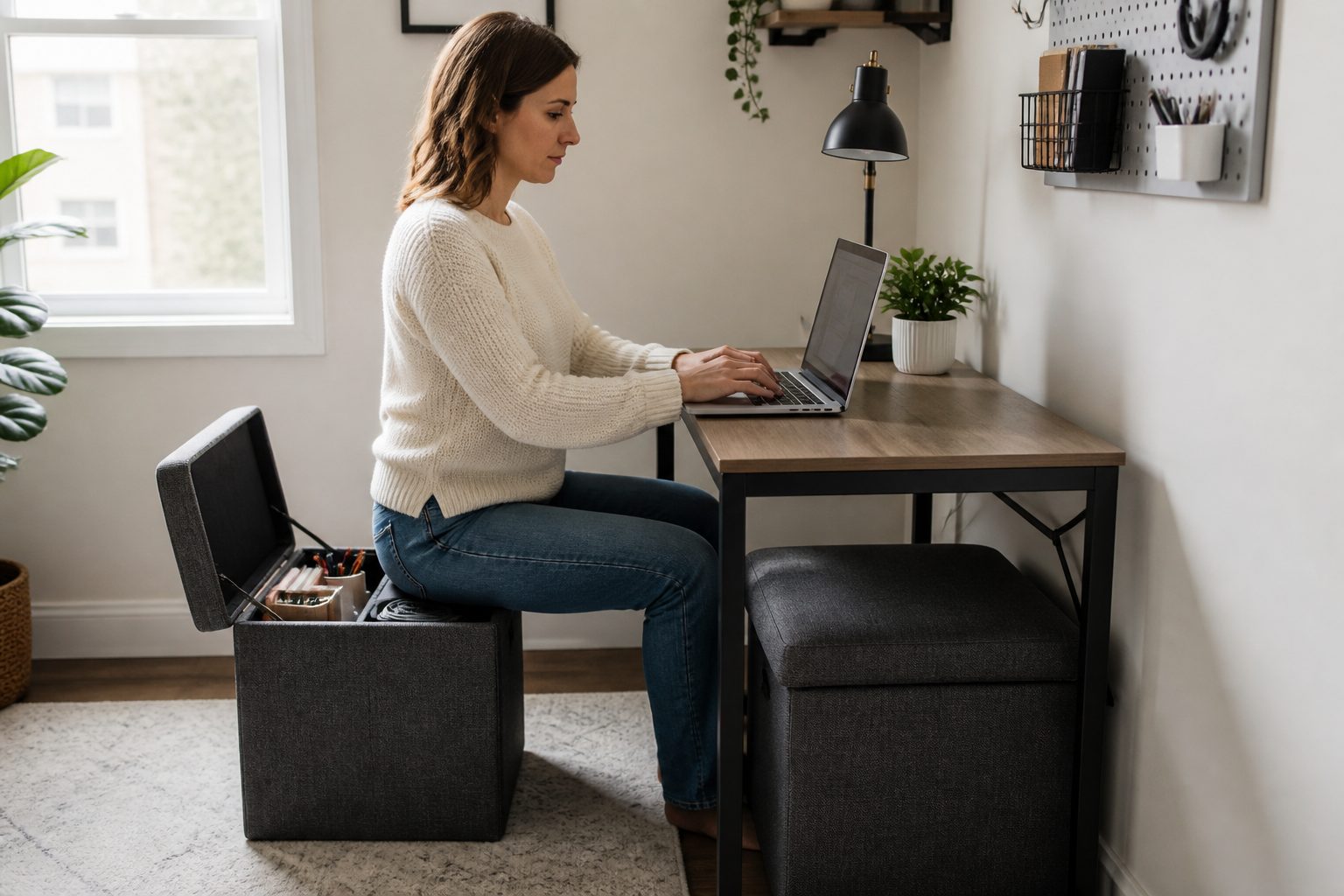
Its primary advantage is hiding office clutter, a constant battle in small spaces. Documents, stationery, and laptop accessories vanish inside, keeping your desk clear and mind focused, creating a serene, productive environment.
A sturdy ottoman’s surface can serve as an impromptu side table for coffee or a notepad. This flexibility means no extra space is needed for a separate table, enhancing its appeal in a compact setup, truly embodying multi-purpose office furniture.
For a quick break, the ottoman provides alternative seating, promoting movement. Beneficial during long work sessions, it allows position shifts and pressure relief, introducing ergonomic variety into your routine.
For informal meetings or collaborative sessions, an ottoman provides instant extra seating. Pull it out when needed, tuck it away afterward, maintaining a professional, adaptable workspace.
A compact office ottoman often has a padded top, ensuring comfort as a seat or footrest. This soft surface is more inviting than a hard chair or storage bin, combining practicality with coziness.
Dual-purpose design: seating, footrest, and hidden filing in one
A storage ottoman’s genius lies in its dual-purpose design: comfortable seating, a relaxing footrest, and discreet storage for office essentials, making it indispensable for an efficient small workspace.
As desk seating, it’s comfortable for short tasks or guests. Its compact size slides easily under most desks, freeing valuable floor space. This adaptability is key to maximizing every inch of your small office.
For stretching legs, the ottoman transforms into a perfect footrest, reducing strain and improving circulation. This simple act significantly improves comfort during long computer hours, providing an ergonomic break without cluttering.
Hidden filing truly shines for organization. Many models fit standard file folders or small storage boxes, turning an unassuming seat into a private filing cabinet. This keeps sensitive documents out of sight but easily accessible.
Imagine tucking away client files, receipts, or your wireless keyboard and mouse after work. This conceals items, maintaining a clean, minimalist aesthetic and preventing visual chaos in smaller spaces.
This multi-purpose office furniture is a game-changer for simplifying setups without sacrificing utility. It handles seating, relaxation, and critical storage needs at once, providing solutions for common small space dilemmas.
A storage ottoman’s versatility means it adapts to changing daily needs without separate purchases. You get a chair, footrest, and storage unit in one package. This intelligent design testifies to efficient small space planning.
Firmness ratings and what constitutes adequate support for work sessions
Firmness is critical for ottoman desk seating, especially for extended use. A plush, soft ottoman might feel luxurious but offers insufficient support for focused work. A stable surface that maintains good posture is needed.
Ottoman firmness is often anecdotal, but look for models with high-density foam cushioning. This foam resists compression, providing a stable, supportive seat that won’t sag, ensuring consistent comfort.
| Firmness Level | Description | Best Use in Home Office |
|---|---|---|
| Soft | Very plush, sinks significantly when sat upon. | Occasional footrest, very short breaks. |
| Medium-Soft | Comfortable give, but still offers some resistance. | Footrest, short-term extra seating, light laptop use. |
| Medium | Balanced comfort and support, slight give. | Primary ottoman desk seating for moderate periods. |
| Medium-Firm | Minimal give, very stable and supportive. | Extended seating, alternative to a desk chair. |
| Firm | Hard surface, almost no compression. | Side table, heavy-duty storage, not ideal for seating. |
Size considerations: matching ottoman dimensions to your desk height
Choosing the right size storage ottoman is crucial for effective integration, especially regarding desk height. An ottoman too tall or short creates an uncomfortable, potentially ergonomic nightmare. Correct dimensions ensure a seamless, comfortable workspace.
Most standard desks are 28-30 inches high, so ottoman desk seating must be proportionate. Ideally, the ottoman top should allow knees to bend at 90 degrees, with feet flat. This ergonomic principle prevents strain.
Measure from the floor to your desk’s underside to determine maximum ottoman height for tucking underneath. Ensure enough clearance to slide it in and out easily without scraping, preventing frustrating fit issues.
Consider the ottoman’s width and depth, not just height. A wider ottoman offers more surface area for seating or a temporary tabletop, but might obstruct movement in confined spaces. Balance utility with the floor plan.
Square or rectangular ottomans with compact storage often fit best into corners or alongside existing furniture. Round ottomans are charming but might waste space in small areas due to curved edges. Consider your room’s geometry.
For a footrest, a slightly lower ottoman might be more comfortable, elevating legs without hip strain. For seating, ensure it’s high enough to comfortably reach your desk. Intended use dictates optimal height.
Always double-check storage ottoman dimensions before purchasing, comparing them against your desk and room measurements. A few inches make a big difference in comfort and usability. Proper planning ensures functional multi-purpose office furniture.
Interior capacity: what actually fits inside common ottoman sizes
A storage ottoman’s interior capacity is a major selling point, but understanding what realistically fits is important. Usable space varies by size and design. Match the ottoman’s capacity with your specific storage needs.
Smaller ottomans (15-18 inches square) are perfect for tucking away essentials like notebooks, pens, and charging cables. They easily hold documents or a tablet, keeping your desk clear and everyday items out of sight.
Medium-sized ottomans (20-24 inches square/rectangular) offer substantial storage. They accommodate a laptop, portable printer, or several binders and file folders, ideal for hidden filing or stowing larger electronics.
Larger ottomans (over 24 inches) provide ample space for bulkier items like blankets, extra office supplies, or a small shredder. Some include internal dividers, organizing space and preventing shifting, incredibly efficient for cluttered small spaces.
Consider internal dimensions, not just external, as padding and frame thickness reduce usable space. A good storage ottoman specifies internal measurements, giving a clearer picture of what you can store.
Think about frequently stored items and choose an ottoman that comfortably houses them. For many physical files, look for models designed to hold standard file boxes or hanging folders. This tailored approach ensures maximum utility.
An ottoman with compact storage can transform a messy area into an organized one, but only if its capacity meets your demands. Don’t overestimate internal space; measure items before buying to ensure functional storage.
Lid mechanisms: hinged vs lift-top vs removable lids
Your storage ottoman’s lid mechanism significantly impacts usability and convenience. Each style—hinged, lift-top, or removable—offers distinct advantages and drawbacks. Choose based on workflow and stored items.
Understanding these differences helps select an ottoman that enhances your small office seating. Consider access frequency and surrounding space for smooth integration into your daily routine.
- Hinged Lids:
- Attached on one side, typically with soft-close hinges.
- Offers easy, one-handed access to contents.
- Requires clear space on the opening side.
- Often found on larger, more permanent ottomans.
- Prevents the lid from being misplaced.
- Lift-Top Lids:
- Lid lifts straight up, sometimes on gas struts.
- Ideal for tight spaces where swinging a lid is difficult.
- Can sometimes stay open on its own for hands-free access.
- Great for frequently accessed items.
- Requires less surrounding clearance.
- Removable Lids:
- Lid detaches completely from the base.
- Most versatile for using the lid as a tray or extra surface.
- Easiest to fully access the entire interior.
- Risk of misplacing the lid or needing a place to set it.
- Common on smaller, more portable storage ottomans.
- Best for items accessed less often.
Fabric and material choices for office durability
Your storage ottoman’s fabric and material dictate its durability and suitability for a busy home office. Used for seating, a footrest, or a temporary surface, it must withstand daily wear. Choose robust, easy-to-maintain materials.
For ultimate durability, consider faux leather or microfiber. Faux leather offers a sleek, professional look, is easy to wipe clean, and resists spills/stains. Microfiber is soft, highly durable, resists pilling, and repels liquids.
Performance fabrics are excellent, engineered to resist stains, fading, and heavy use. Often water-repellent, they’re perfect for a home office where spills might occur, maintaining appearance longer.
For natural fibers, look for tightly woven blends like tweed or thick canvas. These offer good abrasion resistance and classic texture, complementing office decors. However, they might require more immediate spill attention than synthetics.
Avoid delicate fabrics like velvet or loose weaves if the ottoman sees frequent use or serves as desk seating. These show wear quickly, accumulate dust, and are harder to clean. Prioritize practicality over decorative appeal for this multi-purpose furniture.
The frame material also contributes to longevity. A solid wood or metal frame provides superior stability and support over particleboard or plastic. Always check construction details to ensure a lasting piece for your small office ottoman.
Ultimately, your material choice should balance aesthetics with daily office life. Durable fabric ensures your small office storage ottoman remains functional and attractive for years, preventing premature replacement and maintaining a polished look.
How to style a storage ottoman to blend with office furniture
Styling a storage ottoman to blend seamlessly with existing office furniture creates a cohesive, professional look. It should feel integrated, not an afterthought. Thoughtful selection and placement make a difference.
Consider your home office’s aesthetic. For modern, minimalist furniture, opt for an ottoman with clean lines, a simple silhouette, and a neutral color. Sleek faux leather or solid-colored fabric complements contemporary desks and shelving.
For a traditional or classic office, choose an ottoman with tufting, decorative legs, or a richer, textured fabric like tweed or velvet. Earthy tones, deep blues, or subtle patterns enhance warm, wood-heavy decor, adding elegance.
Color coordination is key. Select an ottoman that matches or complements a dominant office color, like your desk chair, rug, or wall art. This creates visual harmony, making the small office storage ottoman feel intentional.
Consider the ottoman’s visible legs or base. Metal legs match modern desks, while wooden legs tie into classic or rustic aesthetics. These details significantly contribute to the integrated appearance of your multi-purpose furniture.
Placement also plays a role. Position the ottoman where it’s accessible but doesn’t impede movement, perhaps tucked under your desk or beside a bookshelf. This functional placement ensures it looks like a natural part of the office.
Finally, accessorize the ottoman’s surface when not used as desk seating. A small tray can hold a plant or decorative items, further integrating it into the room. This soft styling makes the ottoman feel less utilitarian, more like a decorative accent.
Using ottomans as mobile side tables during video calls
In remote work, video calls are constant, and an ottoman can be a mobile side table. Its portability allows quick repositioning of essentials, ensuring a professional, uncluttered on-screen appearance. This adaptability is useful for dynamic workspaces.
During a video call, you might need quick access to a notepad, water, or phone without cluttering your main desk. A small office storage ottoman can be pulled close to hold these items just out of camera view, keeping your background clean and professional.
If your ottoman has a firm, flat top, it can hold a small ring light or secondary monitor, elevating them for better call height. This creates a polished visual presence without permanent fixtures, improving your virtual meeting setup.
For softer-topped ottomans, a small, rigid tray transforms it into a stable surface for drinks or documents. This maximizes utility during online interactions, preventing spills and providing a solid platform.
The beauty of using an ottoman this way lies in its mobility. Easily slide it to your preferred spot: next to your chair, behind you, or off-camera. This freedom is a significant advantage in a small home office where space is at a premium.
After the call, the ottoman reverts to its primary role as desk seating or storage, or is simply tucked away. This seamless transition makes it valuable multi-purpose office furniture, adapting to your daily needs.
Embracing the ottoman as a mobile side table helps maintain an organized, visually appealing workspace, even on camera. It’s a clever way to manage clutter and improve virtual meeting presentations, offering versatile solutions.
Pairing ottomans with floor cushions for flexible seating arrangements
Flexible seating is essential in a small home office, especially for guests or posture shifts. Pairing a storage ottoman with floor cushions offers a dynamic, comfortable solution, providing versatile small office seating.
An ottoman serves as primary low seating, providing a stable, comfortable base. For informal meetings or brainstorming, floor cushions complement the ottoman, creating a relaxed, inviting atmosphere, perfect for collaborative moments.
The height difference between the ottoman and floor cushions adds visual interest and varied seating positions. Some prefer the elevated ottoman, others find floor cushions more comfortable, catering to different preferences and body types.
When not in use, floor cushions stack neatly on or beside the storage ottoman, keeping space tidy. Some ottomans are large enough to store cushions inside, maximizing your small office storage ottoman space. This dual storage is incredibly efficient.
This flexible arrangement encourages a casual, creative environment, breaking from traditional office rigidity. Perfect for stepping away from your desk chair for different work or conversation, it promotes a more relaxed working style.
Choose floor cushions and an ottoman with a similar color palette or complementary textures for a cohesive look. This ensures flexible seating contributes to your home office’s aesthetic. Visual harmony is important even in adaptable spaces.
Combining an ottoman with floor cushions provides immense versatility in small office seating. Transform your workspace from a solitary focus zone to a collaborative hub in minutes. This setup embodies multi-purpose office furniture at its best.
Limitations: when a dedicated office chair is the better investment
While a storage ottoman offers incredible versatility for small offices, it has limitations. A dedicated ergonomic office chair remains superior in specific scenarios. Understanding these boundaries ensures the best decision for health and productivity.
For individuals working eight+ hours daily at a desk, an ottoman desk seating likely won’t provide adequate ergonomic support. Dedicated office chairs offer adjustable lumbar support, armrests, and seat height, crucial for proper posture over long durations.
If you suffer from back pain, neck strain, or musculoskeletal issues, relying solely on an ottoman for seating could exacerbate problems. An ergonomic chair supports natural spine curves and distributes weight evenly, vital for long-term comfort and health.
An ottoman’s lack of a backrest means you can’t lean back and relax your upper body, necessary during long work periods. Constant core muscle engagement, while good for short bursts, becomes tiring and unsustainable, leading to fatigue and poor posture.
Ottomans typically lack armrests, important for supporting arms and shoulders, reducing neck and upper back strain. Proper arm support maintains a comfortable typing position and prevents slouching—a significant ergonomic feature ottomans cannot offer.
For tasks requiring precise movements or sustained focus, a good office chair’s stability and adjustability are unmatched. An ottoman, while firm, doesn’t allow subtle adjustments for perfect desk/monitor alignment, critical for preventing repetitive strain injuries.
Honestly consider your work habits and physical needs. If your work involves extensive computer use or specific ergonomic requirements, a high-quality office chair is a wise investment. Health benefits and improved productivity far outweigh an ottoman’s space-saving advantages.
A small office storage ottoman is excellent as a secondary seat, footrest, or for occasional use, but rarely replaces a primary ergonomic chair. Think of it as valuable multi-purpose furniture complementing your main setup, not substituting it. It’s about understanding the right tool.
While small office seating alternatives are important, your workstation’s core ergonomics should always be sound. Don’t compromise long-term comfort and health for space. A balanced approach ensures both efficiency and well-being.