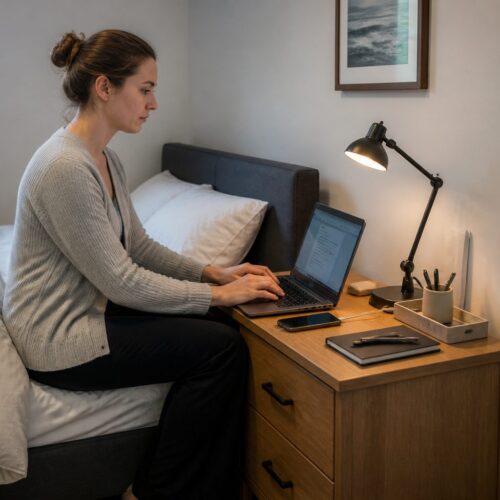

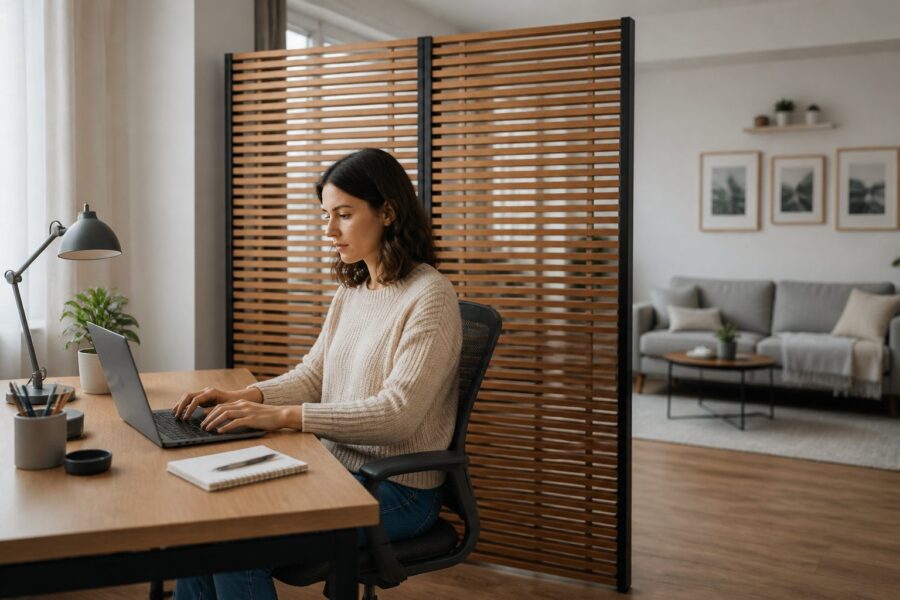
Creating the perfect home office setup in a shared open living space can be quite challenging, especially when considering all the potential distractions. You may find it difficult to maintain focus with daily home activities happening around you, which can make it hard to get into a productive zone.
Incorporating a room divider home office is a practical solution to achieve much-needed privacy and create a dedicated workspace. This article explores various types of dividers that can transform your workspace while maximizing the use of space to accommodate both work and leisure activities effectively.
Whether you’re working from home full-time or part-time, establishing boundaries is crucial to maintain a healthy work-life balance. Let’s dive into the various types of room dividers suited to small home offices, focusing on their unique features and benefits.
The Challenge of Working in a Shared Open Living Space
Open living spaces are increasingly popular in modern home design, but they come with unique challenges for home office setups that can hinder productivity. The lack of defined boundaries can lead to distractions, noise pollution, and decreased overall productivity, making it essential to find ways to create a more focused work environment.
In a shared environment, everyday noise, visual clutter, and interruptions from family members or housemates can easily derail your focus and disrupt your workflow. Finding creative solutions to establish a dedicated workspace is essential for maintaining a professional mindset and ensuring you can complete your tasks effectively.
Establishing an organized and functional workspace within an open-plan area can feel overwhelming, especially when trying to balance personal and professional responsibilities. However, with the right strategies and tools at your disposal, you can cultivate a productive atmosphere that enhances your ability to focus and complete your work efficiently.
Room dividers are an effective solution to combat the challenges of noise and distraction in shared living spaces. They can provide the privacy and focus needed to work efficiently in a shared home environment, allowing you to establish a clear delineation between work and leisure.
By visually separating your office from the rest of the living space, you can create a distinct work zone that helps signal to others that you are in work mode. This separation not only aids in minimizing interruptions but also enhances your overall productivity by creating a more professional setting in your home.
Types of Room Dividers Suited to Small Home Offices
There are several types of room dividers to consider when setting up a small home office, each offering unique benefits tailored to different needs and aesthetics. From folding screens to bookshelves, choosing the right divider can enhance both functionality and style, making your workspace more enjoyable and efficient.
From simple to sophisticated designs, the variety of dividers available ensures that you can find an option that matches your personal taste and home decor. Here’s a closer look at the most popular options, detailing their advantages and potential drawbacks for use in a small home office.
Folding screens are versatile and can be easily moved or stored when not in use, making them an excellent choice for those who value flexibility in their workspace. They come in various styles, from minimalist designs to more decorative options, allowing you to choose one that complements your home’s aesthetic.
Freestanding panels are another popular choice for creating a division within your space, providing a stable solution for dividing areas effectively. These panels can also come in different materials, such as fabric or wood, to match your decor and enhance the overall look of your home office.
Bookshelf dividers not only separate spaces but also provide valuable storage options, making them a functional choice for small offices. They can hold books, files, or decorative items, helping you keep everything organized while adding a stylish element to your workspace.
Folding Screens vs. Freestanding Panels: Pros and Cons
Folding screens offer flexibility and are easy to set up, making them ideal for temporary office setups that might need to be adjusted frequently. However, they may not provide as much stability as freestanding panels, which can be a consideration if you require a more permanent solution.
Freestanding panels are generally sturdier and can withstand more wear and tear, offering a reliable option for those who work in their home office regularly. On the downside, they may be bulkier and harder to move than folding screens, which could limit your ability to rearrange your space as needed.
| Feature | Folding Screens | Freestanding Panels |
|---|---|---|
| Portability | High | Medium |
| Stability | Medium | High |
| Design Variety | High | Medium |
| Storage | Low | Medium |
Both folding screens and freestanding panels can serve as effective office privacy screens in an apartment, making it easier to concentrate on your work. The choice ultimately depends on your specific needs, preferences, and the available space within your home environment.
Now, let’s explore how bookshelf dividers can serve as dual-purpose office furniture, providing both storage and privacy in one sleek design. This innovative approach maximizes space while enhancing your workspace’s functionality, allowing for both organization and separation.
Bookshelf Dividers as Dual-Purpose Office Furniture
Bookshelf dividers are an excellent option for small home offices, providing both storage and separation in one tidy arrangement. They can hold essential documents, office supplies, and personal items, keeping everything organized while ensuring you have easy access to what you need throughout your working hours.
Additionally, these dividers can be styled to match your existing decor, further enhancing your workspace and making it a place you enjoy spending time in. By integrating bookshelves into your office design, you can create a functional and inviting environment that fosters creativity and productivity.
When selecting a bookshelf divider, consider height and depth to ensure it fits your space well without overwhelming it. You want to strike a balance between storage capacity and maintaining an open feel in your workspace, which can significantly affect your mood and efficiency.
Utilizing the top of the bookshelf can also provide additional space for decor or plants, which adds visual interest and can contribute to a more pleasant working environment. Incorporating elements like greenery or personal touches can make your workspace feel more inviting and reduce stress levels.
Incorporating bookshelf dividers into your home office setup can help you establish a sense of professionalism while still feeling at home. They create a distinct boundary while fostering a creative atmosphere, allowing you to effectively separate your work and personal life.
Plant Walls and Green Dividers for a Biophilic Workspace
Adding greenery to your workspace can improve both aesthetics and well-being, making it a more enjoyable place to work. Plant walls and green dividers are excellent solutions for creating a biophilic workspace that connects you with nature while enhancing the overall ambiance of your home office.
These living dividers not only enhance privacy but also purify the air and boost mood, contributing to a healthier work environment. Incorporating plants into your office setup can foster a connection to nature, which has been shown to increase creativity and reduce stress levels.
- Vertical planters
- Hanging pots
- Living walls
- Potted plants
- Planter shelves
When selecting plants, consider low-maintenance options that thrive in indoor environments to ensure they remain vibrant without requiring excessive care. This ensures that your green dividers remain a beautiful addition to your workspace without becoming a burden to maintain.
Transforming your workspace with plant walls adds both beauty and functionality, creating an inviting atmosphere that encourages productivity. A biophilic approach can lead to improved productivity and creativity while you work, making your office a more pleasant space to be in.
Hanging Curtains and Fabric Partitions for Flexible Privacy
Hanging curtains and fabric partitions offer a flexible solution for creating privacy in small home offices, allowing you to customize your workspace to suit your needs. These options can be easily adjusted to provide varying levels of privacy depending on the time of day or your current work requirements.
They can be opened or closed depending on the level of privacy required at any given moment, providing versatility for those who need a quick transition from work mode to home mode. Fabric dividers can also add texture and warmth to your workspace, making it a more inviting environment.
When choosing fabric, consider patterns and colors that complement your interior style, as this allows you to create an inviting and cohesive work environment that reflects your personal taste. The right choice of fabric can also contribute to the overall mood of your office, enhancing your ability to focus and be productive.
Hanging curtains can also absorb sound, contributing to a quieter workspace that reduces distractions and enhances concentration. This is a significant advantage in open-plan layouts where noise can be distracting, making it easier for you to maintain your focus throughout the day.
Overall, fabric partitions offer a versatile and aesthetically pleasing solution for office privacy screens, allowing you to create a space that feels both functional and stylish. They can easily adapt to changes in your workspace layout, ensuring that your setup remains efficient as your needs evolve.
Acoustic Benefits of Well-Placed Room Dividers
In addition to providing privacy, well-placed room dividers can enhance the acoustic quality of your workspace, making it a more comfortable environment for focused work. They can help absorb sound and reduce noise levels, creating a more focused environment that is conducive to productivity.
This is especially important in shared living spaces where multiple activities occur simultaneously, as the right dividers can help mitigate the effects of noise. By strategically placing dividers, you can minimize distractions and improve your overall work experience, leading to a more successful workday.
Materials like fabric and wood can significantly dampen sound, making them ideal for room dividers in home offices. Choosing the right materials is essential for achieving the desired acoustic benefits, so consider your options carefully based on your specific needs.
Additionally, combining dividers with other sound-absorbing elements, such as rugs, cushions, or acoustic panels, can further enhance your workspace. This layered approach to sound management can create a more serene atmosphere that enables you to concentrate fully on your tasks.
Investing in acoustic-friendly room dividers can ultimately lead to greater productivity and a more enjoyable work experience. A quieter workspace allows you to concentrate better and produce higher-quality work, making it a worthwhile consideration in your home office design.
How to Choose a Divider That Suits Your Interior Style
When selecting a room divider for your small home office, consider the overall aesthetic of your space and how the divider will fit into that vision. The right divider should harmonize with your existing decor while fulfilling its functional purpose, ensuring a cohesive look throughout your home.
Explore various materials, colors, and designs that resonate with your style preferences to find the perfect match for your workspace. This ensures that your office privacy screen feels cohesive and thoughtfully designed, contributing to a more pleasant and productive environment.
For a modern look, consider sleek metal or glass dividers that convey a sense of sophistication and elegance. If you prefer a cozy, rustic feel, wooden dividers with natural finishes may be more suitable, providing warmth and character to your workspace.
Don’t forget to take into account the size and scale of your chosen divider to ensure it fits comfortably within your available space. Ensuring the divider does not overwhelm the area is essential for maintaining an open and airy feel in your home office.
Ultimately, the best divider is one that meets both your practical needs and aesthetic preferences, enhancing your workspace in a way that makes you feel comfortable and inspired. A well-chosen room divider can enhance your productivity and inspire creativity, allowing you to thrive in your home office.
Renter-Friendly Installation Methods for Privacy Screens
For renters, installing room dividers can be a challenge due to restrictions on permanent changes that may affect your lease agreement. Fortunately, there are several renter-friendly installation methods to consider that allow you to create a functional office without damaging the property.
Using tension rods is an excellent option for hanging curtains without damaging walls, as they can be easily removed when needed. This makes them ideal for temporary setups that can be adjusted as your needs change, providing flexibility in your workspace.
Freestanding dividers do not require any installation, providing flexibility for renters who may not want to make any permanent changes. This allows you to easily rearrange your space without worrying about lease agreements, making it a hassle-free solution for creating a dedicated work area.
Adhesive hooks can also be used to hang lightweight fabric partitions, providing a simple, damage-free solution for adding privacy screens to your workspace. This method allows you to customize your office setup without worrying about potential damage to walls or ceilings.
By utilizing these renter-friendly methods, you can create a functional and stylish home office that meets your needs without compromising your living situation. A little creativity can go a long way in making your workspace feel more private and personalized, allowing you to work efficiently from the comfort of your home.