

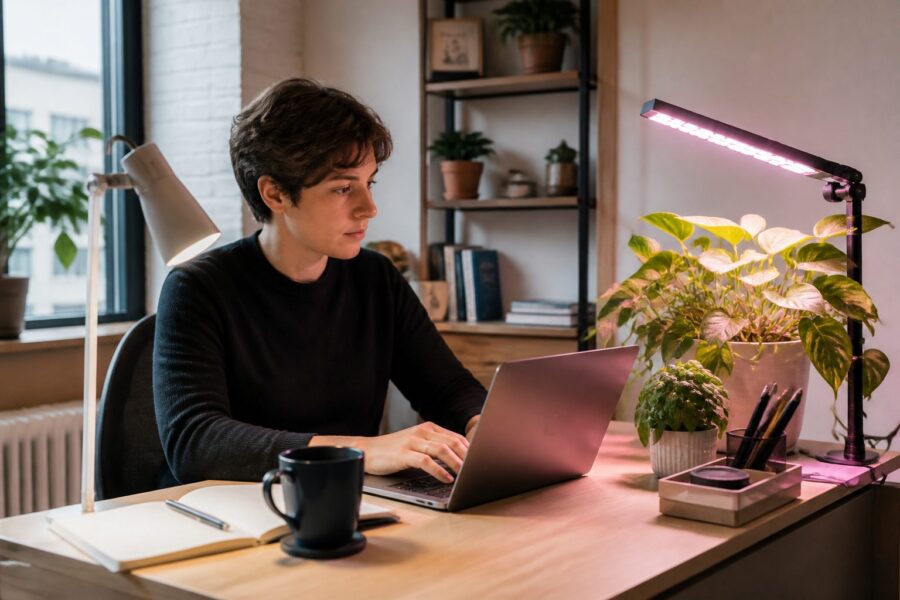
As more people shift to remote work, the need for a well-designed home office has never been greater, especially as we adapt to new routines and environments. Creating a small space home office that incorporates elements of nature can significantly enhance your workspace, and one of the best ways to achieve this is through biophilic design, which nurtures our innate connection to the natural world.
Biophilic design emphasizes the connection between nature and our living spaces, promoting wellness and productivity in our daily activities. Adding plants to your desk not only beautifies your environment but also improves air quality, reduces stress levels, and contributes to a more positive emotional state while you work.
One crucial component of integrating plants into your workspace is understanding how to provide adequate lighting, which is essential for their growth and health. This is where grow light desk home office plants come into play, allowing greenery to thrive even in low-light conditions, ensuring that your workspace remains vibrant and inviting regardless of external light availability.
The Biophilic Workspace Trend and Why Plants Belong at Your Desk
The biophilic workspace trend highlights the importance of incorporating natural elements into our daily environments, emphasizing the psychological and physical benefits that come from such integration. Studies show that exposure to plants and green spaces can enhance creativity and focus, making them perfect additions to your home office, where you spend significant amounts of time.
Having plants at your desk can create a calming atmosphere, which is essential for productivity and maintaining a positive mindset during work hours. Moreover, plants can help to break up the monotony of a typical office setup, adding color, vibrancy, and a sense of life to your workspace, which can stimulate your senses and improve your overall mood.
Incorporating biophilic desk lighting, such as grow lights, can further enhance your workspace by providing the necessary conditions for your plants to thrive. These lights not only support plant growth effectively but also create a warm and inviting environment in your home office, making it a more enjoyable place to work.
When selecting plants for your desk, consider those that thrive indoors and require low maintenance, as this will ensure they remain healthy and vibrant even with a busy schedule. With the right grow light, even those hard-to-grow species can flourish, contributing positively to your workspace’s aesthetic, health, and overall atmosphere.
By embracing the biophilic workspace trend, you can create a productive and serene home office that encourages both creativity and tranquility. This approach not only benefits your plants but also positively affects your overall well-being, leading to a more fulfilling work experience.
What Makes a Grow Light Different From Standard Office Lighting
Grow lights are specifically designed to emit light spectrums that support plant growth, unlike standard office lighting, which is often meant solely for illumination. While traditional lights may provide general illumination, they often lack the specific wavelengths needed for photosynthesis, which is essential for healthy plant growth.
Typically, grow lights focus on the blue and red wavelengths of the light spectrum, which are essential for plant health and development. This targeted approach helps plants to thrive indoors, even in spaces that may not receive ample sunlight, thus ensuring that your greenery remains lush and vibrant.
In contrast, standard office lighting may produce a harsh white light that can be uninviting for both plants and humans, often leading to discomfort during prolonged periods of use. By utilizing grow lights, you can create a more harmonious atmosphere in your workspace that is beneficial for both your plants and your productivity.
Additionally, grow lights are often adjustable, allowing you to customize the intensity based on the specific needs of your plants, which can vary depending on the species. This flexibility helps ensure that your desk plant light productivity is maximized, benefiting both your plants and your work performance by creating an ideal environment for growth.
Understanding these differences is crucial when setting up a plant-friendly workspace that fosters both growth and productivity. Opting for grow lights instead of regular office lighting can greatly enhance the conditions in which your desk plants thrive, contributing to a more vibrant and inviting office space.
Understanding the Light Spectrum Plants Need to Thrive Indoors
Plants require specific light wavelengths for photosynthesis, primarily blue and red light, to thrive and flourish in their environment. Blue light promotes vegetative growth, while red light encourages flowering and fruiting, making both essential for a plant’s life cycle and health.
| Light Color | Wavelength (nm) | Effect on Plants |
|---|---|---|
| Blue | 400-500 | Encourages leaf growth |
| Red | 600-700 | Promotes flowering |
| Green | 500-550 | Least effective for photosynthesis |
| Far Red | 700-800 | Stimulates flowering |
Understanding this spectrum is essential when selecting a grow light for your home office plants, as it will help you make informed choices that cater to the specific needs of your greenery. By ensuring your lighting setup caters to these needs, you can create a thriving environment for your desk plants that supports their health and growth.
Grow Light Styles That Suit a Compact Home Office Surface
Choosing the right grow light style is crucial for maximizing your compact home office space, as it allows you to combine functionality with aesthetics. Options like clip-on grow lights and small desk lamps are ideal for limited surfaces while providing effective lighting that meets the needs of your plants without overwhelming your workspace.
Additionally, LED grow lights are popular for small spaces due to their energy efficiency and low heat output, making them an excellent choice for maintaining a comfortable working environment. These lights allow you to keep your plants close without worrying about overheating your workspace, which can be a concern with traditional grow lights.
Another great option is a floor stand grow light that can be positioned beside your desk, providing additional lighting while saving valuable surface space. This style can be adjusted easily to provide optimal light for multiple plants, ensuring they receive the care they need without cluttering your desk area.
For a more aesthetically pleasing option, consider pendant grow lights that can hang above your desk, illuminating your plants in a stylish manner. These not only light up your plants but also serve as a stylish addition to your home office decor, enhancing the overall ambiance of your workspace.
With various styles available, you can easily find a grow light that complements your small office setup while catering to the specific needs of your plants. Make sure to choose one that aligns with your plants’ needs and your aesthetic preferences, allowing you to enjoy a beautiful and productive workspace.
Choosing the Best Desk Plants for a Low-Light Office Environment
When selecting desk plants for a low-light office, it’s essential to choose varieties that thrive in such conditions, ensuring they remain healthy and vibrant with minimal effort. Plants like snake plants and pothos are excellent options as they require minimal light and care, making them perfect companions for a busy work life.
Additionally, consider plants such as peace lilies and ZZ plants, which are known for their resilience in low-light environments and their ability to purify the air. These plants not only add beauty to your workspace but also contribute to a healthier atmosphere, enhancing your overall work experience and well-being.
- Snake Plant
- Pothos
- Peace Lily
- ZZ Plant
- Spider Plant
Incorporating these plants into your home office can significantly enhance your work environment by bringing a touch of nature indoors. With the right grow light, even low-light plants can thrive, ensuring your space remains vibrant and inviting while positively impacting your mood and productivity.
Timer Settings and Daily Light Hours for Common Desk Plants
Setting the right timer for your grow lights is crucial for the health of your desk plants, as it ensures they receive the appropriate amount of light for optimal growth. Most common desk plants require around 12-16 hours of light daily to thrive, depending on their specific needs and growth stages.
For instance, plants like succulents and snake plants benefit from a longer light duration, while shade-loving plants, such as peace lilies, can thrive with about 10-12 hours of light per day. Understanding these requirements will help you maintain the optimal growth environment, allowing your plants to flourish and contribute positively to your workspace.
Using a timer can simplify this process, ensuring your plants receive consistent light without the need for manual adjustments. This is particularly helpful for busy individuals who might forget to turn their lights on and off manually, ensuring that your plants are cared for even when you are preoccupied with work.
By maintaining a regular light schedule, you can enhance your desk plant light productivity and foster a thriving environment for your greenery. This will lead to healthier plants and a more pleasant workspace that inspires creativity and focus throughout your workday.
Ultimately, the right timing can significantly impact the growth and vitality of your plants, making it an essential aspect of indoor gardening. Take the time to research the specific light needs of your chosen desk plants for the best results, ensuring they are well-equipped to thrive in your home office.
Do Grow Lights Interfere With Monitor Glare or Screen Calibration
One common concern about using grow lights in a home office is whether they interfere with monitor glare, which can be quite distracting during work. The good news is that many modern grow lights are designed to minimize glare, making them suitable for close proximity to screens without compromising your visual comfort.
Moreover, using LED grow lights can help reduce eye strain, as they tend to produce a softer light quality that is easier on the eyes. This makes them an excellent choice for long hours spent in front of a computer, allowing you to focus on your work without discomfort.
To ensure that your monitor’s calibration remains accurate, it’s essential to position your grow lights strategically within your workspace. Avoid placing them directly behind or in front of your screen to mitigate any potential glare that could distort your view and affect your productivity.
Instead, consider positioning them at an angle or off to the side, which can help to reduce glare while still providing ample light for your plants. This will allow you to enjoy the benefits of plant grow light office setups without compromising your screen’s performance and your overall work efficiency.
By being mindful of your lighting setup, you can create a perfectly balanced workspace that nurtures both your plants and your productivity. This ensures that both your plants and your productivity thrive in harmony, leading to a more enjoyable and effective work environment.
Energy Use of Small Grow Lights Compared to Traditional Setups
When considering grow lights for your home office, energy efficiency is an important factor that can impact your overall utility costs. Small grow lights, particularly LED models, consume significantly less energy compared to traditional fluorescent or incandescent setups, making them a more sustainable option for your workspace.
Typically, LED grow lights use up to 80% less energy than traditional lighting options, which not only reduces your electricity bill but also aligns with sustainable living practices. This energy efficiency helps you maintain a greener lifestyle while still enjoying the beauty and benefits of indoor plants in your home office.
In addition to being energy-efficient, small grow lights have a longer lifespan, meaning you won’t need to replace them as often. This longevity further decreases waste and cost, making your investment in indoor gardening both practical and environmentally conscious.
By choosing energy-efficient grow lights, you can enjoy a flourishing plant setup without the guilt of high energy consumption weighing on your mind. Your small office can be both productive and environmentally conscious, allowing you to balance work and nature seamlessly.
Ultimately, investing in small grow lights is a smart choice for those looking to balance their workspace with nature, enhancing both productivity and aesthetics. This allows you to enjoy the benefits of indoor plants while keeping energy use in check, creating a harmonious work environment that reflects your values.
Building a Cohesive Plant and Lighting Aesthetic in a Small Space
Creating a cohesive aesthetic in your small home office involves carefully selecting both plants and lighting that complement each other. Choose grow lights that align with your decor style while providing the necessary light for your plants, ensuring that both functionality and design are prioritized in your workspace.
Incorporating stylish planters and decorative shelves can enhance the overall look of your workspace, transforming it into a more inviting and personalized area. By harmonizing plant types and lighting styles, you can create an inviting and productive environment that inspires creativity and focus each day.
Consider using colors and materials that align with your existing office furniture, as this will help tie everything together and create a sense of unity in your design. This attention to detail can elevate the overall atmosphere of your workspace, making it a place where you genuinely enjoy spending your time.
Additionally, think about the placement of your plants and grow lights, as strategically positioning them can draw the eye and create a focal point that enhances your workspace. This careful arrangement can lead to a more visually appealing environment that encourages productivity and a connection to nature.
Ultimately, a well-planned aesthetic can make your small office feel larger and more welcoming, transforming it into a sanctuary for creativity and focus. This thoughtful approach enhances both your productivity and your connection to nature, allowing you to thrive in your home office.


