

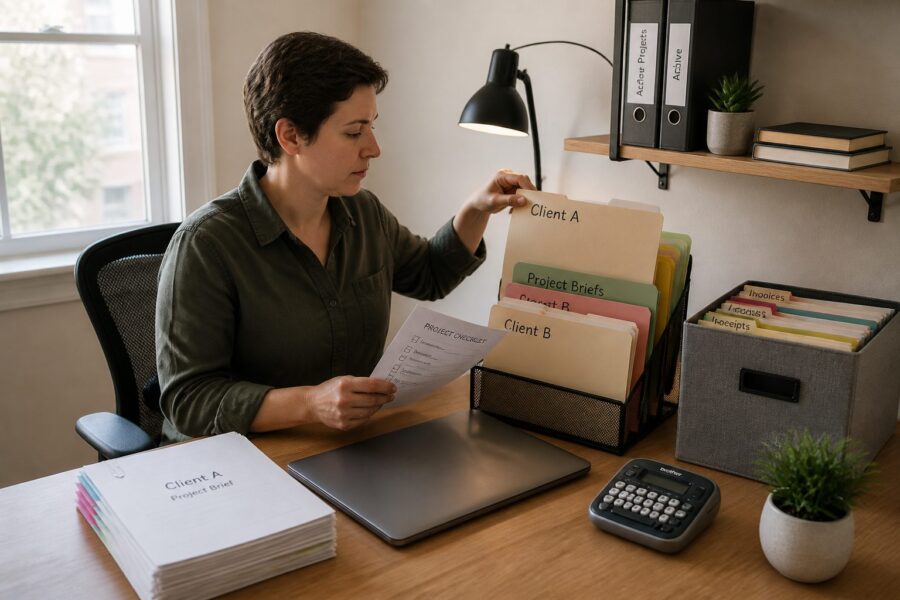
Establishing a uniform naming convention across both systems can simplify the retrieval process, allowing freelancers to find what they need quickly and efficiently. When physical and digital files mirror each other, freelancers can quickly find what they need without confusion, saving valuable time that can be better spent on actual work.
Regularly reviewing both systems is also essential for maintaining organization and consistency, as this helps ensure that both filing methods remain aligned and effective. This can help identify any discrepancies between the two systems and ensure that nothing is lost in translation, reinforcing a seamless workflow.
Moreover, taking advantage of technology can facilitate this sync process, with various software solutions available that can help integrate physical and digital filing systems seamlessly. By utilizing technology, freelancers can enhance their organizational strategies and improve overall productivity.
Ultimately, a synchronized filing system will enhance workflow efficiency and reduce the chances of errors, ensuring that freelancers can focus on delivering high-quality work. This organization strategy is invaluable for freelancers looking to streamline their operations and achieve greater success in their careers.
Annual File Archiving and Purging for Growing Freelancers
As freelancers grow, regular file archiving and purging become essential tasks that contribute to a well-organized and efficient workspace. These practices help maintain an organized workspace while ensuring that only relevant documents are kept on hand, which is crucial for staying focused and productive.
Annual reviews of files can help identify outdated or unnecessary documents that can be safely discarded, allowing freelancers to streamline their filing systems. This not only frees up physical and digital space but also makes it easier to locate important project files when they are needed most, enhancing overall efficiency.
Additionally, consider creating a schedule for file archiving to establish a regular routine that keeps your workspace organized. This process can ensure that important documents are preserved while irrelevant files are promptly removed, maintaining a clutter-free work environment.
Moreover, archiving completed projects can serve as a valuable resource for future reference or inspiration, allowing freelancers to draw from past experiences when tackling new challenges. Maintaining a clean workspace is crucial for enhancing creativity and focus as a freelancer, as it fosters a positive and productive environment.
Ultimately, an organized filing strategy is vital for the long-term success of freelancers, as it enables them to work more efficiently and effectively. Regular archiving and purging help keep the workload manageable and the workspace efficient, paving the way for continued growth and success in their freelance careers.
Consider investing in fireproof and waterproof filing cabinets for physical documents, which can provide peace of mind knowing that important papers are protected from disasters. For digital files, using encrypted cloud storage or secure password-protected folders can significantly enhance data security, offering an added layer of protection against potential breaches.
Additionally, regularly updating security measures, including software and hardware, is crucial for maintaining a secure home office environment that protects against emerging threats. This proactive approach ensures that sensitive information remains protected against potential breaches and helps freelancers stay compliant with industry standards.
Establishing a protocol for handling sensitive documents can further enhance security, ensuring that there are clear guidelines on how to manage and protect client information. This includes limiting access to sensitive information, implementing strict sharing protocols, and regularly purging unnecessary files that could pose a risk if left unattended.
Ultimately, the goal is to create a safe and secure workspace that fosters trust and professionalism between freelancers and their clients. A well-thought-out document security strategy will benefit both freelancers and clients alike, reinforcing a commitment to safeguarding sensitive information.
Syncing Physical and Digital Systems for Consistent Filing
To maximize efficiency, freelancers should strive to sync their physical and digital filing systems, ensuring that both methods of organization complement each other. This consistency ensures that all documents are organized in a manner that is easy to navigate, regardless of the format, reducing the chances of confusion or misplacement.
Establishing a uniform naming convention across both systems can simplify the retrieval process, allowing freelancers to find what they need quickly and efficiently. When physical and digital files mirror each other, freelancers can quickly find what they need without confusion, saving valuable time that can be better spent on actual work.
Regularly reviewing both systems is also essential for maintaining organization and consistency, as this helps ensure that both filing methods remain aligned and effective. This can help identify any discrepancies between the two systems and ensure that nothing is lost in translation, reinforcing a seamless workflow.
Moreover, taking advantage of technology can facilitate this sync process, with various software solutions available that can help integrate physical and digital filing systems seamlessly. By utilizing technology, freelancers can enhance their organizational strategies and improve overall productivity.
Ultimately, a synchronized filing system will enhance workflow efficiency and reduce the chances of errors, ensuring that freelancers can focus on delivering high-quality work. This organization strategy is invaluable for freelancers looking to streamline their operations and achieve greater success in their careers.
Annual File Archiving and Purging for Growing Freelancers
As freelancers grow, regular file archiving and purging become essential tasks that contribute to a well-organized and efficient workspace. These practices help maintain an organized workspace while ensuring that only relevant documents are kept on hand, which is crucial for staying focused and productive.
Annual reviews of files can help identify outdated or unnecessary documents that can be safely discarded, allowing freelancers to streamline their filing systems. This not only frees up physical and digital space but also makes it easier to locate important project files when they are needed most, enhancing overall efficiency.
Additionally, consider creating a schedule for file archiving to establish a regular routine that keeps your workspace organized. This process can ensure that important documents are preserved while irrelevant files are promptly removed, maintaining a clutter-free work environment.
Moreover, archiving completed projects can serve as a valuable resource for future reference or inspiration, allowing freelancers to draw from past experiences when tackling new challenges. Maintaining a clean workspace is crucial for enhancing creativity and focus as a freelancer, as it fosters a positive and productive environment.
Ultimately, an organized filing strategy is vital for the long-term success of freelancers, as it enables them to work more efficiently and effectively. Regular archiving and purging help keep the workload manageable and the workspace efficient, paving the way for continued growth and success in their freelance careers.
Accordion files allow you to store multiple documents in a compact manner, making them ideal for presentations or client meetings where quick access to various files is crucial. Portable folders, on the other hand, can be easily transported and provide additional space for organization, ensuring that everything you need is within reach when you’re on the go.
- Accordion file for ongoing projects, allowing for easy access to all relevant documents
- Portable folder for client meetings, ensuring that you have everything at hand
- Separate sections for different clients, making it easy to keep their work distinct
- Labeling pockets for easy access, reducing the time spent searching for specific files
- Expandable design for added capacity, accommodating new documents as projects develop
Both options can enhance your freelancer document organization by keeping everything in one place and reducing the chances of losing important paperwork while on the go. This level of organization is especially important for freelancers who often work in varying environments and need to be able to find documents quickly and efficiently.
Ultimately, investing in a good accordion file or portable folder can improve your efficiency as a freelancer by providing a reliable way to manage your documents. These tools ensure that your client work remains organized, regardless of your location, allowing you to focus on what you do best without the distraction of disorganization.
Naming Conventions and Color-Coding for Multi-Client Projects
For freelancers managing multiple clients, establishing consistent naming conventions is essential to maintaining an organized filing system. This practice allows for quick identification of files and reduces the likelihood of confusion, particularly when working with various clients and numerous projects simultaneously.
Color-coding can further enhance this system, making it visually easier to distinguish between different clients or project types at a glance. By assigning specific colors to various clients, freelancers can quickly locate necessary files, improving efficiency and streamlining their workflow.
Combining naming conventions with color-coding creates a robust organizational strategy that caters to the specific needs of freelancers. This dual approach helps maintain clarity across various projects while simplifying the retrieval process, ensuring that no time is wasted searching for important documents.
Be sure to use clear and descriptive names for files, avoiding vague titles that can lead to confusion and misfiling. A well-thought-out naming convention can save time and reduce frustration when searching for documents, allowing freelancers to remain focused on their work.
Ultimately, effective naming and visual cues will enhance your client folder system, allowing your freelance work to flow more smoothly and efficiently. This strategy is beneficial for both current projects and future references, helping freelancers maintain an organized and productive work environment.
How to Securely Store Sensitive Client Documents at Home
Safeguarding sensitive client documents is critical for maintaining confidentiality and trust in freelance work, which can significantly impact a freelancer’s reputation and client relationships. Freelancers must implement secure storage solutions to protect sensitive information, ensuring that it remains confidential and safe from unauthorized access.
Consider investing in fireproof and waterproof filing cabinets for physical documents, which can provide peace of mind knowing that important papers are protected from disasters. For digital files, using encrypted cloud storage or secure password-protected folders can significantly enhance data security, offering an added layer of protection against potential breaches.
Additionally, regularly updating security measures, including software and hardware, is crucial for maintaining a secure home office environment that protects against emerging threats. This proactive approach ensures that sensitive information remains protected against potential breaches and helps freelancers stay compliant with industry standards.
Establishing a protocol for handling sensitive documents can further enhance security, ensuring that there are clear guidelines on how to manage and protect client information. This includes limiting access to sensitive information, implementing strict sharing protocols, and regularly purging unnecessary files that could pose a risk if left unattended.
Ultimately, the goal is to create a safe and secure workspace that fosters trust and professionalism between freelancers and their clients. A well-thought-out document security strategy will benefit both freelancers and clients alike, reinforcing a commitment to safeguarding sensitive information.
Syncing Physical and Digital Systems for Consistent Filing
To maximize efficiency, freelancers should strive to sync their physical and digital filing systems, ensuring that both methods of organization complement each other. This consistency ensures that all documents are organized in a manner that is easy to navigate, regardless of the format, reducing the chances of confusion or misplacement.
Establishing a uniform naming convention across both systems can simplify the retrieval process, allowing freelancers to find what they need quickly and efficiently. When physical and digital files mirror each other, freelancers can quickly find what they need without confusion, saving valuable time that can be better spent on actual work.
Regularly reviewing both systems is also essential for maintaining organization and consistency, as this helps ensure that both filing methods remain aligned and effective. This can help identify any discrepancies between the two systems and ensure that nothing is lost in translation, reinforcing a seamless workflow.
Moreover, taking advantage of technology can facilitate this sync process, with various software solutions available that can help integrate physical and digital filing systems seamlessly. By utilizing technology, freelancers can enhance their organizational strategies and improve overall productivity.
Ultimately, a synchronized filing system will enhance workflow efficiency and reduce the chances of errors, ensuring that freelancers can focus on delivering high-quality work. This organization strategy is invaluable for freelancers looking to streamline their operations and achieve greater success in their careers.
Annual File Archiving and Purging for Growing Freelancers
As freelancers grow, regular file archiving and purging become essential tasks that contribute to a well-organized and efficient workspace. These practices help maintain an organized workspace while ensuring that only relevant documents are kept on hand, which is crucial for staying focused and productive.
Annual reviews of files can help identify outdated or unnecessary documents that can be safely discarded, allowing freelancers to streamline their filing systems. This not only frees up physical and digital space but also makes it easier to locate important project files when they are needed most, enhancing overall efficiency.
Additionally, consider creating a schedule for file archiving to establish a regular routine that keeps your workspace organized. This process can ensure that important documents are preserved while irrelevant files are promptly removed, maintaining a clutter-free work environment.
Moreover, archiving completed projects can serve as a valuable resource for future reference or inspiration, allowing freelancers to draw from past experiences when tackling new challenges. Maintaining a clean workspace is crucial for enhancing creativity and focus as a freelancer, as it fosters a positive and productive environment.
Ultimately, an organized filing strategy is vital for the long-term success of freelancers, as it enables them to work more efficiently and effectively. Regular archiving and purging help keep the workload manageable and the workspace efficient, paving the way for continued growth and success in their freelance careers.
When using a numbered system, each client can be assigned a unique number that corresponds to their files, creating a clear and efficient way to categorize projects. This method is especially useful for freelancers with numerous clients, as it reduces the potential for misplacing files and ensures that everything is accounted for at all times.
| Client Number | Client Name | Project Type |
|---|---|---|
| 001 | ABC Corp | Marketing |
| 002 | XYZ LLC | Design |
| 003 | 123 Inc | Consulting |
| 004 | 456 Ltd | Development |
Alternatively, an alphabetical system can be just as effective, especially for freelancers with fewer clients, providing a straightforward method of organization. Both methods can be adapted to fit the specific needs of your project files and small office setup, allowing for maximum efficiency regardless of the chosen approach.
Whichever system you choose, consistency is key for easy navigation and retrieval of important documents. Regularly updating your folder structure will ensure that it remains relevant as your clientele and projects evolve, helping you stay organized and efficient in your work.
Active Project Files vs. Completed Project Archives
Understanding the difference between active project files and completed project archives is crucial for effective document organization in a freelance setting. Active project files are those currently in progress, requiring regular access and updates to remain current with client needs and changes.
In contrast, completed project archives house files from finished projects, which can be stored away once they are no longer actively needed but may still be useful in the future. This distinction helps freelancers maintain focus on current tasks while keeping past work accessible if needed, creating a balanced and functional filing system.
Organizing active and archived files separately can also help in decluttering your workspace, which is essential for maintaining a productive environment. Keeping active projects readily available prevents time lost searching for documents among old projects, thereby enhancing workflow efficiency.
Consider using separate folders or containers for active and completed files, whether physical or digital, to create a clear boundary between what needs immediate attention and what is simply for reference. This strategy can significantly improve organization and make it easier to locate files when they are needed most.
Regularly reviewing completed project archives is also beneficial for freelancers, as it can help identify any projects that may need to be reactivated or referenced. This practice not only keeps your filing system organized but can also provide inspiration for future projects or help in referencing past work, ensuring that valuable insights and lessons learned are not lost.
Using Accordion Files and Portable Folders for Client Work
Accordion files and portable folders can be a game-changer for freelancers managing client work, providing a practical solution to document organization. They offer an efficient way to organize documents while remaining flexible and mobile, catering to the dynamic nature of freelance work.
Accordion files allow you to store multiple documents in a compact manner, making them ideal for presentations or client meetings where quick access to various files is crucial. Portable folders, on the other hand, can be easily transported and provide additional space for organization, ensuring that everything you need is within reach when you’re on the go.
- Accordion file for ongoing projects, allowing for easy access to all relevant documents
- Portable folder for client meetings, ensuring that you have everything at hand
- Separate sections for different clients, making it easy to keep their work distinct
- Labeling pockets for easy access, reducing the time spent searching for specific files
- Expandable design for added capacity, accommodating new documents as projects develop
Both options can enhance your freelancer document organization by keeping everything in one place and reducing the chances of losing important paperwork while on the go. This level of organization is especially important for freelancers who often work in varying environments and need to be able to find documents quickly and efficiently.
Ultimately, investing in a good accordion file or portable folder can improve your efficiency as a freelancer by providing a reliable way to manage your documents. These tools ensure that your client work remains organized, regardless of your location, allowing you to focus on what you do best without the distraction of disorganization.
Naming Conventions and Color-Coding for Multi-Client Projects
For freelancers managing multiple clients, establishing consistent naming conventions is essential to maintaining an organized filing system. This practice allows for quick identification of files and reduces the likelihood of confusion, particularly when working with various clients and numerous projects simultaneously.
Color-coding can further enhance this system, making it visually easier to distinguish between different clients or project types at a glance. By assigning specific colors to various clients, freelancers can quickly locate necessary files, improving efficiency and streamlining their workflow.
Combining naming conventions with color-coding creates a robust organizational strategy that caters to the specific needs of freelancers. This dual approach helps maintain clarity across various projects while simplifying the retrieval process, ensuring that no time is wasted searching for important documents.
Be sure to use clear and descriptive names for files, avoiding vague titles that can lead to confusion and misfiling. A well-thought-out naming convention can save time and reduce frustration when searching for documents, allowing freelancers to remain focused on their work.
Ultimately, effective naming and visual cues will enhance your client folder system, allowing your freelance work to flow more smoothly and efficiently. This strategy is beneficial for both current projects and future references, helping freelancers maintain an organized and productive work environment.
How to Securely Store Sensitive Client Documents at Home
Safeguarding sensitive client documents is critical for maintaining confidentiality and trust in freelance work, which can significantly impact a freelancer’s reputation and client relationships. Freelancers must implement secure storage solutions to protect sensitive information, ensuring that it remains confidential and safe from unauthorized access.
Consider investing in fireproof and waterproof filing cabinets for physical documents, which can provide peace of mind knowing that important papers are protected from disasters. For digital files, using encrypted cloud storage or secure password-protected folders can significantly enhance data security, offering an added layer of protection against potential breaches.
Additionally, regularly updating security measures, including software and hardware, is crucial for maintaining a secure home office environment that protects against emerging threats. This proactive approach ensures that sensitive information remains protected against potential breaches and helps freelancers stay compliant with industry standards.
Establishing a protocol for handling sensitive documents can further enhance security, ensuring that there are clear guidelines on how to manage and protect client information. This includes limiting access to sensitive information, implementing strict sharing protocols, and regularly purging unnecessary files that could pose a risk if left unattended.
Ultimately, the goal is to create a safe and secure workspace that fosters trust and professionalism between freelancers and their clients. A well-thought-out document security strategy will benefit both freelancers and clients alike, reinforcing a commitment to safeguarding sensitive information.
Syncing Physical and Digital Systems for Consistent Filing
To maximize efficiency, freelancers should strive to sync their physical and digital filing systems, ensuring that both methods of organization complement each other. This consistency ensures that all documents are organized in a manner that is easy to navigate, regardless of the format, reducing the chances of confusion or misplacement.
Establishing a uniform naming convention across both systems can simplify the retrieval process, allowing freelancers to find what they need quickly and efficiently. When physical and digital files mirror each other, freelancers can quickly find what they need without confusion, saving valuable time that can be better spent on actual work.
Regularly reviewing both systems is also essential for maintaining organization and consistency, as this helps ensure that both filing methods remain aligned and effective. This can help identify any discrepancies between the two systems and ensure that nothing is lost in translation, reinforcing a seamless workflow.
Moreover, taking advantage of technology can facilitate this sync process, with various software solutions available that can help integrate physical and digital filing systems seamlessly. By utilizing technology, freelancers can enhance their organizational strategies and improve overall productivity.
Ultimately, a synchronized filing system will enhance workflow efficiency and reduce the chances of errors, ensuring that freelancers can focus on delivering high-quality work. This organization strategy is invaluable for freelancers looking to streamline their operations and achieve greater success in their careers.
Annual File Archiving and Purging for Growing Freelancers
As freelancers grow, regular file archiving and purging become essential tasks that contribute to a well-organized and efficient workspace. These practices help maintain an organized workspace while ensuring that only relevant documents are kept on hand, which is crucial for staying focused and productive.
Annual reviews of files can help identify outdated or unnecessary documents that can be safely discarded, allowing freelancers to streamline their filing systems. This not only frees up physical and digital space but also makes it easier to locate important project files when they are needed most, enhancing overall efficiency.
Additionally, consider creating a schedule for file archiving to establish a regular routine that keeps your workspace organized. This process can ensure that important documents are preserved while irrelevant files are promptly removed, maintaining a clutter-free work environment.
Moreover, archiving completed projects can serve as a valuable resource for future reference or inspiration, allowing freelancers to draw from past experiences when tackling new challenges. Maintaining a clean workspace is crucial for enhancing creativity and focus as a freelancer, as it fosters a positive and productive environment.
Ultimately, an organized filing strategy is vital for the long-term success of freelancers, as it enables them to work more efficiently and effectively. Regular archiving and purging help keep the workload manageable and the workspace efficient, paving the way for continued growth and success in their freelance careers.
Creating an efficient home office space is essential for freelancers, as it can significantly impact productivity and organization, two critical factors that contribute to their overall success. Understanding the unique organizational needs that arise from working with various clients is the first step in establishing a streamlined client file system that effectively addresses the complexities of freelance work.
Freelancers often juggle multiple projects, each with specific requirements and deadlines, which can quickly become overwhelming if not properly managed. This complexity necessitates a well-thought-out freelancer document organization strategy to keep everything in order, ensuring that no detail gets overlooked and that all tasks are completed on time.
The right setup not only helps in managing current tasks but also prepares you for future projects that may arise unexpectedly. A clear and accessible client folder system can make all the difference in maintaining workflow efficiency and reducing stress, allowing freelancers to focus on their creative work rather than getting caught up in organizational chaos.
The Unique Organizational Needs of Freelancers Working From Home
Freelancers often operate in a fast-paced environment, where adaptability is key to success and the ability to pivot quickly can determine the outcome of a project. This means that they must develop personalized organizational systems that cater to their unique workflow and client demands, ensuring they can meet varying expectations without compromising quality.
Many freelancers work with multiple clients at once, requiring them to keep track of different project specifications and deadlines that can vary widely from one client to another. An effective organizational strategy allows for clear visibility of tasks, reducing the chance of missing deadlines and enabling freelancers to prioritize their workload more efficiently.
Moreover, freelancers may need to switch between different modes of work, such as creative tasks, administrative duties, and client communications, all of which require different resources and mindsets. Having a flexible yet robust client file system can help manage these varying demands effectively, ensuring that freelancers can transition smoothly between different types of work without losing focus.
Establishing a clear structure for document organization also helps freelancers maintain professionalism in their work, which is crucial for building trust with clients and fostering long-term relationships. This can enhance client trust and lead to better long-term relationships, ultimately contributing to a more sustainable freelance career.
Ultimately, a well-organized home office setup can free up mental space, allowing freelancers to focus on delivering high-quality work that meets and exceeds client expectations. The aim is to create an environment where everything has its place, making it easy to find what you need when you need it and minimizing distractions that can derail productivity.
Physical vs. Digital Client File Approaches
When it comes to managing client files, freelancers often face the choice between physical and digital systems, each with its own set of strengths and weaknesses. Each approach has its advantages and can be tailored to fit individual preferences and work habits, allowing freelancers to choose the method that best suits their workflow and lifestyle.
Physical filing systems can provide a tangible way to organize documents, making it easier to quickly access important papers, especially during in-person meetings where digital devices may not be practical. However, they take up valuable space in a small office and can become cluttered if not regularly maintained, leading to frustration and potential loss of important files.
On the other hand, digital systems offer the convenience of cloud storage and easy searchability, which is particularly beneficial for freelancers who are constantly on the move. They allow freelancers to access client files from anywhere, which can be a game-changer for those who travel or work remotely, providing flexibility that physical files simply cannot match.
Nonetheless, relying solely on a digital system may lead to challenges with data security and organization if not managed properly. A blended approach often works best, allowing freelancers to enjoy the benefits of both physical and digital organization while mitigating the risks associated with each method.
Ultimately, the choice between physical and digital client file management should reflect personal working styles and client needs, taking into account what has worked best in the past. Understanding these differences can help freelancers design a customized client folder system that works best for them, leading to increased efficiency and satisfaction in their work.
Setting Up a Simple Numbered or Alphabetical Folder System
One of the most effective ways to organize client files is by setting up a simple numbered or alphabetical folder system that makes finding documents straightforward and efficient. This straightforward approach allows for quick retrieval of documents while minimizing confusion, which is essential for maintaining productivity in a busy freelance environment.
When using a numbered system, each client can be assigned a unique number that corresponds to their files, creating a clear and efficient way to categorize projects. This method is especially useful for freelancers with numerous clients, as it reduces the potential for misplacing files and ensures that everything is accounted for at all times.
| Client Number | Client Name | Project Type |
|---|---|---|
| 001 | ABC Corp | Marketing |
| 002 | XYZ LLC | Design |
| 003 | 123 Inc | Consulting |
| 004 | 456 Ltd | Development |
Alternatively, an alphabetical system can be just as effective, especially for freelancers with fewer clients, providing a straightforward method of organization. Both methods can be adapted to fit the specific needs of your project files and small office setup, allowing for maximum efficiency regardless of the chosen approach.
Whichever system you choose, consistency is key for easy navigation and retrieval of important documents. Regularly updating your folder structure will ensure that it remains relevant as your clientele and projects evolve, helping you stay organized and efficient in your work.
Active Project Files vs. Completed Project Archives
Understanding the difference between active project files and completed project archives is crucial for effective document organization in a freelance setting. Active project files are those currently in progress, requiring regular access and updates to remain current with client needs and changes.
In contrast, completed project archives house files from finished projects, which can be stored away once they are no longer actively needed but may still be useful in the future. This distinction helps freelancers maintain focus on current tasks while keeping past work accessible if needed, creating a balanced and functional filing system.
Organizing active and archived files separately can also help in decluttering your workspace, which is essential for maintaining a productive environment. Keeping active projects readily available prevents time lost searching for documents among old projects, thereby enhancing workflow efficiency.
Consider using separate folders or containers for active and completed files, whether physical or digital, to create a clear boundary between what needs immediate attention and what is simply for reference. This strategy can significantly improve organization and make it easier to locate files when they are needed most.
Regularly reviewing completed project archives is also beneficial for freelancers, as it can help identify any projects that may need to be reactivated or referenced. This practice not only keeps your filing system organized but can also provide inspiration for future projects or help in referencing past work, ensuring that valuable insights and lessons learned are not lost.
Using Accordion Files and Portable Folders for Client Work
Accordion files and portable folders can be a game-changer for freelancers managing client work, providing a practical solution to document organization. They offer an efficient way to organize documents while remaining flexible and mobile, catering to the dynamic nature of freelance work.
Accordion files allow you to store multiple documents in a compact manner, making them ideal for presentations or client meetings where quick access to various files is crucial. Portable folders, on the other hand, can be easily transported and provide additional space for organization, ensuring that everything you need is within reach when you’re on the go.
- Accordion file for ongoing projects, allowing for easy access to all relevant documents
- Portable folder for client meetings, ensuring that you have everything at hand
- Separate sections for different clients, making it easy to keep their work distinct
- Labeling pockets for easy access, reducing the time spent searching for specific files
- Expandable design for added capacity, accommodating new documents as projects develop
Both options can enhance your freelancer document organization by keeping everything in one place and reducing the chances of losing important paperwork while on the go. This level of organization is especially important for freelancers who often work in varying environments and need to be able to find documents quickly and efficiently.
Ultimately, investing in a good accordion file or portable folder can improve your efficiency as a freelancer by providing a reliable way to manage your documents. These tools ensure that your client work remains organized, regardless of your location, allowing you to focus on what you do best without the distraction of disorganization.
Naming Conventions and Color-Coding for Multi-Client Projects
For freelancers managing multiple clients, establishing consistent naming conventions is essential to maintaining an organized filing system. This practice allows for quick identification of files and reduces the likelihood of confusion, particularly when working with various clients and numerous projects simultaneously.
Color-coding can further enhance this system, making it visually easier to distinguish between different clients or project types at a glance. By assigning specific colors to various clients, freelancers can quickly locate necessary files, improving efficiency and streamlining their workflow.
Combining naming conventions with color-coding creates a robust organizational strategy that caters to the specific needs of freelancers. This dual approach helps maintain clarity across various projects while simplifying the retrieval process, ensuring that no time is wasted searching for important documents.
Be sure to use clear and descriptive names for files, avoiding vague titles that can lead to confusion and misfiling. A well-thought-out naming convention can save time and reduce frustration when searching for documents, allowing freelancers to remain focused on their work.
Ultimately, effective naming and visual cues will enhance your client folder system, allowing your freelance work to flow more smoothly and efficiently. This strategy is beneficial for both current projects and future references, helping freelancers maintain an organized and productive work environment.
How to Securely Store Sensitive Client Documents at Home
Safeguarding sensitive client documents is critical for maintaining confidentiality and trust in freelance work, which can significantly impact a freelancer’s reputation and client relationships. Freelancers must implement secure storage solutions to protect sensitive information, ensuring that it remains confidential and safe from unauthorized access.
Consider investing in fireproof and waterproof filing cabinets for physical documents, which can provide peace of mind knowing that important papers are protected from disasters. For digital files, using encrypted cloud storage or secure password-protected folders can significantly enhance data security, offering an added layer of protection against potential breaches.
Additionally, regularly updating security measures, including software and hardware, is crucial for maintaining a secure home office environment that protects against emerging threats. This proactive approach ensures that sensitive information remains protected against potential breaches and helps freelancers stay compliant with industry standards.
Establishing a protocol for handling sensitive documents can further enhance security, ensuring that there are clear guidelines on how to manage and protect client information. This includes limiting access to sensitive information, implementing strict sharing protocols, and regularly purging unnecessary files that could pose a risk if left unattended.
Ultimately, the goal is to create a safe and secure workspace that fosters trust and professionalism between freelancers and their clients. A well-thought-out document security strategy will benefit both freelancers and clients alike, reinforcing a commitment to safeguarding sensitive information.
Syncing Physical and Digital Systems for Consistent Filing
To maximize efficiency, freelancers should strive to sync their physical and digital filing systems, ensuring that both methods of organization complement each other. This consistency ensures that all documents are organized in a manner that is easy to navigate, regardless of the format, reducing the chances of confusion or misplacement.
Establishing a uniform naming convention across both systems can simplify the retrieval process, allowing freelancers to find what they need quickly and efficiently. When physical and digital files mirror each other, freelancers can quickly find what they need without confusion, saving valuable time that can be better spent on actual work.
Regularly reviewing both systems is also essential for maintaining organization and consistency, as this helps ensure that both filing methods remain aligned and effective. This can help identify any discrepancies between the two systems and ensure that nothing is lost in translation, reinforcing a seamless workflow.
Moreover, taking advantage of technology can facilitate this sync process, with various software solutions available that can help integrate physical and digital filing systems seamlessly. By utilizing technology, freelancers can enhance their organizational strategies and improve overall productivity.
Ultimately, a synchronized filing system will enhance workflow efficiency and reduce the chances of errors, ensuring that freelancers can focus on delivering high-quality work. This organization strategy is invaluable for freelancers looking to streamline their operations and achieve greater success in their careers.
Annual File Archiving and Purging for Growing Freelancers
As freelancers grow, regular file archiving and purging become essential tasks that contribute to a well-organized and efficient workspace. These practices help maintain an organized workspace while ensuring that only relevant documents are kept on hand, which is crucial for staying focused and productive.
Annual reviews of files can help identify outdated or unnecessary documents that can be safely discarded, allowing freelancers to streamline their filing systems. This not only frees up physical and digital space but also makes it easier to locate important project files when they are needed most, enhancing overall efficiency.
Additionally, consider creating a schedule for file archiving to establish a regular routine that keeps your workspace organized. This process can ensure that important documents are preserved while irrelevant files are promptly removed, maintaining a clutter-free work environment.
Moreover, archiving completed projects can serve as a valuable resource for future reference or inspiration, allowing freelancers to draw from past experiences when tackling new challenges. Maintaining a clean workspace is crucial for enhancing creativity and focus as a freelancer, as it fosters a positive and productive environment.
Ultimately, an organized filing strategy is vital for the long-term success of freelancers, as it enables them to work more efficiently and effectively. Regular archiving and purging help keep the workload manageable and the workspace efficient, paving the way for continued growth and success in their freelance careers.


