

Transforming your small space into a functional and inviting home office can be a challenge. Good lighting is essential for productivity and comfort, especially when your office is part of another room like the kitchen.
One often-overlooked solution is installing under cabinet lighting. By strategically placing lights beneath your cabinets, you can brighten your workspace and create a more pleasant atmosphere. This article will guide you through the process of installing under cabinet lighting, perfect for a kitchen office setup.
We’ll cover everything from the benefits of this lighting solution to a step-by-step installation guide. You’ll also learn about different types of lights, planning your setup, and troubleshooting common issues. Let’s brighten up your workspace by installing under cabinet lighting.
Benefits of Under Cabinet Lighting
Under cabinet lighting offers numerous advantages for a small space home office, especially when it’s integrated into a kitchen. It provides focused task lighting, making it easier to see what you’re working on, whether it’s paperwork or your laptop.
This type of lighting reduces eye strain, which is particularly important if you spend long hours working. Proper lighting can also enhance the overall ambiance of your workspace, making it more inviting and less sterile.
Beyond functionality, under cabinet lighting can also improve the aesthetics of your kitchen office. It adds a touch of elegance and sophistication, highlighting countertops and backsplashes.
This can transform a mundane area into a visually appealing and inspiring workspace. Furthermore, it’s an energy-efficient solution, especially when using LED strip lights, helping you save on electricity bills while enjoying optimal illumination.
Consider the versatility it offers, allowing you to adjust the brightness and color temperature to suit different tasks and moods. This adaptability is crucial for maintaining focus and comfort throughout the workday.
Under cabinet lighting can also increase the perceived value of your home. It’s a relatively inexpensive upgrade that can make a significant impact on the overall look and feel of your kitchen office.
Moreover, it enhances safety by illuminating potential hazards on your countertops. This is especially important in a kitchen environment where sharp objects and hot surfaces are common.
Finally, under cabinet lighting offers a long-term solution, especially with the durability of LED options. This means less frequent replacements and a more sustainable approach to lighting your workspace.
Types of Under Cabinet Lights
When it comes to under cabinet lighting, you have several options to choose from, each with its own pros and cons. LED strip lights are a popular choice due to their flexibility and energy efficiency.
These lights are easy to install and can be cut to fit the exact length of your cabinets. Puck lights are another option, offering a more focused beam of light and are often battery-operated or plug-in for easy installation.
Linear lights, which come in both LED and fluorescent options, provide a continuous, even light distribution. Fluorescent lights are less energy-efficient than LEDs and may produce a noticeable hum.
Xenon lights offer a bright, white light that closely mimics natural daylight, but they also generate more heat. Consider the brightness, color temperature, and energy consumption of each type before making a decision.
LED tape lights are incredibly versatile and come in a variety of colors and brightness levels. They can be easily concealed and offer a modern, sleek look to your kitchen office.
Puck lights are great for accent lighting and highlighting specific areas or objects. They are often used to showcase decorative items or provide focused light for reading or writing.
Linear LED fixtures offer a more robust and professional look. They provide a consistent and even light output, making them ideal for larger workspaces or areas where task lighting is critical.
Consider the ease of installation and maintenance when choosing between different types of lights. Some lights require more complex wiring or mounting, while others are designed for simple peel-and-stick installation.
Also, think about the lifespan of the lights and the availability of replacement parts. LED lights generally have a longer lifespan and are more readily available than other types of lighting.
Planning Your Installation
Before you start installing under cabinet lighting, careful planning is essential to ensure a successful outcome. Begin by measuring the length of the underside of your cabinets where you intend to install the lights.
This will help you determine the amount of lighting you need and the best placement for optimal illumination. Consider the existing light sources in your kitchen office and how the under cabinet lights will complement them.
| Factor | Considerations | Impact |
|---|---|---|
| Cabinet Length | Measure accurately | Determines light strip length |
| Light Type | LED, Puck, Linear | Affects brightness and energy use |
| Power Source | Plug-in, Battery, Hardwired | Impacts installation complexity |
| Color Temperature | Warm, Cool, Daylight | Influences workspace ambiance |
Think about whether you want warm, cool, or daylight color temperature to create the desired ambiance. Also, decide on the power source: will you use plug-in lights, battery-operated lights, or hardwired lights?
Plug-in lights are the easiest to install but require access to an outlet. Battery-operated lights offer flexibility but may require frequent battery changes. Hardwired lights provide a clean look but require professional installation.
Consider the placement of outlets and how you will conceal the cords for plug-in lights. Cord management is essential for maintaining a clean and organized workspace.
Think about whether you want dimmable lights to adjust the brightness according to your needs. Dimmable lights can help you create a more comfortable and productive work environment.
Also, consider the height of your cabinets and the angle of the light to avoid glare. Proper placement and angling can help you achieve optimal illumination without causing eye strain.
Plan for any necessary tools or materials, such as measuring tape, scissors, adhesive strips, or mounting clips. Having everything you need on hand will make the installation process smoother and more efficient.
Step-by-Step Installation Guide
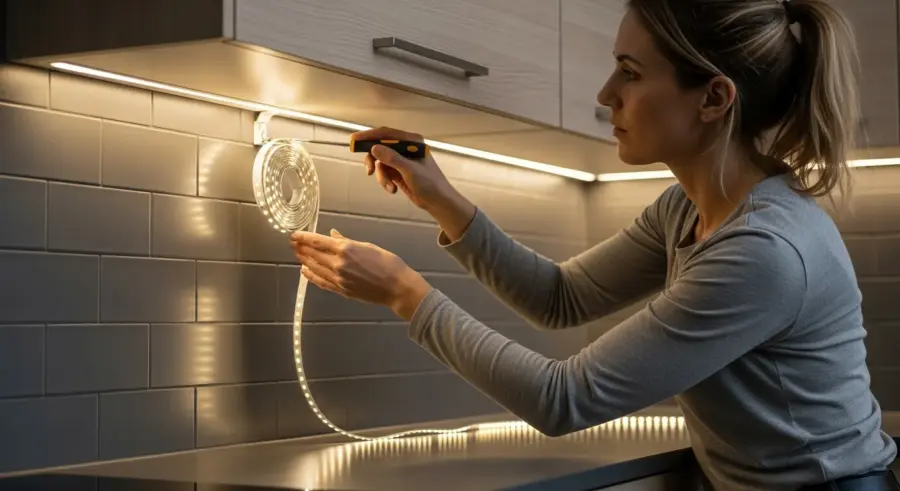
Now, let’s dive into the step-by-step process of installing under cabinet lighting. For plug-in LED strip lights, start by cleaning the underside of your cabinets with a degreasing cleaner to remove any dirt or grease.
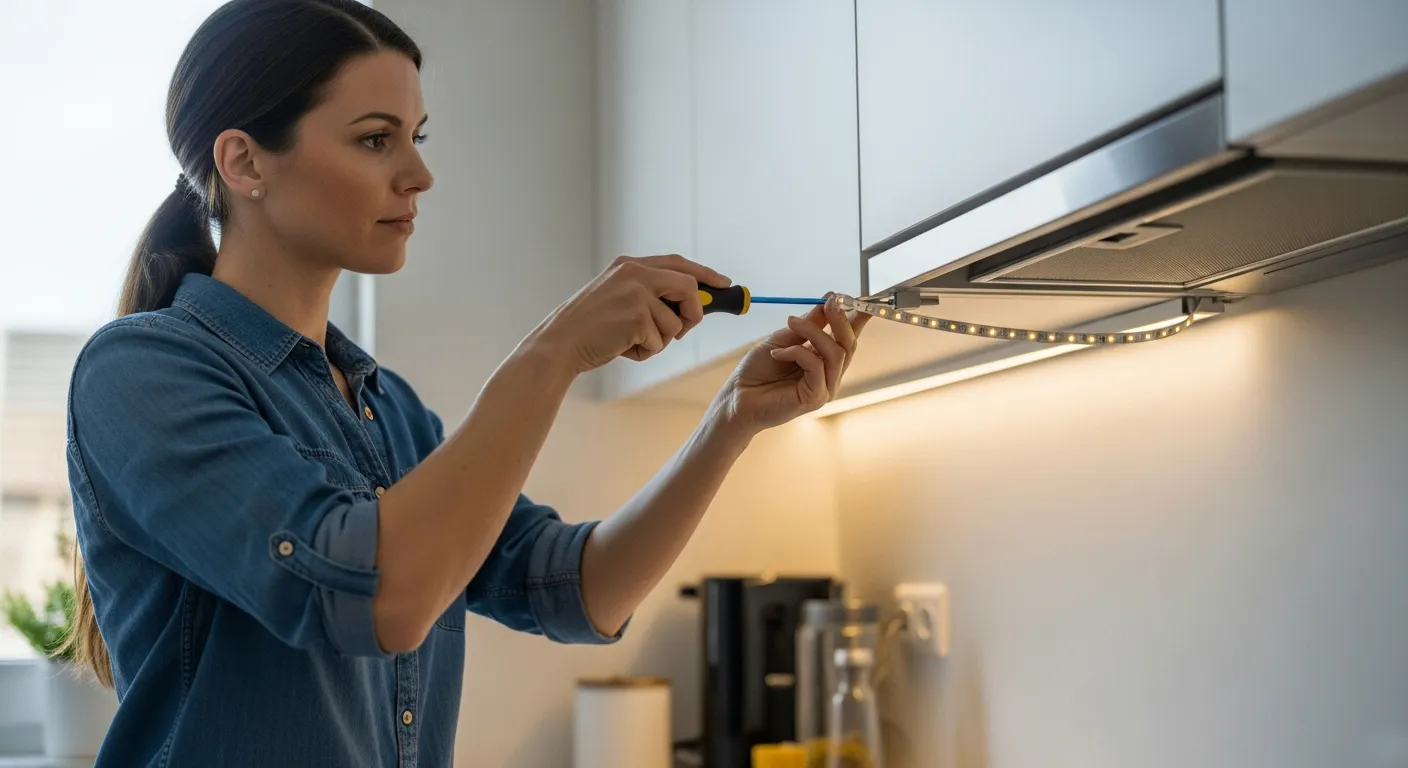
Measure and cut the LED strip lights to the desired length using scissors at the designated cutting points. Peel off the adhesive backing and carefully stick the lights to the underside of the cabinets, ensuring they are straight and evenly spaced.
If your cabinets have a lip, you may need to use mounting clips for added support. For puck lights, simply peel off the adhesive backing and stick them to the underside of the cabinets in your desired locations.
For hardwired lights, it’s best to hire a qualified electrician to ensure safe and proper installation. After installing the lights, plug them in or insert batteries, and test to make sure they are working correctly.
Before applying the adhesive, do a test run to ensure the lights are positioned correctly and provide the desired illumination. This will help you avoid mistakes and ensure a professional-looking installation.
Use a level to ensure the lights are straight and even. This will give your kitchen office a more polished and professional appearance.
If you are using mounting clips, make sure they are securely attached to the cabinets. This will prevent the lights from falling down over time.
For hardwired lights, be sure to turn off the power at the breaker before starting any electrical work. Safety is paramount when dealing with electricity.
After completing the installation, clean up any debris or leftover materials. This will help you maintain a clean and organized workspace.
Powering Your Under Cabinet Lights
Choosing the right power source for your under cabinet lighting is crucial for convenience and aesthetics. Plug-in lights are the simplest option, requiring only an available outlet nearby.
However, exposed cords can be unsightly, so consider using cord concealers or cable management solutions to keep things tidy. Battery-operated lights offer the most flexibility, as they can be placed anywhere without the need for outlets.
- Check local electrical codes
- Use a qualified electrician for hardwiring
- Consider dimmer switches for adjustable brightness
- Utilize timers for energy savings
- Hide cords with cable management solutions
However, you’ll need to replace the batteries regularly, which can be costly and inconvenient. Hardwired lights provide a clean, seamless look, as the wiring is hidden within the walls.
This option requires professional installation and may involve cutting into walls and ceilings. Consider using a dimmer switch to control the brightness of your lights, allowing you to adjust the ambiance to suit your needs.
Explore the possibility of using a smart plug to control your plug-in lights remotely. This can be a convenient way to turn the lights on and off without having to reach for the switch.
Consider using rechargeable batteries for battery-operated lights to reduce waste and save money in the long run. Rechargeable batteries are a more sustainable and environmentally friendly option.
If you are hardwiring your lights, make sure to use the correct gauge wire and follow all local electrical codes. This will ensure the safety and reliability of your electrical system.
Think about installing a dedicated circuit for your under cabinet lights to prevent overloading your existing circuits. This can help prevent electrical problems and ensure the lights operate properly.
Choosing the Right Color Temperature
The color temperature of your under cabinet lights can significantly impact the mood and functionality of your kitchen office. Warm white light (2700K-3000K) creates a cozy and inviting atmosphere, ideal for relaxing evenings.
However, it may not be the best choice for task lighting, as it can make it harder to see details. Cool white light (3500K-4100K) provides a brighter, more energizing light, suitable for tasks that require focus and precision.
Daylight (5000K-6500K) mimics natural sunlight, offering the best color rendering and clarity. This is an excellent option for a kitchen office, as it can help reduce eye strain and improve productivity.
Consider using adjustable color temperature lights, which allow you to switch between warm, cool, and daylight settings depending on your needs. Experiment with different color temperatures to find what works best for your workspace.
Think about the color of your cabinets and countertops when choosing the color temperature. Certain colors may look better under different lighting conditions.
Consider the time of day and the type of tasks you will be performing in your kitchen office. Warmer light may be more suitable for evenings, while cooler light may be better for daytime work.
Experiment with different color temperatures to see how they affect your mood and productivity. Some people find that cooler light helps them focus, while others prefer warmer light for a more relaxed atmosphere.
Consider using a light meter to measure the color temperature of your existing light sources. This can help you choose under cabinet lights that complement your existing lighting.
Integrating with Smart Home Systems
Integrating your under cabinet lighting with smart home systems can add convenience and control to your kitchen office. Smart LED strip lights can be controlled via smartphone apps, allowing you to adjust brightness, color temperature, and even set timers.
Some smart lights are compatible with voice assistants like Amazon Alexa and Google Assistant, enabling you to control them with voice commands. You can create custom lighting scenes for different activities, such as “work mode” for focused tasks and “relax mode” for winding down after work.
Consider using motion sensors to automatically turn on the lights when you enter the kitchen office. This can be particularly useful if your hands are full or if you often forget to turn off the lights when you leave.
Smart lighting can also be integrated with other smart home devices, such as smart thermostats and smart blinds, to create a cohesive and automated environment. This can help you optimize energy consumption and create a more comfortable and productive workspace.
Explore the possibility of creating routines that automatically adjust the lighting based on the time of day or your activity. For example, you could set a routine that automatically turns on the lights to a bright, cool setting when you start working and dims them to a warm, cozy setting when you finish.
Consider using geofencing to automatically turn on the lights when you arrive home. This can be a convenient way to ensure that your kitchen office is always well-lit when you need it.
Think about integrating your smart lights with your smart calendar to automatically adjust the lighting based on your schedule. For example, you could set the lights to turn on automatically when you have a meeting scheduled in your kitchen office.
Consider using a smart home hub to centralize control of all your smart devices. This can make it easier to manage your smart lighting and other smart home devices from a single app.
Troubleshooting Common Issues
Even with careful planning and installation, you may encounter some common issues with your under cabinet lighting. If the lights are not turning on, first check the power source and make sure the outlet is working or the batteries are fresh.
If the lights are flickering, it could be due to a loose connection or a faulty bulb. Ensure all connections are secure and replace any damaged bulbs with new ones.
If the adhesive on the LED strip lights is not sticking properly, clean the surface thoroughly and use mounting clips for added support. If the lights are too bright or too dim, consider using a dimmer switch or adjusting the color temperature settings.
If you experience any electrical issues, such as buzzing sounds or sparks, immediately turn off the power and consult a qualified electrician. Regular maintenance, such as cleaning the lights and checking for loose connections, can help prevent future problems.
If your smart lights are not connecting to your Wi-Fi network, check your router and make sure the lights are within range. You may need to reset your lights or your router to re-establish the connection.
If your dimmer switch is not working properly, make sure it is compatible with the type of lights you are using. Some dimmer switches are not compatible with LED lights.
If your motion sensor is not working properly, check the sensitivity settings and make sure it is not obstructed by any objects. You may need to adjust the settings to prevent false triggers.
If your lights are emitting a strange odor, turn them off immediately and inspect them for any signs of damage. A burning smell could indicate a serious electrical problem.
Conclusion
Installing under cabinet lighting is a simple yet effective way to enhance your small space home office, especially in a kitchen setting. By providing focused task lighting, reducing eye strain, and improving aesthetics, it can transform your workspace into a more productive and inviting environment.
Whether you choose LED strip lights, puck lights, or linear lights, careful planning and installation are key to achieving optimal results. Don’t hesitate to explore smart home integration options to further enhance your lighting experience, making your kitchen office a brighter and more efficient space.
Remember to prioritize safety and follow all local electrical codes when installing your under cabinet lighting. With the right lighting, you can create a workspace that is both functional and aesthetically pleasing.
Consider the long-term benefits of investing in high-quality lighting solutions. This will ensure that your kitchen office remains a comfortable and productive space for years to come.


