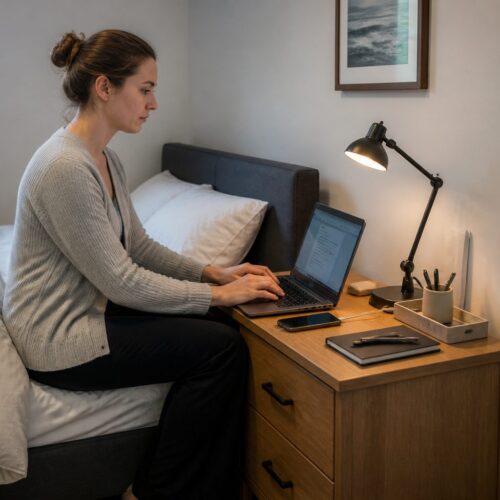

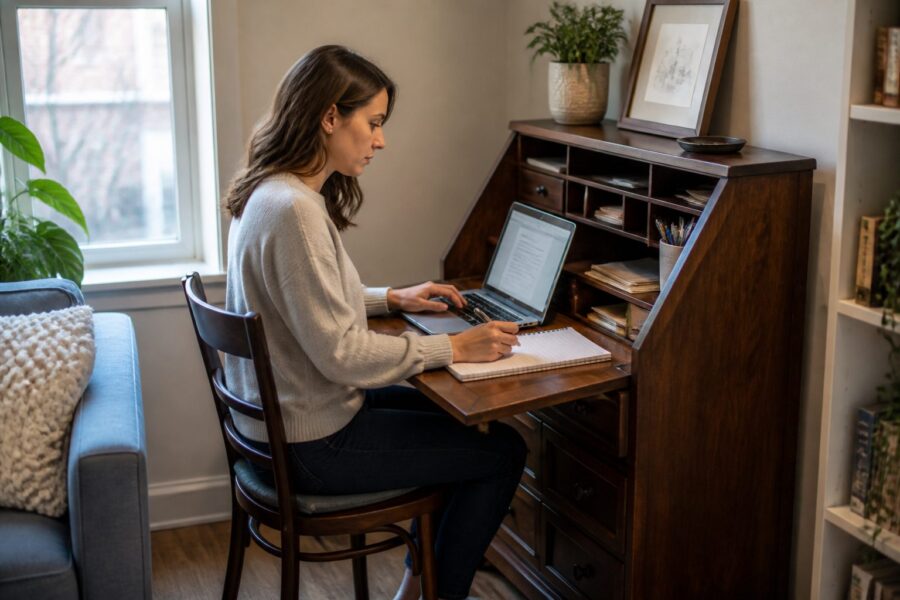
Finding the right desk for a small home office often feels like a puzzle. You need functionality, space-efficiency, and style that blends seamlessly into your living areas. The classic secretary desk offers a time-tested solution for compact workspaces, proving to be an ideal choice for modern homes and continuing its legacy of intelligent design.
Also known as a bureau desk compact or fall-front desk, this versatile piece provides a dedicated work zone that disappears when not in use. Its clever design makes it perfect for apartments, shared rooms, or any area where a traditional large desk won’t fit. You gain an organized workstation without sacrificing precious floor space, with options ranging from antique style desk small space to sleek contemporary designs.
What Defines a Secretary Desk and Its Historical Origins
A secretary desk is defined by its hinged, drop-front writing surface. This panel folds down to create a flat work area, revealing small drawers, cubbies, and pigeonholes. When closed, it resembles a compact cabinet or chest, often with additional drawers below, making it a discreet and organized workspace. Its multi-functional design is a hallmark of its enduring appeal.
Originating in the late 17th and early 18th centuries, these desks gained popularity during the Georgian and Victorian eras. They served as personal workstations for letter writing and managing household affairs, prioritizing utility and discretion. Early versions, crafted from fine hardwoods like mahogany, were status symbols reflecting administrative capabilities. The term “secretary” refers to the clerk or assistant who used such a desk.
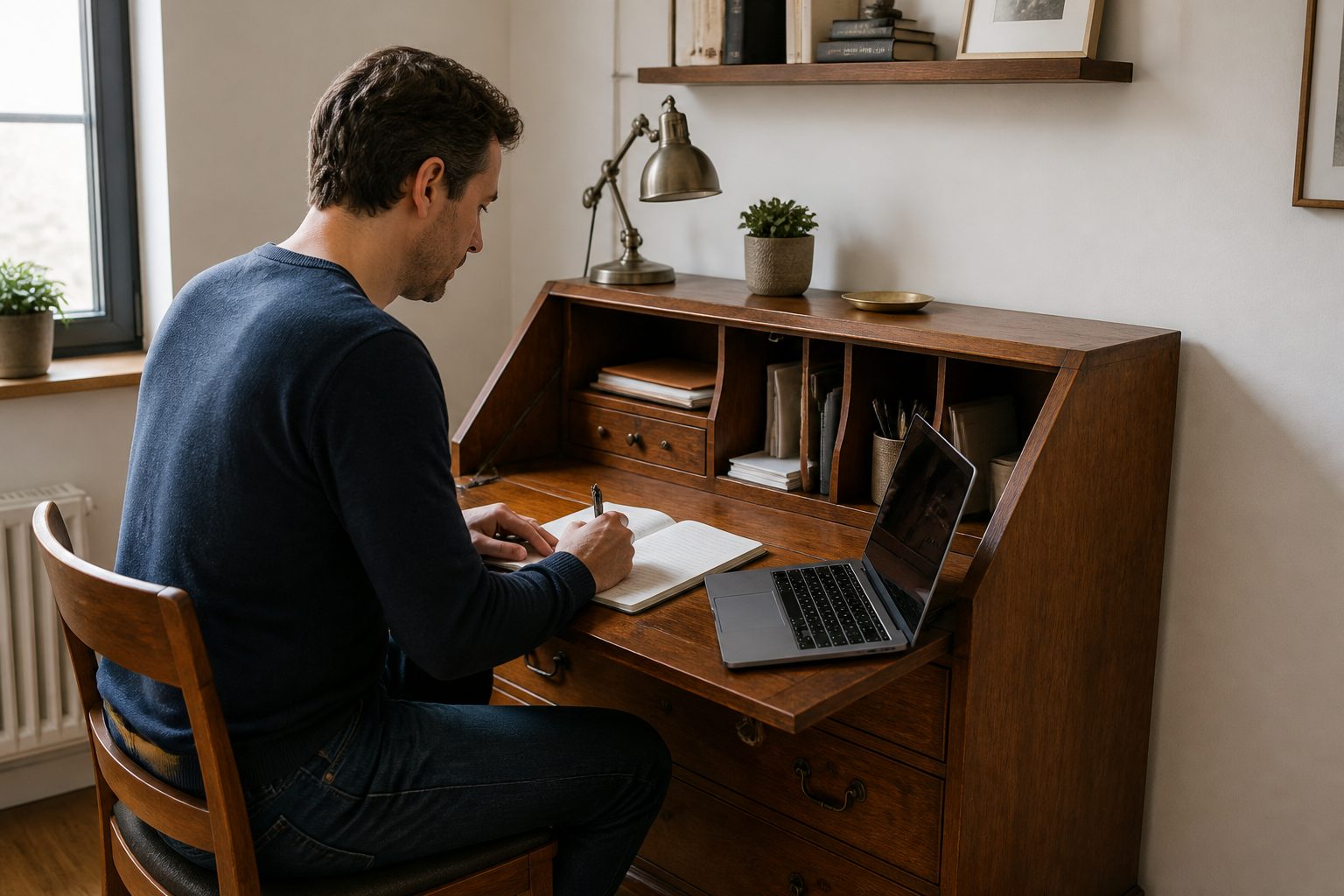
The ingenious design allowed paperwork and tools to be neatly folded away, concealing clutter—a core advantage for today’s smaller living situations. While the basic form endures, styles have adapted from antique style desk small space options to sleek, minimalist versions. Its blend of practical function and timeless aesthetic makes it a strong contender for any compact office setup, adding classic elegance to modern homes.
Why the Drop-Front Design Suits Small and Shared Spaces
The drop-front design is the genius behind the secretary desk’s suitability for small and shared spaces. It instantly transforms a closed cabinet into a functional desk, then quickly conceals your papers, laptop, and office supplies. This allows your home office to vanish, leaving a tidy piece of furniture that blends seamlessly with your decor, preventing your workspace from dominating open-plan living areas and offering a sense of visual calm.
For studio apartments or homes without a dedicated office, this discretion is invaluable. A secretary desk small home office can be placed in a bedroom, living room, or hallway without looking out of place, maintaining the aesthetic integrity of your environment. In shared spaces, closing the desk creates a clear boundary between work and leisure, benefiting everyone.
The compact footprint of a closed secretary desk saves valuable floor space, unlike traditional desks that always project into the room. Many models include built-in storage behind the drop-front for pens, notebooks, and chargers, eliminating the need for additional furniture. This integrated storage and adaptability make a fold-out desk with storage a smart choice for maximizing every square foot and ensuring visual calm in tight spots.
Comparing Secretary Desks to Standard Writing Desks
Understanding the differences between a secretary desk small home office and a standard writing desk is key. The primary distinction lies in their form, function, and how they manage clutter. A standard desk is always “on display,” whereas a secretary desk offers a hidden, convertible workspace, which is invaluable for maintaining a clean aesthetic in multi-purpose rooms.
A typical writing desk provides an open, fixed work surface, often with visible drawers or shelving. While offering immediate access, this means your workspace is constantly visible, potentially creating visual clutter in a living area. The secretary desk, in contrast, conceals all work items when closed, maintaining a tidy aesthetic.
| Feature | Secretary Desk | Standard Writing Desk |
|---|---|---|
| Work Surface | Hinged, drop-front, concealable | Fixed, always open |
| Clutter Management | Hides all items when closed | Items remain visible |
| Footprint (Closed) | Compact, cabinet-like | Always projects into room |
| Storage | Integrated cubbies, small drawers | Larger drawers, open shelves |
| Aesthetic | Blends with living room furniture | Clearly an “office” piece |
| Privacy | Work contents are private when closed | Work contents are always public |
Measuring Your Available Wall Space Before Buying
Before purchasing a secretary desk, meticulous measuring is essential to ensure it fits perfectly, both physically and functionally. Start by measuring the width and height of your intended wall space, accounting for windows, doorways, vents, or existing shelves. Ensure adequate vertical clearance, especially if the desk has an upper hutch, to avoid any obstructions.
Crucially, measure the depth when the fold-out desk with storage is both closed and open. You need enough clear space for the drop-front to extend fully and for you to sit comfortably. To visualize this, add the closed depth to the drop-front’s length; this total represents the maximum projection into the room. Confirm it doesn’t create a bottleneck or feel cramped.
Also, consider your chair. Will it tuck neatly under the drop-front when closed, preserving the compact nature of your bureau desk compact? Finally, ensure easy movement around the desk. Careful planning guarantees your secretary desk small home office is a practical addition, not a spatial headache.
Interior Compartments: What to Look for in Organization Features
The interior of a secretary desk is crucial for organization, providing dedicated spots for all office essentials. When shopping for a fold-out desk with storage, prioritize the variety and layout of compartments behind the drop-front, as these significantly impact daily productivity and overall user experience.
Look for a mix of cubbies, small drawers, and pigeonholes tailored to your needs. Cubbies are ideal for notebooks or tablets, keeping them upright and accessible. Small interior drawers, possibly with dividers, are perfect for organizing tiny items like paperclips or USB drives. Pigeonholes, a classic antique style desk small space feature, excel at sorting mail or documents, though modern designs might offer adjustable shelves for flexibility.
Consider compartment sizing for your typical items and workflow. Some desks even include hidden slots for laptops or charging cables, keeping technology secure and out of sight. Ensure the overall layout is accessible while seated. A well-designed interior maximizes the utility of your secretary desk small home office, making it a joy to use and greatly enhancing organization.
Drawer Quality and Glide Mechanisms That Matter for Daily Use
Beyond the drop-front, the quality of a secretary desk’s drawers and their glide mechanisms is vital for long-term satisfaction. Flimsy drawers quickly become frustrating, impacting daily use. You need smooth, reliable operation every time you open them to ensure durability and ease of access, making your interaction with the furniture a pleasure.
When inspecting a secretary desk small home office, prioritize lower drawers, which often bear more weight. Look for full-extension glides, allowing drawers to pull out completely for full access to contents and preventing wasted space. Strong construction, like dovetail joints, and features such as soft-close mechanisms, enhance both functionality and longevity.
- Full-Extension Glides: Drawers pull out entirely for full access.
- Smooth Operation: No sticking, wobbling, or grinding.
- Weight Capacity: Can hold heavier items without sagging.
- Dovetail Joints: Strong, durable construction for drawer boxes.
- Soft-Close Feature: Prevents slamming and reduces noise.
Material Choices: Solid Wood vs Engineered Wood vs Metal Frame
The material of your secretary desk significantly impacts its durability, aesthetic, and price. For a secretary desk small home office, consider solid wood, engineered wood, or metal frames, each with distinct advantages and suitability for different decor styles and budgets.
Solid wood (oak, maple, cherry) offers strength, longevity, and timeless beauty, lasting generations and refinishable if worn. An antique style desk small space in solid wood is a valuable investment, though it’s typically the most expensive, heavier, and susceptible to humidity changes. Engineered wood (MDF, particleboard with veneer) is a budget-friendly, stable alternative with diverse finishes, providing good value for a fold-out desk with storage. However, it’s generally less durable and harder to repair than solid wood; check specifications for higher-density options.
Metal frame secretary desks, often combined with wood or glass, provide a modern, industrial aesthetic. They are strong, stable, and lighter than solid wood, making them easy to move. While durable, they may lack the warmth of wood, potentially clashing with traditional decor. Your choice depends on personal taste, desired longevity, and how a sleek metal bureau desk compact complements your room’s overall design.
Height Considerations for Ergonomic Seated Work
Proper ergonomic height is crucial for comfortable and healthy work, even with an antique style desk small space. Many traditional secretary desks have drop-front surfaces lower than the modern standard of 29-30 inches (74-76 cm), which can pose a challenge for laptop use and lead to neck, shoulder, and back strain over time.
Always measure the drop-front surface height when open. If it’s too low, causing you to hunch, consider ergonomic solutions. A chair cushion can raise your seated height, though a footrest might then be needed. A laptop stand is an excellent alternative, elevating your screen to eye level and allowing for proper wrist posture with an external keyboard and mouse, effectively transforming a lower desk into a functional workstation.
Some modern secretary desks are designed with contemporary ergonomics in mind, featuring higher drop-fronts or adjustable legs. If you plan extended use of your secretary desk small home office, prioritize comfort and proper posture. Checking specifications carefully ensures your bureau desk compact supports your well-being, making even short tasks more enjoyable.
Styling a Secretary Desk in Modern and Contemporary Interiors
A secretary desk small home office, though often traditional, is surprisingly versatile in modern and contemporary interiors. The key is thoughtful integration. For a modern look, choose clean lines, minimal ornamentation, and sleek finishes like lacquered white, black, or light wood, possibly with metal or glass accents. For eclectic styles, an antique style desk small space creates charming contrast against modern decor, adding visual interest and depth to the room’s design.
When closed, keep the visible surface clear with a single, well-chosen decorative item like a sculptural lamp or plant. When open, maintain an organized and visually appealing interior using matching desk accessories and perhaps a small piece of art or photo in a cubby. Consider room colors and textures; a dark wood desk can ground a light space, or a brightly colored one can add personality. The fold-out desk with storage should feel integrated, not an afterthought.
Proper lighting is also essential. A small, task-oriented lamp, complementing the desk’s style, can be placed on the interior work surface or atop the closed unit. This enhances both functionality and the overall ambiance of your secretary desk small home office setup, ensuring it contributes positively to your home’s design.
How to Pair a Secretary Desk with a Compatible Small Chair
Pairing a secretary desk with a compatible small chair is crucial, as a bulky office chair negates its space-saving benefits. Choose a chair that is comfortable, functional, and visually appropriate, ideally with a streamlined profile and no arms, or arms low enough to tuck completely under the drop-front when closed. This allows the chair to disappear, maintaining the neat aesthetic of your secretary desk small home office and preserving precious floor space.
Swivel chairs without arms and with smooth-rolling casters offer flexibility and easy movement, tucking away effortlessly. For an antique style desk small space, a classic wooden dining chair or small upholstered accent chair can work well, provided the seat height is ergonomically appropriate for the desk’s work surface. A cushion can add comfort if needed.
Consider the chair’s material and color to complement your desk and room decor, creating a cohesive look. If you spend significant time at your bureau desk compact, prioritize ergonomic features like lumbar support, even in a smaller profile. The best chair fits your body and space, completing an efficient and stylish workspace.
Top Use Cases: Journaling, Laptop Work, and Paperwork Management
A secretary desk small home office is incredibly versatile, excelling at focused, contained tasks. It’s perfect for journaling or creative writing, offering an intimate, enclosed space for reflection with cubbies for pens and notebooks. For laptop work, it provides a stable surface, with interior compartments ideal for chargers and accessories, assuming ergonomic height is addressed for comfortable long-term use.
Paperwork management is where a secretary desk truly shines, with pigeonholes and small drawers perfect for sorting bills, correspondence, and important documents. It serves as an excellent command center for household affairs, keeping all necessary tools contained within the fold-out desk with storage, ready when needed and hidden when not.
This bureau desk compact also functions as a dedicated space for hobbies like stamp collecting or small craft projects, concealing ongoing work to maintain a tidy living area. For students, it provides a quiet, private study area in a bedroom or dorm, minimizing distractions. Ultimately, the secretary desk is ideal for tasks not requiring expansive setups, offering efficiency and discretion for modern home office needs in limited spaces.