

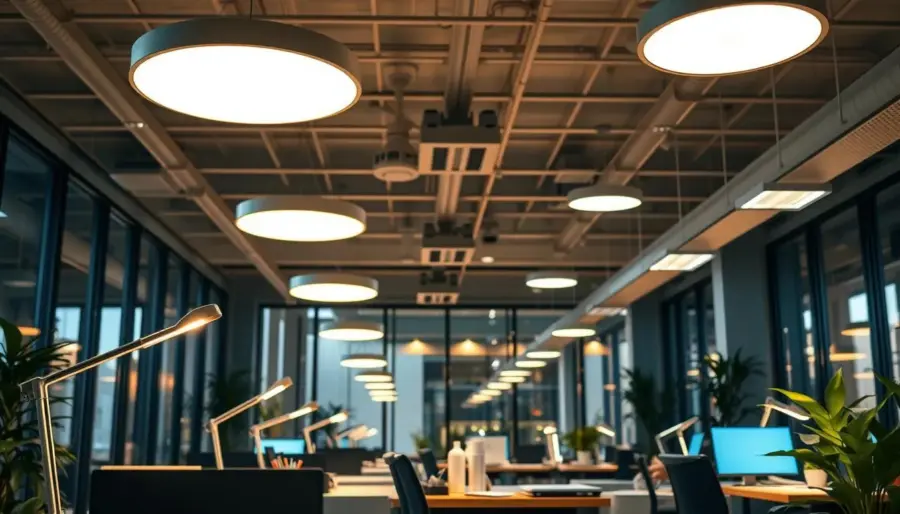
Efficient office lighting means lowering watts while keeping clear, comfortable illumination and safe egress. You’ll learn practical ways to cut energy use without hurting visibility or your team’s focus.
This section previews the topics you’ll find in the listicle: general fixtures, task fixtures, control strategies, daylighting, and backup approaches. It also explains why good design and maintenance matter for long-term savings and consistent output.
You’ll see how updated technology and smarter controls reduce wasted power from outdated systems. We also cover reliability: outages and after-hours needs are real pain points, so layered lighting and backup plans keep operations running.
Key outcomes you can expect: lower energy bills, better visual comfort, reliable performance, and smarter automation that supports productivity.
– Overview of efficient fixtures, controls, and natural light.
– Emphasis on maintenance, backup planning, and cost savings.
Why low-energy lighting matters in your office today
How your workplace is lit shows up on power bills and on employee output. You pay for hours and watts across open-plan areas, corridors, and shared rooms. Small habits—like leaving fixtures on overnight—add up fast.
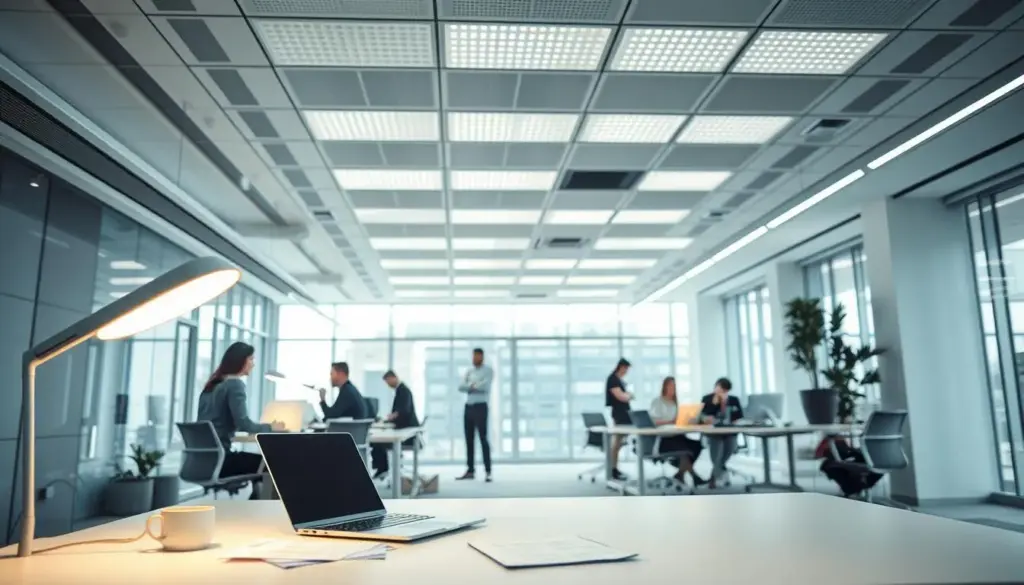
How lighting affects energy and performance
Poor quality lighting causes glare, flicker, and mismatched illumination. That increases eye strain and lowers productivity. Better design delivers the right light in the right place and reduces errors.
Where most offices waste power
- Empty rooms with lights left on for hours.
- Overlit desks and “always-on” corridors that lack controls.
- Old fixtures that draw more power and need frequent service.
Think beyond dimming: an efficient system combines modern fixtures, smart controls, and daylight. Decision-makers should weigh total costs—energy draw, maintenance, lamp or driver replacement, and labor.
Pair everyday efficiency with reliable backup to protect operations during outages. That way you cut bills and keep your team working without costly interruptions.
What to look for in modern low-power lighting systems
Start by matching illumination targets to tasks and the physical layout of your space. Decide the required level for each room so you give screens and desks controlled glare while corridors and storage areas get safe, uniform light.
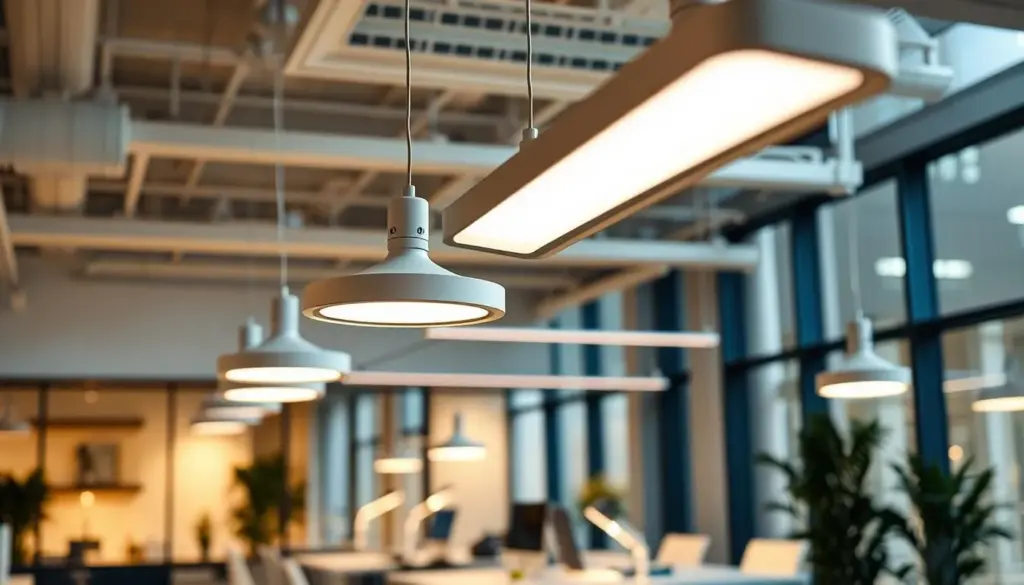
Fixture design and beam quality
Choose fixtures with good diffusion and beam control. Proper optics reduce harsh glare and make the perceived brightness more comfortable.
Evaluating the whole system
Think of a system as fixture + driver + controls. Mismatched parts cut efficiency and shorten service life, so pick matched families and keep documentation handy.
Control and maintainability
- Options: occupancy sensors, schedules, and daylight dimming—each pays off in specific areas.
- Maintenance: design for easy access to drivers and use standardized parts to speed up services.
- Stock key spares and standardize products to cut downtime and long-term costs.
Low-power light solutions for general office lighting
Choose fixtures that balance uniform coverage and minimal energy draw for everyday open-plan work areas. Below are practical options you can pick based on ceiling type, spacing, and use patterns.
LED panel lights for open-plan spaces
LED panel fixtures give even distribution and reduce glare, so you often need fewer fixtures to meet targets. That lowers both watts and install complexity.
LED troffers and retrofit kits for existing ceiling systems
Troffers or retrofit kits let you upgrade a grid without a full remodel. Choose kits that match driver and dimming compatibility to avoid performance gaps.
Linear LED fixtures for corridors and shared areas
Linear profiles deliver consistent levels in circulation zones. They keep wattage low while improving visual continuity for safe movement.
High-efficacy bulbs for small rooms and quick upgrades
For single rooms or break areas, swapping to high-efficacy bulbs is quick and cost-effective. It’s a smart interim choice before a full fixture replacement.
- Procurement tips: standardize color temperature and CRI, confirm dimming compatibility, and verify warranties.
- Savings note: Lower wattage plus fewer operating hours compounds into measurable energy reductions over time.
Task lighting that saves energy without sacrificing comfort
Task-focused fixtures let you add brightness exactly where it matters. This approach reduces waste by avoiding full-room over-illumination and improves comfort for focused work.
Adjustable desk lamps for focused work
Choose adjustable desk lamps that let each person aim illumination to their workspace. Position the lamp behind or to the side of a screen to cut glare and lower eye strain.
Benefits: portable fixtures use minimal power, give precise beam control, and reduce the pressure to increase overhead levels.
Under-cabinet and shelf lighting for support zones
Under-cabinet and shelf-mounted fixtures work well in mailrooms, copy areas, and supply counters. They brighten task zones without raising ambient output across the whole office.
- Pair task units with reduced ambient lighting so the room feels balanced.
- Prefer LED products with diffusers and flicker-free drivers for consistent color and comfort.
- Give employees on-desk control to avoid complaints and extra overhead additions.
Lighting control strategies that cut power use automatically
Automated control makes your office run smarter by cutting runtime and matching output to real needs. A clear plan for when fixtures run helps you avoid common energy waste and improves occupant comfort.
Occupancy sensors for offices, restrooms, and storage rooms
Install occupancy sensors to stop empty-room operation. Offices, restrooms, and storage areas are frequent culprits for wasted power.
Proper sensor placement and commissioning ensure the sensors respond predictably and avoid false offs.
Daylight harvesting to reduce artificial lighting near windows
Daylight harvesting dims your lighting system when sunlight is available. This reduces energy use and often improves the occupant experience.
Timers and scheduling for consistent after-hours savings
Use timers and schedules for cleaning shifts and weekend modes. Predictable on/off times cut night and weekend power and lock in steady savings.
Layered design to avoid overlighting
Keep ambient levels lower and add task fixtures where needed. Scene-based control options help prevent overlighting and simplify daily use.
- Implementation notes: commission systems, standardize control logic, and train staff to avoid confusion.
- Reduced time-on plus lower wattage compounds into long-term savings and faster ROI.
Using natural light as a no-cost lighting solution
Daylight is the simplest, cost-free way to cut daytime electricity use and make workspaces feel healthier. By relying on natural light, you lower artificial lighting run hours and improve occupant mood and focus.
Window treatments and layout changes that maximize daylight
Use sheer or light-colored coverings and keep sightlines open to let daylight reach desks. Position workstations so screens avoid direct glare while still gaining brightness.
Mirrors and finishes that bounce light deeper
Install mirrors and choose pale paint, ceilings, and furnishings to reflect light into interior zones. This simple design trick brightens a room without adding powered fixtures.
Skylights and glass partitions for longer-term gains
Consider skylights or glass partitions to bring daylight into central spaces. These options support a modern aesthetic and extend daylight’s benefits throughout larger areas.
- Evaluate: watch light levels at different times and seasons to see where you can cut artificial lighting.
- Control: pair daylight with dimming and glare mitigation to keep comfort and avoid overheating.
- Benefits: reduced electricity use, better wellness, and improved productivity are typical outcomes.
Solar-powered lights and outdoor lighting for safer, efficient access
Solar options let you add safe, off-grid illumination to paths and entries with little infrastructure work. They use free, abundant energy and cut grid power demand while improving evening visibility.
Place fixtures to minimize shadows and aim optics so the beam falls on sidewalks and steps. Good distribution prevents glare and guides people along the actual walking path.
When solar lighting systems beat wired options
Solar wins for remote parking edges, temporary access routes, and areas where trenching is costly or disruptive. These systems avoid new conduit and lower installation time.
Choosing products to match output and runtime
Size based on battery capacity, panel area, and local sun exposure. Check lumen and runtime specs, winter performance, and whether batteries are replaceable.
- Prefer weather-rated units with clear lumen/runtime specs.
- Charge portable units in full sun; fixed units need unobstructed exposure.
- Oversize components if the site is shaded or has long cloudy seasons.
Battery-powered lights for flexible, low-energy coverage
Battery-powered lamps and portable units fill gaps in your lighting plan with on-demand, movable illumination. They work well for pop-up meetings, temporary work zones, and partial outages where full system backup isn’t available.
Rechargeable lamps and battery-operated fixtures for pop-up needs
Rechargeable lamps give high output and are easy to stage. Keep a charging roster, store spares, and label units so you always have ready spares.
LED tea lights for low-risk ambient illumination
Use LED tea lights in lobbies or common areas during brief outages. They mimic candle glow without flame and offer safe, low-risk ambient lighting for visitors.
Flashlights and portable lights for facilities response
Stock handheld flashlights and magnetic or handheld work lights for facilities teams. Mobility matters: these items help you navigate stairs, electrical rooms, and storage safely.
- Standardize on a few types and battery formats to simplify replacements.
- Match the product form factor to task — desk, wall-mount, handheld — as many come in various shapes sizes.
- Apply home emergency habits: keep units charged, store extras, and test them regularly to ensure they are ready when needed.
Non-electric lighting options for emergencies and power outages
When power is unavailable, non-electric options give basic, emergency coverage you can control. Treat these items as true backups for when your regular system requires grid power that isn’t available.
Candles as last-resort lighting and the fire-safety tradeoffs
Use candles only as a last resort. Candles are cheap and easy, but they pose an open-flame fire risk and need constant supervision.
Place candles in stable holders, clear the area of combustibles, and never leave them unattended.
Oil lamps for longer-lasting light with simple maintenance
Oil lamps burn longer than most candles and give more usable illumination per refill. They work with a simple wick and routine trimming.
Keep extra fuel, a wick trimmer, and a safe storage spot documented in your facilities plan so staff can deploy them correctly.
Gas options including propane lanterns and kerosene lamps
Gas options—such as propane lanterns and kerosene lamps—produce reliable output and extended run times. They are best for outdoor lighting or well-ventilated, controlled use.
Avoid using propane lanterns in enclosed spaces because of carbon monoxide risks. Reserve kerosene lamps for outdoor or closely supervised areas.
Ventilation and indoor-use limits to protect your team
Document clear terms in your emergency plan: where items are stored, who may deploy them, and which zones are off-limits.
- Prefer outdoor lighting for gas devices; keep them away from entry points.
- Translate familiar home preparedness steps into workplace policy to avoid improvised, risky choices.
- Train staff on safe use, ventilation needs, and monitoring until power returns.
Backup power for your lighting system: planning for reliability and safety
Designing backup power protects occupants, maintains operations, and limits costly downtime. A dedicated plan ensures safe egress, security lighting, and minimal disruption to daily tasks during outages.
Why a centralized, detached power room helps
A detached power room keeps inverter fan noise and heat away from work areas. It also consolidates standby drain so you avoid multiple always-on devices in occupied buildings. That lowers ongoing power use and guest complaints.
Practical architecture and component choices
Centralize inverters, MPPTs, and batteries in the detached room, then feed distribution panels sized for high loads. Use local PSUs at each building for DC loads rather than many small inverter systems.
- Plan at least ~10kW of inverter capacity for typical office zones; stack units like Victron MultiPlus 5k for low standby usage.
- Size panels to handle peak lighting and security loads plus surge margins.
- Pick one DC voltage and stick with it across your systems to simplify spares and troubleshooting.
Fire, heat, and battery-room separation
Separate and fireproof the battery room, especially if you use non-rack batteries. This reduces occupant risk and improves ventilation management.
Isolate heat-generating equipment and include monitored vents or HVAC to manage temperature and energy safely.
Maintenance workflows to cut downtime and costs
Keep one service location and documented spares—store a spare PSU and common fuses. Schedule routine testing and load exercises to find faults early.
Benefits: fewer service visits, lower long-term costs, and faster recovery when failures occur.
Conclusion
Conclusion
Close your plan by prioritizing high‑impact upgrades first: swap to efficient fixtures, add controls, and use daylight strategically. These steps deliver the fastest saving energy money wins and improve comfort quickly.
Then stage backup options — solar, battery, and non‑electric gear — so your lighting remains reliable during outages. Remember that non‑electric items need clear rules and safe ventilation; open flames require extra caution.
Pick a small number of upgrades this quarter, measure results, and expand. Treat lighting as a system: optics, placement, controls, and maintenance together determine cost, comfort, and long‑term performance.


