

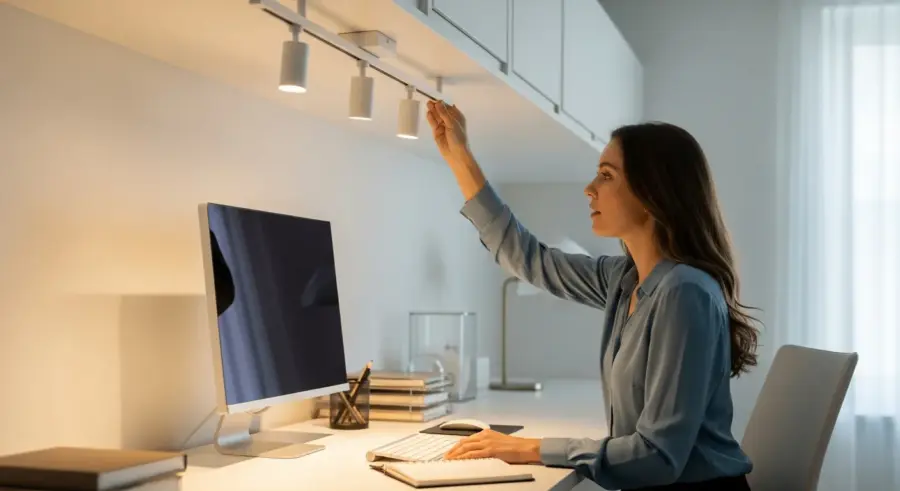
Creating a dedicated home office in a small space can be a challenge, but with the right lighting, it can be both functional and inviting. A proper track lighting setup can transform a cramped corner into an efficient and comfortable workspace.
Track lighting offers adjustable lighting, flexible lighting, and directional lighting, making it an ideal choice for small home offices. This guide will walk you through setting up track lighting to maximize your productivity and comfort.
From understanding the benefits of track lighting to choosing the right fixtures and installing them correctly, you’ll learn everything you need to create the perfect track lighting setup for your home office. Let’s get started on making your small space shine.
Benefits of Using Track Lighting
Track lighting offers numerous advantages for a home office, especially in smaller spaces. One of the primary benefits is its flexibility.
You can easily adjust the position of the light heads to focus light exactly where you need it. This is particularly useful for tasks that require focused illumination, such as reading documents or working on detailed projects.
Another significant advantage is its ability to adapt to different lighting needs throughout the day. During daylight hours, you might want to direct light away from your computer screen to reduce glare.
In the evening, you can adjust the track heads to provide more ambient lighting, creating a softer and more relaxed atmosphere. This adaptability makes track lighting a versatile solution for any home office environment.
Track lighting also helps to maximize space by eliminating the need for multiple lamps. Instead of cluttering your desk with task lights or floor lamps, a single track lighting system can provide all the necessary illumination.
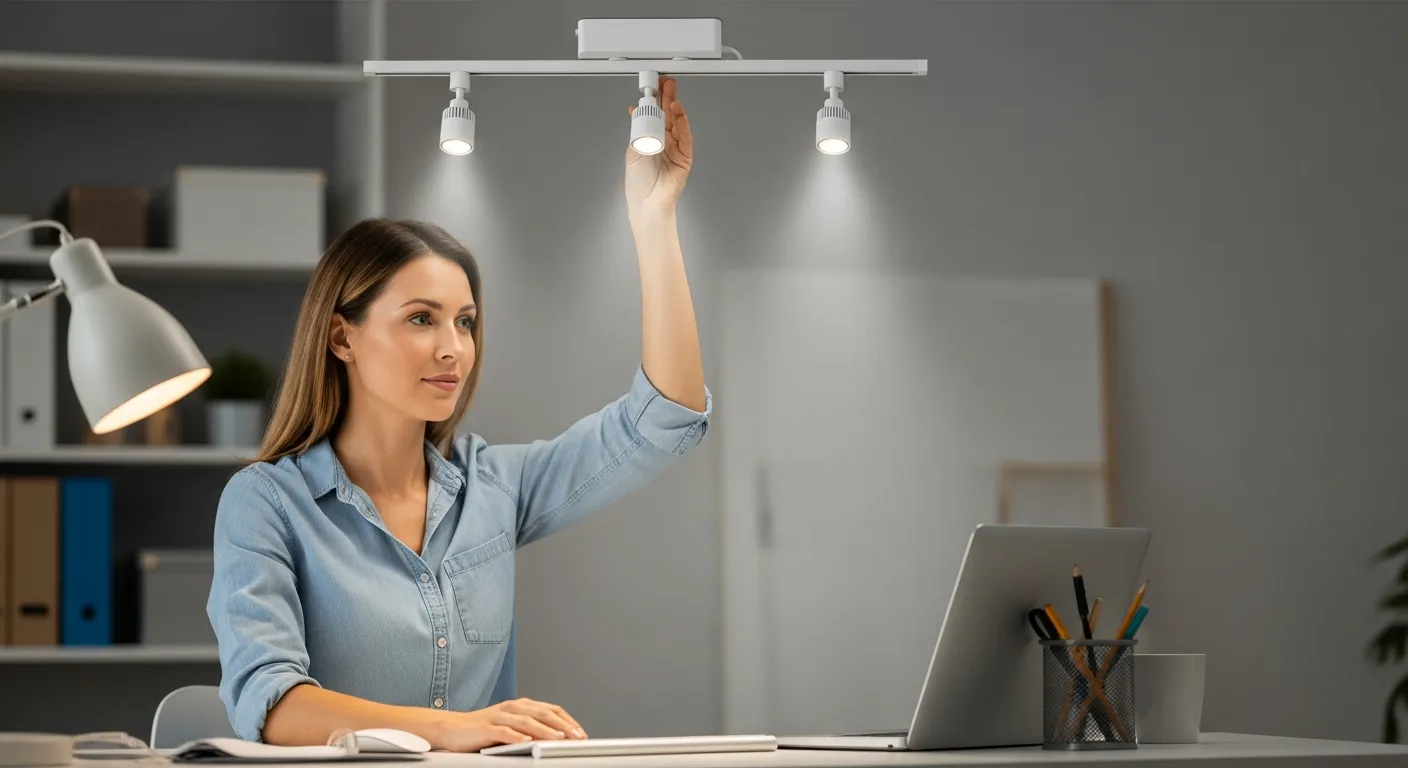
This is especially beneficial in small home offices where every square inch counts. By freeing up desk space, you’ll have more room to work and stay organized, leading to increased productivity.
Beyond flexibility and space-saving, track lighting can enhance the aesthetics of your home office. With a variety of styles and finishes available, you can choose a track lighting system that complements your decor.
From sleek and modern designs to more traditional styles, there’s a track lighting option to suit every taste. This allows you to create a workspace that is not only functional but also visually appealing.
Furthermore, track lighting can be easily customized to meet your specific needs. You can add or remove light heads as needed, and you can choose from a variety of bulb types to achieve the desired light intensity and color temperature.
This level of customization allows you to create a lighting system that is perfectly tailored to your work habits and preferences. Track lighting is also relatively easy to install, making it a great option for DIY enthusiasts.
With basic tools and some simple instructions, you can have your track lighting system up and running in no time. This can save you money on installation costs and give you the satisfaction of knowing that you did it yourself.
Finally, track lighting can increase the value of your home. A well-lit home office is an attractive feature for potential buyers, and it can make your home more appealing to a wider range of people.
By investing in track lighting, you’re not only improving your workspace but also adding value to your property. Consider the long-term benefits when making your decision.
Types of Track Lighting Systems
When it comes to track lighting, there are several types of systems to choose from, each with its own unique features and benefits. The most common types include line-voltage track lighting, low-voltage track lighting, and monorail track lighting.
Understanding the differences between these systems will help you select the best option for your home office. Line-voltage track lighting is the most traditional type, operating on standard household voltage (120V in North America).
It’s easy to install and compatible with a wide range of light fixtures and bulbs. However, it can be less energy-efficient compared to low-voltage systems, and the fixtures tend to be larger.
Low-voltage track lighting, on the other hand, operates on a lower voltage (typically 12V or 24V), requiring a transformer to convert the household voltage. This type of system is more energy-efficient and allows for smaller, more discreet fixtures.
Low-voltage systems often provide better control over light output and direction, making them ideal for task lighting. Monorail track lighting is a more contemporary option that uses a single, flexible rail to support the light fixtures.
This system offers a sleek and minimalist look, and the rail can be bent or shaped to fit the unique contours of your home office. Monorail systems are particularly well-suited for modern interiors and can be customized to create a variety of lighting effects.
Another type of track lighting gaining popularity is LED track lighting. These systems utilize LED bulbs, which are incredibly energy-efficient and have a long lifespan.
LED track lighting is available in both line-voltage and low-voltage options, offering flexibility in terms of installation and design. They also produce less heat compared to traditional incandescent or halogen bulbs.
When choosing between these different types of track lighting systems, consider your budget, your energy efficiency goals, and the overall aesthetic you’re trying to achieve. Line-voltage systems are generally the most affordable, but low-voltage and LED systems offer better energy savings in the long run.
Monorail systems can be more expensive due to their unique design and installation requirements. Think about the size of your home office and the amount of light you need when making your decision.
Also, consider the ease of installation and the availability of replacement parts. Some track lighting systems are easier to install than others, and some may require specialized tools or expertise.
Before making a purchase, research the different brands and models available to ensure you’re choosing a high-quality system that will last for years to come. Read reviews and compare prices to find the best deal.
Ultimately, the best type of track lighting system for your home office will depend on your individual needs and preferences. Take the time to carefully consider your options before making a decision.
Planning Your Track Lighting Layout
Proper planning is essential for a successful track lighting installation. Before you start, consider the size and shape of your home office, as well as the placement of your desk, shelves, and other furniture.
Think about the primary tasks you’ll be performing in the space and the type of lighting you’ll need for each. Here’s a table to help you plan your track lighting layout:
| Area | Task | Lighting Needs |
|---|---|---|
| Desk | Computer work, reading, writing | Bright, focused light |
| Shelves | Display, storage | Accent lighting |
| Walls | Artwork, decor | Directional lighting |
| General area | Walking, relaxing | Ambient lighting |
Consider the position of your computer screen to minimize glare. Position your track lighting so that the light heads can be directed away from the screen.
When planning your track lighting layout, think about the direction of natural light in your office. If you have windows, consider how the sunlight will affect the lighting in your space throughout the day.
You may want to position your track lighting to supplement the natural light or to provide additional illumination in areas that are not well-lit by the sun. Consider the color of your walls and furniture when planning your track lighting layout.
Darker colors absorb more light, so you may need to use brighter bulbs or more light heads to achieve the desired level of illumination. Lighter colors reflect light, so you may be able to use fewer light heads or dimmer bulbs.
Think about the height of your ceiling when planning your track lighting layout. If you have high ceilings, you may need to use longer track heads or pendant lights to bring the light closer to the work surface.
If you have low ceilings, you may need to use flush-mounted track heads to avoid creating a cluttered or cramped feeling. Consider using a dimmer switch to control the brightness of your track lighting.
This will allow you to adjust the lighting to suit your needs and preferences, and it can also help to save energy. Plan for future expansion when designing your track lighting layout.
You may want to leave some extra space on the track so that you can add more light heads later if needed. This will give you the flexibility to adapt your lighting to changing needs and preferences over time.
Sketch out your track lighting layout on paper or using a computer program before you start installing the system. This will help you visualize the finished product and make any necessary adjustments before you begin.
Take measurements of your home office and use them to create an accurate scale drawing of the space. This will help you determine the optimal placement of the track and light heads.
Installing Track Lighting
Installing track lighting is a straightforward process that can be done with basic tools and some DIY skills. The first step is to turn off the power at the circuit breaker.
This is crucial for safety, so double-check that the correct breaker is off before proceeding. Next, locate the junction box where you’ll be connecting the track lighting system.
Most track lighting systems are designed to be mounted directly to a standard junction box. Remove the existing light fixture, if there is one, and disconnect the wires.
Carefully connect the wires from the track lighting system to the wires in the junction box, using wire connectors to secure the connections. Typically, you’ll be connecting the black (hot) wire, the white (neutral) wire, and the green (ground) wire.
Once the wiring is complete, mount the track to the ceiling using screws and anchors. Make sure the track is securely attached to the ceiling to prevent it from falling.
Finally, attach the track heads to the track and insert the bulbs. Once everything is in place, turn the power back on at the circuit breaker and test the lighting system to make sure it’s working properly.
Before you begin the installation process, read the manufacturer’s instructions carefully. This will ensure that you understand the specific requirements for your track lighting system.
Gather all the necessary tools and materials before you start. This will save you time and frustration during the installation process. You’ll typically need a screwdriver, wire strippers, wire connectors, a drill, screws, and anchors.
When connecting the wires, make sure that the connections are tight and secure. Loose connections can cause electrical problems and even fires. Use wire connectors that are appropriate for the size and type of wire you’re using.
When mounting the track to the ceiling, use anchors that are appropriate for the type of ceiling you have. Drywall anchors are suitable for drywall ceilings, while concrete anchors are needed for concrete ceilings.
Make sure the track is level before you tighten the screws. A crooked track will look unprofessional and can also cause problems with the light heads. If you’re not comfortable working with electricity, hire a qualified electrician to install your track lighting system.
This will ensure that the installation is done safely and correctly. Always double-check your work before turning the power back on. Make sure that all the wires are properly connected and that the track is securely mounted to the ceiling.
Choosing the Right Track Heads and Bulbs
Selecting the right track heads and bulbs is crucial for achieving the desired lighting effect in your home office. Track heads come in various styles, including spotlights, floodlights, and pendant lights.
Spotlights provide a focused beam of light, ideal for highlighting specific areas or objects. Floodlights offer a wider beam, perfect for general illumination.
- Consider LED bulbs for energy efficiency
- Choose bulbs with the right color temperature
- Match the bulb type to the track head
- Consider smart bulbs for dimming
- Think about the beam angle
Consider smart bulbs, which let you control the brightness and color temperature of your lights remotely. With smart bulbs, you can easily adjust the lighting to suit your mood and the task at hand.
When choosing track heads, consider the style of your home office. If you have a modern office, you may want to choose sleek, minimalist track heads. If you have a more traditional office, you may want to choose more ornate track heads.
Consider the size of your home office when choosing track heads. If you have a small office, you may want to choose smaller track heads to avoid overwhelming the space. If you have a large office, you can use larger track heads to provide more light.
When choosing bulbs, consider the color temperature of the light. Color temperature is measured in Kelvin (K). Warm white light (2700K-3000K) is ideal for creating a cozy and relaxing atmosphere.
Cool white light (3500K-4100K) is ideal for task lighting and creating a more energetic atmosphere. Daylight light (5000K-6500K) is ideal for simulating natural daylight and is often used in offices and studios.
Consider the wattage of the bulbs when choosing bulbs. Wattage is a measure of how much energy the bulb uses. Choose bulbs with a wattage that is appropriate for the size of your home office and the amount of light you need.
Consider the lifespan of the bulbs when choosing bulbs. LED bulbs have a much longer lifespan than incandescent or halogen bulbs. This means that you will need to replace them less often, which can save you money in the long run.
Think about the beam spread of the bulbs. The beam spread is the angle of the light that is emitted from the bulb. Narrow beam spreads are ideal for spotlights, while wide beam spreads are ideal for floodlights.
Consider the dimming capabilities of the bulbs. Some bulbs are dimmable, while others are not. If you want to be able to adjust the brightness of your track lighting, choose dimmable bulbs and a compatible dimmer switch.
Adjusting and Maintaining Your Track Lighting
Once your track lighting is installed, take some time to adjust the track heads to achieve the perfect lighting arrangement. Experiment with different angles and positions to find the most effective way to illuminate your workspace.
Regular maintenance is also important to keep your track lighting system in good working condition. Periodically check the track heads and bulbs to ensure they are securely attached and functioning properly.
Dust the track and fixtures regularly to prevent buildup, which can reduce light output and potentially cause overheating. If a bulb burns out, replace it promptly with the correct type and wattage.
Also, inspect the wiring and connections periodically to ensure they are secure and free from damage. If you notice any signs of wear or corrosion, consult a qualified electrician to make the necessary repairs.
Proper maintenance will not only extend the life of your track lighting system but also ensure that it continues to provide optimal illumination for your home office. Adjusting the track heads seasonally can help adapt to changing light conditions.
In the winter, you might want to direct more light towards your desk to compensate for shorter days. During the summer, you can adjust the track heads to minimize glare and heat.
When adjusting the track heads, consider the tasks you’ll be performing in your home office. If you’re working on a computer, position the track heads to minimize glare on the screen.
If you’re reading or writing, position the track heads to provide bright, focused light on your work surface. If you’re using your home office for relaxation, position the track heads to create a softer, more ambient light.
When cleaning your track lighting system, use a soft cloth or duster. Avoid using harsh chemicals or abrasive cleaners, as these can damage the finish of the track heads and fixtures.
Check the track for any loose connections or damage. If you find any loose connections, tighten them with a screwdriver. If you find any damage, consult a qualified electrician to make the necessary repairs.
Replace burned-out bulbs as soon as possible. Burned-out bulbs can reduce the overall brightness of your track lighting system and can also be a fire hazard. When replacing bulbs, use the correct type and wattage.
Consider using a dimmer switch to control the brightness of your track lighting system. This will allow you to adjust the lighting to suit your needs and preferences, and it can also help to save energy.
Conclusion
Setting up track lighting in your small home office is a worthwhile investment that can significantly improve your workspace. Track lighting offers adjustable lighting, flexible lighting, and directional lighting, making it a versatile solution for any home office.
By following these guidelines, you can create a well-lit and comfortable environment that enhances your productivity and well-being. With a little planning and effort, you can transform your small space into a bright and efficient home office.
Remember to consider your specific needs and preferences when choosing and installing your track lighting system. There is no one-size-fits-all solution, so take the time to find the system that works best for you.
With the right track lighting, you can create a home office that is both functional and stylish. A well-lit home office can improve your mood, reduce eye strain, and increase your productivity.
Investing in track lighting is an investment in your health and well-being. So, take the time to plan and install your track lighting system carefully, and enjoy the benefits of a well-lit and comfortable home office.


