


Start with lifecycle thinking: think about sourcing, manufacture, transport, daily use, and end-of-life when you pick items for your home office. This approach helps you cut waste, lower emissions, and protect indoor air quality.
Your choices matter because a home office is high-contact—desks, chairs, flooring, shelves, and accessories see daily wear. Durable material choices reduce replacements and maintenance over time.
In this list-style guide, you won’t get trend picks alone. You’ll find options that balance performance and looks, from rapidly renewable plant-based options like bamboo to reclaimed wood and recycled steel. Each example ties back to carbon impact, waste reduction, moisture resistance, and upkeep.
Use the checklist I provide to score choices by carbon footprint, waste, moisture resistance, and maintenance. That way, you can apply the same frame to future projects and keep style and function in balance with environmental goals.
Why Your Home Office Materials Matter for Climate, Energy, and Air Quality
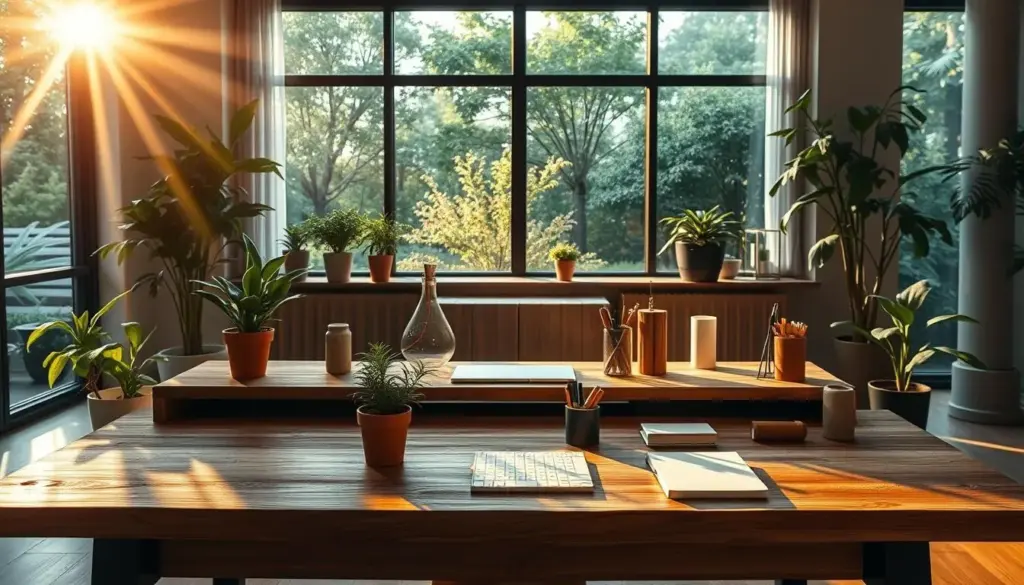
What you bring into your workspace carries a hidden climate cost. Some of that cost is “front-loaded” as embodied carbon: the pre-operation emissions tied to making and transporting desks, flooring, panels, and storage. That front-loaded carbon adds up fast.
Embodied carbon and emissions in what you buy
Embodied carbon accounts for about 10% of global energy-related CO2 emissions, so even one room contributes to a larger change. Concrete production alone makes roughly 8% of global CO2, which is why reducing concrete-heavy surfaces helps lower your footprint.
Energy consumption and waste in the manufacturing process
The manufacturing process uses energy at every stage: extraction, processing, transport, and packaging. That energy consumption creates emissions and waste, so “how it’s made” often matters more than appearance.
Indoor air quality: reducing VOCs and harmful emissions
Your home office is a space you spend hours in. Conventional paints, finishes, and adhesives can release VOCs that harm indoor air quality.
- Choose low-VOC or zero-VOC products to protect the air you breathe.
- Favor recycled-content options to cut demand for virgin resources and reduce waste.
Later sections will show labels to look for, what to ask suppliers, and how to balance performance with healthier indoor air.
Sustainable materials: What to Look for Before You Buy
A smart buy starts by asking where a product comes from and where it goes when you’re done with it.
Buyer’s checklist:
- Sourcing: Is the item renewable, recycled, or reclaimed? Check recycled content and certified wood labels.
- Lifespan: What is the expected durability and can it be repaired or refinished?
- End of life: Is the product recyclable or compostable to keep it out of landfills?
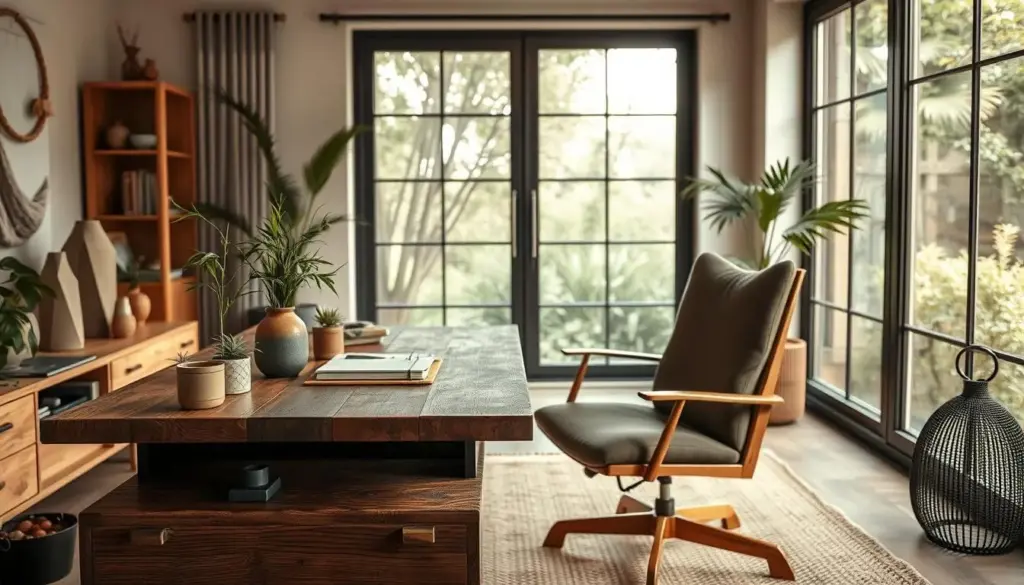
Renewable, recycled, and reclaimed resources divert pre- and post-consumer waste from landfills. Recycled steel and recycled glass, for example, often need less energy in production than new equivalents.
Durability and moisture resistance matter for flooring, desktops, and shelving. Choose options that resist water and wear to avoid early replacement and extra waste. Some natural products need sealing to keep them water-tolerant.
Quick shopping moves: Verify recycled plastic and recycled steel claims, ask for transparent production details, and prioritize low-VOC products that protect air in small rooms.
Rapidly Renewable, Plant-Based Materials That Fit a Modern Home Office
Rapidly renewable choices let you outfit a home office that feels fresh and performs well. These plant-based options reduce carbon tied to new builds and match common U.S. styles like clean-lined desks and floating shelves.
Bamboo for desktops, shelving, and décor
Bamboo grows fast—up to 1.5 inches (3.8 cm) a day—and an entire stem can be used, which cuts waste. Choose well-made laminations and stable construction to avoid warping in humid spots.
Look for finishes that protect the surface without harming indoor air quality. Quality bamboo pieces can replace some wood products while reducing embodied carbon.
Cork for flooring, wall tiles, and pinboards
Cork is harvested without cutting trees; the bark is stripped, and the tree lives on. Cork stores carbon in its cell structure and offers thermal and acoustic insulation underfoot.
Cork also performs well around occasional water exposure and resists abrasion and fire. Use cork for quieter floors, softer standing surfaces, or acoustic wall panels.
Sheep’s wool, hemp, and mycelium—comfort and things to watch
Sheep’s wool insulation regulates humidity by absorbing and releasing moisture and can help keep the air feeling fresher. It stabilizes temperatures for a more comfortable workspace.
Hemp-based products like hempcrete are worth watching—often described as carbon-negative for some building uses. Mycelium panels are emerging as biodegradable, mold- and fire-resistant options in construction trials.
- Where to start: pinboards, panels, and insulation upgrades are easiest to adopt now.
- Check performance: verify finish type, lamination quality, and installation details before you buy.
- Balance: consider embodied energy and local availability to make practical choices for your environment.
Recycled and Reclaimed Materials That Cut Waste and Support a Circular Economy
Circular choices for your home office mean less raw resource demand and fewer items sent to landfills. Choosing reused or reclaimed options keeps value in the system longer and lowers environmental impact compared to buying new.
Recycled steel for frames, shelving, and storage
Recycled steel is common in building construction and furniture. About 40% of steel production already uses recycled content, and reclaimed steel can match new steel in strength and durability. Use it for desk frames, file cabinets, and heavy shelving that needs long life and load capacity.
Recycled glass and low-energy surfaces
Recycled glass usually needs far less energy than new glass in production. You can find glass aggregate in countertops, decorative tiles, and desktop accents that keep quality while cutting energy consumption.
Recycled plastic and practical components
Recycled plastic products work well for cable trays, chair mats, panels, and small accessories. They divert plastic from landfills and offer moisture resistance. Check product transparency—resin type and manufacturing details matter for durability.
Reclaimed wood for warmth and reduced demand
Reclaimed wood adds character to desktops and shelving. It reduces demand for new wood, keeps usable timber out of waste streams, and can indirectly support biodiversity by easing harvest pressure.
- Tip: Ask suppliers for recycled content percentages and end-of-life options before you buy.
- Tip: Favor items that can be recycled again or repaired to extend service life.
Flooring, Surfaces, and Finishes That Balance Sustainability and Everyday Performance
Pick the surfaces you touch most carefully; they set how hard-wearing and healthy your office will be.
Terrazzo-style composites blend stone, recycled glass, and binders into a hard-wearing surface that lasts decades. Historically made from scrap, terrazzo can incorporate up to 80% marble waste as a pre-consumer recycled-content example. Use it for a durable floor, a rolling-chair-friendly surface, or a desktop that resists scratches better than softer options.
Concrete, precast options, and lifecycle wins
Concrete still shows up in composites and binders. Choose precast concrete to cut on-site waste and improve production efficiency. Some newer concrete mixes may reabsorb up to 25% of their embodied carbon over their lifetime, but remember concrete’s overall CO2 impact remains significant. Use it sparingly and where longevity offsets its environmental impact.
Low-VOC paints, finishes, and adhesives to protect indoor air
Low-VOC and zero-VOC products reduce off-gassing in a room you occupy for hours. Look for labels like GreenGuard or VOC limits on the technical data sheet. Match primers and adhesives to the surface to avoid failures that lead to extra waste.
- Choose recycled-content surfaces where possible (recycled glass is a good option).
- Prioritize products with clear production and manufacturing process details.
- Ventilate after installation and allow full cure before heavy use to lower lingering odors.
Conclusion
Small swaps in your workspace can deliver big benefits for durability, indoor air, and climate impact.
Prioritize sustainable materials that cut embodied carbon, reduce waste, and keep air healthy—without giving up everyday performance. Combine plant-based choices like bamboo and cork with recycled inputs such as recycled glass and reclaimed wood for balanced results.
Your home office is part of the built environment; pick building materials thoughtfully and you help steer construction toward cleaner production. Use low-VOC or zero-VOC finishes and adhesives to protect the air you breathe while working long hours.
Practical next step: make one high-impact swap now (for example, a bamboo desktop or cork flooring) and plan one future upgrade (a terrazzo-style or recycled-content surface). A simple budget move is switching to low-VOC paint; a durable upgrade is choosing a recycled-content countertop or terrazzo-style top.