
You can make a small room feel larger without remodeling. Start by editing your surfaces, then add clear, light-looking furniture so less visual clutter competes for attention.
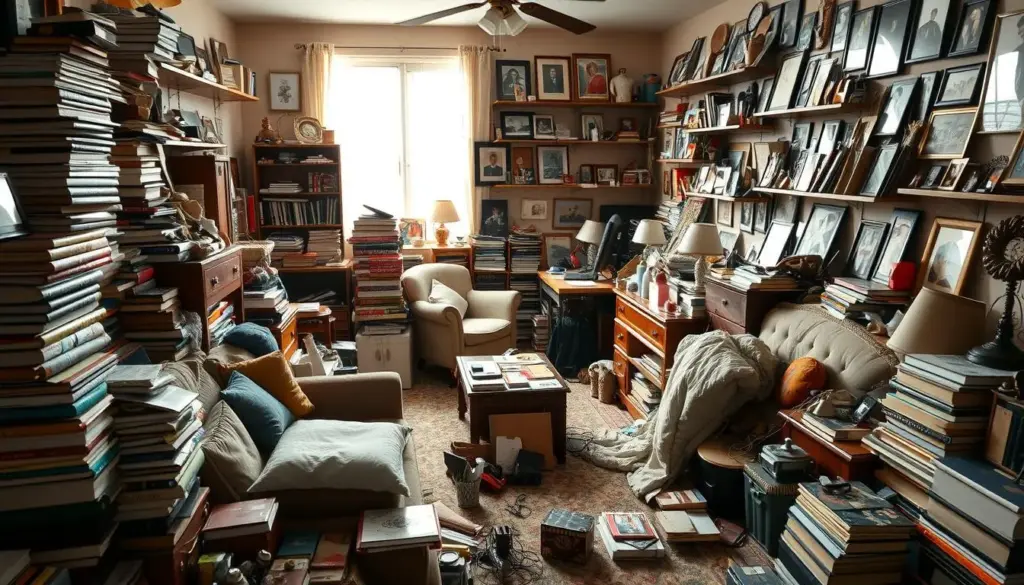
What is visual clutter? It is what you see that reads as messy: papers, random items, and landing zones that fill a surface. That quick build-up of clutter raises anxiety and makes your home harder to clean.
This guide asks you to “edit first, buy last.” Remove everything from one area, clean it, keep only essentials, and give the rest a home. In one afternoon you can make visible progress and then expand across your home over time.
Negative space matters. Leaving breathing room around objects makes each piece count and helps your room feel calmer and more functional for daily life. Use simple rules to keep stuff from returning.
Why visual clutter happens in small rooms and why it feels stressful
High-traffic surfaces in tight spaces turn into constant catch-alls that wear on your nerves. When you move from the door to the couch to the kitchen, you touch the same few spots. Those surfaces become your default drop zones.
Common magnets include:
- Coffee table and living-room surfaces that collect mail, mugs, and gadgets.
- Desks where work items pile because you use them every day.
- Entry areas and the door zone where keys, shoes, and bags end up.
- Kitchen counters where grocery bags, notes, and receipts land.
Items that sit out long enough turn into “invisible” mess. Your mind starts to ignore these piles, but they still signal unfinished tasks. That constant attention tug adds stress and eats your focus.
What you gain when you clear these spots: faster cleaning, fewer lost things, calmer rooms, and more mental space to do what matters in your life at home.
Visual clutter reduction basics: what to edit before you change furniture
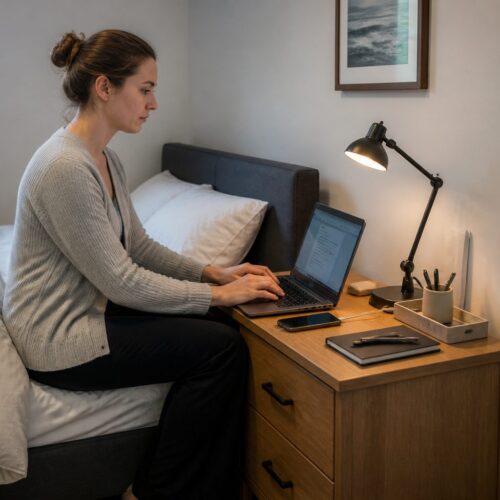
Pick a single spot—like your desk or nightstand—and make it your reset project. Starting with one surface keeps the task simple and gives you a quick win. This first step helps you reduce visual clutter fast and prevents the whole home from feeling overwhelming.
Remove everything from that surface (yes, everything). Wipe it clean so you can see the true usable space. Dust and sticky rings make a surface feel busy even when it looks tidy.
Decide what earns a spot back
Ask: “What is needed here to make this space work?” Put only essentials back. Keep items that support daily use and move the rest to a drawer or a temporary bin.
Create breathing room on purpose
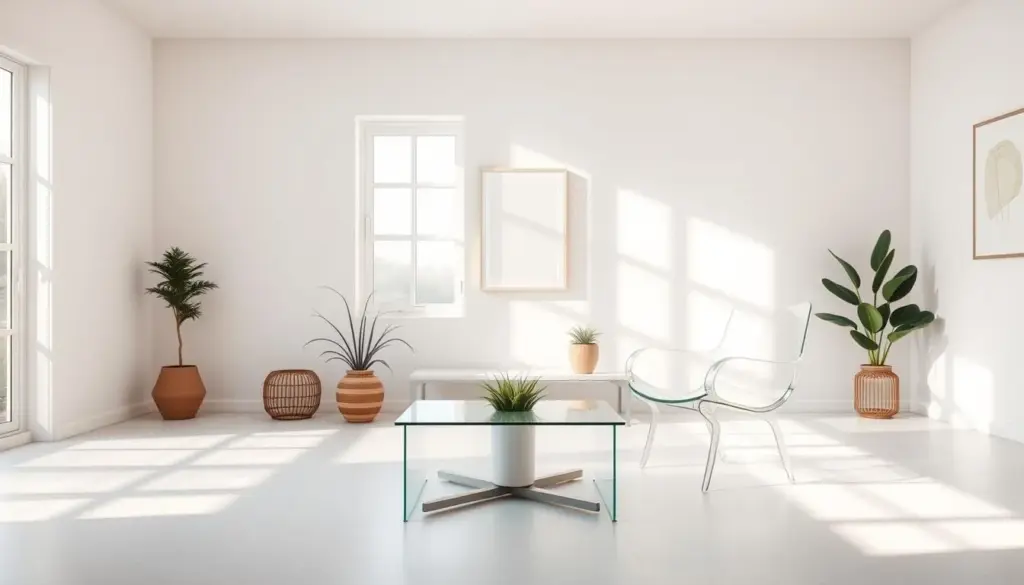
Negative space matters: empty areas are not wasted. Leave clear patches so the room reads as calmer and larger. A simple visual check after you finish will show how your stress drops when fewer things compete for attention.
- Step 1: Choose one surface.
- Step 2: Remove all items and clean.
- Step 3: Return only essentials and set rules to keep it from refilling.
Choosing transparent furniture that makes a room feel bigger
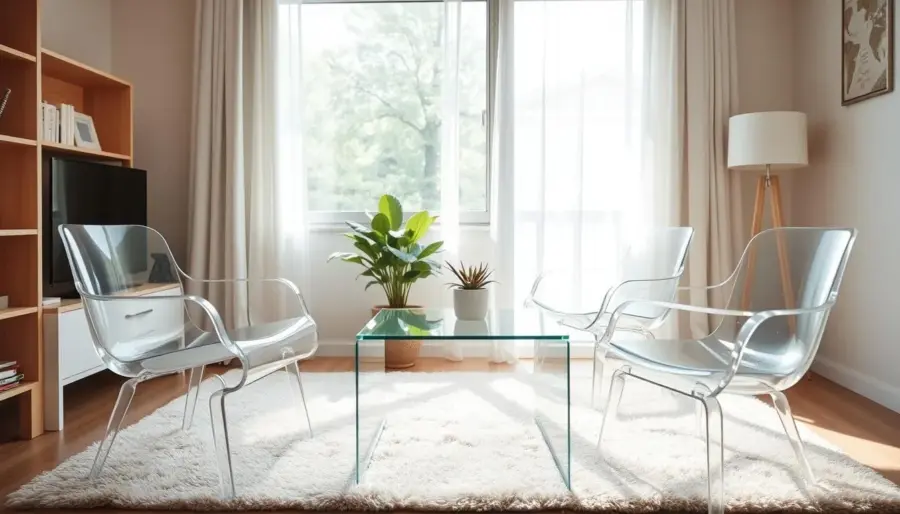
Clear furniture keeps sightlines open, so a small room reads as larger without changing the layout. That effect lowers the visual weight of pieces and helps your living area or entry feel less boxed in.
When acrylic or glass works best for tables, desks, and consoles
Use acrylic or glass for a small coffee table, a slim console by the door, or a compact desk where a bulkier piece would block flow. These materials make the floor and surrounding items visible, which helps reduce visual clutter.
How to pick the right scale so clear furniture doesn’t still feel bulky
Measure walking paths and leave comfortable clearance around each piece. Choose a low-profile table or a narrower console so the clear surface doesn’t become a large object in the room.
Where transparent pieces help most in tight spaces like living rooms and entryways
Place them where sightlines matter: between seating groups, beside the sofa, or along the entry wall. Fewer hard edges interrupt movement and your space will feel calmer.
What to avoid if fingerprints, smudges, or visual noise will add stress
If smudges bother you, pick frosted or tempered glass, or a coated acrylic that hides marks. Look for rounded edges, stable bases, and minimal hardware so the piece stays safe, sturdy, and simple. Keep items on top intentional to help the furniture do its job of reducing visual noise and stress.
Minimalist furniture principles that reduce visual clutter without feeling empty
Choose furniture that breathes — pieces with simple shapes and fewer visual breaks make a small room feel calmer. A well-chosen layout gives your home purpose and makes daily tasks easier.
Favor clean lines and fewer legs, edges, and details
Clean silhouettes reduce the number of things your eye must track. Fewer legs and edges mean less shadow and fewer interruptions across the floor. That helps your space look orderly without feeling sparse.
Use multipurpose pieces to hide everyday stuff
Pick storage ottomans, benches, or coffee tables with hidden compartments. These items let you stash mail, chargers, and small items quickly. That keeps surfaces clear and helps you reduce visual clutter in moments.
Cut extra furniture that isn’t serving a real purpose
Evaluate each piece by function: does it solve a daily problem in your home? If not, removing or replacing it will free floor space and improve flow. Less furniture also means fewer surfaces to tidy, so keeping order becomes an easier habit.
- Define minimalist furniture as simple shapes, not empty rooms.
- Prioritize pieces that hide stuff and support how you use the place.
- Remove extras that create more clutter than usefulness.
How to style surfaces so they stay visually clean day to day
Set practical limits on flat surfaces so the room looks reset in minutes, not hours. A few clear rules make daily upkeep simple and keep your home feeling calm.
Limit what lives on key surfaces. On a coffee table or nightstand keep just a lamp, a coaster, and one small plant or tray. For a dining table, allow only a centerpiece and one functional item so the surface stays ready for use.
Use odd groupings and height variation
Create small vignettes of three items with high, medium, and low heights. The “odd makes even” rule keeps decor interesting without many pieces.
Choose fewer, larger pieces over many knick‑knacks
Swap several tiny items for one or two statement objects. Fewer things are easier to dust and move, and they help the space read as intentional.
Control words, textiles, and books
Limit word signs—your brain reads them and they pull attention. Keep throw pillows and blankets folded in a basket, and give books a single home so they don’t pile on every surface.
- Set a surface limit for coffee table, nightstand, and dining table.
- Allow essentials only; put other items away each evening.
- Aim for a quick reset that takes minutes, not an hour.
Storage that hides clutter fast in a small home
Closed cabinets often work best when you prefer calm over display. Doors hide mixed shapes, labels, and packaging so your room reads tidy at a glance.
Closed cabinets vs open shelving
Open shelves can look curated, but they also keep everything on view. If you are sensitive to mess, that view can feel like constant busy-ness.
Closed cabinets remove that pressure. They let you store everyday things out of sight so surfaces stay simple and peaceful.
Bins, boxes, trays, and baskets that contain items
Containment makes things intentional. Use trays for remotes, a drawer for chargers, baskets for blankets, and boxes in a closet for seasonal gear.
- Trays: remotes, keys, and small electronics.
- Drawer: a single place for chargers and cables.
- Closet boxes: seasonal shoes and accessories.
Declutter first, buy organizers second
Do a quick audit: if a drawer or closet is overstuffed, edit before you buy. Buying more boxes only lets you keep extra things.
When you pair editing with smart storage, you reduce visual clutter and keep your minimalist furniture looking light instead of becoming a catch-all.
Fix the biggest visual distractions: cords, papers, and “drop zones”
The fastest way a tidy room looks busy again is through cords, stray mail, and an unmanaged entry spot. These three troublemakers make a small home feel messy even when furniture is minimal.
Hide cords and wires around TVs, desks, and charging spots
Keep cords out of sight. Route cables behind furniture, tape them along baseboards, or run cord covers where they cross an open wall.
For charging areas, place power strips inside a ventilated basket or a cable box so cords stay contained but safe. That simple step cuts visual distractions and makes surfaces easier to clean.
Create one paper home for mail, bills, and documents
Give mail a single place: a tray, drawer, or basket. When papers arrive, sort immediately into three piles—recycle/junk, action, file.
File what you keep and set a weekly check so things don’t accumulate. This small habit will stop papers from migrating across counters and tables and help reduce visual mess.
Set up an entryway system for shoes, keys, and bags near the door
Match your drop zone to how you live. Install hooks for bags, a shallow tray for keys and loose items, and a low bench or rack for shoes to prevent piles at the door.
A tidy entry saves time. With a clear place for bags, shoes, and keys you’ll lose fewer things and enjoy a calmer environment when you come home.
- Identify cords, paper, and drop zones as the fastest causes of renewed clutter.
- Contain cords, create one paper home, and build a real entry system to reduce visual distractions.
- These fixes are high-impact ways reduce visual mess without buying new furniture.
Keeping your space clutter-free with simple rules and routines
Simple routines are the backbone of a home that stays tidy with minimal effort. Set a few clear rules and everyone who lives with you can follow them.
Give every item a home. Decide where things go and ask people to put away items when they finish. Temporary piles become permanent clutter unless you name a spot for each item.
Build a quick reset that fits your time
Try a 10–15 minute nightly tidy: put away loose items, clear key surfaces, and run a fast sweep of the main rooms. This small step keeps order so you don’t need long cleaning sessions later.
When a deep declutter is the next step
If the same hotspot refills, the real problem may be a jammed drawer or closet. Pick one drawer or category, remove everything, clean it, keep essentials, and relocate or discard the rest.
- Set the core rule: every item has a home.
- Tell the people in your house the plan so it works without daily reminders.
- Use laundry as an example: contain it, run regular loads, and stop clothes from spreading around home.
The payoff: fewer visible reminders of undone tasks, more order, and a calmer mind each time you look around home.
Conclusion
A single, focused edit can change how every room in your house reads at a glance.
Start by editing first, then choose clear, minimalist furniture to keep sightlines open. That combo helps reduce visual clutter and gives you a calmer home with less stress and fewer lost items.
Repeat these steps: pick one surface, remove everything, clean, return only essentials, give the rest a place, and set simple rules to keep order. Limit decor, favor a few larger pieces, and keep books and soft stuff contained so surfaces stay easy to style.
Handle the biggest distractions first—cords, papers, and drop zones—then use this quick checklist this week: choose one surface, clear it, add a tray or bin, and run a nightly reset. Consistency beats perfection; the goal is a more usable space and a calmer living environment.