
A comfortable and functional home office is essential, especially when space is at a premium. An often-overlooked component of an ergonomic workspace is the humble footrest. But finding the right ergonomic footrest for small desk setups can truly transform your work experience.
It’s not just about elevating your feet; it’s about promoting better posture, reducing strain, and enhancing overall comfort. This guide will help you choose the perfect desk footrest to maximize your comfort and productivity.
We’ll cover everything from the ergonomic benefits of using a footrest to the key features to look for when buying one. You’ll also learn about different types of footrests and how to adjust them for optimal comfort.
Why Use a Footrest for Ergonomic Benefits?
The primary reason to invest in an ergonomic footrest for small desk setups is to improve your posture. When your feet dangle or don’t have proper support, it can lead to poor spinal alignment. This misalignment can cause discomfort and even long-term health issues.
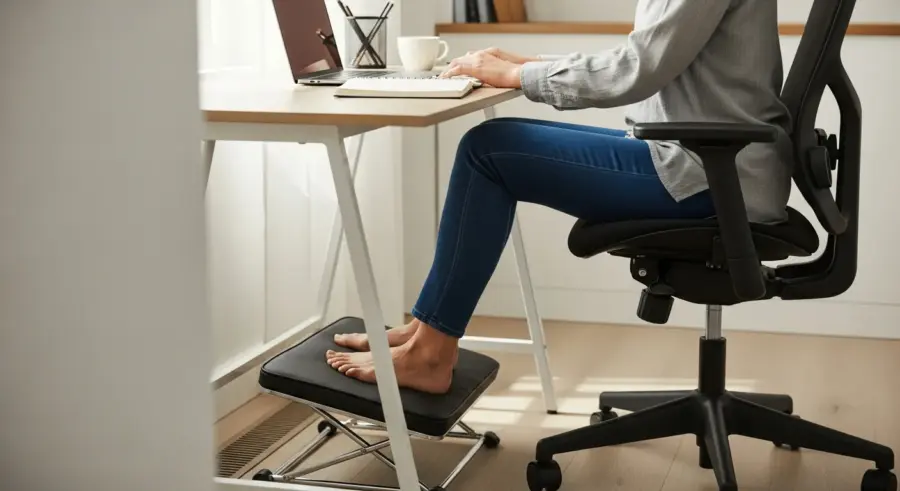
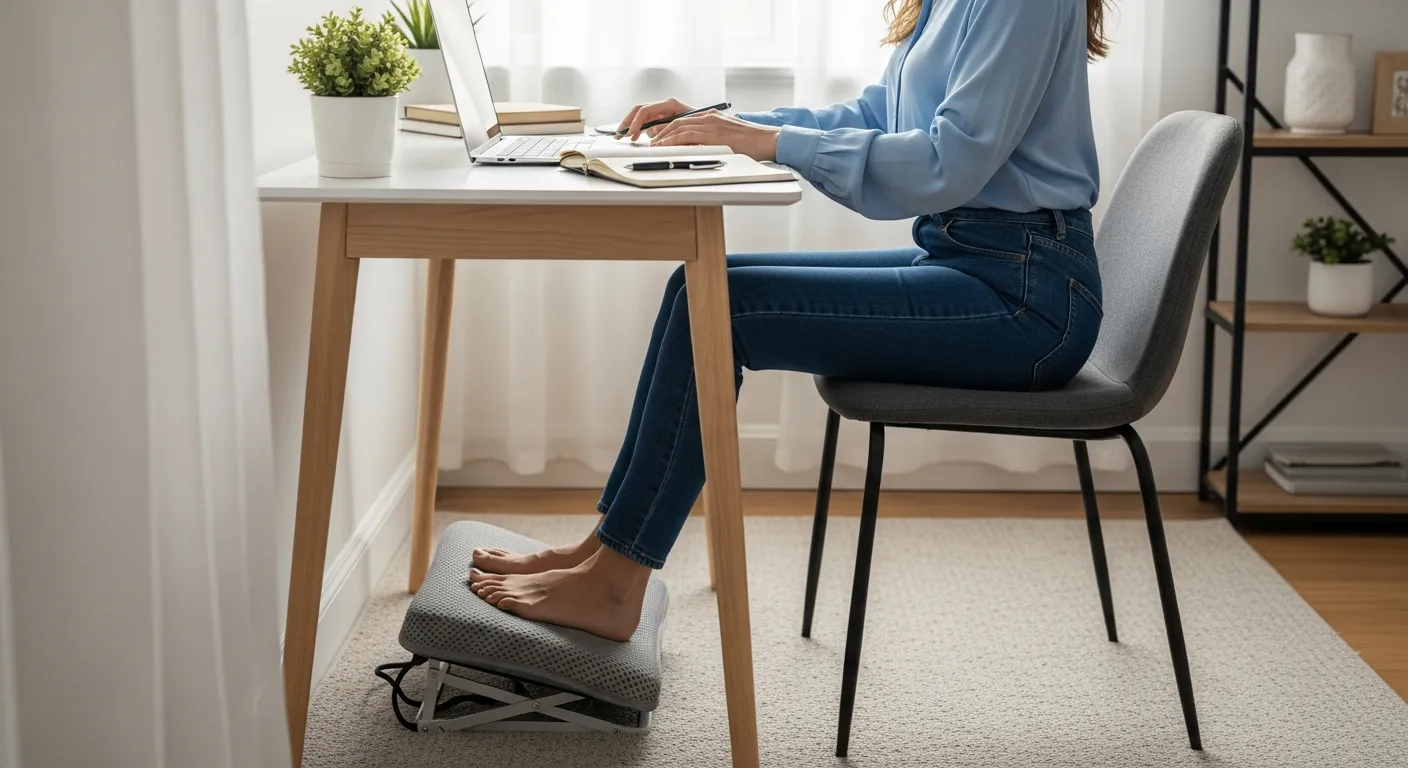
A desk footrest helps maintain the natural curvature of your spine. It does this by ensuring your knees are at a 90-degree angle and your feet are properly supported. This simple adjustment can make a significant difference in reducing back pain and promoting better overall posture.
Another key benefit of using a footrest is improved circulation. When your feet are elevated, it reduces pressure on your legs and ankles. This promotes better blood flow, which can alleviate feelings of fatigue and numbness.
Proper circulation is especially important if you spend long hours sitting at your desk. A footrest can help prevent the pooling of blood in your lower extremities, reducing the risk of varicose veins and other circulation-related issues.
Beyond posture and circulation, a footrest can also reduce muscle strain. By providing a stable and supportive surface for your feet, it helps distribute your weight more evenly. This can alleviate pressure on your lower back, hips, and legs.
Many people find that using a footrest can also improve their focus and concentration. When you’re comfortable and properly supported, you’re less likely to be distracted by aches and pains. This allows you to stay more engaged and productive throughout the workday.
Furthermore, consider that long-term neglect of proper ergonomics can lead to more serious health problems. Investing in a footrest and other ergonomic accessories is a proactive step towards preventing these issues. It’s a small investment that can pay off significantly in terms of your long-term health and well-being.
Don’t underestimate the power of small changes in your workspace. A footrest is a simple addition that can make a world of difference. Take the time to find the right one for your needs and experience the benefits for yourself.
Key Features to Look for in a Footrest
When choosing a desk footrest, adjustability is a crucial factor to consider. The ability to adjust the height and angle of the footrest ensures it can be tailored to your specific needs and desk setup. This customization is essential for achieving optimal ergonomic support.
Look for footrests that offer a wide range of height adjustments to accommodate different leg lengths and desk heights. Angle adjustability allows you to find the most comfortable position for your feet and ankles. This prevents strain and discomfort.
The surface texture of the footrest also plays a significant role in comfort. Some footrests have a smooth surface, while others feature a textured or massage-like surface. A textured surface can provide added grip and prevent your feet from slipping off the footrest.
Massage-like surfaces can also stimulate blood flow and provide a gentle massage to your feet. Ultimately, the best surface texture depends on your personal preference and comfort level. It’s worth trying out different options to see what feels best for you.
Another important feature to consider is the stability of the footrest. A stable footrest will stay in place and won’t slide around while you’re using it. Look for footrests with a non-slip base or rubber feet to ensure they stay firmly planted on the floor.
The size of the footrest is also a factor to consider, especially if you have limited space under your desk. Choose a footrest that is large enough to comfortably accommodate both of your feet. However, it shouldn’t be so large that it takes up too much legroom or interferes with your chair’s movement.
Durability is another key feature to look for in a footrest. Choose a footrest made from high-quality materials that can withstand daily use. Look for footrests with a sturdy construction and a weight capacity that is appropriate for your needs.
Finally, consider the ease of cleaning and maintenance. A footrest that is easy to clean will help keep your workspace hygienic and free from germs. Look for footrests with a wipeable surface or removable covers that can be washed.
Types of Footrests: Adjustable, Rocking, and Heated
Adjustable footrests are the most common type, offering customizable height and angle settings. These are a great option for those who need precise control over their ergonomic setup. They accommodate various body types and desk heights.
Rocking footrests allow for gentle movement, promoting circulation and reducing stiffness. The rocking motion can also help keep you engaged and focused throughout the day. This is especially useful for people who get restless while sitting.
| Type of Footrest | Key Feature | Best For |
|---|---|---|
| Adjustable | Customizable height and angle | Users needing precise ergonomic control |
| Rocking | Gentle rocking motion | Promoting circulation and reducing stiffness |
| Heated | Provides warmth | Cold feet or chilly environments |
| Static | Fixed height and angle | Simple, budget-friendly support |
Heated footrests provide warmth and comfort, which can be particularly beneficial in colder environments. The added warmth can help relax your muscles and improve blood flow. This makes them a cozy addition to any small space home office setup.
There are also static footrests, which offer a fixed height and angle. These are a more basic and affordable option, but they may not provide the same level of customization as adjustable footrests. Static footrests can still be a good choice if you have a standard desk height and don’t need a lot of adjustability.
Another type of footrest is the inflatable footrest. These footrests are lightweight and portable, making them a good option for travel or for use in different locations. Inflatable footrests can be easily inflated and deflated, allowing you to adjust the height and firmness to your liking.
Consider footrests with massage features. Some footrests come with built-in massage rollers or vibrating elements. These features can help stimulate blood flow and provide a relaxing massage to your feet while you work.
Ultimately, the best type of footrest for you will depend on your individual needs and preferences. Consider your budget, the amount of adjustability you need, and any special features that you desire. Researching different options and reading reviews can help you make an informed decision.
Material and Durability Considerations
The material of your desk footrest significantly impacts its durability and comfort. Plastic footrests are generally lightweight and affordable, making them a budget-friendly option. However, they may not be as durable as other materials and can sometimes feel less comfortable.
Metal footrests offer excellent durability and stability, ensuring they can withstand daily use without wearing down. They often come with a non-slip surface to prevent your feet from sliding. However, metal footrests can sometimes be more expensive than plastic options.
Foam footrests, especially those made from memory foam, provide superior comfort and support. They conform to the shape of your feet, reducing pressure points and promoting better circulation. Foam footrests are a great choice for those who prioritize comfort and cushioning.
Wood footrests offer a blend of durability and aesthetic appeal, making them a stylish addition to your workspace. They can be more expensive than other materials but often provide a premium look and feel. Wood footrests can also be quite sturdy and long-lasting.
Beyond the primary material, consider the surface covering of the footrest. Some footrests have a fabric covering, which can provide added comfort and warmth. Fabric coverings can also be easily removed and washed, making them a hygienic option.
Rubber is another common material used for footrest surfaces. Rubber provides excellent grip and prevents your feet from slipping. Rubber footrests are also easy to clean and maintain, making them a practical choice for busy workspaces.
When evaluating durability, pay attention to the construction of the footrest. Look for footrests with reinforced seams and sturdy bases. This will ensure that the footrest can withstand daily use without breaking or wearing down.
Consider the weight capacity of the footrest as well. Ensure that the footrest can safely support your weight without collapsing or buckling. A footrest with a higher weight capacity will generally be more durable and long-lasting.
Size and Space Efficiency
When choosing an ergonomic footrest for small desk setups, size and space efficiency are important considerations. Opt for a compact footrest that fits comfortably under your desk without taking up too much legroom. This is especially important in small spaces where every inch counts.
Consider the dimensions of the footrest and ensure it doesn’t interfere with your chair’s movement or your ability to stretch your legs. A smaller footrest can provide the necessary support without making your workspace feel cramped. Proper planning is key to maximizing your comfort and efficiency.
Folding footrests are an excellent option for maximizing space efficiency. These footrests can be easily folded and stored away when not in use, freeing up valuable legroom. This feature is particularly useful if you occasionally need to use the space under your desk for other purposes.
Another space-saving option is a footrest that doubles as a storage compartment. These footrests provide a place to rest your feet while also offering storage space for small items like cables, pens, or notebooks. This dual functionality can help keep your workspace organized and clutter-free.
Consider the height of the footrest in relation to your desk height and chair height. You want to ensure that the footrest allows you to maintain a comfortable and ergonomic posture. Measure the space under your desk to ensure that the footrest will fit properly.
Think about the shape of the footrest as well. Some footrests are rectangular, while others are curved or contoured. A curved or contoured footrest may provide better support for your feet and ankles. Choose a shape that feels comfortable and natural for you.
If you have a very small workspace, you might even consider a portable footrest that you can easily move around. These footrests are often lightweight and compact, making them easy to transport and store. This is a great option if you work in different locations or need to share your workspace with others.
Don’t forget to consider the overall aesthetic of your workspace. Choose a footrest that complements your existing furniture and decor. A stylish and well-designed footrest can enhance the overall look and feel of your workspace.
Adjusting Your Footrest for Optimal Comfort
To get the most out of your desk footrest, proper adjustment is essential. Start by adjusting the height of your chair so that your knees are at a 90-degree angle when your feet are resting on the footrest. This ensures proper spinal alignment and reduces strain on your lower back.
Next, adjust the angle of the footrest to find the most comfortable position for your feet and ankles. Experiment with different angles to see what feels best for you. A slight incline is often recommended to promote better circulation and reduce pressure on your legs.
- Adjust chair height first
- Ensure 90-degree knee angle
- Experiment with footrest angle
- Keep feet flat or slightly inclined
- Adjust throughout the day as needed
Pay attention to how your body feels after making adjustments. If you experience any discomfort or strain, readjust the footrest until you find a more comfortable position. It may take some trial and error to find the perfect settings for your body and desk setup.
Consider the position of your monitor and keyboard as well. Your monitor should be at eye level to prevent neck strain. Your keyboard should be positioned so that your wrists are straight and your elbows are at a 90-degree angle.
Make sure your feet are fully supported by the footrest. Your heels should be resting comfortably on the surface. If your feet are dangling or only partially supported, you may need to adjust the height or angle of the footrest.
Don’t be afraid to experiment with different footrest positions throughout the day. Your needs may change depending on the task you’re performing or how long you’ve been sitting. Adjust the footrest as needed to maintain optimal comfort and support.
Listen to your body and pay attention to any signs of discomfort or strain. If you experience pain in your back, legs, or feet, stop what you’re doing and readjust your ergonomic setup. A properly adjusted footrest can help prevent these issues, but it’s important to be proactive and address any problems as they arise.
Integrating a Footrest into Your Ergonomic Setup
A footrest is just one component of a comprehensive ergonomic setup. To maximize your comfort and productivity, it’s important to consider other ergonomic accessories as well. An ergonomic chair is essential for providing proper support for your back and spine.
Look for chairs with adjustable height, lumbar support, and armrests to ensure a customized fit. A monitor stand can help position your screen at eye level, reducing strain on your neck and shoulders. This is especially important if you spend long hours looking at a screen.
An ergonomic keyboard and mouse can also make a significant difference in your comfort and productivity. These accessories are designed to promote a more natural hand and wrist position, reducing the risk of carpal tunnel syndrome and other repetitive strain injuries. Consider a split keyboard to further reduce strain.
Proper lighting is also crucial for an ergonomic workspace. Ensure your desk is well-lit to reduce eye strain and headaches. Natural light is ideal, but if that’s not possible, invest in a good quality desk lamp with adjustable brightness and color temperature.
When setting up your ergonomic workspace, start with your chair. Adjust the height of your chair so that your feet are flat on the floor or resting comfortably on your footrest. Your knees should be at a 90-degree angle, and your thighs should be parallel to the floor.
Next, position your monitor so that the top of the screen is at or slightly below eye level. This will help prevent neck strain and headaches. If you wear glasses, you may need to adjust the height of your monitor to ensure that you can see the screen clearly without tilting your head.
Place your keyboard and mouse close to your body, so that your elbows are at a 90-degree angle and your wrists are straight. Avoid reaching or stretching for your keyboard or mouse, as this can lead to muscle strain and fatigue.
Finally, make sure your workspace is organized and clutter-free. A cluttered workspace can be distracting and can make it difficult to maintain a comfortable and ergonomic posture. Take a few minutes each day to tidy up your desk and remove any unnecessary items.
The Importance of Movement and Breaks
Even with the best ergonomic setup, it’s important to take regular breaks and move around. Sitting for prolonged periods can lead to stiffness, fatigue, and other health issues. Set a timer to remind yourself to stand up, stretch, and walk around every 30 to 60 minutes.
Simple exercises like stretching your arms, legs, and neck can help improve circulation and reduce muscle tension. Consider incorporating a standing desk into your workspace to alternate between sitting and standing throughout the day. This can help reduce the negative effects of prolonged sitting.
Using a stability ball as a chair can also promote movement and engage your core muscles. However, it’s important to use a stability ball properly to avoid injury. Ensure the ball is properly inflated and that your feet are flat on the floor when sitting on it.
Microbreaks, short breaks lasting just a few minutes, can also be beneficial. Use these breaks to look away from your screen, focus on a distant object, or simply close your eyes and relax. These small breaks can help reduce eye strain and improve focus.
During your breaks, try to incorporate some light physical activity. Walk around your office, do some jumping jacks, or climb a flight of stairs. Even a few minutes of exercise can help improve your circulation and boost your energy levels.
Consider using a treadmill desk or a bike desk to stay active while you work. These desks allow you to walk or cycle while you’re typing or attending meetings. This can be a great way to burn calories and improve your overall health.
Make sure to stay hydrated throughout the day. Dehydration can lead to fatigue, headaches, and other health problems. Keep a water bottle on your desk and sip on it regularly. Aim to drink at least eight glasses of water per day.
Pay attention to your posture throughout the day. Make sure you’re sitting up straight with your shoulders relaxed and your head aligned with your spine. Avoid slouching or hunching over, as this can lead to back pain and other problems.
Conclusion
Investing in an ergonomic footrest for small desk setups is a simple yet effective way to improve your posture, circulation, and overall comfort. By choosing the right footrest and integrating it into a comprehensive ergonomic setup, you can create a workspace that supports your health and productivity.
Remember to consider factors like adjustability, material, size, and space efficiency when making your selection. Prioritizing movement and breaks throughout the day will further enhance the benefits of your ergonomic setup. A comfortable and supportive workspace is within reach, even in the smallest of spaces.
Ergonomics is an ongoing process, not a one-time fix. Regularly evaluate your workspace and make adjustments as needed. Your body will thank you for it.
By taking the time to create an ergonomic workspace, you can significantly improve your health, productivity, and overall well-being. Don’t underestimate the power of small changes in your work environment.