

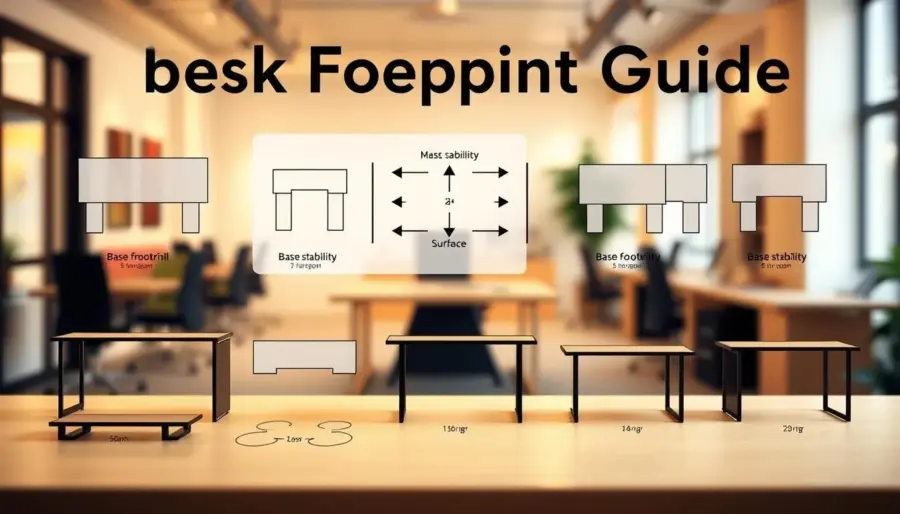
Choosing lamp bases starts with understanding the desk footprint: the contact area where a base meets your surface and how much usable desk space it claims. The footprint balances two needs: stability to prevent tipping and surface area for your laptop, notebook, or monitor stand.
This short guide frames the core trade-off you face. Think of base stability as safety and steady light. Think of surface area as real estate for work tools. Both matter for a comfortable, safe setup in your home study or office.
Expect practical rules, not vague style tips. You’ll learn clear proportion guidelines—platform-to-shade and height-to-shade—plus material and weight tips. These points affect wobble, reach, and how natural the light feels when you work.
By the end, you’ll have one simple way to choose right the first time: match desk size, lamp height, shade diameter, and top-heaviness to your task, focal, or decorative needs. The article will pair those rules with real-world desk scenarios so your choice looks intentional and stays put.
Why Your Desk Lamp Base Footprint Matters for Stability, Safety, and Lighting
How a lamp meets the surface beneath it shapes safety, reach, and how the light falls on your work.
A well-sized lamp base keeps the fixture steady when you type, plug in cables, or shift gear. Small bumps and tight corners make unstable bases wobble or tip, especially in compact spaces.
When a lamp falls, it can crack a shade, scratch wood, or hit a monitor. That means the right base protects both your gear and your desk finish.
The footprint also affects how consistent your lighting is. A base that slides or rotates forces constant readjustment. That ruins focused work and wastes time.
- Stability: prevents tipping from knocks or cable pulls.
- Usability: keeps the light pool steady where you need it.
- Function: influences reach and how the desk feels usable.
- Style: the base anchors the design so the piece looks balanced in place.
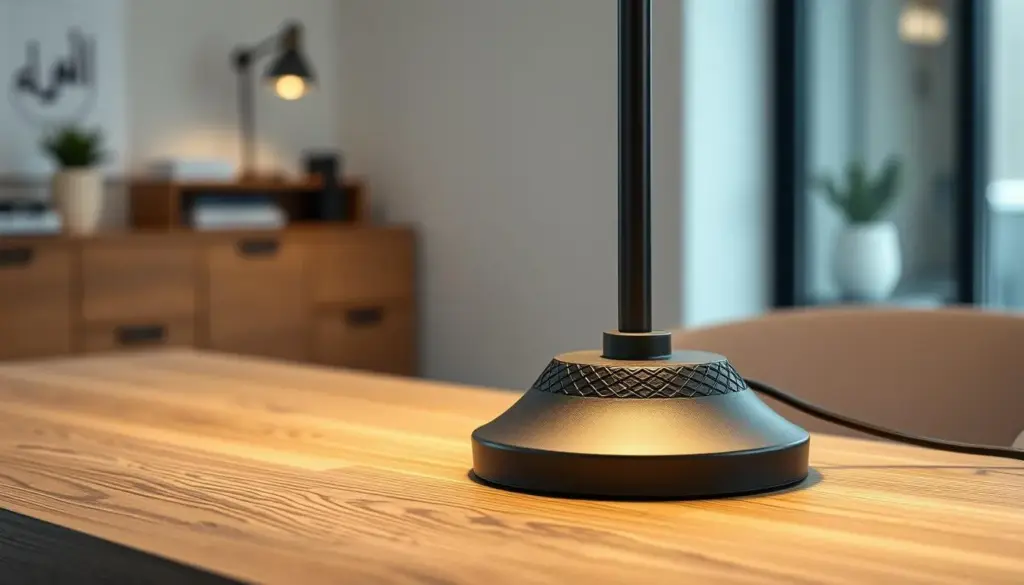
Your best choice depends on shade size, center of gravity, and how you use your desk each day. The next section explains those trade-offs in detail.
Choosing lamp bases for a desk setup: stability vs. surface area trade-offs
Start by weighing how much desk real estate you can spare against how steady the fixture must stay.
When to favor a wider base: pick a broader footprint if you bump the desk often, have pets or kids, or work on a narrow surface. A wider base buys safety even when it uses more space.
How shade size and top‑heaviness matter: a large or deep shade shifts the center of gravity upward. That increases tipping leverage so the same base can feel stable in one setup and risky in another.
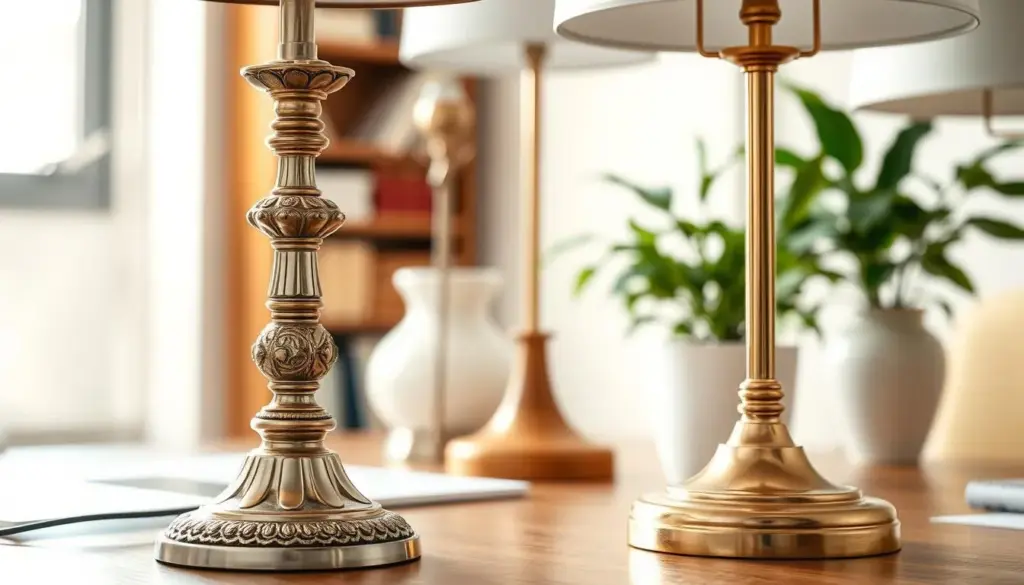
- Wider base: taller profiles, larger shade diameters, or heavy materials at the top.
- Smaller base: OK when the lamp is short, the shade is modest, and placement stays away from edges.
- Measure: compare base diameter to your clear desk area after accessories and cables.
Think in trade-offs, not absolutes. Your best choice depends on task style: focused task fixtures need directional control, while focal pieces may favor visual balance and room feel.
Use-based selection: task, focal, or decorative lighting on your desk
Decide the job your desk fixture must do before you pick scale or style. That choice guides how steady, adjustable, or ornamental the piece should be. Below are the common roles and what each means for stability and surface impact.
Task lighting for focused work and directed light
When you need precise light for reading or detailed work, stability and adjustability are critical. You want a design that stays put when you aim the head or extend an arm.
Key needs: steady contact with the desk, smooth articulation, and minimal wobble so the light holds position without constant correction.
Focal lighting for layered room ambiance
Use a desk fixture to add a soft layer to the room when overheads are off. A well-chosen piece creates a warm evening mode without glare.
Benefits: it supports a layered lighting plan and makes the room feel inviting while still offering practical illumination at task level.
Decorative lighting as an accent
Decorative pieces are chosen mainly for their look and décor impact. They often require other sources for true task brightness.
Expectations: pick something pretty that complements your aesthetic, and plan for supplemental lighting if you need focused light.
- Identify your primary need—task, room ambience, or décor—before you choose scale.
- Your aesthetic (minimalist, ornate, modern, traditional) will change how the fixture reads in a wide range of interiors.
- Remember: bulb type and shade material can convert a single lamp to different roles across day and night.
Finally, check proportions. Too-tall with a tiny contact area or a huge shade on a small foundation can hurt function and the overall room balance. The next section gives clear sizing rules to avoid that mismatch.
Size and proportion rules that keep your lamp from feeling top-heavy
Get the proportions right and you stop worrying about a top-heavy fixture tipping or crowding your desk. Use clear ratios to balance the shade and platform so the piece stays steady and looks correct at your work surface.
Platform diameter guideline for stability with a shade
Stability rule: make the platform diameter at least one-half the diameter of the shade. This reduces tipping risk and keeps the center of gravity lower.
Height-to-shade proportion for a balanced look on a desk or table
A good visual rule is to set the overall height (excluding finial) at about 1.25× the shade diameter. That proportion keeps the piece readable and useful at task height.
How different shade depths change the “right” scale even at the same diameter
Shade depth matters as much as diameter. Deeper shades read heavier and often call for a taller profile. Shallow shades sit well on shorter stems.
Desk-friendly shade sizing ranges and what they imply for base width
Start with a practical range: 8″–22″ lampshade sizes work for most desks. As shade diameter grows, widen the platform, add weight low down, or lower height to maintain stability.
- Quick practical tip: If a large shade blocks your screen or causes glare, try a different shape or lower the height.
- Brighter bulbs or high-output LEDs let you use smaller shades for task light, but keep the shade/base balance to avoid glare.
Lamp base shapes and designs that fit different desk sizes and styles
Different shapes alter both the actual footprint and the visual weight the piece places on your desk.
Think about two footprints: the physical contact area and the perceived presence. A narrow profile can save space but still look tall. A broad form uses more surface yet reads grounded and secure.
Candlestick silhouettes for tighter desks
Candlestick bases use minimal surface while delivering height. You gain vertical reach without a wide platform.
Tip: pair a slender base with a wider shade to keep proportions balanced.
Teardrop shapes for low visual weight
Teardrop designs concentrate mass low, so the base feels stable. The silhouette stays streamlined and suits many modern and transitional furniture lines.
Double gourd for statement pieces
Double gourd profiles are sculptural. Reserve them for wider desks, credenzas, or consoles where the curves can breathe.
Urn forms for classic elegance
Urn-style bases range from tall to rounded. Handles or carved details push the design toward traditional elegance.
Keep clearance near the base so papers and accessories don’t crowd the piece.
Vase-inspired silhouettes for versatile looks
Vase bases span traditional curves to geometric modern shapes. This variety helps you match the piece to your room’s lines and finish.
- Match silhouette to furniture: angular desks benefit from rounded bases; curved desktops pair well with geometric shapes.
- Balance function and style: pick a design that fits your desk area and keeps the fixture stable while complementing the room’s look.
Materials, finishes, and weight: choosing a base that lasts and complements your décor
What a base is made of determines both how steady it sits and how it reads in your décor.
Metal choices in plain terms
White metal often means a zinc alloy that is light and lower cost. It is usually brass‑plated for look. Over time it can feel brittle or chip.
By contrast, brass is heavier and more durable. Higher copper content generally signals better quality. Very pale brass can be low‑copper “junk” brass and may not age well.
How finishes affect room character
Antique brass finishes are made with darkeners, polished highlights, and lacquers. Polished brass or silvertone pieces are plated, buffed, then sealed to slow tarnish.
True patina is rare and costly. Many patina styles are simulated, so check how a finish will wear where you use it.
Ceramic, wood, and glass for texture and warmth
Ceramic gives bold color and sheen; hand‑glazed patterns read like art. Wood brings warmth and a softer feel. Glass stays airy and can diffuse light for a gentle glow.
- Stability tip: heavier metal or ceramic materials resist tipping better with large shades.
- Decor tip: choose hand‑finished details if you want the piece to act as functional art.
- Choice: match material to how you use the desk and how the finish will age with handling.
Conclusion
The right footprint ties together stability, scale, and how your desk feels while you work.
Pick a base that keeps the lamp steady in your space and leaves enough desk surface for your daily tasks. An undersized platform with a large shade makes the piece feel top‑heavy and easier to tip in a busy home office.
Remember two quick rules: make the platform at least half the shade diameter, and use height‑to‑shade proportion as a visual check. Those ratios improve both safety and interior balance.
Match lighting purpose to style: task setups need control and steadiness, focal pieces support room ambiance, and decorative items work best with layered light.
Quick buying checklist: measure desk clearance, pick a shade in the sensible range, then choose a base material and weight that fit your style and resist tipping.


