

You want practical steps to cut costs and waste without making your office feel dim or dated. This guide compares bulbs and fixtures so you can choose what fits conference rooms, desks, and reception areas.
Start with clear goals: lower energy use, reduce replacements, and cut landfill waste while keeping comfortable, productive light for staff and clients.
You’ll learn a simple decision framework: (1) bulb type and quality, (2) fixture materials and finishes, (3) layout by space, and (4) ordering choices to avoid returns. These steps help you buy once and avoid redo projects.
This advice is aimed at US offices and common electrical setups, but it uses global best practices. Expect practical comparisons of LED performance, color temperature, and compatibility so your business gets long-term value.
What Sustainable lighting Means for Your Office in the US</h2>
Look past the sticker price and assess products by lifetime energy use, durability, and end-of-life fate.
In a US office context, sustainable lighting means thinking across the full lifecycle. You judge how much energy a product consumes, how long it lasts, and what happens when it is replaced.
Eco friendly choices lead to measurable gains: lower electricity draw, fewer replacements, and less packaging waste. These outcomes save money and cut your office’s waste stream.
How eco-conscious choices cut pollution and waste
Choosing longer-life items and responsible materials reduces manufacturing waste. It also lowers demand on power plants, which indirectly cuts emissions.
Brand-evaluation checklist
- Look for ethical manufacturing and specific low-waste production claims.
- Check for sustainable packaging and replaceable parts to avoid disposable items.
- Verify origin, clear warranty/lifespan details, and material callouts on product pages.
Impact programs and reporting
Programs can add value: Luminesy plants a tree for each order, and Good & Mojo supports NGOs like the WakaWaka Foundation. Use these as tie-breakers, not substitutes for efficiency.
Document wattage reductions, estimated replacement intervals, and vendor policies for internal ESG reporting.
Bulbs That Cut Energy Use Without Sacrificing Comfort</h2>
Opt for bulb choices that save energy and maintain consistent, pleasant workday light. LED bulbs are the best mainstream option for office spaces because they lower operating costs and deliver steady brightness across shifts.
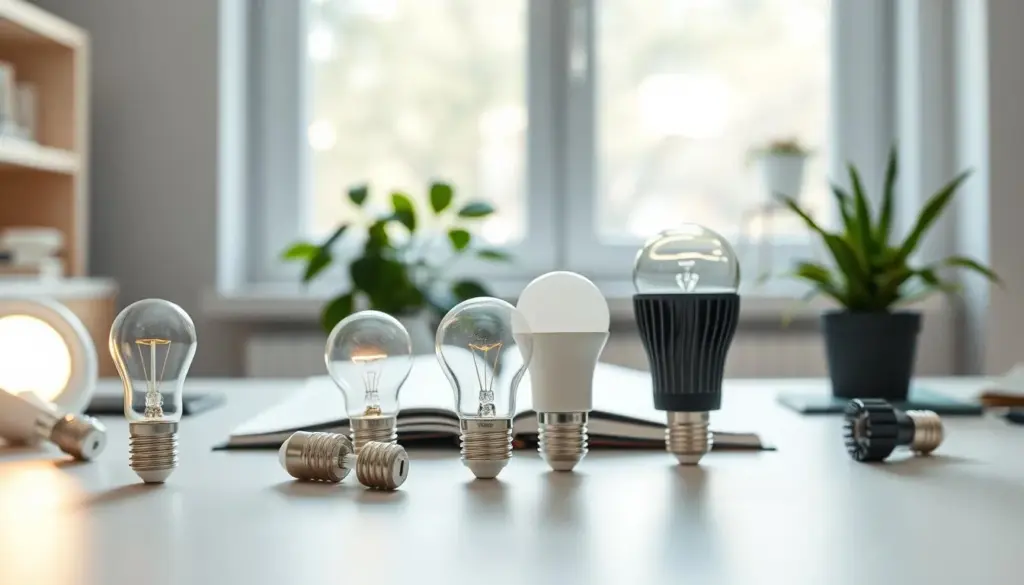
What to buy vs. what to skip:
- Buy: quality LED bulbs for most fixtures — long life, low heat, steady color.
- Consider: incandescent only for specific warm-ambiance fixtures where dim, warm glow matters.
- Skip: halogen for general office use — high heat and short lifespan raise costs.
Choose 2700K when you want a warmer ambiance for reception or lounge areas. Pick 3000K for a whiter, cleaner feel at desks and conference rooms that supports focus.
Check dimmer compatibility before you buy. Some CFLs and older switches cause buzzing; high-quality LEDs plus the right dimmer avoid that issue. Standardize base type, color temp, and dimmable vs non-dimmable across rooms so your lights match and you buy fewer replacements.
Low-Impact Materials and Finishes for Light Fixtures</h2>
Your choice of materials shapes durability, recyclability, and indoor air quality. Choose components that cut waste and keep your office healthy while staying professional.
Renewable options that fit modern design
Bamboo, reeds, and responsibly sourced wood work well in contemporary design. These materials pair with clean silhouettes so pendants and table lamps look current, not rustic.
Recycled and recyclable construction
Look for recycled glass shades and metal bodies. Recycled glass pairs cleanly with brass or steel pendants and wall sconces to give a refined, durable finish.
Health-forward sourcing
Prioritize non-toxic components and low-VOC finishes, paints, and lacquers. This lowers off-gassing in meeting rooms and shared spaces where people spend long hours.
Durability and repairability
- Prefer fixtures with replaceable sockets, shades, and hardware.
- Choose long-lasting brass or robust metal finishes to avoid early replacement.
- Verify material disclosures, cleaning steps, and spare-part availability before you buy.
Choosing the Right Lighting Options for Each Office Space</h2>
Plan each area so the right mix of overhead, task, and accent lights match how people actually use the space. A room-by-room plan stops you from overbuying and avoids harsh overhead-only setups.
Layered design for better workspaces
Use a baseline of ceiling fixtures for even visibility. Add wall sconces and floor lamps for visual comfort.
Task table lamps give focused light for detail work without raising whole-room brightness.
Desk and conference essentials
Prioritize glare control for screens and even faces on calls. Choose pendants that sit low enough to illuminate the table but high enough to avoid glare.
- Size: pendants should be about one-third the table width.
- Height: 28–34 inches above tables for most rooms.
- Diffusers: pick shades that soften without dimming needed clarity.
Common areas, reception, and decor
Use chandeliers or modern lighting statements to align with your brand. Select durable fixtures and efficient bulbs so style doesn’t mean frequent replacement.
Kitchen, break rooms, and outdoors
Place targeted lights over counters and islands for safety and clear task view. Apply the same principles to outdoor lighting: efficient bulbs and weather-ready fixtures to reduce replacements.
Design and Ordering Tips That Keep Your Project Sustainable</h2>
Plan your fixtures and small parts before ordering so your project finishes clean and costs less over time.
Match new pendants and lamps to your existing furniture and decor. This avoids a chain reaction where one new piece makes the rest feel out of date.
Choose finishes and controlled contrast
Pick one or two consistent finishes and then add a controlled contrast in style. For example, pair clean-lined pendants with softer textiles, or use minimalist lamps to balance heavier furniture.
Plan small parts before you buy
Measure cords, ceiling caps, and mounting parts after fixtures arrive. Many returns come from wrong cord color or canopy size. You can replace those parts through Colorcord’s ceiling canopies and DIY wire options instead of swapping the whole pendant.
- Audit quantities: count pendants, table and floor lamps, and ceiling points before checkout.
- Refine decor: use small gold accents on hardware or cords to get the tone right without overbuying.
- Order once: smart planning reduces returns, shipping, and extra packaging.
Conclusion</h2>
Close your project with a phased approach that keeps operations running and reduces costs. Start by swapping to efficient LED bulbs, then upgrade key fixtures made from durable, repairable parts.
Keep comfort and performance by choosing the right color temperature (2700K vs 3000K) and layering ceiling and task lights with table and floor lamps for better ambiance.
Buy high-quality LED bulbs, fixtures with replaceable sockets, and proven materials like responsibly sourced wood or recycled glass. Avoid cheap knockoffs, mismatched dimmers that buzz, and disposable fixtures that need frequent replacement.
Final checklist: align zones to tasks, confirm compatibility, and standardize bulb specs. Price a phased plan—bulbs first, then fixtures, then aesthetic lamps—to improve eco results without disruption.


