

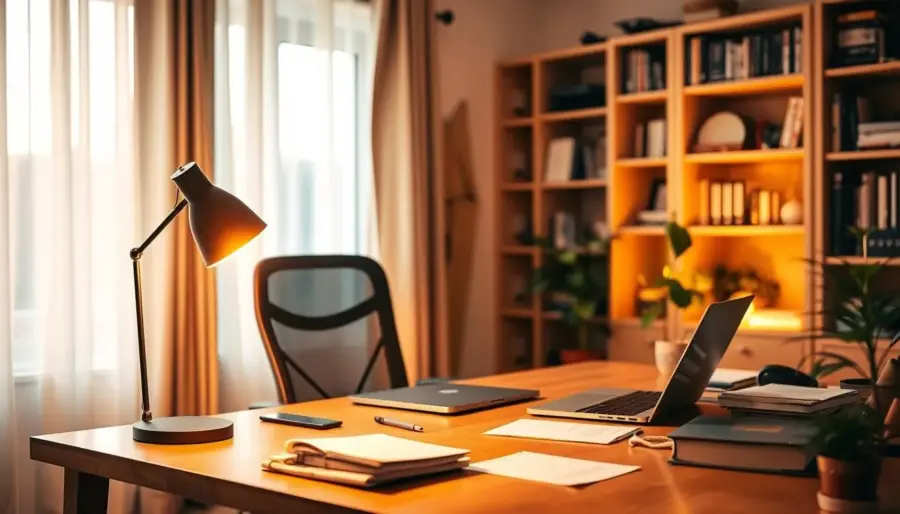
You often need to stay productive after dusk without wrecking your rest. Late-night lighting for adults means creating a calm, focused setup that makes it easy to wind down when you’re done.
Start with warmer, lower-intensity light across the room and use brighter task bulbs only where you need them. This keeps your work clear while protecting your ability to fall asleep later.
This guide shows why warm tones help your body, then walks you through what to buy — from LED plug-ins and sensors to all-in-one desk lamps — and where to place each device in a typical U.S. home.
Expect quick product picks and checklists so you can shop fast. Remember: brightness control and placement matter as much as bulb color, especially if you wake in the middle of the night and want minimal disruption.
Why warm light helps you work late without wrecking your sleep
Evening work works best when your room’s glow helps you concentrate but still lets your body wind down later. Choosing the right light color and brightness matters more than brand names or gadget features.
Blue-leaning and cool-white tones raise alertness. They mimic daylight and can make you feel wired. At night, that can cause eye strain and a stark contrast against dark windows—like harsh office overhead bulbs.
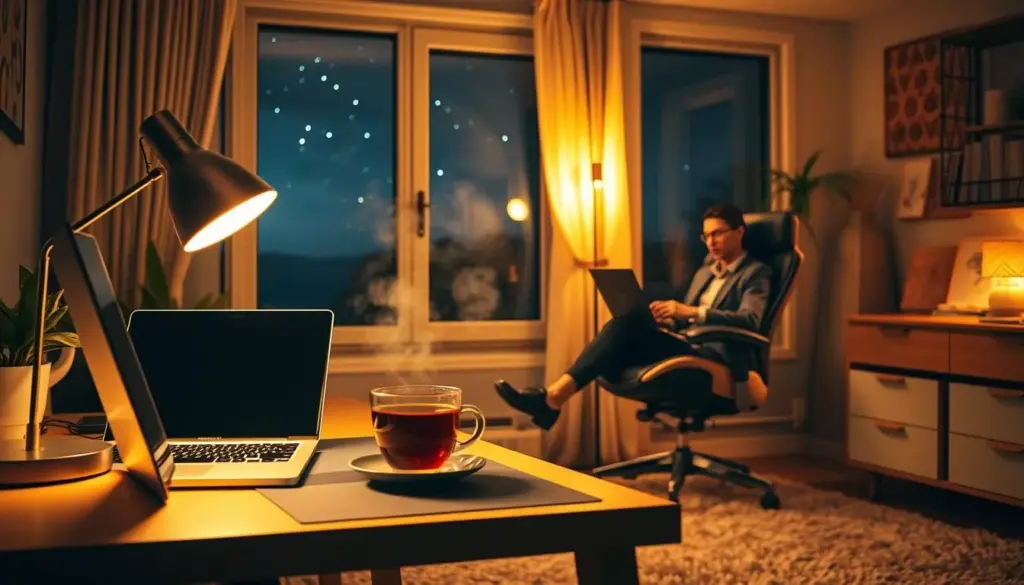
Blue vs warm white and what “too bright” feels like at night
Cool-white and blue-leaning sources often feel stimulating and can keep you alert past bedtime. Warm white tones feel calmer and more comforting for evening tasks.
“Too bright” at night usually shows as sore eyes, difficulty shifting focus, and the sense that the room is unnaturally harsh. That’s the vibe to avoid when you want to sleep soon after working.
Color temperature basics for US shoppers
Look at Kelvin ratings, not marketing labels. Around 2700K–3000K reads as soft, warm white. Values above 4000K move toward cool-white and feel more clinical.
- 2700K–3000K: warm, cozy, easier on the eyes at night.
- 4000K+: brighter, more alerting—better for day tasks.
- LEDs can be gentle if paired with diffusers or dimmers; design and brightness settings shape the outcome.
Match warmth and brightness to your room rather than buying the brightest gadget. That balance keeps you productive now and ready for sleep later.
Late-night lighting: what to buy for focused work and easy wind-down
Choose the right mix of focused and background glow to keep work sharp and your evenings calm. Your goal decides whether you buy a targeted desk task lamp or a low-level layer that fills the room.
Your goal determines your setup
Desk task light is best when you need clear, shadow-free illumination for typing or reading. Pick adjustable brightness and a warm color temperature.
Ambient light makes the whole room feel balanced. A soft glow behind your workspace reduces contrast and cuts eye strain.
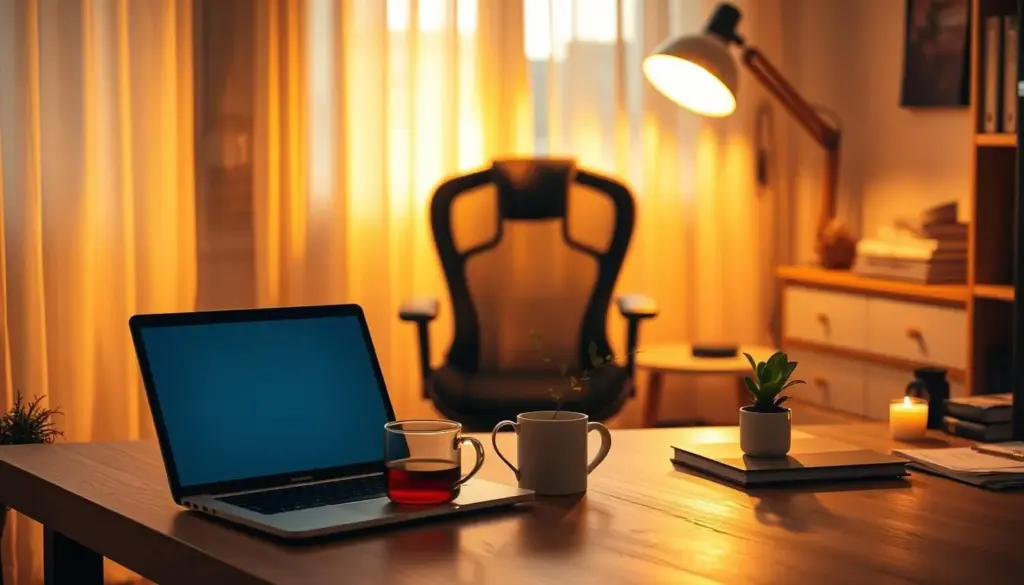
Where to place night lights for evening productivity
- Near your desk for a focused pool of light on tasks.
- Along a hallway path to the bathroom for safe, low-distraction navigation.
- By the bedside for quick decompression after work.
- Start small: plug in one night light for routes, then add desk-side ambience if needed.
- Match the set to your home layout—open-plan rooms may need broader ambient coverage; small rooms do well with compact plug-ins.
Quick picks: the best night lights and warm-glow devices right now
Find the right night light fast with five top picks that cover value, bedside features, and motion-activated safety.
Best overall value: Great Value Mini LED Night Light
Why buy: Tiny plug-in design, ~2.1″x2.1″, 0.5W led night light with a light sensor and a fade timer set around 3000K for warm illumination. It’s travel-friendly and under $5, so you get set-and-forget glow without fuss.
Most practical plug-in: L LOHAS LED Night Light
Why buy: Compact plug-in night with adjustable brightness and an automatic sensor. Great when you need a little more control for a home office corner or shared space.
Best all-in-one bedside: Hatch Restore
Why buy: Night light, sunrise alarm, and white noise in one unit. Touch controls let you set brightness and red options for consistent bedside routine.
Best red option: Loftie Glow with the Flow
Why buy: Low-profile night lights with dusk dawn sensor and a red-glow choice that’s gentle on sleep cycles in hallways and bedrooms.
Best for motion-triggered navigation: Briteman Freyr
Why buy: Motion sensor plus photosensitive control; auto-off after ~15 seconds makes it ideal for short trips to stairs and hallways.
- Fast decision: value — Great Value; adjustable — L LOHAS; bedside upgrade — Hatch; red preference — Loftie; motion — Briteman.
- Buying cautions: check if a device blocks an outlet, whether sensors match your routine, and if non-replaceable batteries fit your long-term needs.
Best plug-in night lights for hallways, bathrooms, and home offices
Plug-in units give steady, low-energy illumination where you need it most at night. They are simple to install and cost very little to run. That makes them ideal for hallways, the bathroom, and a small home office.
Light-sensing “dusk to dawn” plug-ins for set-and-forget use
Dusk-to-dawn behavior uses a light sensor to turn lights on when it gets dark and off at sunrise. The Great Value Mini LED and L LOHAS models use this approach so you don’t have to flip switches every evening.
Compact designs that won’t block your second outlet
Look for low-profile plugs that sit close to the wall. Compact units keep the second outlet free on duplex receptacles and prevent bulky adapters from crowding the space.
When a manual switch beats sensors
Choose a manual switch if you need full control in guest rooms or infrequent-use spaces. Sensors work best for daily routes like hallways where automation is convenient.
- Lens choice: frosted covers give softer glow; clear lenses can feel harsher with an led bulb.
- Placement: mount at ankle-to-waist height in hallways and aim downward in bathrooms to cut glare.
- Options: prefer models with an adjustable sensor or manual override for flexibility.
Warm white vs white light for night work: choosing the right glow
A gentle, warm glow helps you work without tricking your brain into thinking it’s daytime. Choosing the right color temperature keeps you productive and ready for sleep.
Why 3000K warm illumination is easier on your eyes at night
Warm white reads as soft and slightly yellow. Aim for about 3000K on packaging for calm, pleasant illumination.
The Great Value Mini LED Night Light sits near 3000K, giving a low-key pool of color that reduces eye strain during late sessions.
How cool-white illumination can feel more stimulating after dark
Cool white or blue-leaning white light raises alertness and can make it hard to wind down. Use cool tones only for short tasks that demand high detail.
- Rule of thumb: keep background light warm and modest, then add targeted brightness for the task.
- Choose diffusers or frosted lenses to soften glow—Kelvin isn’t the whole story.
- Decide if a warm led night light gives enough desk-side ambience or if you need a separate task lamp for true work output.
Red light options for minimal sleep disruption during late sessions
A soft red glow helps you move through the night without jolting your sleep cycle. Many people pick red night lights when they want visibility but not stimulation.
Red wavelengths are often promoted because they may support melatonin production. Use this as a practical way to keep your room calm, not as medical treatment. Loftie Glow is marketed with red wavelengths and a dusk-to-dawn sensor for consistent nighttime ambience. Some smart devices, like Hatch Restore, also let you set red tones for middle-of-the-night wakeups.
Best uses
- Path lighting from bedroom to bathroom for safe trips.
- Nursery check-ins where you don’t want a full wake-up.
- Bedside glow for brief reading without a spotlight effect.
Why brightness control matters
Adjust brightness because red can still feel intense if it hits your eyes. Look for night lights with brightness settings or dimmers so you can tune the glow.
Sensors help: choose a dusk-to-dawn sensor for steady ambient red, or motion activation for short, on-demand use in hallways and bedroom paths. Place plugs low and out of direct sightlines to reduce visual stimulation and protect your sleep.
Adjustable brightness and brightness settings that match your evening workflow
The right dimming method helps you work clearly now and wind down later. Pick a system that fits how often you tweak the glow and how sensitive you are to change.
Dimmer options: continuous vs stepped levels
Continuous dimmers give smooth control so you can fine-tune warmth and strength. Devices like the L LOHAS plug-in use this approach and make it easy to adjust brightness by small amounts.
Stepped levels offer presets you tap through. They work well if you want quick, repeatable options without constant fiddling.
Setting brightness for reading, typing, and screens
For reading, aim for focused illumination that stops you from squinting. Keep the rest of the room dim so contrast is low.
When typing or using a screen, reduce peripheral glare. Place a local task light behind or to the side to avoid competing with your display.
- Avoid harsh LED glare: use diffusers, bounce light off walls, and choose warmer tones at lower intensity.
- Workflow tip: run brighter during active work, then gradually lower your brightness settings as you finish.
- Bulb choice: a quality led bulb and good diffuser design often matter more than raw lumen numbers for comfortable illumination.
Smart features: light sensor, motion sensor, timers, and touch controls
A few smart features make night gear actually useful. They reduce fuss and help your room behave the same way every evening.
Dusk-to-dawn sensors for steady ambient glow
A light sensor gives you predictable dusk-to-dawn behavior so the room turns on at dusk and shuts off at dawn without daily toggling.
The Great Value Mini LED Night Light uses a light-sensitive timer and fades slowly, so changes feel natural and not abrupt.
Motion sensor lights for quick trips
Motion sensor units like the Briteman Freyr turn on only when you move, which is perfect for halls and stairs.
Watch for limits: false triggers, narrow activation angles, or a short auto-off time that can cut out during longer tasks like brushing teeth.
Timers and routines to help you stop working
Set timers to nudge your wrap-up time. A scheduled dim or off command helps you shift from work to rest without thinking about it.
Touch and app controls: when smart is worth it
Touch control and app features are handy if you want to change color, lower brightness from bed, or pair lights with a white noise machine night routine.
Smart without complexity: choose one feature that fixes your biggest annoyance first — a sensor or a timer — and set it once.
Best night lights for desk-side ambient light (when overhead lighting is too much)
When overhead fixtures feel harsh, a low, desk-side glow can keep your focus without waking your brain. Swap intense ceiling bulbs for a subtle source near your table to lower contrast and reduce eye strain.
Low-profile plug-ins work well because they deliver a steady, unobtrusive pool of light. Place a night light close to the floor or behind your monitor, but avoid direct sightlines so the soft glow supports focus without causing distraction.
Table-lamp alternatives for warm white ambiance
Small, dimmable table lamps give more control over brightness and color. Choose a warm white bulb around 2700K–3000K for comfortable illumination that feels natural at night.
- Why avoid overhead: ceiling lights raise contrast with screens and push your brain toward alertness.
- Placement tip: set plug-in night light near the desk edge or behind shelving to create a soft glow that reduces harsh shadows.
- Video calls: keep the ambient source behind or to the side to prevent glare and odd facial shadows.
Decor-forward night lights can look good by day and provide a gentle glow after dark. The best setup is one you actually use—simple, low-fuss, and tuned to your routine.
All-in-one devices: night light plus white noise for better focus and sleep
A small device that offers both color and sound can simplify your work-to-bed transition. Pairing a night light with white noise helps two ways: the glow reduces contrast and eye strain, while steady sound masks distractions so you can focus.
Hatch Restore: an evening workflow in one unit
The Hatch Restore works as a night light, sunrise alarm, and white noise machine. Use a soft warm glow while you wrap up tasks, switch to optional red mode for minimal disruption, then rely on the sunrise-style alarm in the morning.
Why it helps: touch controls let you lower brightness quickly at bedtime, and scheduling builds a repeatable cue that signals your brain it’s time to stop.
Yogasleep Duet: a budget-friendly, travel-ready combo
Yogasleep’s Duet combines multicolor LED light with a sound machine that offers 30 nonlooping sounds and timer choices (45-, 90-minute, or 8-hour). It’s compact and great for timed wind-down sessions or travel.
Checklist for choosing all-in-ones
- Sound quality and variety — will the white noise and other sounds mask distractions?
- Timer flexibility — can you set short or full-night sessions?
- Brightness range and red-mode option — does the night light dim low enough?
- Controls — prefer touch-only or an app for deeper features and scheduling?
Use these options consistently. The value comes from the same cues each night so your routine links the glow and noise to winding down and better sleep.
Room-by-room recommendations for productive evenings
Set up each room with purpose: work-ready now, sleep-friendly later. Below are quick, practical tweaks so your evening workflow moves smoothly from focus to rest.
Bedroom setups that support work-then-sleep transitions
Keep bedside light warm and low so your eyes don’t get hit by bright sources when you lie down. Use a small, dimmable lamp or a plug-in night device close to the floor behind furniture.
Tip: pick a bedside glow that dims to near-dark for reading, then drops further when you stop working.
Hallways and stairs for safe navigation with minimal brightness
Outline paths with low plug-ins placed near the baseboards. Motion sensors work great in a hallway because they illuminate only when you walk through.
- Place lights low to avoid raising room brightness.
- Choose motion for pass-through areas and dusk-to-dawn sensors for always-on routes.
Bathroom lighting that won’t shock your eyes at night
Swap harsh overheads for a gentle, warm night light near the sink or vanity. The Great Value Mini LED proved ample in bathrooms without overwhelming the eyes, so it’s a solid option.
Kids’ rooms: soft glow and decor-forward options that still work for adults
Pick playful or decor-forward night fixtures that look good by day but emit a soft glow at night. Keep brightness low so the room stays calming for both kids and adults.
Consistency: use a similar color temperature across bedroom → hallway → bathroom to keep the home cohesive and calmer at night.
Power and placement: plug-in night lights, rechargeable options, and travel picks
How you power a night light determines its reliability, portability, and where it can sit in your home. Choose the power style that matches how you move at night and how often you rearrange furniture.
Plug-in units for always-ready use
Plug-in night options are the most reliable for nightly routines because they don’t need recharging. Pick compact designs so the unit won’t block a second outlet or crowd an outlet strip.
Rechargeable and portable choices
Rechargeable LED lights sit on shelves, nightstands, or bathrooms where an outlet is awkward. They give flexible placement and work well if you move lights between rooms.
Travel-friendly picks and simple strategy
Pack a compact night light for hotels or Airbnbs. The Great Value Mini LED was easy to tuck in a bag and set up in unfamiliar rooms, so you avoid flipping harsh overheads at 2 a.m.
- Test at home: try brightness and run time before you travel so you know what to expect.
- Use case: motion-triggered battery units work for short trips; plug-ins win for a consistent nightly set.
Decor-forward night lights that look good in daylight, too
A night light can be a tasteful object on your shelf and a gentle guide after dark. Choose pieces you won’t hide during the day so your hallways and bedrooms feel cohesive and intentional in the home.
Design-led picks that double as home decor
“Decor-forward” means the object reads as a small accent, not just a plug-in. Look for clean shapes, textured finishes, or playful silhouettes—like the Dusen Dusen Everybody Night Light—that fit your room style.
Color options and playful styles without sacrificing a gentle glow
Pick devices with multiple colors and a low-brightness mode so the tone stays soft. Favor models with quality diffusers and warm tones to keep the glow comfortable, not harsh.
- Shared spaces: choose playful designs that pair with adult decor so they suit guests and kids.
- Use a matching set: place identical units along a hallway for an intentional look and safer navigation.
- Don’t forget function: confirm outlet fit, sensor behavior, and dimming before you buy—style shouldn’t trump usefulness.
Energy use and durability: what to expect from LED bulbs and long-life designs
Energy and lifespan are practical buying points. You want a night light that uses little power and keeps steady glow over months.
Why LED night lights usually use very little power
LEDs deliver usable light at low wattage. A compact plug-in can run at about 0.5 watts and still give enough glow for nightly use. That makes the energy impact tiny compared with overhead fixtures.
When non-LED bulbs mean more frequent replacements
Some plug-in models use non-LED bulbs that burn out faster. That leads to more swaps and added hassle if you want set-and-forget performance.
How to read long-life claims in real homes
High “50,000 hours” numbers sound great, but check the power source. The Briteman Freyr lists ~50,000 hours yet uses a sealed battery that can limit real-world life.
- Look for steady brightness: no visible dimming over months is a good sign (the Great Value Mini LED showed no change over four months at ~0.5W).
- Factor replacement hassle: a pricier led bulb or unit can save time and money if it cuts swaps.
- Check power type: plug-in units win for consistent long-term use; sealed batteries may reduce practical lifespan.
What to consider before you buy: the best features for your late-night routine
Before you click buy, map how the device will actually behave in your evening routine. Start with the core features that solve a real need, not the trendiest extras.
Choose your must-haves
Adjustable brightness and clear controls should top your list. You want smooth steps or a dial so you can tune brightness for reading or short walks without glare.
Select the right sensor type and color options next. Decide between warm and red tones, and whether a sound feature matters for your wind-down.
Sensor type: steady vs on-demand
A light sensor (dusk-to-dawn) gives steady ambient glow for long routines. A motion sensor fits quick trips through hallways or stairs.
Match illumination to room and movement
Small bathrooms and narrow halls need less illumination than open living areas. Placement can make low output feel ample.
If you walk a fixed path, motion works well. If you linger, pick a light sensor or manual override so the glow stays on.
Options vs features: simple wins
Basic plug-ins often nail the job. Higher-end picks add more color options, timers, and app control. Avoid overbuying: one well-placed device beats many mismatched lights.
- Must-have checklist: adjustable brightness, chosen sensor type, warm vs red color, and optional sound/timer.
- Pick the power style you’ll actually use: plug-in or rechargeable.
- Test placement before committing to multiple units.
Conclusion
A small, deliberate change in where you put a night source can make late work easier and sleep sooner.
Warm, low-level light and careful placement let you stay productive at night without ruining rest. Use a compact night light for hallways and a gentle desk or bedside source for the bedroom and bathroom path.
Quick-buy rules: pick dusk dawn sensors for consistent set-and-forget glow, motion-triggered units for short trips, and adjustable brightness when tasks vary. For value, try the Great Value Mini LED; upgrade to Hatch Restore for white noise plus light; L LOHAS adds dimming control; Loftie Glow gives a red-style option.
Before you buy, confirm outlet fit, brightness comfort, and whether the light sits in your line of sight from bed. Tonight, fix one problem area—add one well-chosen night source and refine as your routine settles.


