
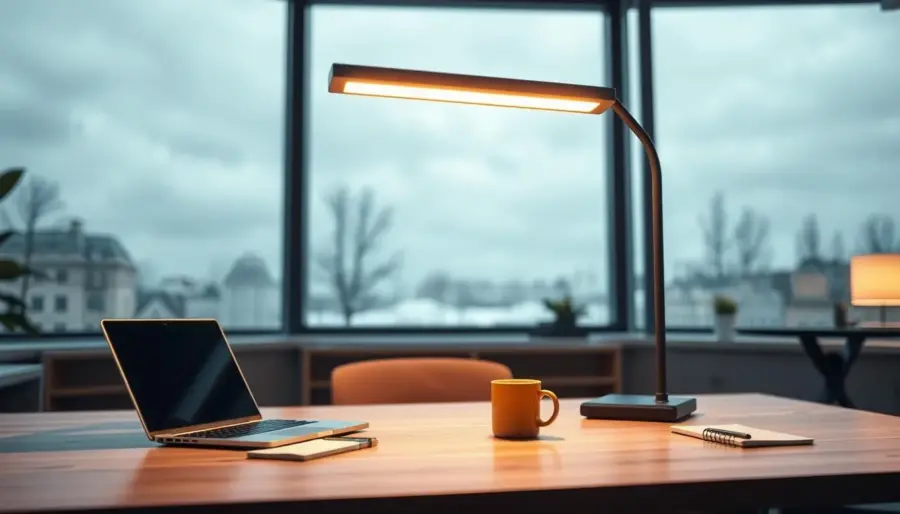
You can use a purpose-built desk setup to boost energy when daylight fades. Think of specialized office light as a compact system you place near your workstation. It mimics outdoor brightness to help lift mood and reduce fatigue in cold months.
This how-to guide shows how to choose and use a light box responsibly. It explains basic safety and when to talk with your healthcare provider. It does not replace medical care, but it can support better focus and steadier mood.
Throughout this article you’ll see the benchmark 10,000 lux and why distance, glare, and timing matter. Proper placement, verified brightness, and a low-UV design decide whether an office-friendly setup succeeds or fails.
Expect clear steps for picking a reliable device, positioning it for comfort, and building a repeatable morning routine that fits meetings and commute time. The goal is improved daytime energy and steadier mood while your schedule and daylight shrink. This content will keep guidance practical and usable.
Why dark months drain your energy and mood at work
When daylight shrinks, many people notice a steady drop in their energy during the workday. The change is more than feeling a bit tired; it can affect focus, motivation, and how you show up in meetings.
How seasonal affective disorder and seasonal depression can show up in your day
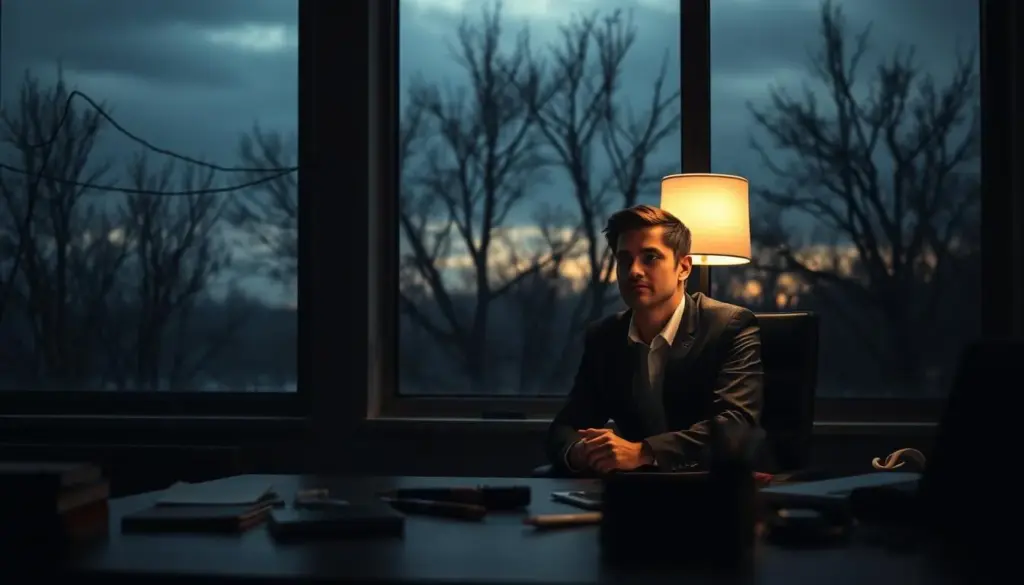
At work, you may start slower in the morning, hit afternoon crashes, or feel flat in discussions. Some people sleep more, lose drive, or find routine tasks oddly hard to begin.
Common fall and winter patterns
Typical fall and winter signs include oversleeping, persistent fatigue, carb cravings, and less interest in socializing after work. These patterns often repeat each year and range from mild to disruptive.
When symptoms may point to a bigger concern
- Symptoms most days for weeks that hurt your work or relationships
- Persistent depressed mood or loss of interest
- Major sleep or appetite changes, or symptoms that don’t follow seasons
If your experience feels hard to manage, treat it as a real mental health issue and consider professional support. Many people benefit from non-medication tools such as morning bright light exposure to help reset the brain and daily rhythm.
Seasonal light therapy basics: what it is and how it works
A targeted desktop bright source can simulate daytime cues and help stabilize your workday energy. In plain terms, seasonal light therapy means you sit near a purpose-designed bright light source to mimic stronger outdoor illumination during darker months.
What a light box does and why bright light can help your brain and mood
A light box delivers high-intensity, indirect light to your eyes so you don’t have to stare at it. This exposure supports circadian alignment and daytime alertness by prompting chemical changes in the brain that often improve mood and focus.
What “10,000 lux” means and why intensity matters
Lux measures illuminance — how much light reaches you. The benchmark 10,000 lux is common in studies and guidance because it reliably produces the intended effect when used correctly.
Lux vs. time tradeoffs you can use to plan your routine
Intensity limits session length: research supports about 30 minutes daily at 10,000 lux (best before 8 a.m.). If your device is dimmer, plan longer sessions — roughly 60 minutes at 5,000 lux or 120 minutes at 2,500 lux.
- Define your goal: morning energy for work.
- Match duration to device lux level.
- Watch placement — many boxes claim specs but don’t deliver where you sit.
Next step: Because intensity, coverage, and glare vary widely by product, choosing the right box is the make-or-break step for effective treatment.
How to choose a light box that actually delivers therapeutic light
Not every 10,000 lux claim holds up at your desk; choosing carefully matters for real results. Start by reading specs that state the exact distance for 10,000 lux and confirm the device lists minimal UV output.
Key specs to verify
On the spec sheet, look for: 10,000 lux at a realistic sitting distance (16–24 inches), low UV emission, and stated intensity off-axis so small head turns still receive treatment.
Why some “10,000 lux” devices disappoint
Manufacturers may quote lux measured inches from the surface. That number is meaningless if you can’t sit that close for 20–30 minutes.
Size, coverage, glare, and hot spots
Larger panels give broader coverage and tolerate small posture shifts. Check for even illumination; hot spots and strong glare often make people stop using a device, nullifying benefits.
How to verify brightness at home
Use a phone lux meter app with the front camera to measure at your normal working distance. Aim to see roughly 7,000–10,000 lux where your face usually sits, not at an ad photo distance.
Return windows and questions for the manufacturer
- Ask: distance for 10,000 lux, UV filtering method, LED lifespan, warranty, and return policy length.
- Prefer makers that publish test methods and offer a trial or ~60-day return window so you can assess real benefit.
How to set up and use light therapy in your office
Start your workday with a short, deliberate exposure session to help steady energy and focus.
Best timing for energy and circadian rhythm
Aim to use light therapy within the first hour after you wake, ideally before 8 a.m. This timing helps anchor your circadian rhythm and boosts morning alertness.
Typical session plan
Plan for about 20 to 30 minutes each day. Consistency matters more than one long session. Expect small gains in days and clearer shifts over two to three weeks.
Distance, positioning, and eye safety
Sit roughly 16–24 inches from the box, angled slightly off-center so the beam reaches your eyes without you staring. Keep your eyes open but do not look directly at the panel.
- Place the unit beside your monitor or on a raised stand.
- Start sessions before your first meeting or during solo work blocks.
- If you feel strain, shorten minutes or move slightly farther away.
Troubleshooting: If benefits lag, recheck lux at your seated distance, extend minutes if needed, and confirm daily use through weekends to avoid reset effects.
Safety, special situations, and when to talk to a healthcare provider
Before you add a bright desktop unit to your routine, check how it might interact with your medical history and current medications. Devices are widely sold, but that ease of purchase does not mean every product is equal for your health.
What “not FDA-regulated for SAD” means in practice
Because light boxes are not FDA-regulated for SAD, you can buy them without a prescription. That also means quality and claims vary, so rely on clear specs—distance for 10,000 lux, UV filtering, and verified testing—rather than marketing hype.
When to consult a clinician
Talk with your provider if depression symptoms are severe, last for weeks, or interfere with work or relationships. Also seek help if you have other mental health diagnoses.
Bipolar disorder and mood disorders
If you have bipolar disorder, discuss risk of triggering hypomania or mania before you use a device. Your clinician may advise adjusted timing, lower intensity, or close monitoring.
Eye health, medications, and UV
- Ask an eye-care professional if you have glaucoma, cataracts, macular disease, or take photosensitizing drugs.
- Choose devices that state minimal UV output and explain filtering or spectrum control.
- Some experts caution against blue light because of retinal risk; green wavelengths are discussed but remain experimental.
Practical stop-and-reassess signals
- New headaches, eye pain, or persistent eye strain.
- Increased agitation, unusual mood elevation, or sleep worsening.
- No benefit after two to three weeks or symptoms that worsen.
Bottom line: Correct distance, session length, and daily use matter, but prioritize safety. If any warning signs appear, pause use and consult your healthcare team.
Conclusion
Core takeaway: Small, daily steps—right device, correct distance, and steady timing—help you manage seasonal affective disorder and keep focus through winter workdays.
Confirm real lux at your sitting spot before you buy a box. Don’t trust ads alone; measure with a phone app and pick models with low UV and clear return policies.
Try short morning sessions most days, sit comfortably 16–24 inches away, and avoid staring directly at the panel. If you notice headaches, mood swings, or eye strain, stop and reassess.
Next steps: shortlist reputable makers, measure brightness, and commit to a multi-week trial. Use any light therapy plan as part of a broader care plan and talk with your provider if symptoms or your health history suggest more than a seasonal affective disorder.


