


Clip-on lights let you add visibility without changing your chair or scooter. You can clamp a headlamp to tubing, secure a taillight with Velcro, or mount a waterproof LED that removes in seconds.
This guide helps you compare options, features, and price so you can buy the right setup for your wheelchair or mobility scooter. We focus on real specs — lumens, amps, and waterproof housings — so choices stay practical and clear.
Use lights when you cross a dim parking lot, roll down a dark hallway, or move between buildings at dusk. Key categories include front headlamp light, rear safety lights, and add-on accessories like blinkers and indicators.
Good means wide beam coverage, steady power draw, weather resistance, and reachable controls while seated. We evaluate brightness and range, glare comfort, battery options, durability, visibility angles, and ease of install.
Check compatibility up front: common tubing sizes, 24V power chair systems, and scooter mounts vary. This preview sets expectations so you avoid wasted money and pick a safe, reliable setup.
Why clip-on lighting matters for safety and visibility in portable setups
Adding a clip-on lamp boosts both what you can see ahead and how others see you at night. That two-part safety need is central: you need enough forward light to spot hazards, and outward visibility so drivers and pedestrians notice you.
Common risk zones
- Parking lots, curb cuts, and intersections where long range and a wide beam help you detect obstacles.
- Long pathways and dim corridors where contrast and shadow reveal trip hazards.
- Entryways, elevators, and garages that double as temporary workspaces needing quick, reliable illumination.
Early winter darkness changes when you use lights. In many U.S. regions you start relying on a clip-on earlier in the day. Motion-sensor options also aid bathroom and entry safety.
Clip-on solutions are portable, low in price compared with the cost of a fall, and support different users, including people with low vision. Aim for visible front and rear placement so ambient street lamps don’t become your only protection.
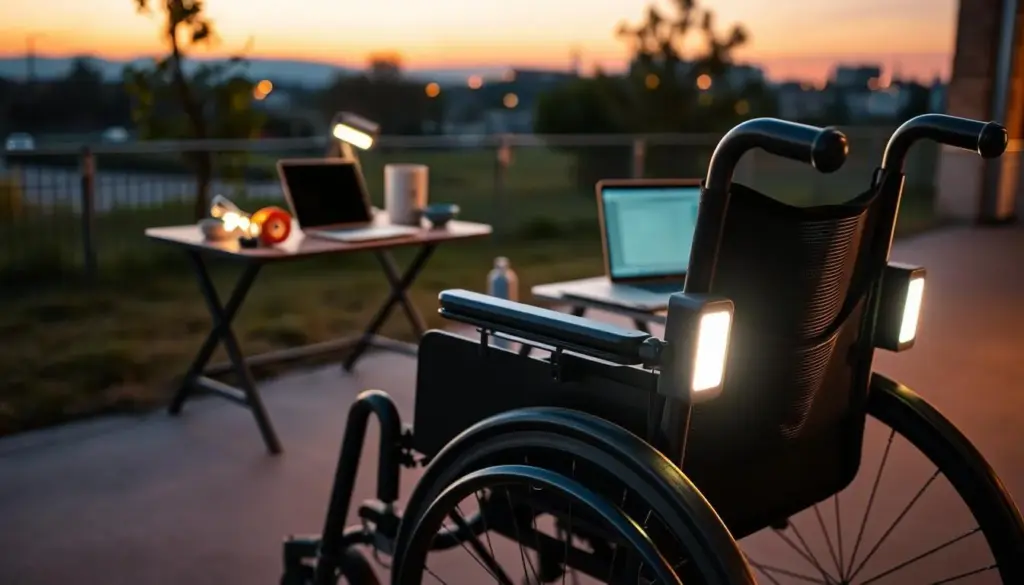
Lighting for mobility: what to look for before you buy
Before you buy, focus on real specs that match how you use a wheelchair every day. Look past marketing and compare measurable details: lumens, beam type, current draw, and housing material. These tell you how a light will perform on sidewalks, ramps, and in dim parking areas.
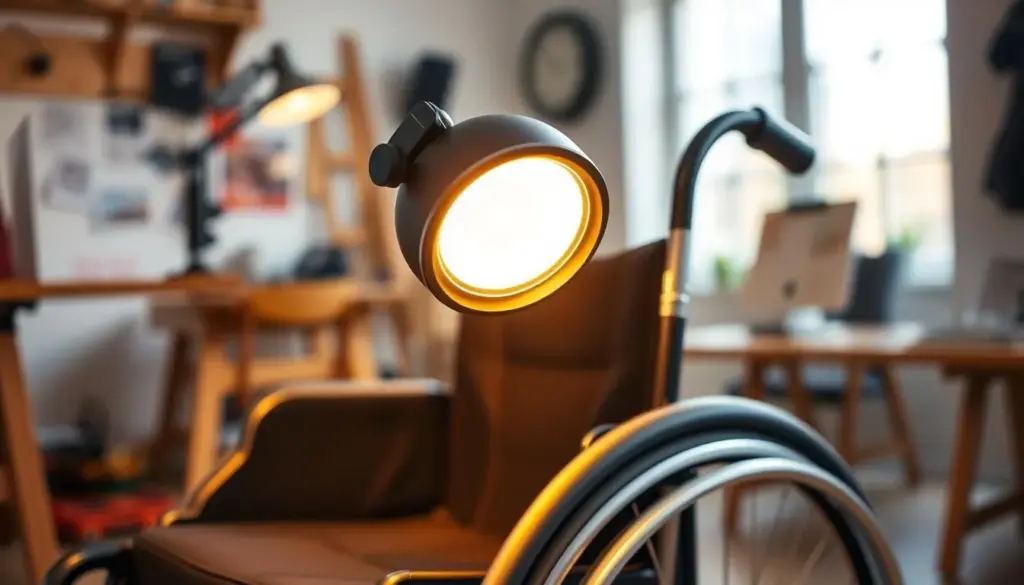
Brightness and coverage
Use lumens and beam pattern to compare real-world range. A CREE LED headlamp rated at 1900 lumens with a flood beam gives wide coverage that helps you spot uneven pavement and curb edges early enough to react.
Color, glare, and comfort
Cool white at 6500K reveals detail but can glare when you sit lower. Angle the headlamp down and pick housings that diffuse hotspots to reduce eye strain.
Power, heat, and durability
Check current draw to predict impact on your chair’s battery. The 0.46A @ 24V spec is a good reference for efficient output. Low-heat LEDs are safer during transfers.
- Durability: insist on waterproof, die-cast sealed aluminum housings built to withstand bumps.
- Visibility: pair a front headlamp with red rear taillamps and amber side reflectors to cover all angles.
- Shopping reality: higher price often buys longer life, better power efficiency, and tougher construction.
Power, batteries, and installation basics for wheelchairs and mobility scooters
How you power and mount a clip-on setup shapes runtime, reliability, and ease of use.
Battery and power options
Two main power paths are common: tap the 24V chair battery with a fused cable, or use standalone battery lights that move between chairs and scooters. Tapping the 24V system gives cleaner, consistent output. Standalone batteries keep things portable and avoid wiring changes.
Installation and mounting
Typical kits use a toggle switch that clamps to 7/8″ or 1″ round tubing, so drilling is often unnecessary. Wiring usually supports one or two headlamps plus a taillight. Route cables away from wheels and moving joints to prevent pinch damage.
Brand fit, scooter notes, and rear placement
Many kits fit popular models such as Pride, Invacare, Quickie, and Permobil, but verify tubing diameter and mounting space on your chair. Scooters may need different mounting options and longer leads.
- Checklist: current draw (amps), expected run time, and fused protection.
- Data points: taillight 0.30A @ 24V; headlamp 0.46A @ 24V.
- Rear tips: Velcro-mounted taillights work well if positioned so bags do not block the beam.
Buying note: pay more when included wiring and seller support reduce installation time and eventual service price.
Top clip-on lighting solutions and accessories to compare
Compare kits that bundle headlamps, taillamps, and mounts so you avoid surprise add-on costs. Look at what arrives in the box and how it matches your typical routes and chair setup.
High-output LED headlamps
Use the 1900-lumen CREE headlamp as a benchmark. The 21st Century Scientific 24V, 20W unit offers a wide flood beam, cool white 6500K, and a 50,000-hour life.
Expandable setups
Choose systems that support a second headlamp. Two units can deliver up to 3800 lumens and still run at a predictable current draw.
Rear safety and signal upgrades
Rear assemblies include two red taillamps and amber side reflectors to boost visibility from multiple angles. Add blinkers or compact indicators if you need turn signals or style upgrades.
- Weather-ready: sealed aluminum housings and waterproof seals resist rain and slush.
- Durability check: prefer die-cast aluminum over thin plastic for better vibration resistance.
- Product-page checklist: confirm lumens, beam type, tubing size, wiring, and vendor support before you buy.
Accessibility-first lighting tips for users and caregivers
Start with the user in the chair: position lights so they light the path without shining into eyes. Wheelchair users sit lower than standing people; test beams while seated and lower angles until hotspots fall below eye level.
Glare reduction and positioning
Aim beams slightly downward and use diffusers or reduced-glare fixtures. Test at night from typical angles. If a light causes glare, move it lower or add a small visor.
Pathway and workspace guidance
Install LED track along walls or outdoor routes to mark walking lines and reduce trips. These strips guide wheels and feet without flooding space with bright light.
Micro-lights and reach-friendly controls
- Micro-lights: stick-on round LEDs near locks, switches, handles, and grab bars to highlight key points.
- Switch height: place toggles between 36″ and 44″ max so people can reach them from a chair.
Hands-free safety
Motion sensors work well in bathrooms and entries. They reduce fumbling when your hands hold objects or when dexterity is limited.
Practical note: mix clip-on solutions with home pathway upgrades. Many options are low price and raise daily confidence and safety for wheelchair users and caregivers.
Conclusion
Decide with real-world use in mind: routes, run time, and how the parts mount to your chair.
Use a simple buyer checklist: brightness and beam range, glare comfort, power draw (example: 0.46A @ 24V), and durable, waterproof housings with multi-angle visibility.
Pair a front headlamp to see and rear taillights to be seen. This system approach is the safest setup around traffic and dim paths.
Before checkout, verify tubing size, mount points on your wheelchair or scooter, and whether you need direct 24V power or standalone battery units.
When shopping, compare price against included parts, view product photos on the website, read fitment details, and confirm seller support and spare parts.
Start by picking one primary headlamp option, then add rear or signal accessories as your routes and weather demand.


