
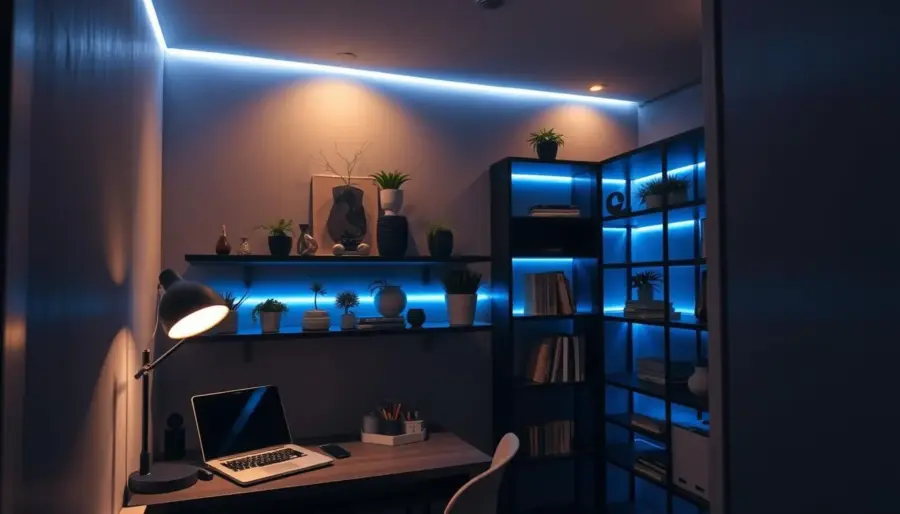
You work best in a well-lit area, yet closet offices and small alcoves often feel cramped and dim. This intro shows how compact, rechargeable options and smart planning make these tight work spots usable and comfortable.
You’ll learn how to compare brightness, beam shape, mounting style, power choices, and durability so you buy once and avoid repeat upgrades. Compact, lightweight solutions matter when floor area is scarce and angles are awkward.
LED choices help conserve energy, extend battery life, and lower operating costs while giving strong illumination. You’ll also see when portable LED units beat fixed plug-in setups and when safety rules call for specialized, explosion-proof fixtures.
By the end, you’ll know how to make a dark closet office or alcove feel safe and work-ready, with minimal glare and fewer shadows around your desk.
Why enclosed office nooks need a different lighting approach
When you work inside a tight nook, typical fixes often fail—what you need is a focused plan. Narrow floor area and close walls change where shadows fall and make bulky fixtures impractical.
Common visibility problems in confined spaces include hard shadows, uneven coverage, and dead zones that hide cables, paperwork, or small parts.
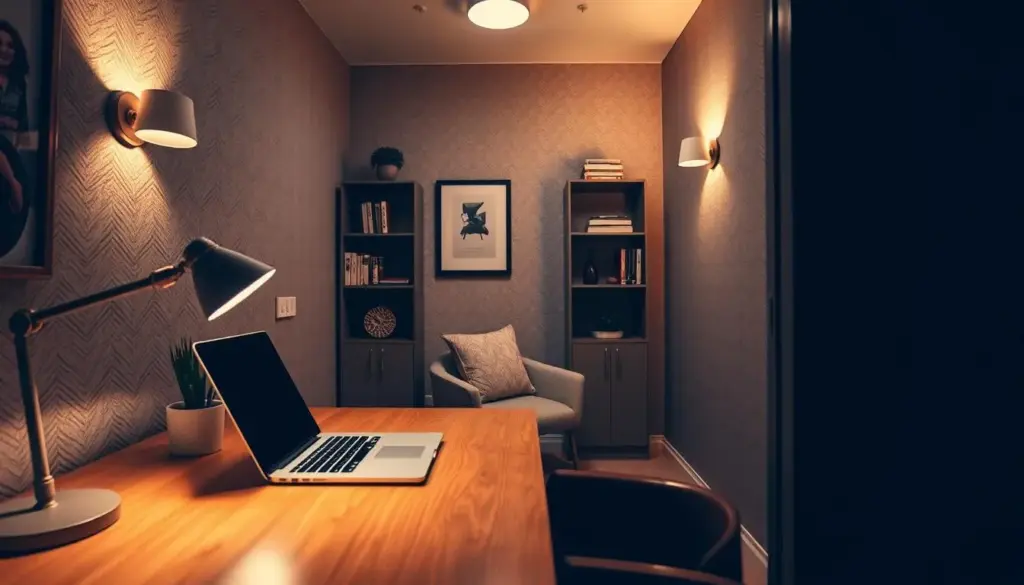
- You’ll spot how walls and your own position block overhead bulbs and create tricky shadow patterns.
- Consistent output reduces eye strain, squinting, and headaches, so you stay productive longer.
- Good illumination lowers trip and bump risks; basic safety steps cut down on accidents for workers in tight areas.
- Matching the beam and position to the task—computer work, repairs, or storage—beats one-size-fits-all choices.
- Hands-free aiming and quick re-aiming let you keep tools or papers steady while you direct the beam where needed.
Takeaway: Plan for mobility, comfort, and safety first. A small change in how you aim and mount your fixtures will improve precision, reduce mistakes, and make your confined space work area feel less cramped and more efficient for workers.
Lighting enclosed spaces: define your use case before you buy
Map out your typical sessions—how long you run lights, what tasks you do, and how often you move a fixture—before shopping. That short planning step saves returns and extra purchases.
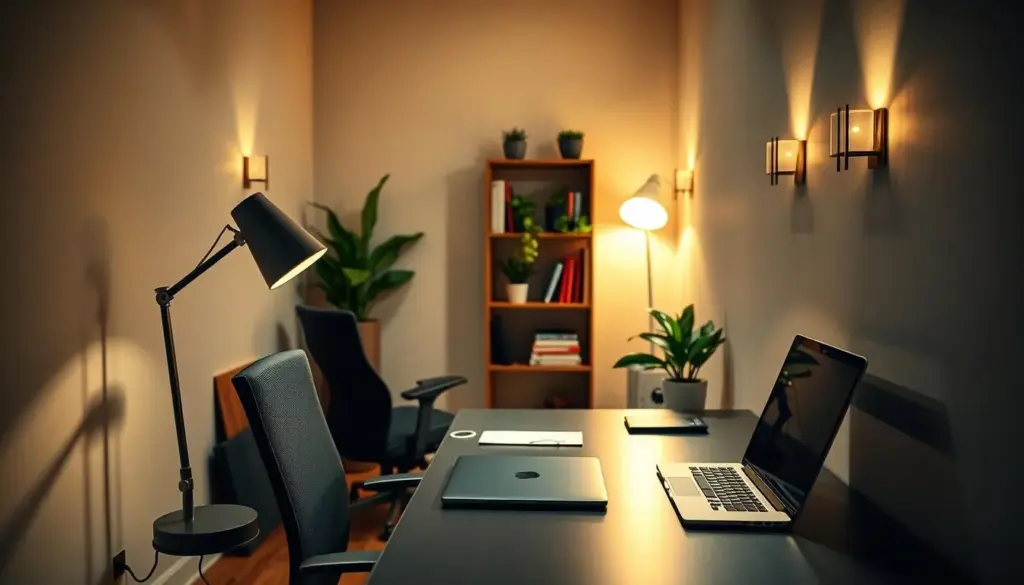
Closet office vs. alcove desk vs. back-of-house storage
Classify your setup so the product matches real life. A closet office needs glare control for screens. An alcove desk benefits from a narrow task beam. Storage areas often need wider coverage for sorting and inventory.
Task lighting vs. ambient fill lighting
Task lights deliver focused beams for keyboards, paperwork, or repairs. Ambient fill softens contrasts and reduces harsh shadows in a tiny area.
Run time and repositioning considerations
Estimate hours per session and days per week. If outlets are scarce, cordless rechargeable options are usually preferred.
- Create a short requirements list: brightness modes, beam control, mounting, and power.
- Decide if one unit suffices or if you need multiple systems to avoid shadows without over-brightening.
- Match frequency of repositioning to a product’s mounting style and handle design.
Bottom line: buy for your use case first. Define needs, then compare models by runtime, beam, and mounting to get a durable, usable result.
Key performance specs that matter most in confined spaces
Focus on practical performance: brightness range, beam control, and color clarity for real tasks.
Brightness and adjustable modes: Pick a light with a wide output range so you can dim for screen work and ramp up for detail tasks. Adjustable modes save battery and prevent glare when you shift from reading to wiring.
Beam control: flood vs. spot
Broad flood beams reduce deep shadows and help you scan shelves or an alcove quickly.
Narrow spot beams let you target a tiny area without lighting the entire room. Choose fixtures that let you switch or aim the beam.
Light quality for visibility
Consistent output keeps inspections reliable—avoid units that pulse or fade during long runs.
Usable color and clarity matter. Good color rendering helps you match labels, wires, and finishes accurately.
- Match specs to your conditions: dark paint, reflective walls, or mixed ambient bulbs.
- Prefer modern LED technology for strong illumination with low power draw.
- Buy equipment with simple controls so you adapt quickly on the job.
Power and portability for dark closets with limited outlets
Choose the right power approach to balance portability, runtime, and a neat work area. In a small closet office, your choice of power affects safety, workflow, and how tidy the room stays.
Why rechargeable, cordless work lights often win
When outlets are scarce, rechargeable, cordless units reduce cable clutter and trip risks. A cordless setup lets you move the unit to avoid glare on a monitor or bright spots on paperwork.
Battery runtime for hours-long sessions
Estimate your typical session length and pick a battery that covers it with headroom. Modern LED designs stretch runtime while keeping useful output.
When corded power still makes sense
For a permanent desk that rarely moves, a corded fixture gives stable output and no runtime worries. Weigh neat cable routing, outlet placement, and the need for portable equipment.
- You’ll decide cordless vs. corded based on outlet access and how often you reposition your light.
- Good charging habits—overnight charging or rotating a backup—keep your lighting used reliably.
- Match the LED option to conserve energy while giving bright modes for detail work and softer modes for calls.
Durability for dust, moisture, and temperature swings in small areas
In tight work areas, build quality matters as much as brightness—choose products that resist impacts and grime. A brief durability check up front saves time and reduces mid-task interruptions.
Impact-resistant housings for bumps in tight spaces
Impact-resistant cases prevent cracked shells and exposed components when a fixture is bumped by a chair, door, or tool. Look for reinforced corners, rubber bumpers, and shatterproof lenses.
Materials and build features that stand up to dust and dampness
Select sealed designs and gasketed ports to keep dust out and limit moisture ingress. Metal or high-grade polymer bodies handle temperature swings better than thin plastics.
Reliability benefits: fewer disruptions and replacements
Durability cuts down on maintenance and keeps you working through changing conditions. Strong builds mean fewer failures, lower long-term costs, and safer gear in mixed-use environments.
- Create a short checklist: impact rating, ingress protection, serviceability, and your real-world requirements.
- Prioritize maintenance-friendly products with replaceable parts and clear warranties.
- Match the build level to your conditions—office-only needs differ from utility or storage use.
Hands-free placement: mounting and positioning options
Hands-free mounting lets you aim steady beams while you keep both hands on the task. In tight areas, pick mounts that suit your surfaces and workflow so the light works with your body and desk height.
Magnetic work lights for metal surfaces and quick aiming
Magnetic fixtures attach to steel frames, filing cabinets, or shelving for instant, stable placement. They let you aim precisely without holding a lamp, which reduces glare and shadow when you work close to a monitor.
Clamp, scaffold, cart, and tripod-style setups for flexible placement
Clamp mounts grip desks or shelves where a floor stand won’t fit. Tripods and quadpod-style supports give height with a small footprint. Cart and scaffold mounts suit heavier products and industrial-grade fixtures used confined to tight job zones.
Keeping floor space clear in cramped work areas
Keep walkways and chair paths open by using wall, shelf, or overhead mounts when possible. Aim from the side to cut hand shadows and use elevated positioning for consistent coverage.
- Practical tip: match mounting choice to the surface and product weight to avoid improvised, unstable setups.
- Why it matters: right placement reduces glare, keeps your floor clear, and improves task accuracy.
- Quick checklist: surface type, mount stability, adjustability, and how the solution integrates with your workflow.
LED technology advantages for enclosed-space lighting
Modern LED options give you bright, steady output with low power draw and a small footprint. That combination solves common constraints in narrow work areas and helps you run lights longer without external power.
Energy efficiency that lowers operating costs and extends battery life
led lighting uses far less power than older bulbs. You get longer runtime on rechargeable units and lower monthly energy bills for fixtures used daily.
Reduced heat emission for comfort and safer tight-space use
led technology emits minimal heat, so a closed closet office stays cooler and safer. Less heat also lowers fire risk near papers, fabrics, or packed shelving.
Long lifespan to cut maintenance in hard-to-access locations
LEDs last thousands of hours. That means fewer replacements and less disruptive maintenance when fixtures sit behind shelves or above a desk.
Compact, lightweight designs that fit where bulkier lights can’t
Small task lamps, slim floods, and strip options let you place useful light in narrow alcoves without crowding the work surface.
- Practical takeaway: choose LEDs for low energy use, long life, and small form factors to reduce maintenance and improve usability in tight spaces.
Safety and compliance: when “hazardous areas” rules apply
Start by confirming whether the area may hold flammable gases, vapors, or dust that need special-rated fixtures. That quick check tells you if this is a normal desk nook or a regulated work zone that demands stricter safety controls.
What counts as a hazardous location
Hazardous areas are places where concentrations of flammable gases, vapors, or combustible dust can form. In these conditions, ordinary electrical gear may create arcs or hot surfaces that ignite the atmosphere.
How explosion proof designs reduce ignition risk
Explosion proof lighting uses robust, encased housings to contain any sparks or heat. That design prevents internal faults from starting an external fire or blast.
Certifications and rating basics
UL listings and Class/Division ratings (for example, Class I Division 1 and 2) tell you which products meet local safety standards. Match the rating to the expected presence of vapors or gases before you buy.
- Choose UL-listed lighting fixtures for regulated sites.
- Prioritize explosion proof units if there is any chance of flammable atmosphere exposure.
- Correct rating means fewer compliance surprises and better overall safety.
Explosion proof lighting options to consider for high-risk environments
Choose rated gear that limits heat and contains internal faults to protect people and property. For hazard-prone work, you need products designed to stop sparks and keep contaminants out while delivering steady output.
Hand lamps, rope/string lights, and area fixtures for tanks and vessels
Hand lamps give you portable, focused beams for close work. Rope or string styles spread light along curved surfaces and inside tanks without bulky housings.
Area fixtures cover larger runs and stay useful when you need broad, even illumination across a vessel or corridor.
Encased designs that contain sparks and withstand harsh conditions
Encased housings trap any internal fault and limit heat transfer. They also resist dust, humidity, shock, and vibration for long service life.
Use cases beyond heavy industry and mounting options
Proof-rated fixtures have value in kitchens and public areas where shatter resistance reduces injury and cleanup. You’ll also choose magnet, cart, scaffold, pipe-clamp, or quadpod mounts to place gear safely without clutter.
- Compare hand lamps, rope lights, and area fixtures to match your workflow.
- Favor encased proof lighting to contain sparks and protect the environment.
- Consider explosion proof LED lighting for efficiency and long runtime.
Choosing the right fixtures for your space layout and workflow
Pick fixtures that match how you move, store gear, and use your desk so the light works with your rhythm. Start by mapping tasks and common positions. That makes it easier to select practical lighting solutions that fit your workflow.
Small alcove desk setups: targeted task lights plus spill fill
For an alcove desk, combine a targeted task light with a soft spill or fill source. The task light gives focused brightness for keyboards and paperwork.
Spill fill reduces contrast so your monitor stays readable while you work.
Closet offices: glare control and wall/door mounting strategies
In a closet office, control glare first. Use adjustable mounts on walls or the door to aim the beam away from your eyes.
Magnetic or under-shelf mounts keep the desk clear and let you reposition the light quickly.
Larger restrictive areas: slimline floodlight-style coverage
Slimline floodlights offer broad coverage without bulky hardware. They work well where a single fixture must brighten a narrow but longer zone.
Adjustable brightness and beam focus help you choose broad coverage versus precise illumination.
Quick selection checklist
- Brightness and beam pattern
- Mounting style and aiming flexibility
- Runtime, durability, and rating
Use this checklist to narrow options fast. Confirm real runtime figures, check beam photos, and verify the product meets your requirements for used confined setups. This approach gives you the right lighting choices with less guesswork.
Conclusion
Close with a simple purchase rule: define the task, map the layout, then pick the smallest set of products that meets both light and safety needs.
You’ll prioritize consistent illumination to cut shadows, lower trip risk, and help workers stay precise and productive in a confined space. Favor cordless rechargeable kits when outlets are limited, and choose LED options for low heat, long life, and energy savings.
Keep durability high if dust, dampness, or temperature swings matter. For any risk of flammable vapors or combustible dust, treat explosion proof and proof-rated equipment as required, not optional.
Final step: compare fixtures by beam, runtime, mount, and rating. Buy the minimal task + fill or a slim flood + targeted light to keep your workspace safe, readable, and low-maintenance.


