

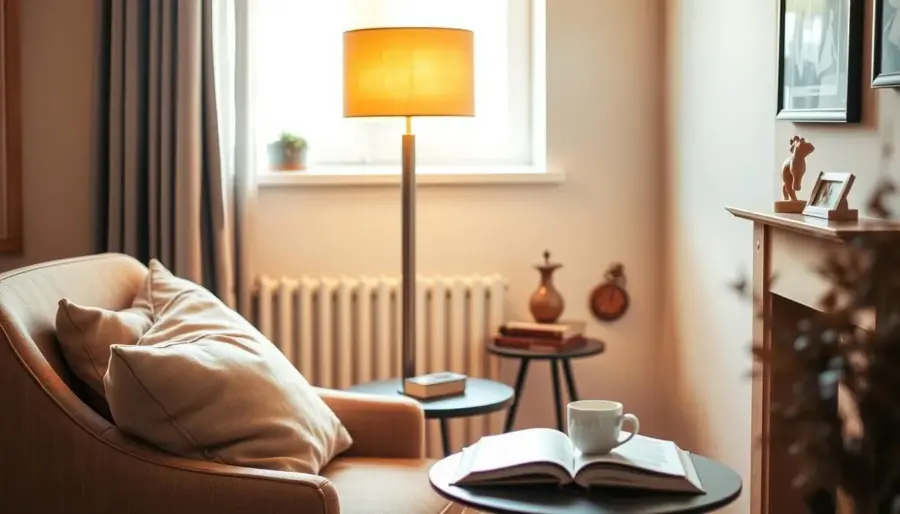
You want to claim a dark corner without stealing walking room or tabletop space. A slim floor lamp can lift a small area using vertical lighting, so your space feels brighter and less cluttered.
This guide will compare slim models that tuck into corners, deliver useful brightness, and look intentional in your home. Expect a product roundup focused on compact bases, narrow shades, and easy placement.
Integration here means more than fitting a fixture: it covers how a unit joins your smart routines and voice control with Alexa or Google, and growing Matter support in the United States.
You’ll learn how modern smart lamps handle DIY colors and music-reactive modes so the same fixture works as task light by day and mood lighting at night. The article moves from sizing and placement basics to smart compatibility and brand picks with setup tips.
In short: make a tight area feel larger and avoid bulky bases, extra cords, or oversized shades. This section sets expectations for practical, stylish choices that work in small rooms.
Why Slim Floor Lamps Make Sense for Small Nooks, Corners, and Tight Rooms
Slim vertical lighting can turn a tight corner into a useful, well-lit spot without crowding your walkways. You keep surfaces clear and get light at eye level or higher, which beats a bulky tabletop when space is limited.
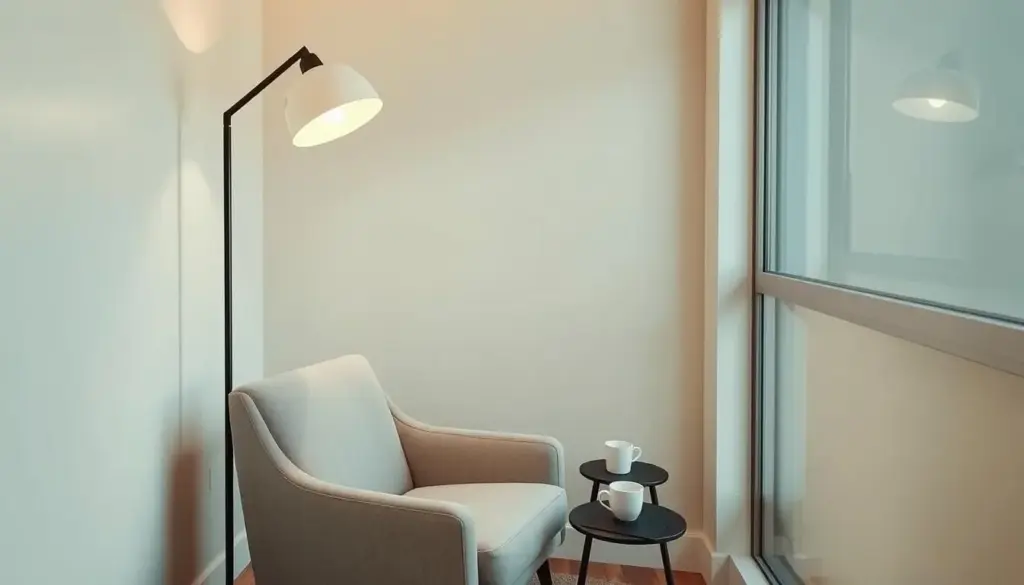
How post-style and corner floor designs save space: narrow bases and tall profiles occupy minimal footprint, so you can tuck a unit behind a chair, beside a sofa arm, or in a narrow gap between furniture pieces.
Where they work best: use one in a bedroom corner for soft night lighting, by your sofa for ambient glow in the lamp living room, or in a home office corner to reduce harsh overhead glare and create a comfortable work area.
- Measurable “slim”: check base width/depth (footprint), overall height, and reach beside seating.
- Comfort: choose diffused or bounce-friendly designs to avoid glare in a small space.
- Tradeoff: the slimmer the profile, the more precise the placement needs to be—directional sources can miss the area if poorly positioned.
Before buying, focus on dimensions and real placement photos so the corner floor choice actually fits your room and delivers the light and comfort you expect.
Floor Lamp Integration: What to Look for in Smart Controls and Compatibility
A compact vertical light can do more when its controls and ecosystem match how you already use voice and apps.
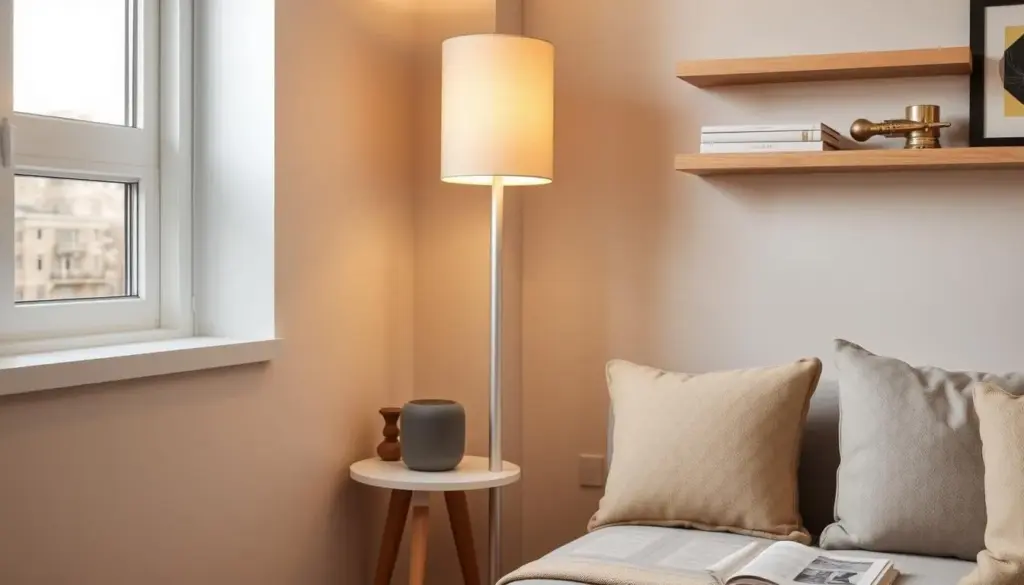
At minimum, expect reliable on/off, dimming, and basic color or color temperature control. Scheduling and timers are also essential so your corner lights follow daily routines.
In the US, most models support voice with Alexa or Google Assistant. Typical commands include “turn on,” “dim to 30%,” and “set color to warm white.” That covers most daily uses without opening an app.
- SmartThings reality: some products link directly, others require a bridge or expose only scene triggers.
- Hue hub route: Hue-compatible bulbs or fixtures usually join SmartThings through the Hue bridge for more stable, local-like control.
- Wi‑Fi limits: many Tuya-derived Wi‑Fi devices show as scene-only items in hubs; avoid Bluetooth-only models if you need broad ecosystem access.
Matter over Wi‑Fi simplifies cross-platform setup, but it often shares only core controls (on/off, dim, basic color). Expect advanced scenes, music modes, and special effects to remain tied to the maker’s app or product firmware.
Top Picks for Slim Smart Floor Lamps That Fit in Corners
Choose a narrow post-style option to make a corner feel intentional without eating floor space. Below are compact, smart-friendly choices and what to watch for when you buy.
- Selection criteria: fit for corners, a stable base, useful brightness, wide dimming range, color features, and solid smart compatibility.
- Govee Matter over Wi‑Fi: recommend the newer govee floor lamp model that supports Matter for broader ecosystem support. Confirm Matter on the exact model before you buy.
- Govee RGBIC basics: the typical RGBIC style excels at bold multi‑color looks, DIY color control, lighting effects, and music sync for mood-first corners.
- Hue-compatible posts: Philips Hue post-style options join SmartThings reliably via the Hue hub for stable automations and hub-based control.
- Tuya vertical LEDs: pick Wi‑Fi models, not Bluetooth. Expect SmartThings to treat many as scene-only devices; check app quality first.
- LIFX Beams/light bars: use these as vertical alternatives when a true base won’t fit or you want a modular accent instead.
- Pro variants note: premium hardware can add extras, but pro features may not translate to SmartThings or Matter—buy for what you’ll actually use.
Govee Floor Lamp Spotlight: RGBICW, Preset Scene Options, and App-Only Features
Govee’s tall RGBICW model turns a tight corner into a shifting ribbon of color and light. The govee floor lamp uses multi-zone RGBICW control so sections of the post can show different colors at once. That creates gradients and layered looks a plain white bulb can’t match.
In practical terms, RGBIC/RGBICW means the post contains addressable zones. Each zone can show its own color or temperature, so a single slim column looks like several lights in one. Corners amplify those lighting effects: walls reflect and blend the colors, making gradients feel deeper and more cohesive.
Choose a preset scene when you want instant results. Use a calm night preset for low, warm glow that won’t wake sleepers. Pick a movie scene for dim, saturated backlight. Switch to a focus preset for bright, cool white that helps reading or work.
- DIY mode: fine-tune palettes, speed, and brightness to match your routine.
- Music mode: sound-reactive color changes add energy for living rooms or gaming, but keep brightness low and transitions slower for tastefulness.
- Physical controls: the included remote or on-device button gives quick access when you don’t want the app.
Remember: basic on/off and dimming often work through smart platforms, but many advanced scenes and specialty lighting effects remain app-only. That makes the govee floor a strong decorative centerpiece, as long as you use the official app for its full feature set.
Picking the Right Brightness, Beam, and Color for Comfort in a Small Area
Choosing the right output and spread makes a tight corner comfortable for reading or resting. Focus on how the brightness, beam, and color work together so your nook feels intentional rather than harsh.
Brightness and dimming
Separate ambient glow from usable light. In a small area, you want a soft background plus a brighter zone for tasks. A wide dimming range matters more than a high maximum lumen count.
Too much direct output can bounce off pale walls and create glare. Pick a fixture with smooth steps or continuous dimming and a diffuser to keep the light even.
Color temperature and color-changing
Warm white wins for reading and winding down. Warm-to-neutral whites reduce eye strain and help the body relax. Reserve RGB for short bursts of mood effects or accent scenes.
If you need both, choose a model with reliable white rendering and basic color modes so you can switch between practical lighting and playful color when desired.
Placement tips for softer ambient effects
- Angle the post to graze the wall so the beam bounces and fills the room softly.
- Leave a few inches behind the base for spread; avoid pushing it flush against the wall.
- Keep hotspots below eye level or shielded to prevent direct glare while seated.
- If this is your main area light, prioritize white output and dimming over flashy effects.
The best choice is the one you leave on. Pick brightness and color that match daily use and the room will feel better each time you enter.
Setup and Placement Tips to Maximize Vertical Space (Without Clutter)
A smart placement plan makes a tall, narrow light feel like built-in design instead of clutter.
Cable management and outlet planning
Plan the outlet location first. Decide which direction the cord will run so you avoid crossing walkways.
Use simple cable clips, a low-profile raceway, or a flat cord under baseboards to keep the area neat. Hide power bricks behind furniture when possible to keep the post visually slim.
Living room placement that avoids screen glare
Place the light slightly behind the sofa line so it provides soft backlight without reflecting on a TV. Angle the post to graze the wall and avoid direct hotspots on screens.
Leave clearance for reclining and side tables so the fixture doesn’t push seating away from the wall.
Bedroom night lighting and low-brightness scenes
Set a warm, low-brightness scene for night so you can navigate without overhead lights. Use muted tones to prevent eye strain and to keep the room calm.
Home office corners as comfortable area lighting
Use a slim post as area lighting to reduce contrast between your monitor and the surrounding room. Aim for diffuse, adjustable brightness so you can switch between focused work and relaxed breaks.
- Quick routine tip: create three presets—work, relax, night—so the fixture supports daily habits instead of becoming an extra gadget.
- Keep it slim: minimize visible cords, avoid extra adapters, and tuck the base a few inches from the wall for optimal spread.
Comparing Smart Lamp Ecosystems and Add-Ons for a Cohesive Look
Think of your lighting as a system, not a collection of gadgets. Start by matching color capability and how devices accept commands. That helps your room feel unified instead of a mix of mismatched pieces.
Mix-and-match setups
You can pair Govee devices with other brands, including Nanoleaf, to create coordinated looks. A user report showed these pairings can feel seamless when you use consistent color palettes and timing.
Platform scenes vs brand-app presets
- Platform scenes (hub or voice routines) sync basic on/off, dim, and white balance across devices.
- Brand-app presets unlock advanced effects like music modes or multi-zone color that often stay inside the maker’s app.
- Decide which behaviors you want automated and which you’ll adjust in-app.
Design consistency matters. Repeat finishes and shapes so your corner looks intentional. Pair a govee tree floor with a matching govee table lamp to layer light at multiple heights and keep a single design language.
Finally, expect a tradeoff: the more advanced the features, the more you’ll rely on the brand app. Plan your setup around which scenes and presets you want to follow you across your smart home.
Conclusion
When space is tight, choosing a narrow, tall light often delivers the greatest design and function payoff.
In a small room, the best smart choice is usually a slim floor lamp that uses vertical lighting to add comfort and style without clutter. Start your buying checklist with footprint and stability, then check brightness and dimming quality. Next, confirm color needs and white rendering. Finally, verify smart compatibility (Alexa, Google, SmartThings, Matter, or Hue).
If you want broad platform control, prioritize Matter or Hue routes. If you want dramatic multi‑zone effects and music modes, expect to use the brand app. Read listings closely for LED and connectivity details so similar products don’t surprise you.
Pick one corner in your home, set up one or two automations, and expand only after you like how the lights feel and work.


