

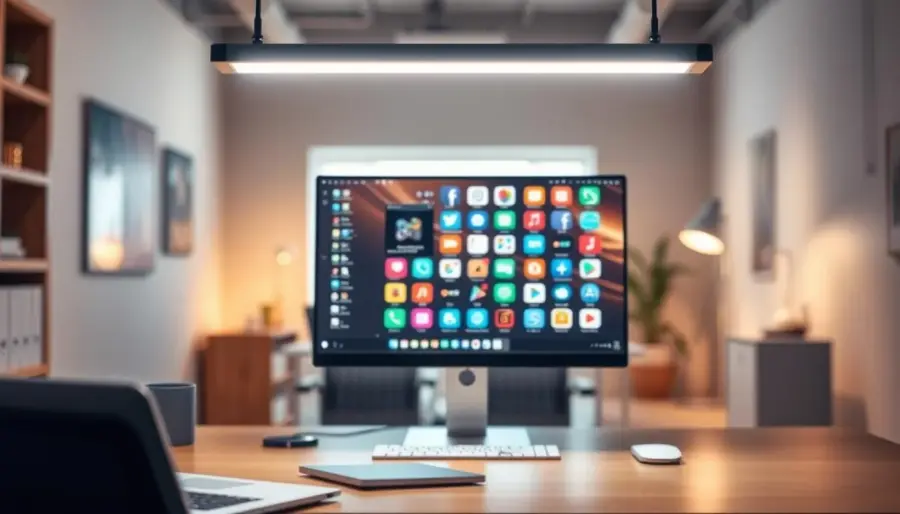
You want better desk lighting without clutter or glare. A slim strip that clips to the top of your screen shines down onto your workspace instead of taking up desk space like a traditional lamp. That simple swap can free room for a keyboard, sketchpad, or other gear while giving focused illumination for work, gaming, or hobbies.
In real reviews, models range from budget picks to premium designs like the Razer Aether at $129.99. You’ll see differences in asymmetrical optics, brightness and color controls, and backlighting that affect comfort during long sessions.
This guide will help you weigh desk space savings, reduced eye strain, and improved visibility for notes and hands-on tasks. You’ll learn how to judge value by glare control, ease of use, fit for your screen edge, and whether extra features are worth the price.
We’ll also compare real brands—BenQ, Xiaomi, Razer, Baseus, Quntis—so you can match features to your setup and avoid overspending.
Why a top-mounted monitor light bar belongs in your workspace
A clip-on solution lets you free up valuable desk space by removing a lamp base, arm, and cord clutter. If your surface is already crowded with a keyboard, mouse, and hobby tools, swapping to a screen-mounted strip reclaims usable area for work or models.
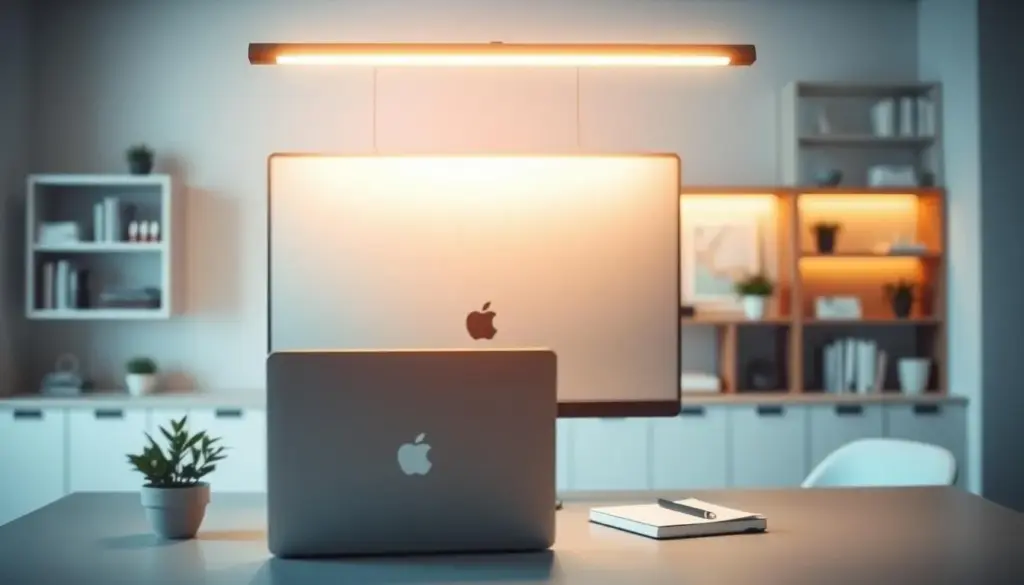
Space-saving lighting that frees up desk space compared with a desk lamp
Because the fixture sits on the screen edge, you avoid sideways shadows and base sprawl. The light path aims forward and down, so your hands and notes get even coverage instead of hard side shadows.
More comfortable screen time by reducing contrast and helping reduce eye strain
Balanced task and ambient lighting lowers the harsh contrast between a bright screen and a dark room. In practice, that means fewer squints, less fatigue when you look between your screen and your desk, and less urge to crank brightness.
Task visibility upgrades for your keyboard, notes, and model-building or creative work
For hybrid use—work, gaming, sketching, or model assembly—the strip adapts with brighter, cooler output for detail work and warmer, dimmer tones for evening sessions. Tom’s Hardware users noted cooler light helps when painting small parts while warmer settings feel better for relaxed play.
- Minimalist look: A slim strip reads cleaner than a desk lamp in office or bedroom setups.
- Practical gain: Better task lighting with less desk clutter improves comfort and focus.
Note: Not all designs perform the same—glare control and optics determine whether the addition truly improves your screen experience or creates reflections.
Monitor light bar tech explained: what makes these light bars different
Understanding how these strips shape light helps you pick a model that keeps your screen clear and your desk usable. Optical design, control options, and back-facing illumination are the big differences you’ll notice in real use.
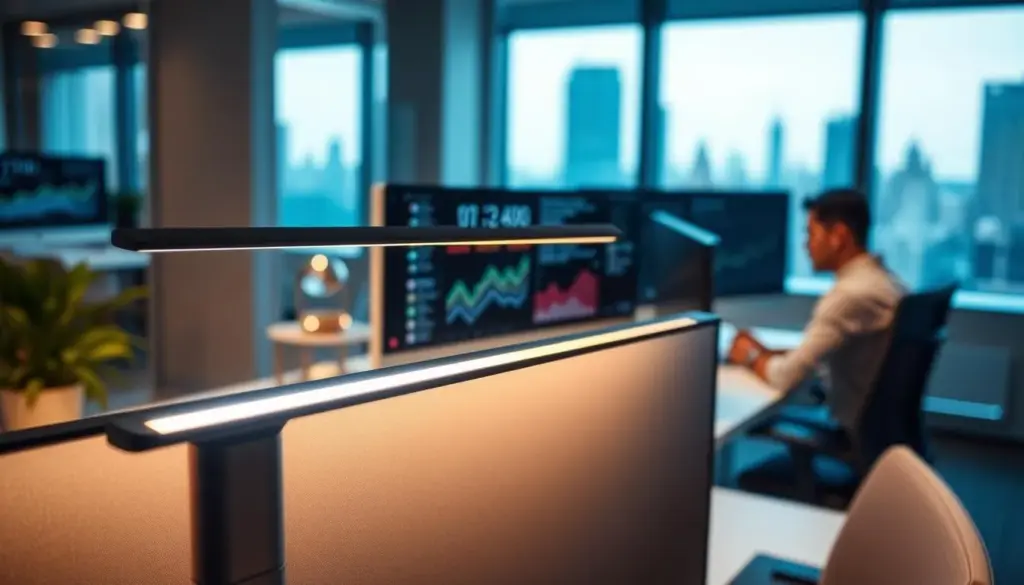
Asymmetrical optics and glare control
Asymmetrical lighting means the lens throws bright output down onto your desk while limiting spill onto the panel. That cutoff prevents screen reflection and visible glare.
BTOD testing showed BenQ’s ScreenBar produced a distinct cutoff line and best controlled glare. Budget models from Baseus and Quntis tended to bleed light onto the screen, which can wash out colors and raise eye strain.
Brightness and color temperature
Think of brightness and color as two separate dials you’ll use every day. Brightness sets intensity; color temperature shifts mood.
Use cool, bright settings for detail work like note reading or modeling. Switch to warmer, dimmer tones for relaxed evening use.
Auto dimming and biased/back lighting
Auto dimming works as a set-and-forget feature that adapts output to room conditions so you’re not always adjusting settings.
Biased or back light casts gentle illumination behind the display to balance front lighting. That reduces contrast between screen and surroundings and lowers eye strain in dark rooms.
- Buyer tip: prioritize asymmetrical optics and effective back lighting over flashy extras if glare-free viewing is your goal.
- Real-world note: good optics beat raw lumen numbers when it comes to usable desk illumination.
How to choose a monitor light bar that fits your setup
Start with fit: measure the top edge of your screen so the strip sits secure and aims where you work. If it wobbles, even the best features won’t help.
Mounting and thickness checks
Check your display thickness and edge shape against the product specs. Some designs use clamps, others rely on counterweights. The wrong match can tilt forward or fail on thicker housings.
Flat vs curved displays
Curved panels change contact points. Confirm compatibility—brands like Quntis offer curved options, while BTOD found BenQ’s mount fits a wide range.
Single vs dual coverage and desk placement
If you run two screens, you may need a longer unit or two smaller units to get even coverage across your desk. For deep desks, verify the spread and adjustment range so notes and keyboard sit in the beam.
Build quality signals and final checklist
- Solid hinge that holds angle
- Sturdy clip or weight system
- Durable bar materials that resist sag
Fit first, then coverage, then glare control. Use this checklist before you buy so the chosen product truly matches your setup and range of tasks.
Features you’ll actually use in daily office and home setups
Daily use reveals which controls and dimming systems will save you fiddling and frustration. Pick based on how often you tweak settings at your desk and what tasks you do most.
Wireless puck vs on-bar controls vs touch sensors
The wireless puck often wins for usability. BTOD preferred puck-controlled models for quick tweaks without reaching up to the screen.
Xiaomi’s cheap wireless puck uses rotate for brightness, press-and-rotate for color temperature, and a short press for on/off. That makes it a practical choice for busy desks.
On-bar controls, like Razer’s, work if you rarely change settings. Touch sensors on some Baseus and Quntis models felt too sensitive in tests.
Stepless dimming and saved modes
Stepless dimming matters because you need a usable minimum at night. Baseus reached about 5%, which kept comfort without glare.
BenQ’s puck lets you save favorites so you can switch between work, gaming, and reading fast.
- Pick controls that match your workflow.
- Prioritize stepless dimming and usable minimums.
- Use presets to jump between tasks without fuss.
Price, performance, and real-world reviews: picking the right model and range
Price often decides which features you actually use, so match your budget to the optical performance you need. Organize the market into clear ranges so you can pick without guesswork.
Budget and mid-range tradeoffs
Baseus (~$31.99) and Quntis (~$39.99) offer solid controls and stepless dimming at low cost. Reviews flagged both for light bleed and weaker asymmetrical lighting.
That spill can lower contrast and make colors look washed on your screen.
Best glare control for the money
benq screenbar (~$109) stood out in tests for a clean cutoff line, strong mount, and useful auto dimming. If glare control is priority, this model gives the best balance of optics and usability.
Premium front/back experience
The benq screenbar halo (~$179) adds back light, front modes, and a wireless puck with saved favorites. It’s the premium choice if you want versatile scenes and easy switching.
Value puck and smart extras
Xiaomi (~$67.99) is a good value puck option: better build quality than the cheapest models but not the same glare performance as benq screenbar.
Razer Aether (~$129.99) leans style and ecosystem. Its biased lighting is neat, but Matter/app features can feel like extra complexity you may not use.
- Quick buyer guardrail: make sure you pay for optics, controls, and fit before spending on brand or smart integrations.
Conclusion
A well-chosen desk strip can free up surface area while making long sessions easier on your eyes.
You buy a monitor light bar to reclaim desk space and get focused task lighting for notes, keyboards, and hands-on work. Good models cut contrast and help reduce eye strain by letting you dial brightness and color temperature.
Match the product to your setup: fit and mount, desk depth, and whether you need strong glare control or backlighting for a wall-facing display. Asymmetrical optics are the key feature that separates useful units from those that cause screen reflections.
For most users, mid-range offers the best value. Step up to BenQ-level optics if glare is your priority; choose Xiaomi or Razer if you want a puck or extra modes and you will use them. Prioritize controls you like, a low minimum brightness at night, and a solid mount over spec-sheet hype.
The result: consistent task lighting, cleaner desk space, and a more comfortable screen environment that helps you get work done with fewer breaks for tired eyes.


