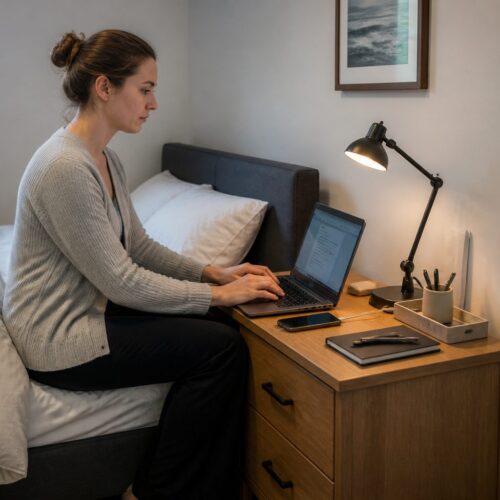


You want a small footprint without giving up support. A low-profile seat can provide full-size relief through targeted adjustability—seat height, seat depth, lumbar location, and recline tension—rather than bulk. Focus on fit, not size, and look for measurable ranges that match your body and desk.
Use this guide to set clear buying goals: define a low-profile design that tucks under your desk, then check non-negotiable features like seat height range and lumbar placement. BIFMA standards aim to fit many users, and OSHA warns that prolonged static posture raises MSD risk.
Think about how you’ll use the seat—work-from-home, dorm study, or a small apartment desk—since usage time changes what matters most. This Buyer’s Guide shows quick, measurable checkpoints and simple fit tests so you can compare options fast.
An informed choice is an investment in comfort and better posture. We’ll also cover setup so your new office chair feels right from day one.
Why a Low-Profile Office Chair Matters in Small Spaces
When space is tight, your seating choice must balance fit and function. In apartments, dorms, or small home offices, bulky furniture can block circulation and make it hard to sit close enough to your desk.

The practical tradeoff is simple: you need a usable office setup but not a piece that dominates the room. A low-profile seat gives clearance for tight desk nooks and shared rooms so you can use back support properly.
The real ergonomic challenge of apartments, dorms, and home offices
Dining seats and stools often lack adjustability and proper lumbar support. That forces you to perch on the front edge or slouch, which flattens your spine’s natural curve and leads to lower back discomfort.
How prolonged static posture increases musculoskeletal strain (OSHA)
OSHA notes static postures as a top risk for MSDs. Staying locked in one pose reduces circulation, increases fatigue, and can turn mild discomfort into real pain by the end of the day.
Shopping and research tip
- Verify measurements and warranty details before you buy.
- If a retailer page won’t load because of a page blocked error or a blocked extension, disable extensions and try again.
- Choose movement-friendly features (tilt, recline) to reduce static strain.
Bottom line: the right low-profile option protects your health while fitting your space constraints, so you don’t trade posture for room.
Compact chair ergonomics essentials you should prioritize
Small footprints still need targeted adjustability to prevent aches and keep you productive.
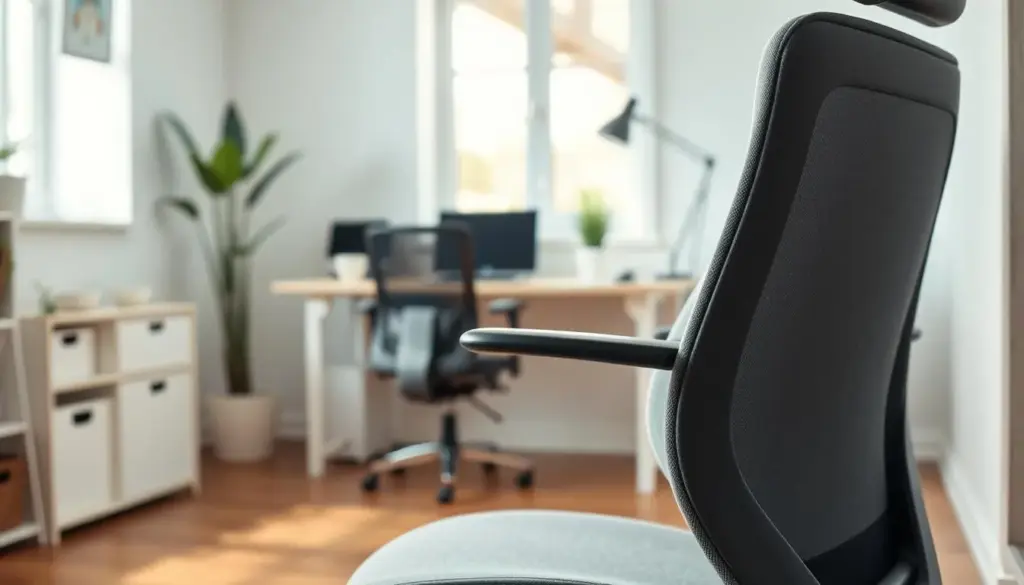
Adjustability over bulk: a seat that matches your body cuts down on compensating postures. Focus on measurable ranges rather than a bigger backrest or thicker padding.
Seat height targets
Look for a seat height of about 40–52 cm so your feet sit flat on the floor and knees form roughly a right angle. That base stabilizes your posture and reduces pressure under the thighs.
Seat depth fit
Seat depth of 38–45 cm is ideal. You should sit back against the backrest while keeping a 2–3 finger gap behind the knees to avoid circulation and pressure problems.
Lumbar and movement features
Lumbar support that adjusts 6–12 cm lets you align support with the low-back curve and protect the spine. Recline and tilt tension in the 100°–125° range promote small, healthy movements that fight static strain.
- Check that ranges are reachable from your desk.
- Prioritize features you can use daily over cosmetic choices.
- Filter by these essentials before comparing materials or color.
Seat height, seat depth, and backrest fit for your body
Match height to your desk and legs. Set the seat height so the top of the seat is just below your kneecaps when you stand in front of it. When seated, your feet should sit flat and your thighs should be roughly parallel to the floor.
How to tell if the chair height matches your desk and leg length
Quick self-check: sit and rest your forearms on the desk. If you must shrug your shoulders to type, the desk-seat relationship is off.
Leg length matters. Shorter users often sit too high and dangle; taller users may sit too low and tip the knees above the hips. Adjust so your feet get solid support.
Backrest shape and support zones that reduce slouching
A supportive backrest has targeted zones that hold your lower and upper back in place. This discourages the upper back from collapsing forward and reduces forward head strain.
The right backrest is not always the tallest. It should match your torso length and allow you to sit back while keeping your arms relaxed at the desk.
- Sit back with your back contacting the backrest; if you slide forward after 30–60 minutes, the seat depth or backrest fit is wrong.
- Seat depth should allow 2–3 fingers behind the knee while your back stays against the backrest.
- Desk proximity test: you should be supported and still close enough for relaxed arm angle while typing.
Lumbar support features that reduce lower back pain risk
The right lumbar solution fills the inward curve of your low back without forcing an exaggerated arch. Good support should match the natural curve of your spine so you stay upright and alert.
Adjustable height and the sweet spot
Look for 6–12 cm of vertical adjustment. That range helps you place the pad in the true “sweet spot” — the inward curve just above your pelvis.
If the support sits too high you may shrug or push forward. If it sits too low you’ll slide and lose the benefit altogether.
Dynamic systems versus fixed curves
Dynamic lumbar systems move with you and keep contact during recline. Fixed lumbar curves only help if your body perfectly matches the built-in shape.
Dual-section backrests for long sessions
Dual-section designs separate lower and upper back zones. They spread pressure and reduce the tendency to collapse into a C-shaped posture during long work periods.
- Buying tip: if you’ve had lower back pain, prioritize adjustable lumbar and a dual-section backrest.
- Remember: lumbar support cuts risk, but it does not replace movement breaks and proper setup.
Space-saving design features that don’t sacrifice comfort
Smart seating design helps you pull in close to your desk while keeping posture stable.
Armless and flip-up armrests for sliding fully under your desk
Armless models or flip-up armrests let you tuck the seat beneath the desk so you sit close and keep shoulders relaxed. This is a valid ergonomic strategy in tight rooms because it prevents you from reaching and leaning forward.
Slim profiles and compact bases that preserve floor space
A slim profile and a small base free up visible floor area and make your office feel less crowded. You can still get back support and movement options without oversized padding.
How armrest width can affect shoulder posture and desk proximity
Wide armrests can push your arms outward, rotate your shoulders, and stop you from getting near the desk.
- Measure chair width with armrests and the base footprint so it fits under your desk.
- Check that the seat slides fully under the desk edge before you buy.
- Prioritize tuck-away armrests if your desk is narrow or shared with other users.
Decision rule: if floor or desk space is limited, choose tuck-away features rather than oversized pieces—but don’t give up lumbar support, seat fit, or tilt options that maintain daily comfort and support.
Materials and build quality to look for in a compact ergonomic chair
The build matters: breathable surfaces, firm padding, and a solid base make daily use easier.
Mesh backrest benefits for breathability in tight rooms
Mesh improves airflow so you stay cool when ventilation is limited. In small office spaces, that ventilation makes long sessions more comfortable.
Cushioning and seat pan firmness: balancing comfort and support
Look for supportive cushioning that feels firm but not hard. It should stop you from sinking and tilting your pelvis.
Quick seat pan check: sit for 15–30 minutes. If you feel pressure points, the foam density or shape is wrong for long use.
Five-star base stability and caster choice for carpet vs. hard floors
Stability matters: a five-star base reduces tipping when you recline or shift. It’s essential even for smaller models.
- Match casters to your floor: soft casters for hard floors, hard casters for carpet.
- Correct casters let you reposition smoothly and protect your floor surface.
- When comparing office chair options, check adjustment mechanisms, warranty length, and lab testing claims for build quality.
Choosing the right size for you, including petite-friendly options
Fit matters more than looks when you shop for smaller frames. Start by checking the BIFMA range listed on spec pages. That tells you whether a product is engineered to fit a broad group of users instead of a single “average” height.
What “BIFMA range” fit means and why it matters for real-world comfort
BIFMA range refers to design targets that cover many body sizes. When a model follows those ranges, you get usable adjustments for real people. Look for specs, not marketing phrases.
Petite fit cues: seat height range, backrest scale, and armrest adjustability
For smaller users, check the minimum seat height first. Ensure the backrest does not hit high on your shoulders and that armrests drop low enough to avoid shrugging.
What to look for if you’re around 4’11” to 5’6″
- Lower minimum seat height and shallow seat depth.
- Manageable backrest scale and a compact base to save home office space.
- Adjustable armrests or flip-up models so you can tuck in close.
Real examples: Herman Miller Aeron Size A, Sihoo M59AS, and Alera Etros Petite show how scale plus adjustments work. Avoid deep seats that force you to perch; they disconnect you from support and cause fatigue.
How to set up your chair for better posture at your desk
Put the seat first: a stable base makes every other adjustment effective.
Start by setting seat height so your feet rest flat on the floor or a footrest. Your knees should form a comfortable working angle without pressure behind the knees.
Next, dial in seat depth. Sit all the way back and check for a 2–3 finger gap behind the knees. That gap prevents pressure and numbness while keeping your back supported.
Align lumbar support and arm height
Position lumbar support to match your low-back curve so your back stays upright during typing. Set armrests so your shoulders stay relaxed; if they force a shrug, lower them or flip them up.
Match desk, keyboard, and monitor
Adjust desk and keyboard height so your wrists remain neutral and your shoulders stay relaxed. If shoulders creep up, lower the desk or raise the seat slightly.
Finally, raise the monitor so the top of the screen sits at or just below eye level to reduce neck and upper back strain (OSHA).
- Quick tip: if a product manual or video won’t load because the page is blocked by an extension, try disabling extensions temporarily so you can confirm adjustment steps and specs.
Conclusion
When you compare options, put measurable fit and daily use first. Start with seat height and depth, then confirm lumbar quality and smooth recline. These features drive long-term support and comfort more than looks or padding.
Remember that a compact model can still protect posture and save space in your home office. Expect a 1–2 week adaptation period as your body adjusts; small breaks and movement reduce static strain.
Treat the right office chair as a health-focused investment. Verify the published adjustment range, test support where possible, and choose materials that match your daily use for lasting comfort and better health.