

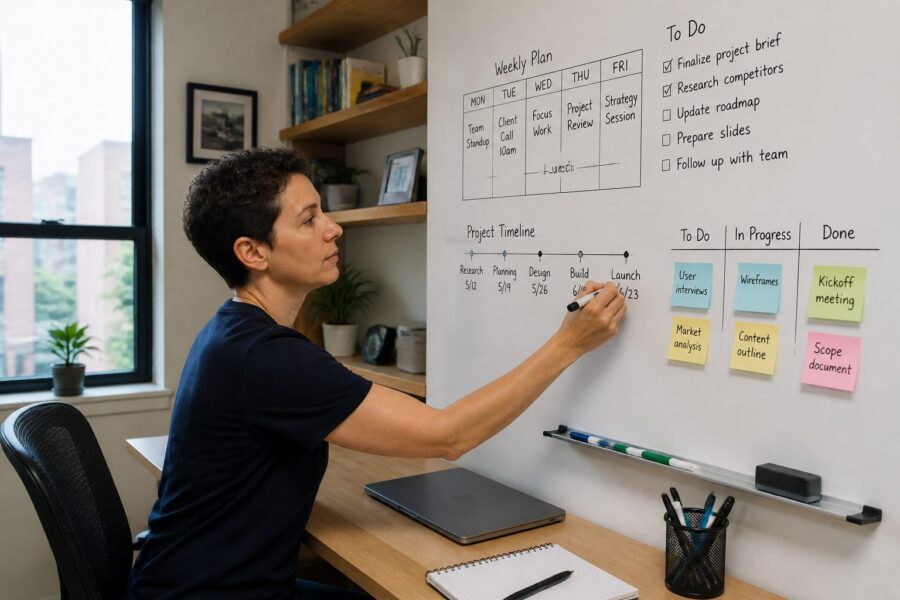
Creating a dedicated workspace at home is essential, especially for visual thinkers who thrive on brainstorming and organizing ideas visually in a way that allows them to process their thoughts more effectively. A writing surface that promotes creativity and productivity can significantly enhance your work experience in a small office setup, transforming it into a space where you can flourish and innovate.
Incorporating a whiteboard into your home office can provide the perfect solution for visualizing projects and tracking tasks across various stages of completion. This article explores the options available, from full whiteboard panels to dry-erase paint, and discusses how to best utilize these tools in your space to maximize both creativity and efficiency.
Let’s dive into the various aspects of setting up a visual planning workspace that maximizes your small office’s potential by examining the different tools and strategies available. Whether you are renting or own your space, there are practical solutions for every scenario that can be adapted to fit various needs and preferences.
Why Visual Thinkers Need a Dedicated Writing Surface
Visual thinkers often process information more effectively when they can see it laid out in front of them, as this allows for a better grasp of complex concepts and ideas. A dedicated writing surface, such as a whiteboard wall home office, provides ample space to brainstorm and organize thoughts visually, which can lead to breakthroughs in creativity and problem-solving.
Having a designated area for visual planning encourages creativity and reduces clutter, which can often stifle innovative thinking and productivity. This organization can lead to increased productivity and a clearer understanding of tasks at hand, allowing you to focus on what truly matters in your work.
A writing surface allows for spontaneous idea generation, making it easier to capture fleeting thoughts that might otherwise be lost in the chaos of daily life. This adaptability can transform your workspace into a dynamic and engaging environment, where ideas can flow freely and efficiently.
Using a writable wall paint can further enhance your creative space by turning any wall into a dry erase surface small office, providing a blank canvas for your thoughts and ideas. This flexibility means you can customize your workspace to fit your specific needs, allowing for a truly personalized approach to visual organization.
The act of writing things down can also aid memory retention and comprehension by reinforcing connections between concepts. With a dedicated writing surface, you can visualize your thoughts, making them more tangible and organized, which can significantly improve your overall productivity and focus.
Full Whiteboard Panels vs. Dry-Erase Paint: Pros and Cons
When considering whiteboard options, full whiteboard panels and dry-erase paint each have their unique advantages that cater to different needs and preferences. Full panels provide a smooth, ready-to-use surface that can hold up against heavy use, making them an excellent choice for those who frequently brainstorm or outline projects visually.
However, they can be more expensive and require professional installation, which may not be ideal for everyone. Dry-erase paint, on the other hand, is a cost-effective way to create a writable wall and offers a more seamless look, turning any surface into a creative canvas without the need for extensive renovations.
Yet, the durability of painted surfaces may not match that of full panels, potentially leading to ghosting over time, which can detract from the clarity of your visuals. It’s essential to weigh these factors based on your workspace needs, intended use, and budget to make the best decision for your visual planning setup.
Both options can significantly enhance your visual planning workspace, so consider how you plan to use them and what will best suit your workflow. For a more permanent solution, full panels might be ideal, while renters might prefer the flexibility of dry-erase paint to avoid making any permanent changes to the space.
Ultimately, the choice boils down to personal preference and workspace requirements, as well as how much you value durability versus aesthetic flexibility. Assess your needs carefully to decide which product will best serve your small office setup, ensuring that you create a space that inspires and motivates you.
Choosing the Right Wall or Surface for a Whiteboard Installation
Selecting the right wall or surface for your whiteboard installation is crucial for maximizing its effectiveness and ensuring that it serves your needs well. Consider walls that are free from obstructions and allow for easy access to your writing surface, as this will facilitate a more fluid and enjoyable brainstorming experience.
Natural light can also enhance your workspace, making it a pleasant place to brainstorm ideas and reducing the strain on your eyes while working. Ensure that the chosen wall area is spacious enough to accommodate your planned whiteboard size, allowing for ample room to write and visualize your thoughts.
| Wall Type | Pros | Cons |
|---|---|---|
| Drywall | Easy to install | May require reinforcement |
| Wood Paneling | Durable | More expensive |
| Painted Walls | Versatile | Can ghost over time |
| Concrete | Sturdy | Hard to install on |
Assess the wall’s condition before installation, as a smooth surface will yield better results and enhance your writing experience. It’s also wise to consider your décor and how the whiteboard will fit into your overall aesthetic, ensuring that it complements the look and feel of your workspace.
Choosing the right surface will pave the way for effective organization and visualization, empowering you to create a space that truly supports your work. A thoughtful approach will help you create an inspiring visual planning workspace that encourages creativity and productivity.
Sizing Your Whiteboard to Fit Without Dominating the Room
When it comes to sizing your whiteboard, balance is key to creating an environment that feels open and inviting rather than cramped. A large whiteboard can be overwhelming in a small office, so it’s essential to choose a size that complements your space while still allowing for effective visual planning.
Measure your available wall space and consider the height and width that will work best for your needs, taking into account the layout of the room and the placement of furniture. A board that is too large can make the room feel cramped, while one that is too small may not be functional for your planning needs.
Consider a board that covers about one-third of the wall space to maintain a harmonious look that doesn’t overwhelm the room. This will ensure you have enough room to write and visualize your thoughts without overpowering the room’s design and aesthetics.
Additionally, consider the layout of your small office when determining whiteboard size, as you want to ensure it aligns well with other furniture and elements in the room. This thoughtful consideration will help create a cohesive and functional workspace that enhances your productivity.
Ultimately, the goal is to create a functional yet aesthetically pleasing workspace that inspires creativity and focus. The right size whiteboard can provide the perfect balance between utility and style, ensuring that you have an effective tool for visual planning without sacrificing the overall design of your office.
Using Whiteboard Calendars and Kanban Layouts in Small Offices
Incorporating whiteboard calendars and Kanban layouts can significantly enhance productivity in small offices by providing clear visual representations of tasks and timelines. These tools help visualize ongoing projects, making it easier to keep track of tasks and deadlines, ultimately facilitating better time management.
By creating a clear visual representation of your workload, you can effectively manage your time and prioritize tasks based on urgency and importance. This method promotes accountability and ensures that nothing slips through the cracks, allowing you to stay on top of your responsibilities.
- Monthly whiteboard calendars
- Weekly task planners
- Project status boards
- Team collaboration spaces
- Deadline trackers
Using these layouts can also encourage teamwork if you share your space with others, fostering a collaborative environment that supports collective goals. This makes it easy to collaborate and stay aligned on goals, enhancing communication and creativity within your team.
Overall, whiteboard calendars and Kanban layouts are powerful tools for organizing tasks in a small office, providing a visual framework that supports clarity and focus. Embrace these strategies to enhance your visual planning workspace and create a more organized, productive environment.
Magnetic Whiteboards as Dual-Function Organization Tools
Magnetic whiteboards serve as excellent dual-function organization tools in small offices, combining the utility of a writing surface with the convenience of a magnetic board. They not only provide a writable surface but also allow for the use of magnets to hold important documents, notes, and reminders, which can enhance your organization.
This feature maximizes your workspace by reducing clutter and keeping everything in one place, allowing you to maintain an organized environment. You can easily move items around, making it a flexible solution for organizing your visual planning workspace and adapting to changes as needed.
Magnetic boards come in various sizes, making them suitable for different office layouts and allowing for customization based on your specific needs. They can be used as a central point for brainstorming sessions or as a simple task board, providing versatility in how you organize your work.
When selecting a magnetic whiteboard, consider the thickness and material to ensure durability and long-lasting use. A high-quality surface will provide a better writing experience, resist ghosting, and last longer, ensuring that your investment is worthwhile.
By integrating a magnetic whiteboard into your small office, you create a multifunctional space that enhances productivity and organization. This versatility makes it an ideal choice for visual thinkers who benefit from a dynamic workspace that supports their creative processes.
Portable Tabletop Whiteboard Alternatives for Renters
If you are renting and cannot install permanent whiteboard solutions, portable tabletop whiteboards offer an excellent alternative that allows you to maintain flexibility in your workspace. These boards provide the ability to write and erase ideas without damaging the walls, making them an ideal choice for temporary setups.
Portable options can easily be moved around your workspace, allowing you to adapt your setup as needed based on your current projects or brainstorming sessions. They are lightweight and often designed to fit on desks or small tables, making them a practical solution for maximizing your small office’s potential.
Many portable whiteboards come with built-in stands, making them easy to set up and use, which is particularly useful for collaborative sessions or brainstorming with a team. This feature enables you to quickly transition from individual work to group discussions without the hassle of rearranging your entire workspace.
Additionally, some options feature magnetic surfaces, allowing for added functionality by attaching notes and reminders directly to the board for easy access. This capability enhances your organization and keeps essential information within reach as you work.
With portable tabletop options, you can create a dynamic and adaptable workspace without the commitment of installation, making them perfect for maximizing your small office’s potential. These boards provide the flexibility you need to maintain an organized and efficient work environment.
How to Keep a Whiteboard Surface Clean and Ghost-Free
Maintaining a clean whiteboard surface is essential for optimal performance and longevity, ensuring that your writing experience remains enjoyable and effective. Regular cleaning helps prevent ghosting, which can obscure your writing over time and diminish the overall usability of your whiteboard.
Use a soft cloth and a gentle cleaner specifically designed for whiteboards to keep the surface clear and easy to use. Avoid using abrasive materials that can scratch the surface and diminish its quality, as this can lead to expensive replacements and a less efficient workspace.
Additionally, consider implementing a routine cleaning schedule to ensure your board remains in top condition, as consistency is key to preventing buildup. This practice will also help keep your visual planning workspace organized and functional, allowing you to maintain a productive environment.
For stubborn stains, specialized whiteboard cleaners are effective at removing marks without damaging the surface, which can extend the life of your board. A little maintenance goes a long way in preserving the usability of your writing surface, making your workspace more efficient.
By taking these simple steps, you can keep your whiteboard looking fresh and new, which can significantly enhance your overall workspace experience. A clean writing surface fosters a productive environment and enhances your small office experience, allowing you to focus on your work without distractions.
Integrating Whiteboard Layouts With Digital Project Management
Integrating whiteboard layouts with digital project management tools can significantly enhance your workflow by combining the benefits of both physical and digital organization. This hybrid approach allows for both visual tracking and digital organization of tasks, ensuring that you can manage your projects effectively.
Using a whiteboard for brainstorming sessions and a digital tool for tracking progress can create a comprehensive project management system that supports clarity and efficiency. This combination helps maintain clarity and can improve team collaboration, ensuring everyone is on the same page as projects progress.
By visualizing tasks on your whiteboard, you can easily transfer information to digital platforms for enhanced tracking and accountability, bridging the gap between hands-on planning and digital management. This strategy allows you to blend the best of both worlds, making your workflow more dynamic and responsive to changes.
Ultimately, integrating these systems can lead to improved efficiency in your small office, as you leverage the strengths of both mediums. You’ll find that a combination of physical and digital tools can yield the best results, providing flexibility and organization in your work processes.
Embrace the synergy of these methods to create a well-organized and productive workspace that meets your unique needs. A thoughtful integration of whiteboard layouts with digital management will enhance your overall workflow, empowering you to achieve your goals more efficiently.


