


In the realm of small home offices, space is often a precious commodity. Maximizing every inch becomes essential for creating a functional and comfortable workspace. One of the most effective solutions for conquering clutter and optimizing organization is the strategic use of storage boxes.
These humble containers are more than just receptacles; they are versatile tools that can transform a cramped area into an efficient and aesthetically pleasing environment. Let’s explore the world of small office storage boxes and how they can revolutionize your workspace.
From stackable designs to decorative finishes and clear constructions, there’s a storage box to suit every need and style. By carefully selecting and utilizing these organizational aids, you can unlock the full potential of your small home office.
The Versatility of Storage Boxes: Organizing and Concealing
Storage boxes offer a dual benefit: organization and concealment. They provide a designated space for items, preventing them from cluttering your desk or shelves. This makes finding what you need much easier.
At the same time, they hide away unsightly items, creating a cleaner and more visually appealing workspace. Think of them as the ultimate tidying tool for a small office.
Consider the stacks of papers, tangled cords, and miscellaneous office supplies that often accumulate in a small office. Storage boxes provide a solution to these problems. You can neatly categorize and store these items, keeping them out of sight but easily accessible.
Moreover, storage boxes can be used to organize items that are not used daily but still need to be kept within reach. This could include tax documents, project files, or reference materials. The key is to label the boxes clearly so you know what’s inside.
Storage boxes can be used to organize a variety of items in a small office, from stationery and documents to electronic gadgets and personal belongings. They help create a dedicated space for each item, reducing the chances of misplacement. This ultimately saves time and effort in the long run.
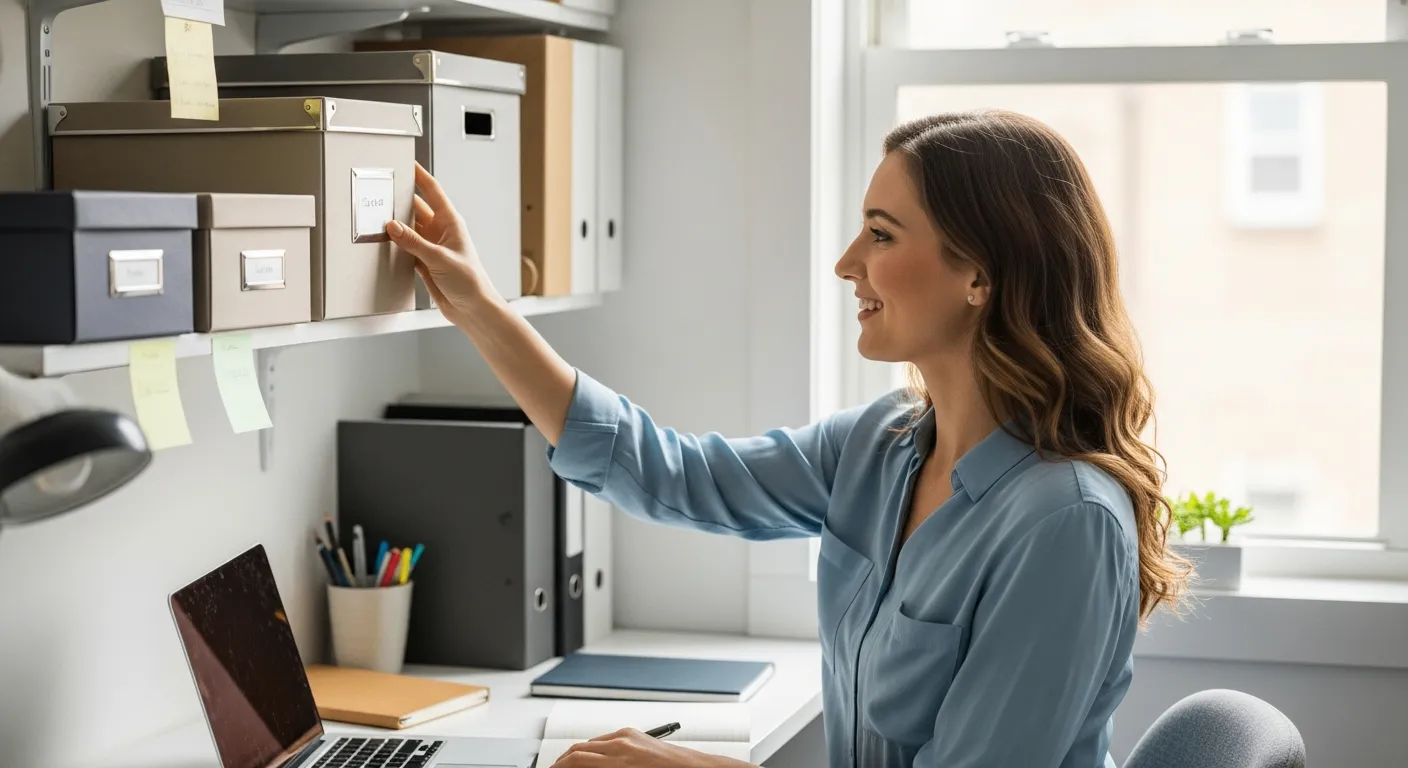
The ability to conceal clutter is a significant advantage of storage boxes. Open shelves and desks can quickly become cluttered with items, creating a sense of chaos and disorganization. Storage boxes allow you to hide these items away, creating a cleaner and more visually appealing workspace.
Furthermore, storage boxes can be used to protect delicate or valuable items from dust, sunlight, and other environmental factors. This is particularly important for items that are not used frequently but need to be kept in good condition. Storage boxes can act as a protective barrier.
The versatility of storage boxes extends to their portability. Many storage boxes come with handles or are lightweight, making them easy to move around. This is particularly useful for small offices where space is limited and you may need to rearrange your furniture or storage solutions frequently.
Stackable Boxes: Maximizing Vertical Space
When square footage is limited, thinking vertically is essential. Stackable boxes are designed to do just that, allowing you to utilize the often-overlooked space above your desk or shelves. This is a game-changer for small home offices.
These boxes come in various sizes and materials, offering a customizable storage solution that can adapt to your specific needs. Look for stackable boxes made from durable materials like plastic or reinforced cardboard, ensuring they can withstand the weight of their contents.
Stackable boxes are particularly useful for storing items that you don’t need to access frequently. This could include seasonal decorations, archived documents, or extra office supplies. By stacking these boxes, you can keep them out of the way while still having them readily available when needed.
When choosing stackable boxes, consider the height and weight capacity of each box. You want to ensure that the boxes are stable and won’t topple over, especially if you’re stacking them high. Also, make sure the boxes are easy to access, even when they’re stacked.
Stackable boxes are available in a wide variety of materials, including plastic, cardboard, and fabric. Plastic boxes are durable and easy to clean, making them a good choice for storing items that may get dirty or wet. Cardboard boxes are more affordable and lightweight, but they may not be as durable as plastic boxes.
Fabric stackable boxes are a good option for storing soft items, such as clothing or linens. They are also more aesthetically pleasing than plastic or cardboard boxes. When choosing fabric boxes, make sure they are made from a durable material that will not easily tear or stain.
To maximize vertical space effectively, consider using a combination of different sizes and shapes of stackable boxes. Place larger boxes at the bottom of the stack and smaller boxes at the top. This will create a more stable and visually appealing storage solution. Also, be sure to distribute the weight evenly across the stack.
Before purchasing stackable boxes, measure the height and width of the space where you plan to store them. This will help you ensure that the boxes will fit properly and that you are maximizing the available space. Leave some extra space around the boxes for easy access.
Decorative Boxes: Adding Style to Your Storage
Storage doesn’t have to be purely functional; it can also be an opportunity to add style to your small home office. Decorative boxes come in a wide array of colors, patterns, and materials. These can complement your existing decor while providing valuable storage space.
Choose decorative boxes that reflect your personal taste and the overall aesthetic of your office. This will make your space more inviting and inspiring. Decorative boxes are a great way to add personality to your workspace.
| Box Type | Material | Typical Use |
|---|---|---|
| Fabric Boxes | Linen, Cotton | Soft items, accessories |
| Wooden Boxes | Pine, Oak | Books, decorative items |
| Patterned Cardboard Boxes | Cardboard | Files, documents |
| Metal Boxes | Steel, Aluminum | Tools, hardware |
Consider using decorative boxes to store items that you want to keep within reach but don’t necessarily want on display. This could include books, magazines, or personal items. These boxes can be placed on shelves, desks, or even the floor, adding a touch of style to any corner of your office.
Decorative boxes can be found in a variety of styles, from modern and minimalist to rustic and vintage. Choose boxes that complement the existing decor of your office. This will create a cohesive and visually appealing space. Consider the color palette and overall theme of your office.
When selecting decorative boxes, pay attention to the details. Look for boxes with interesting textures, patterns, or embellishments. These details can add a touch of personality and sophistication to your office. Consider boxes with unique closures or handles.
Decorative boxes can also be used to create a focal point in your office. Arrange a collection of decorative boxes on a shelf or desk to create a visually appealing display. This is a great way to add interest and personality to your space. Use boxes of varying sizes and shapes for a more dynamic display.
Don’t be afraid to mix and match different styles of decorative boxes. This can create a more eclectic and personalized look. Just make sure that the boxes complement each other in some way, such as through color or texture. A well-curated collection of decorative boxes can add a unique touch to your office.
Clear Boxes: Easily Identifying Contents
For those who prioritize functionality and ease of access, clear boxes are an excellent choice. These boxes allow you to see the contents at a glance, eliminating the need to rummage through multiple containers to find what you’re looking for. This saves time and reduces frustration.
Clear boxes are particularly useful for storing items that you use frequently or need to access quickly. This could include office supplies, craft materials, or electronic accessories. The transparent design makes it easy to identify the contents without having to open the box.
When choosing clear boxes, look for durable materials that can withstand regular use. Plastic is a popular choice, as it is lightweight, easy to clean, and resistant to damage. Make sure the boxes are also stackable, allowing you to maximize vertical space.
Consider using clear boxes to store items that you want to keep visible but protected from dust and damage. This could include collectibles, photographs, or important documents. The clear design allows you to enjoy these items while keeping them safe and organized.
Clear boxes are especially helpful for organizing small items that can easily get lost or misplaced. Use them to store things like paper clips, rubber bands, and push pins. This will prevent these items from cluttering your desk drawers and keep them within easy reach.
When using clear boxes, consider organizing the contents within each box as well. Use dividers or smaller containers to separate different types of items. This will make it even easier to find what you’re looking for and prevent items from getting mixed up.
To further enhance the functionality of clear boxes, consider labeling them with the contents. Even though you can see what’s inside, labeling can help you quickly identify the specific items you need. Use a label maker or write directly on the box with a permanent marker.
Clear boxes can also be used to create a visually appealing storage solution. Arrange the boxes on a shelf or desk in a neat and organized manner. This can add a touch of order and cleanliness to your office. Consider using boxes of different sizes and shapes to create a more dynamic display.
Labeling Boxes: Staying Organized
No matter what type of storage boxes you choose, labeling is essential for maintaining an organized small home office. Clear and concise labels will help you quickly identify the contents of each box. This will save you time and prevent you from having to open multiple boxes to find what you need.
There are several ways to label your storage boxes. You can use a label maker, write directly on the box with a permanent marker, or create custom labels using your computer and printer. Choose the method that works best for you and your labeling style.
When labeling your boxes, be as specific as possible. Instead of simply labeling a box “Office Supplies,” consider labeling it “Pens, Pencils, Highlighters.” This will make it easier to find exactly what you’re looking for. You can also use color-coded labels to further categorize your items.
Consider using a numbering system to keep track of your boxes. This can be particularly useful if you have a large number of boxes or if you need to track the contents of each box for inventory purposes. Keep a master list of your boxes and their contents for easy reference.
When creating labels, use a clear and easy-to-read font. Avoid using cursive or overly decorative fonts, as these can be difficult to decipher. Choose a font size that is large enough to be easily visible from a distance. Consistency in font choice will also improve readability.
If you’re using a label maker, consider using different colors of labels to further categorize your items. For example, you could use blue labels for office supplies, green labels for craft materials, and red labels for personal items. This will make it even easier to find what you’re looking for at a glance.
For boxes that are stored in hard-to-reach places, consider labeling them on multiple sides. This will ensure that you can easily see the label regardless of the box’s orientation. Labeling the top of the box can be especially helpful for boxes stored on high shelves.
Remember to update your labels as needed. If you change the contents of a box, be sure to update the label accordingly. This will prevent confusion and ensure that your storage system remains organized and efficient. Regularly review your labels to ensure they are accurate and up-to-date.
Choosing the Right Boxes for Your Needs
Selecting the right storage boxes for your small home office is a personal process. It will depend on the amount of space you have. It also depends on your organizational style and the items you need to store.
Start by assessing your storage needs. What items do you need to store? How often do you need to access them? How much space do you have available? Once you have a clear understanding of your needs, you can start exploring the different types of storage boxes available.
- Measure your space
- Consider box materials
- Think about aesthetics
- Plan for future needs
- Prioritize accessibility
Consider the size and shape of the boxes. Choose boxes that fit comfortably in your available space and that are easy to stack or store. Think about the materials the boxes are made from. Choose boxes that are durable, easy to clean, and appropriate for the items you’ll be storing.
Before making a purchase, read reviews and compare prices. This will help you find the best value for your money. Look for boxes that are well-made and durable, as these will last longer and provide better protection for your belongings. Consider purchasing boxes from a reputable brand.
Think about the long-term storage needs of your office. Will you need to store more items in the future? Choose boxes that are versatile and can be used for a variety of purposes. Consider purchasing boxes in a variety of sizes and shapes to accommodate different types of items.
When choosing boxes, consider the weight of the items you’ll be storing. Choose boxes that are strong enough to support the weight of their contents. Avoid overfilling boxes, as this can cause them to break or become unstable. Distribute the weight evenly within each box.
Consider the climate of your office. If your office is humid or prone to temperature fluctuations, choose boxes that are resistant to moisture and temperature changes. Plastic boxes are a good choice for humid environments, while cardboard boxes are more susceptible to moisture damage. Consider using desiccant packs to absorb moisture.
Organizing with Small Office Storage Boxes
Before you start filling your small office storage boxes, take some time to declutter your space. Get rid of anything you don’t need or use. This will free up valuable storage space and make it easier to stay organized.
Sort your items into categories. This will help you determine what type of storage boxes you need and how to label them. Group similar items together. This makes it easier to find what you’re looking for when you need it.
Place the boxes in strategic locations. Put the items you use most frequently in easily accessible locations. Store less frequently used items in higher or harder-to-reach places. This will ensure that your most important items are always within reach.
Maintain your organized space by regularly decluttering and reorganizing your storage boxes. This will prevent clutter from accumulating and ensure that your office remains a functional and inspiring workspace. Make it a habit to tidy up at the end of each day.
When decluttering, be ruthless. If you haven’t used an item in the past year, chances are you don’t need it. Donate or discard items that are no longer useful. This will free up valuable storage space and make it easier to stay organized. Consider having a designated donation box.
When sorting your items, consider using a three-box system. Label one box “Keep,” one box “Donate,” and one box “Discard.” This will help you make quick decisions about what to do with each item. Be honest with yourself about what you truly need and use.
When placing your storage boxes, consider the flow of your office. Make sure that the boxes are not blocking walkways or creating obstacles. Arrange the boxes in a way that is both functional and aesthetically pleasing. Consider using vertical space to maximize storage.
To maintain your organized space, set aside a few minutes each day to tidy up. This will prevent clutter from accumulating and ensure that your office remains a functional and inspiring workspace. Make it a habit to put things back in their place after you use them. A little bit of maintenance each day can go a long way.
Creative Uses for Storage Boxes
Beyond the basics, storage boxes can be used in creative ways to enhance your small home office. Consider using a decorative box as a charging station for your electronic devices. Cut holes in the back of the box to thread your charging cables through, keeping them organized and out of sight.
Use a clear box to create a mini-greenhouse for your plants. Place a small tray of water in the bottom of the box to provide humidity. This will help your plants thrive, especially during dry months. A small plant can brighten up any workspace.
Turn a stackable box into a makeshift filing cabinet. Use hanging file folders to organize your documents and files. This is a great way to keep your paperwork organized without taking up too much space. A well-organized filing system is essential for any home office.
Repurpose a decorative box as a desktop organizer. Use dividers to create compartments for pens, pencils, notepads, and other office supplies. This will help keep your desk clutter-free and ensure that everything is within easy reach. A tidy desk promotes productivity.
Create a portable workstation by using a large storage box as a base. Place your laptop, notepad, and other essential items inside the box. This allows you to easily move your workstation from one location to another. This is perfect for those who like to work in different areas of their home.
Use a decorative box to hide unsightly cords and cables. Cut holes in the back of the box to thread the cords through. This will create a cleaner and more organized look. This is a great way to improve the aesthetics of your office.
Create a gift-wrapping station by using a large storage box to store wrapping paper, ribbons, and other gift-wrapping supplies. This will keep your supplies organized and easily accessible. This is especially useful during the holidays.
Use a clear box to store your craft supplies. This will allow you to easily see what you have on hand. This is perfect for those who enjoy crafting in their spare time. A well-organized craft supply storage system can inspire creativity.
The Benefits of an Organized Office
An organized small home office is more than just aesthetically pleasing; it also offers a range of practical benefits. Studies have shown that a clutter-free workspace can improve focus, reduce stress, and boost productivity. When your surroundings are organized, your mind is clearer.
By implementing storage box solutions, you can create a more efficient and enjoyable work environment. This will allow you to focus on your tasks and achieve your goals. A well-organized office can also improve your overall well-being.
Think about the time you waste searching for misplaced items or trying to navigate a cluttered desk. An organized office eliminates these distractions, allowing you to use your time more effectively. This can lead to increased productivity and improved work quality.
Moreover, an organized office can reduce stress and anxiety. Clutter can be overwhelming and create a sense of chaos. By implementing storage solutions, you can create a calm and peaceful workspace. This can help you feel more relaxed and focused.
An organized office can also improve your physical health. A cluttered workspace can be a breeding ground for dust and allergens. By keeping your office clean and organized, you can reduce your exposure to these irritants. This can lead to improved respiratory health.
A well-organized office can also boost your creativity. A cluttered environment can stifle creativity and make it difficult to think clearly. By creating a clean and organized workspace, you can free up your mind to focus on creative tasks. This can lead to new ideas and innovations.
An organized office can also improve your professional image. If you have clients or colleagues who visit your office, a clean and organized workspace will create a positive impression. This can enhance your credibility and professionalism. A well-organized office reflects attention to detail.
Ultimately, an organized office is an investment in your well-being and success. By taking the time to create a clean, organized, and functional workspace, you can improve your focus, reduce stress, boost productivity, and enhance your overall quality of life. The benefits of an organized office are far-reaching.
Conclusion
Small office storage boxes are indispensable tools for creating an organized, efficient, and stylish workspace. From maximizing vertical space with stackable designs to adding personality with decorative finishes and ensuring easy access with clear constructions, these versatile containers offer a solution for every need and preference.
By carefully selecting and utilizing storage boxes, you can transform your small home office into a haven of productivity and creativity. Embrace the power of organization and unlock the full potential of your workspace.


