

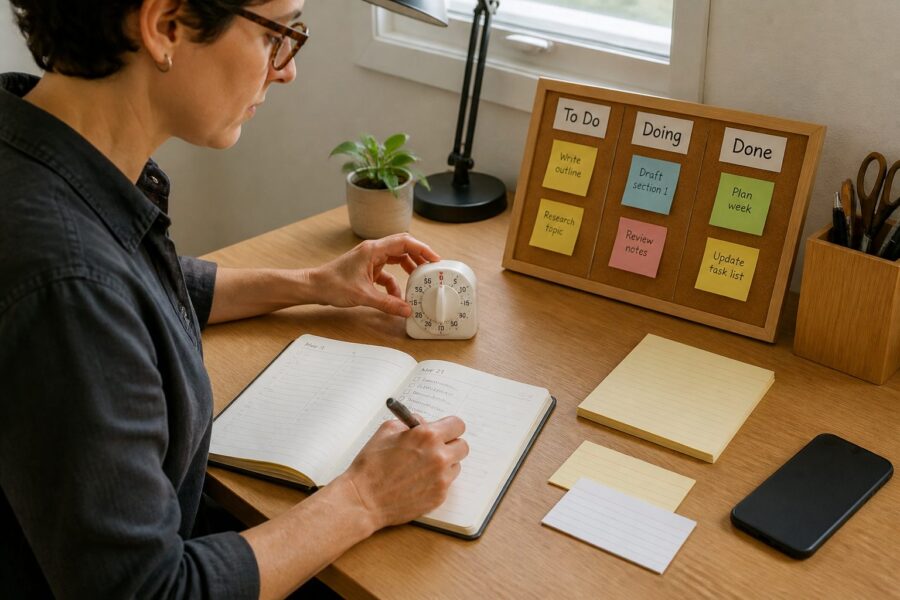
Look for smaller versions of planners, timers, and boards that can be easily tucked away when not in use, making it easier to maximize your limited surface area. This allows you to enjoy the benefits of analog tools without sacrificing the functionality of your workspace.
Consider multi-functional tools that serve various purposes to minimize clutter and enhance your workflow. For instance, a planner that doubles as a habit tracker can save space and streamline your organization, allowing you to keep everything in one place.
Additionally, prioritize tools that can be easily integrated into your existing setup, ensuring a smooth transition between your digital and analog workflows. This helps you maintain your productivity without feeling overwhelmed by the need to juggle multiple systems.
Ultimately, the goal is to enhance your productivity without sacrificing space, creating a harmonious environment that fosters creativity and efficiency. Thoughtful selection of compact tools can help you achieve a well-organized and effective small workspace that supports your work style.
Combining Analog Planning With Digital Calendars Without Duplication
Integrating analog planning with digital calendars can be a game-changer for productivity, allowing you to maximize your organizational capabilities. By establishing a system that allows both to coexist harmoniously, you can streamline your planning process and enhance your overall efficiency.
Start by identifying key tasks and appointments that need to be tracked in both formats to ensure that you do not duplicate efforts. This approach allows you to streamline your planning process and maintain a clear overview of your obligations.
Consider using your analog planner for daily and weekly tasks while keeping digital calendars for long-term events, enabling you to engage with your tasks physically. This dual approach allows you to enjoy the benefits of both systems without becoming overwhelmed by excess information.
Additionally, setting specific times to review both systems can help you stay on track and ensure that nothing is overlooked. This practice encourages you to regularly assess your commitments, keeping your workflows cohesive and organized.
Ultimately, the combination of analog and digital tools can create a powerful productivity system that enhances your efficiency in your small space home office. By thoughtfully integrating these approaches, you can create a balanced and effective workspace that supports your unique work style and needs.
By tracking habits daily, you can identify patterns and make adjustments to improve your productivity, allowing you to refine your approach over time. This can be particularly beneficial in a home office environment where distractions are prevalent, helping you stay focused on your priorities.
Using a simple checklist or a dedicated habit tracker notebook can provide a satisfying way to mark off achievements and progress. This physical record can motivate you to stay consistent and committed to your goals, creating a sense of accomplishment as you see your habits develop.
Additionally, sharing your habit tracker with a friend or colleague can create a sense of accountability, making it easier to stick to your commitments. This social aspect can further enhance your commitment to maintaining a productive routine and can provide encouragement when needed.
Ultimately, habit trackers can serve as powerful motivators in your small space home office, helping you cultivate positive behaviors and improve overall productivity. They encourage consistency and focus, making it easier to achieve your desired outcomes.
Choosing Compact Analog Tools That Don’t Crowd Your Surface
When selecting analog productivity tools for your home office, compact options are essential to maintain a clean and organized workspace. Choosing tools that fit your space helps to ensure that you can work efficiently without feeling overwhelmed by clutter.
Look for smaller versions of planners, timers, and boards that can be easily tucked away when not in use, making it easier to maximize your limited surface area. This allows you to enjoy the benefits of analog tools without sacrificing the functionality of your workspace.
Consider multi-functional tools that serve various purposes to minimize clutter and enhance your workflow. For instance, a planner that doubles as a habit tracker can save space and streamline your organization, allowing you to keep everything in one place.
Additionally, prioritize tools that can be easily integrated into your existing setup, ensuring a smooth transition between your digital and analog workflows. This helps you maintain your productivity without feeling overwhelmed by the need to juggle multiple systems.
Ultimately, the goal is to enhance your productivity without sacrificing space, creating a harmonious environment that fosters creativity and efficiency. Thoughtful selection of compact tools can help you achieve a well-organized and effective small workspace that supports your work style.
Combining Analog Planning With Digital Calendars Without Duplication
Integrating analog planning with digital calendars can be a game-changer for productivity, allowing you to maximize your organizational capabilities. By establishing a system that allows both to coexist harmoniously, you can streamline your planning process and enhance your overall efficiency.
Start by identifying key tasks and appointments that need to be tracked in both formats to ensure that you do not duplicate efforts. This approach allows you to streamline your planning process and maintain a clear overview of your obligations.
Consider using your analog planner for daily and weekly tasks while keeping digital calendars for long-term events, enabling you to engage with your tasks physically. This dual approach allows you to enjoy the benefits of both systems without becoming overwhelmed by excess information.
Additionally, setting specific times to review both systems can help you stay on track and ensure that nothing is overlooked. This practice encourages you to regularly assess your commitments, keeping your workflows cohesive and organized.
Ultimately, the combination of analog and digital tools can create a powerful productivity system that enhances your efficiency in your small space home office. By thoughtfully integrating these approaches, you can create a balanced and effective workspace that supports your unique work style and needs.
Moreover, the tactile aspect of moving tasks from one column to another can be rewarding and motivating, making your work feel more engaging. This hands-on approach can help you stay connected with your work in a small space, preventing feelings of isolation.
Overall, Kanban boards can simplify your task management while fitting seamlessly into your workspace, offering a straightforward way to visualize your workload. They enhance productivity by providing clarity and structure to your tasks, making it easier to prioritize effectively.
Habit Trackers and Accountability Tools for Solo Remote Workers
Habit trackers are essential tools for remote workers aiming to build and maintain productive routines that lead to success. These analog productivity tools serve as visual reminders of your goals and reinforce accountability, helping you stay committed to your objectives.
By tracking habits daily, you can identify patterns and make adjustments to improve your productivity, allowing you to refine your approach over time. This can be particularly beneficial in a home office environment where distractions are prevalent, helping you stay focused on your priorities.
Using a simple checklist or a dedicated habit tracker notebook can provide a satisfying way to mark off achievements and progress. This physical record can motivate you to stay consistent and committed to your goals, creating a sense of accomplishment as you see your habits develop.
Additionally, sharing your habit tracker with a friend or colleague can create a sense of accountability, making it easier to stick to your commitments. This social aspect can further enhance your commitment to maintaining a productive routine and can provide encouragement when needed.
Ultimately, habit trackers can serve as powerful motivators in your small space home office, helping you cultivate positive behaviors and improve overall productivity. They encourage consistency and focus, making it easier to achieve your desired outcomes.
Choosing Compact Analog Tools That Don’t Crowd Your Surface
When selecting analog productivity tools for your home office, compact options are essential to maintain a clean and organized workspace. Choosing tools that fit your space helps to ensure that you can work efficiently without feeling overwhelmed by clutter.
Look for smaller versions of planners, timers, and boards that can be easily tucked away when not in use, making it easier to maximize your limited surface area. This allows you to enjoy the benefits of analog tools without sacrificing the functionality of your workspace.
Consider multi-functional tools that serve various purposes to minimize clutter and enhance your workflow. For instance, a planner that doubles as a habit tracker can save space and streamline your organization, allowing you to keep everything in one place.
Additionally, prioritize tools that can be easily integrated into your existing setup, ensuring a smooth transition between your digital and analog workflows. This helps you maintain your productivity without feeling overwhelmed by the need to juggle multiple systems.
Ultimately, the goal is to enhance your productivity without sacrificing space, creating a harmonious environment that fosters creativity and efficiency. Thoughtful selection of compact tools can help you achieve a well-organized and effective small workspace that supports your work style.
Combining Analog Planning With Digital Calendars Without Duplication
Integrating analog planning with digital calendars can be a game-changer for productivity, allowing you to maximize your organizational capabilities. By establishing a system that allows both to coexist harmoniously, you can streamline your planning process and enhance your overall efficiency.
Start by identifying key tasks and appointments that need to be tracked in both formats to ensure that you do not duplicate efforts. This approach allows you to streamline your planning process and maintain a clear overview of your obligations.
Consider using your analog planner for daily and weekly tasks while keeping digital calendars for long-term events, enabling you to engage with your tasks physically. This dual approach allows you to enjoy the benefits of both systems without becoming overwhelmed by excess information.
Additionally, setting specific times to review both systems can help you stay on track and ensure that nothing is overlooked. This practice encourages you to regularly assess your commitments, keeping your workflows cohesive and organized.
Ultimately, the combination of analog and digital tools can create a powerful productivity system that enhances your efficiency in your small space home office. By thoughtfully integrating these approaches, you can create a balanced and effective workspace that supports your unique work style and needs.
In an increasingly digital world, many remote workers are discovering the myriad benefits of integrating analog productivity tools into their home office setups. These tools not only enhance focus but also provide a tangible way to organize tasks and manage time effectively, creating a balanced and productive work environment.
Small spaces can often feel cluttered and overwhelming, making it essential to find tools that complement digital workflows without adding to the chaos. By combining the best of both worlds, you can create a productive environment that fosters creativity and efficiency, allowing for more effective use of your limited space.
In this article, we’ll explore the various analog tools that can enhance your small space home office setup and help you stay organized. From desk timers to habit trackers, each tool serves a unique purpose in boosting productivity, ensuring that you can manage your tasks efficiently.
Why Analog Tools Complement Digital Workflows
Analog tools provide a tactile experience that digital devices often lack, helping to improve focus and reduce distractions in a world filled with notifications and alerts. They can serve as a refreshing break from screens, allowing your mind to reset and recharge, which is essential for maintaining long-term productivity.
Using analog tools can also enhance memory retention, as writing things down physically engages different parts of the brain and reinforces information. This can lead to better task management and prioritization in your home office, making it easier to keep track of what needs to be accomplished.
Moreover, these tools can help create a visual representation of your tasks, making it easier to see what needs to be done at any given moment. This is especially useful in small spaces where clutter can quickly become overwhelming, as it allows you to focus on high-priority tasks without losing sight of your goals.
Incorporating analog tools into your workflow can also encourage mindfulness and intentionality in your daily tasks. By focusing on one task at a time, you can enhance the quality of your work, leading to greater satisfaction and effectiveness in your projects.
Ultimately, the blend of analog and digital tools can lead to a unique productivity system tailored to your personal needs and preferences. This combination not only streamlines your workflow but also fosters a sense of accomplishment as you see your tasks completed and organized.
The Desk Timer: How a Physical Countdown Improves Focus
A desk timer is a simple yet effective tool to enhance focus during work sessions, providing a straightforward way to manage your time. Utilizing a desk timer, especially with methods like the Pomodoro technique, can help you break your work into manageable chunks, making daunting tasks feel more achievable.
By setting a specific time limit for tasks, you can create a sense of urgency that leads to increased productivity and helps you stay on target. This physical countdown creates a visual cue that keeps you accountable and on track, preventing procrastination and distractions.
Furthermore, the act of physically turning a timer can be a grounding ritual that helps you transition between tasks, marking the beginning and end of focused work sessions. This simple practice encourages you to take breaks, promoting better long-term focus by preventing burnout and fatigue.
Desk timers are also free from digital distractions, allowing you to concentrate on the task at hand without the temptation of checking your phone or email. This can be particularly beneficial in a small workspace where distractions are often within arm’s reach, making it easier to maintain your focus.
Overall, investing in a desk timer can significantly elevate your productivity levels and transform your workflow. Whether you choose a classic hourglass or a modern digital version, the benefits of having a physical time management tool are undeniable and can lead to improved efficiency.
Bullet Journals and Physical Planners as Daily Command Centers
Bullet journals and physical planners serve as effective daily command centers, allowing you to organize tasks at a glance while providing a space for creative expression. These analog productivity tools provide a customizable framework for managing your schedule and priorities, making it easier to align your tasks with your goals.
With a physical planner, you can outline your day, week, or month, ensuring that nothing slips through the cracks, as the act of writing things down reinforces memory. This visual layout can be particularly helpful in a small workspace where digital notifications may go unnoticed, enabling you to stay ahead of your commitments.
| Feature | Benefit | Example |
|---|---|---|
| Customization | Tailor to your needs | Color-coding |
| Tactile Experience | Engages senses | Writing with pen |
| Visualization | See tasks clearly | Daily spreads |
| Mindfulness | Promotes focus | Reflective journaling |
Additionally, bullet journals allow for creative expression, which can boost motivation and make planning an enjoyable part of your daily routine. By incorporating art and design, you can transform the mundane task of organizing your schedule into something fun and inspiring.
Ultimately, utilizing a bullet journal or physical planner can lead to enhanced organization and productivity in your small office. These tools create a structured yet flexible approach to managing tasks, allowing you to adapt and respond to changing demands effectively.
Cork Boards and Sticky Notes as Real-Time Task Displays
Cork boards and sticky notes offer a dynamic way to visualize tasks in real-time, acting as a physical reminder of what needs to be accomplished. These analog tools allow you to quickly jot down tasks and pin them for immediate access, ensuring that nothing is overlooked in your busy schedule.
Using colorful sticky notes can create an engaging visual display that captures your attention throughout the day, making it easier to remember priorities. This can be especially useful in a small workspace where you need constant reminders of your goals and commitments, as it helps to keep your tasks front and center.
Moreover, cork boards provide a space to showcase your goals and achievements, adding a motivational element to your home office. You can easily rearrange tasks and notes as priorities shift, allowing for flexibility in your planning and execution.
This flexibility allows you to adapt your workflow in response to changing demands and emerging projects. The tactile nature of moving notes around can also provide a satisfying break from screen time, making your work process more enjoyable.
Incorporating cork boards and sticky notes into your workspace can transform your approach to task management, fostering a more organized and visually appealing environment. These tools encourage creativity and spontaneity while keeping you organized and focused on your priorities.
Weekly Planning Boards That Live Outside Your Screen
Weekly planning boards are an essential component of effective time management in a small office, providing a clear overview of your week at a glance. These boards help to prioritize tasks and deadlines visually, making it easier to stay organized and focused.
By placing a weekly planning board in a prominent location, you create a constant reminder of your commitments and upcoming tasks. This visual cue can help keep you accountable and focused on your goals, ensuring that you stay on track throughout the week.
Moreover, weekly planning boards can be customized to fit your specific needs and preferences, allowing for greater personalization. You can use magnets, markers, or even washi tape to make the board more dynamic and engaging, adding a touch of creativity to your planning process.
This flexibility allows for easy adjustments as tasks and priorities change, helping you to manage your responsibilities more effectively. Plus, seeing your week planned out can alleviate stress and provide clarity, helping you maintain a better work-life balance.
Investing in a weekly planning board can enhance your productivity and provide a sense of organization and control over your time. This tool is particularly valuable in a small workspace where clarity and focus are paramount for achieving your goals.
Kanban Boards in Small Spaces: DIY Options That Fit a Desktop
Kanban boards are powerful tools for managing tasks efficiently, especially in small office spaces where organization is key. A DIY Kanban board can be easily created using simple materials, allowing you to customize it to fit your desktop and suit your workflow.
Using a small whiteboard or even a section of corkboard, you can create columns for tasks at different stages of completion. This provides a clear visual representation of your workflow and helps you track progress effectively, ensuring that you stay on top of your responsibilities.
- DIY whiteboard
- Corkboard sections
- Sticky notes
- Magnetic strips
- Color-coded task cards
Moreover, the tactile aspect of moving tasks from one column to another can be rewarding and motivating, making your work feel more engaging. This hands-on approach can help you stay connected with your work in a small space, preventing feelings of isolation.
Overall, Kanban boards can simplify your task management while fitting seamlessly into your workspace, offering a straightforward way to visualize your workload. They enhance productivity by providing clarity and structure to your tasks, making it easier to prioritize effectively.
Habit Trackers and Accountability Tools for Solo Remote Workers
Habit trackers are essential tools for remote workers aiming to build and maintain productive routines that lead to success. These analog productivity tools serve as visual reminders of your goals and reinforce accountability, helping you stay committed to your objectives.
By tracking habits daily, you can identify patterns and make adjustments to improve your productivity, allowing you to refine your approach over time. This can be particularly beneficial in a home office environment where distractions are prevalent, helping you stay focused on your priorities.
Using a simple checklist or a dedicated habit tracker notebook can provide a satisfying way to mark off achievements and progress. This physical record can motivate you to stay consistent and committed to your goals, creating a sense of accomplishment as you see your habits develop.
Additionally, sharing your habit tracker with a friend or colleague can create a sense of accountability, making it easier to stick to your commitments. This social aspect can further enhance your commitment to maintaining a productive routine and can provide encouragement when needed.
Ultimately, habit trackers can serve as powerful motivators in your small space home office, helping you cultivate positive behaviors and improve overall productivity. They encourage consistency and focus, making it easier to achieve your desired outcomes.
Choosing Compact Analog Tools That Don’t Crowd Your Surface
When selecting analog productivity tools for your home office, compact options are essential to maintain a clean and organized workspace. Choosing tools that fit your space helps to ensure that you can work efficiently without feeling overwhelmed by clutter.
Look for smaller versions of planners, timers, and boards that can be easily tucked away when not in use, making it easier to maximize your limited surface area. This allows you to enjoy the benefits of analog tools without sacrificing the functionality of your workspace.
Consider multi-functional tools that serve various purposes to minimize clutter and enhance your workflow. For instance, a planner that doubles as a habit tracker can save space and streamline your organization, allowing you to keep everything in one place.
Additionally, prioritize tools that can be easily integrated into your existing setup, ensuring a smooth transition between your digital and analog workflows. This helps you maintain your productivity without feeling overwhelmed by the need to juggle multiple systems.
Ultimately, the goal is to enhance your productivity without sacrificing space, creating a harmonious environment that fosters creativity and efficiency. Thoughtful selection of compact tools can help you achieve a well-organized and effective small workspace that supports your work style.
Combining Analog Planning With Digital Calendars Without Duplication
Integrating analog planning with digital calendars can be a game-changer for productivity, allowing you to maximize your organizational capabilities. By establishing a system that allows both to coexist harmoniously, you can streamline your planning process and enhance your overall efficiency.
Start by identifying key tasks and appointments that need to be tracked in both formats to ensure that you do not duplicate efforts. This approach allows you to streamline your planning process and maintain a clear overview of your obligations.
Consider using your analog planner for daily and weekly tasks while keeping digital calendars for long-term events, enabling you to engage with your tasks physically. This dual approach allows you to enjoy the benefits of both systems without becoming overwhelmed by excess information.
Additionally, setting specific times to review both systems can help you stay on track and ensure that nothing is overlooked. This practice encourages you to regularly assess your commitments, keeping your workflows cohesive and organized.
Ultimately, the combination of analog and digital tools can create a powerful productivity system that enhances your efficiency in your small space home office. By thoughtfully integrating these approaches, you can create a balanced and effective workspace that supports your unique work style and needs.


