
You share a single room for work, rest, and hobbies. That can blur the lines between tasks and downtime. Using carefully placed light can create clear zones without building walls or moving big furniture.
Start with ambient and task sources, then add an accent touch to guide your eye toward work mode. This subtle approach shapes perception and directs attention so the work area reads as its own zone.
This how-to will walk you through a simple foundation, bulb choices, and ideal placement. It also flags common mistakes so you avoid harsh glare and shadows that fight productivity.
The goal: a soft glow that defines your workspace while balancing comfort and focus. With a few small changes, your shared room will look organized and intentional without a remodel.
Why Accent Lighting Helps You Carve Out a Dedicated Work Space in a Shared Room
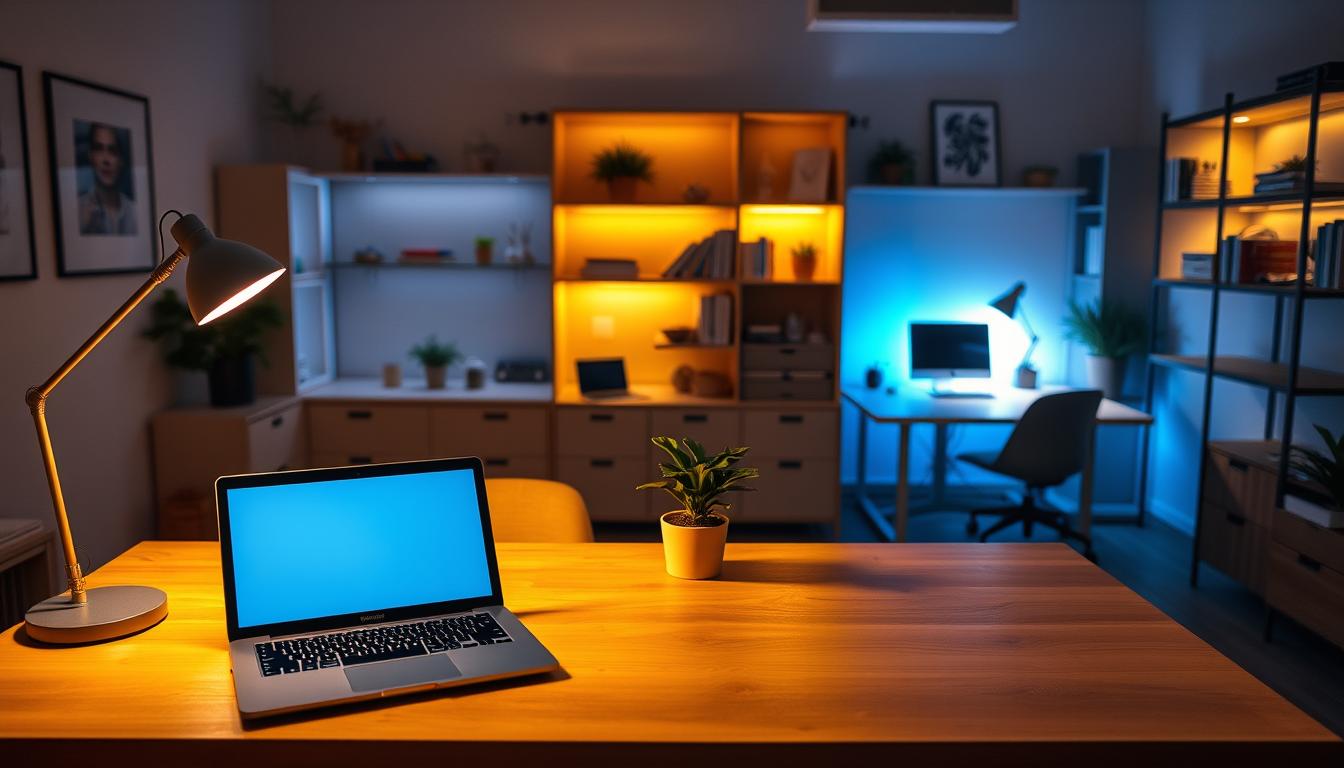
Small, brighter spots around a desk can mentally separate work from the rest of a shared space. You get general visibility from ambient lighting, while a focused lamp gives clear, concentrated light for each task.
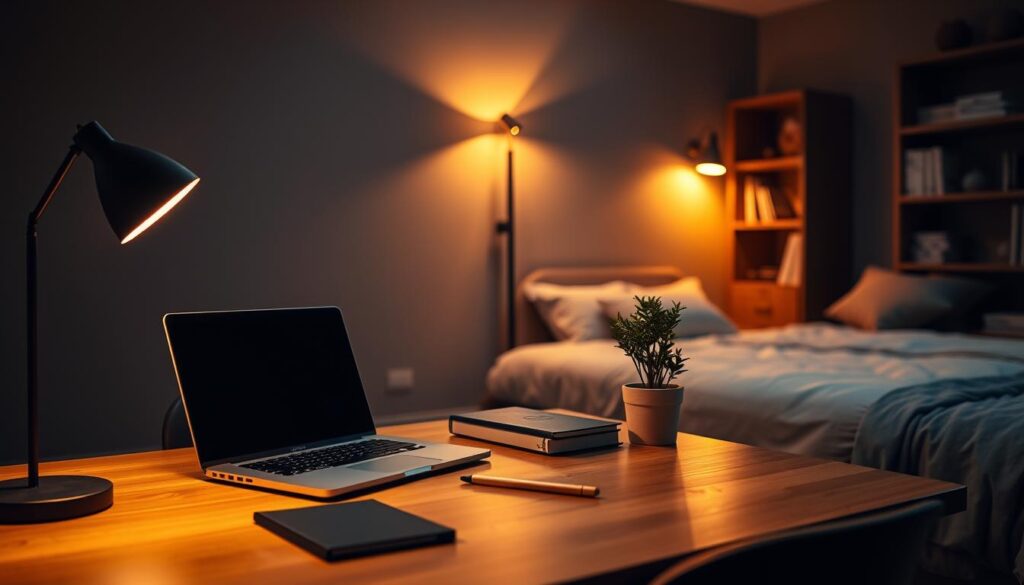
Use a third layer to guide the eye: subtle accent lighting creates tiny pockets of brightness that draw attention to your desk or shelving. These points don’t flood the room; they make targeted areas feel like their own zone.
- Ambient lighting = baseline visibility across the room.
- Task lighting = direct beam for work tasks and screen clarity.
- Feature lights = small highlights that mark your workspace boundary.
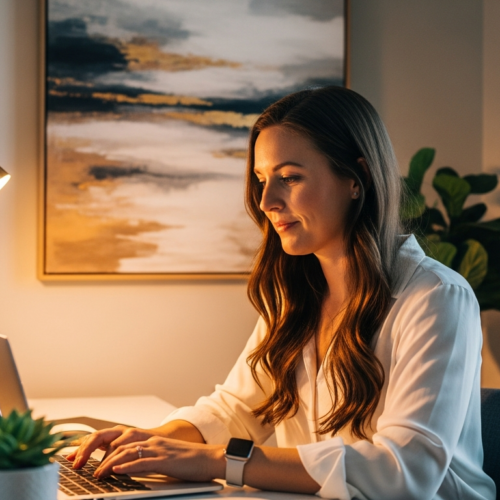
Your brain reads contrast as separation. A slightly brighter patch signals “this is your work area” even when furniture blends into other spaces. Done well, this approach boosts focus and keeps the rest of the room relaxed for TV, rest, or family time.
Keep it subtle: spotlight chosen features and details without making the fixture the focal point. That balance helps you stay productive and preserves the shared nature of the room.
Set Your Lighting Foundation Before You Add Accents
Make the base layer functional first. Start by securing broad, even coverage so your desk is practical for daily tasks before you add style or directional highlights.
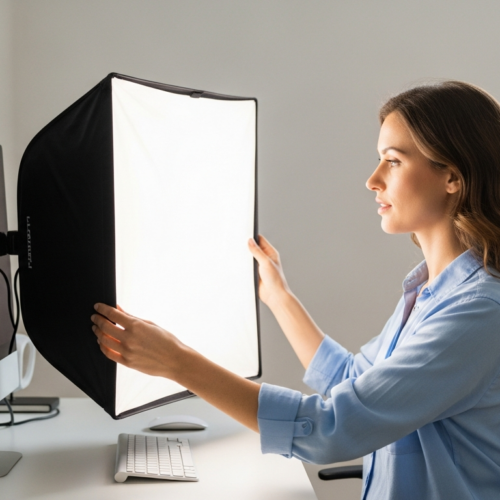
Get ambient task coverage in place. Aim for consistent general light plus a clear task source at the desk. Good task lighting prevents glare on screens and keeps the work area usable.
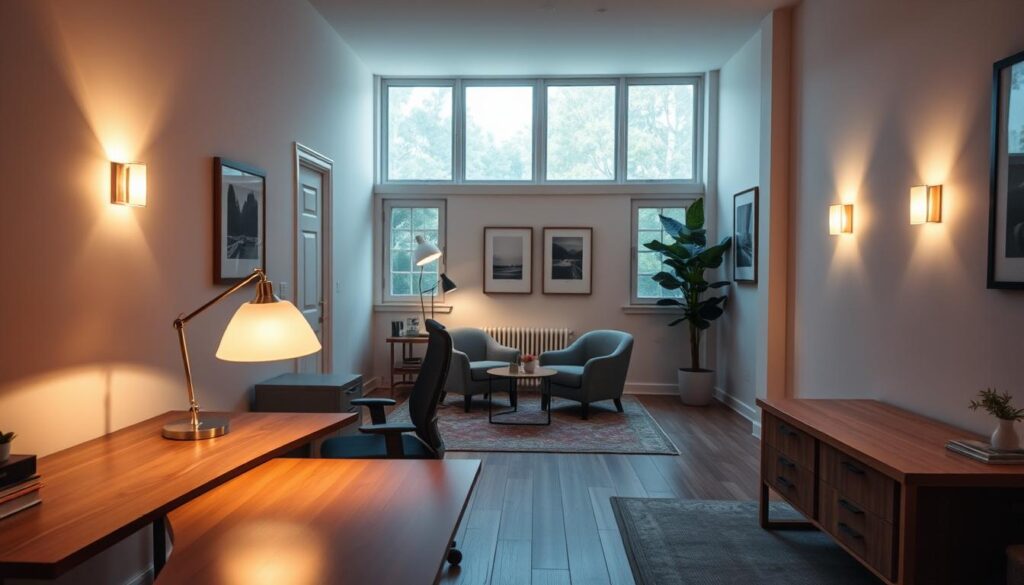
Step back and check sightlines
Turn the lights on and view the room from common spots: the entry, sofa, or bed. This quick check shows how your placement reads at a glance and whether any bright spots overpower the space.
Treat shadows as part of the plan
Intentional shade helps define your workspace. Leave other areas softer so the work zone stands out. Walls and corners behave differently; test at eye level to see where shadows fall during real use.
- First: secure ambient task coverage so the desk is functional.
- Then: avoid letting accents overpower the base; poor foundations create glare and an unbalanced effect.
- Finally: add controlled highlights to make specific areas shine and complete the design.
When the fundamentals are stable, you can confidently use accent as the finishing layer to create a clear, comfortable boundary for work in a shared room.
Plan Visual Accent Lighting to Define Workspace Zones
Decide the exact border of your desk zone so the rest of the room stays relaxed. A clear boundary helps your brain switch into work mode without changing furniture or layout.
Pick the boundary line
Choose one edge to anchor the zone: the desk rim, the wall behind your desk, or a corner nook. Each gives a different feel—horizontal edges read as work surfaces, walls act like backdrops, and corners create cozy nooks.
Use contrast and controlled illumination
Make the work patch modestly brighter than nearby spaces. That contrast pulls attention to the work area without bathing the whole room in bright light.
Decide what to highlight
Aim at a wall plane, shelving, artwork, or an architectural feature like a column or niche. These targets reinforce the zone and add personality without clutter.
- Desk edge: highlights the work surface boundary.
- Wall behind desk: creates a clean backdrop that frames your space.
- Shelving/artwork: anchors the zone with objects you use or enjoy.
- Architectural features: use beams or niches as natural markers.
Balance brightness levels
Keep the fixture directional and subtle so it defines the area but does not draw attention to itself. Dim or lower the beam if you feel glare or eye strain.
When you match target, contrast, and comfort, the effect is a focused workspace that fits the overall room design.
Visual accent lighting fixture types that work best for shared rooms
Choose fixtures that fit your room size and how you work, not just what looks trendy. Below are practical types you can mix to mark a workspace without crowding a shared room.
Spotlights for a focused beam
Spotlights cast a narrow, adjustable beam. Use them to draw attention to a pinboard, shelf, or single artwork near your desk. They are great when you want a clear, concentrated patch of brightness.
Track lighting for flexible coverage
Track lighting is minimalist and angleable. A simple planning rule: about 3 ft 3 in of track with one head per 3 ft 3 in of wall you want to light. That spacing keeps coverage even without heavy fixtures.
Wall sconces to frame your side
Sconces add decorative impact and help define “your side” of the room. Mount a pair to flank a desk or shelf and you get design and function in one fixture choice.
Recessed downlights and uplighting
Use recessed downlights to wash walls behind the desk or uplights at the base of a wall. These options create a clean boundary effect while leaving other areas softer.
Portable lamps and LED strip options
Table and floor lamps are the easiest no-install options for rentals. For a modern, diffused glow, tuck an LED strip behind a desk, under shelves, or along a baseboard. Strips use little energy and reduce eye strain.
Picture and shelf lights for details
Picture lights set at about a 30-degree angle highlight artwork or a single piece. Shelf lights mount under shelving to warm up collections and reinforce the workspace visually.
- Mix these fixtures to define your desk without overwhelming the room.
- Choose a couple of types and balance brightness so the work zone reads as its own area.
Placement Tips That Make Your Workspace Boundary Look Intentional
The way you point a light matters more than the size of the fixture. Small adjustments in placement and aim make the work patch feel deliberate. Aim so the feature—shelf, wall, or art piece—gets attention, not the fixture itself.
Angle and direction: tilt heads toward a feature at a slight angle so the object stands out. That approach helps draw attention to the targeted area while the rest of the room stays softer.
Wall washing and textured walls: wash the wall behind your desk to define your side of the room. For textured walls, light at a low angle to bring depth and dramatic effect without glare.
- Picture lights: set at about 30 degrees to show color and texture on an artwork or art piece without harsh shine.
- Track lighting: follow the rule: ~3 ft 3 in of track with one head per ~3 ft 3 in of wall for even coverage.
- Architectural details: graze trim or niches to frame the workspace and strengthen the boundary.
Test and refine. Move a head a few inches or change aim by a few degrees until the accent light supports the whole room and the desired effect is clear.
Choose Bulbs and Color Temperature for Focus Without Glare
Picking the right bulbs shapes how your workspace feels and how well you focus. Aim for a warm, subtle layer that defines the desk while task sources handle clear work brightness.
Go warmer for accents: stay under 3,500K
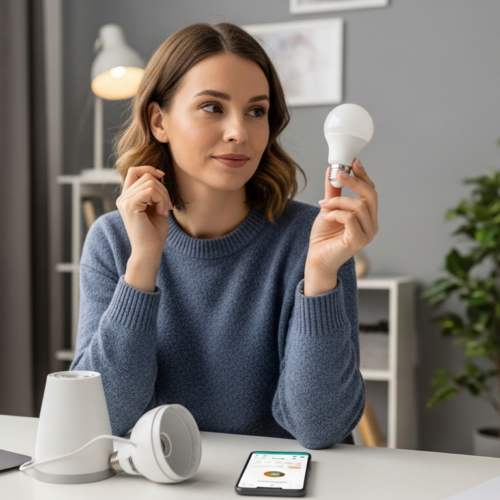
Choose bulbs under 3,500K, with about 3,000K as a reliable warm white. That warm glow makes a shared home feel relaxed while still marking the work boundary.
Why LED is a strong option
LED bulbs deliver real advantages: they use roughly 90% less energy than incandescents and often last about a decade. They also produce almost no UV, so they won’t fade artwork or framed art near your desk.
- Energy: LEDs cut power use and save money.
- Longevity: fewer replacements over time.
- Safety for art: no harmful UV exposure to artwork.
Use dimmers and color-tunable LEDs to shift modes
Install dimmers or choose color-tunable LED options so you can shift from focused work sessions to downtime without changing fixtures. Keep your task lighting bright for reading and screens, and let the accent layer stay softer to frame the zone.
Common Accent Lighting Mistakes That Blur Boundaries Instead of Defining Them
If your highlights scream louder than the rest of the room, they no longer define a workspace—they dominate it. A quick audit can reveal whether your choices help or hurt the goal of clear separation.
Overly bright accents that compete with ambient light
Too-bright accent lighting makes the whole room read at the same intensity. That removes the contrast you need to mark a workspace. The result can feel like a showroom instead of a cozy shared space.
Incorrect aim that flattens features or creates hotspots
Poor placement can wash out texture, create harsh hotspots, or accidentally highlight clutter. If a fixture draws your eye more than the object it should frame, change the aim or lower the beam.
Ignoring room scale when choosing fixtures and beams
Small rooms need softer beams; large rooms tolerate wider throws. Match fixture size and beam intensity to the room so the accent effect feels balanced rather than overwhelming.
- Tip: dim test—if a light pulls focus, reduce output or move it.
- Tip: aim for subtle contrast so the workspace is defined but the room remains comfortable.
- Tip: check at night and during the day to see how the effect changes.
Conclusion
Conclusion
Close with a simple rule: secure broad ambient and task coverage first, then add targeted accent lighting to mark a natural boundary in your shared room.
The core idea is clear: small pockets of brighter light help your eye register where work happens inside the same space. Keep those highlights modest so they complement—not compete with—the rest of the room.
Do a quick check from key sightlines (entry, sofa, bed) to confirm the workspace reads clearly while other areas stay softer. Return to fixture selection basics and pick lights that match your room size and the feature you want to show.
Your next step: choose one boundary this week—desk edge, wall wash, or corner nook—and refine the setup as you use the space.