
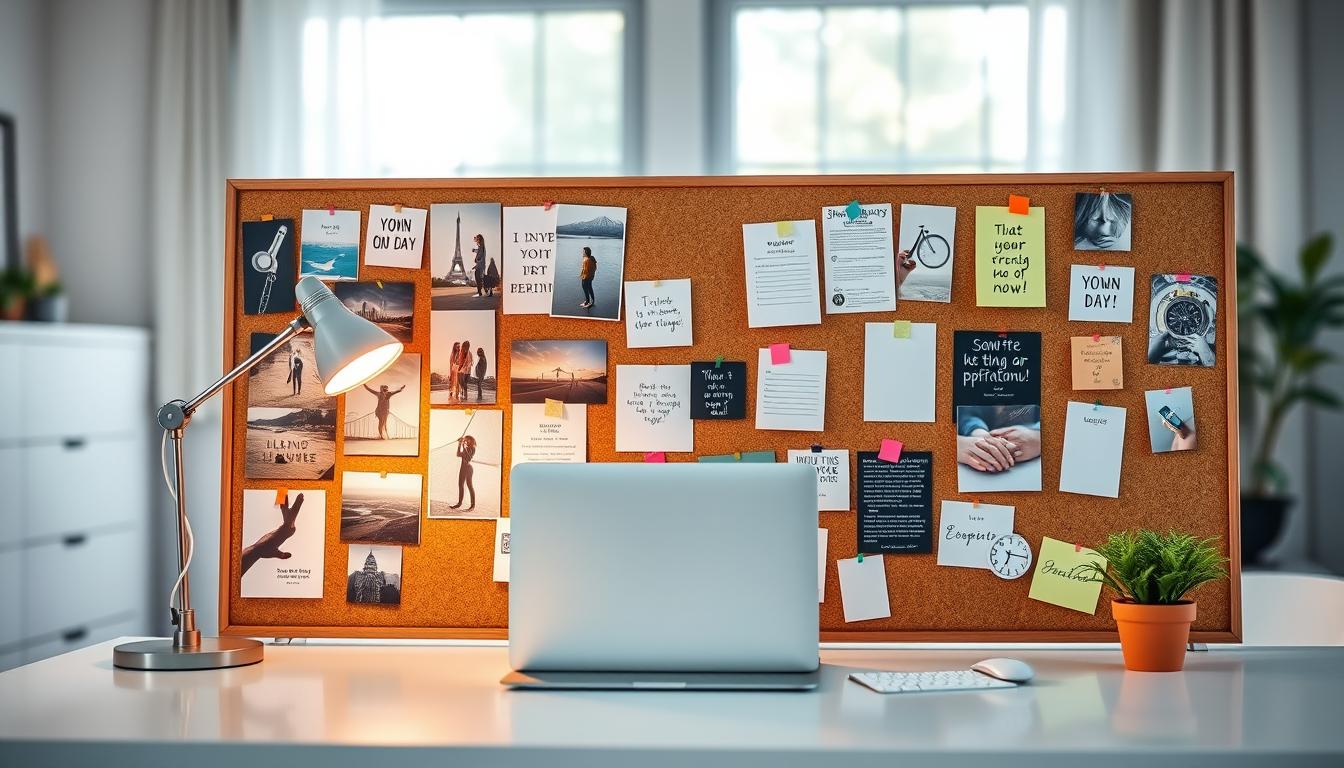
Keep your goals close without turning your home into a gallery. A compact vision board helps you place images and words where you will see them daily. This lets your attention return to what you want to build next.
Use small formats—micro-boards, framed collages, desk displays, or digital backgrounds—so visuals stay near your routine. The aim is simple: pair regular sight with consistent action. Your board invites intention, not a rigid checklist.
We will clarify the difference between vision-driven content (your why, intentions, and goals) and aesthetic direction (colors and texture). Then you’ll follow a clear process: intention → format → materials → build → display → daily use → refresh.
Expect practical payoff: more clarity, fresh energy, and a tangible pull toward reality when your visuals live where you actually see them. This guide shows small-space solutions that fit real life.
What a vision board is and how it’s different from a mood board
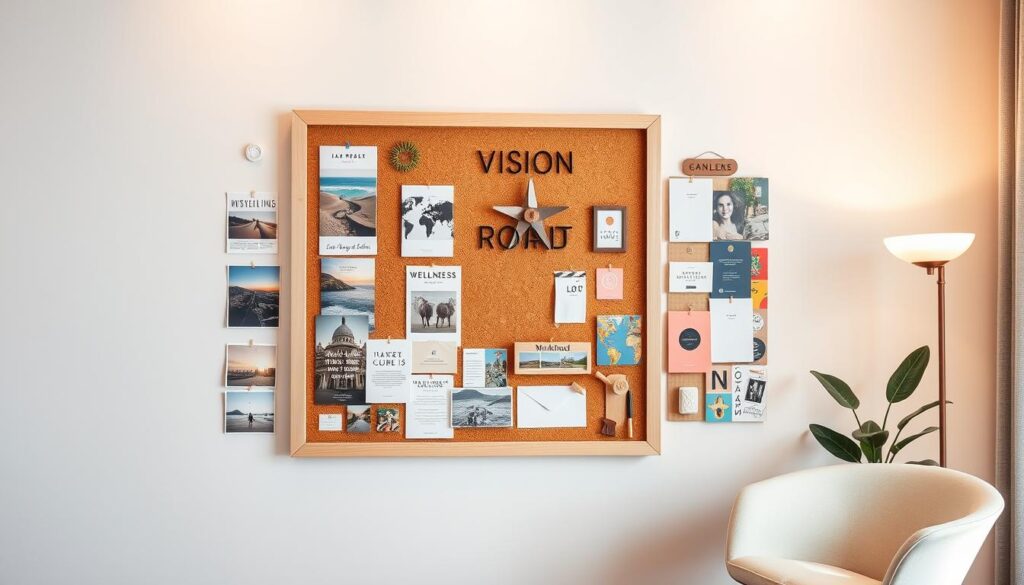
Think of a board as a clear snapshot of your aims—small, focused, and ready to guide daily choices. A vision board is a curated collection of images and words that reflect your goals, intentions, and the deeper why behind them. Life coach Zakiya Larry calls it a visual representation of your goals; it can be poster-size or tucked into a notebook.
How goal-focused tools differ from aesthetic tools
Use a goal-focused board to track career moves, health routines, or relationship plans. By contrast, an aesthetic board helps with design or lifestyle choices like a kitchen palette or a photo shoot plan.
Formats that fit modern life
A “board” can be physical, digital (Canva, Pinterest, Google Slides), or journal-based. Choose a physical option for ritual at home, digital for quick edits at work and on devices, or a notebook spread for privacy and portability.
- Practical tip: Ask what you want—visual direction or goal direction—before you build, so the tool stays useful.
- Mix if needed: Keep a mood set for a room while keeping a separate vision board for yearly dreams.
Why vision boards can work when you pair visualization with action
When you see a clear image of a goal often, your brain starts treating it like a real plan. Repeated sight makes intentions feel more immediate. That simple shift helps you prioritize what matters.
How repeated visual cues keep goals top-of-mind
Short, frequent glances prime your mind. The cue moves a goal from vague hope to a task you can act on. Over time, small reminders reduce the mental effort needed to choose the right next step.
What research says about digital reminders and motivation
One 2025 study found that students who used a digital vision board, revisited visuals through the year, and reflected on progress saw higher motivation and more clarity in their plans. This work shows that a visible prompt plus reflection supports goal setting.
Visualization, performance, and realistic expectations
Visualization helps practice mentally. Athletes who rehearsed a skill often closed much of the gap with physical practice. Still, this tool is an inspiration aid, not magic—pair it with planning and small actions to reach the intended future in reality.
- Mechanism: repeated cues make goals feel tangible.
- Digital use: quick glances during the day create reminders without extra willpower.
- Action pairing: after each look, take one tiny step toward the goal.
Set your intention before you start creating a vision board
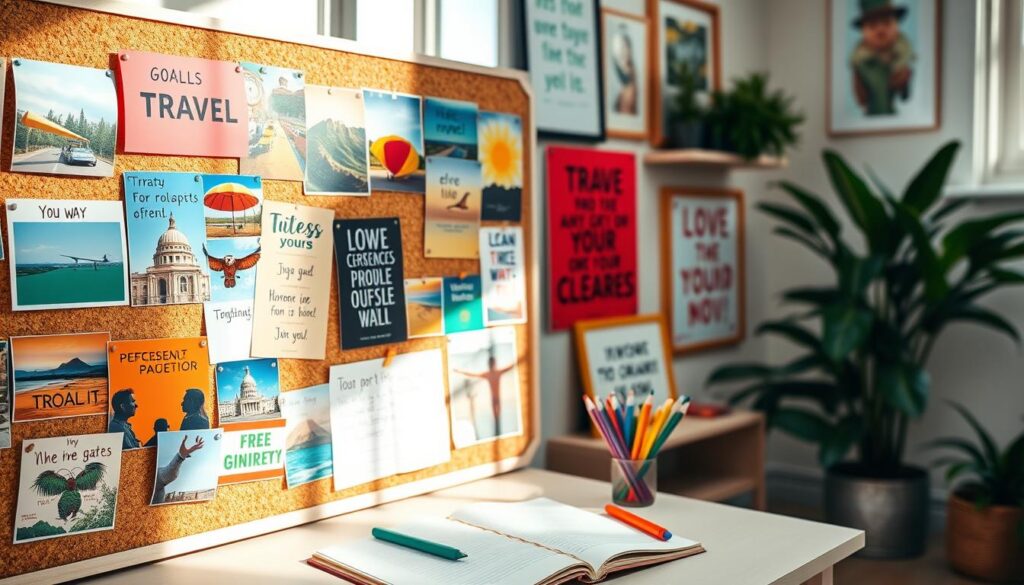
Set a single intention so every cut, clip, and phrase you choose has purpose. This step keeps the process from becoming purely decorative and makes the board a tool for action.
Pick the life areas that matter most right now
Choose one or two categories—home, work, relationships, health, or travel—to focus your energy. Narrowing scope helps you make meaningful change without overwhelm.
Decide your time horizon
Will this project cover the year ahead or reflect longer-term dreams? A yearly focus helps you set digestible benchmarks. Use a mid-year check to track progress and adjust course.
Find the feelings first
Start with the words that match how you want daily life to feel—calm, confident, steady, or expansive. Pick phrases that add energy and bring clarity when you glance at the visual.
- Start with intention: creating vision without reflection often looks nice but lacks follow-through.
- Keep scope small: focus on one or two areas so goals stay clear.
- Use benchmarks: yearly targets and mid-year check-ins make progress measurable.
Your chosen intention becomes the filter for every image, phrase, and visual you collect. Let that filter guide what stays and what goes so the result supports real action and clarity.
Choose the right format for small-space living and busy schedules
Match the size and type of your board to your daily rhythm and available space. If a large poster feels like too much, cut a poster board in half or use a large photo frame. That keeps inspiration visible without clutter.
Compact physical options
Try half boards, cork panels, framed collages, or magnetic panels on the fridge. A framed collage reads like decor and works best when you want a tidy, intentional look that blends with room design.
Magnetic panels or small cork squares sit neatly on a desk or dresser and take little time to update.
Digital options for quick updates
Use Canva, Pinterest, Google Slides, or PowerPoint to build a digital vision board. Set the final file as phone wallpaper or laptop background so images and photos greet you during the day.
Portable formats for privacy and travel
Notebooks, scrapbooks, binders with page protectors, and photo boxes let you flip through ideas on the go.
- Pick what you will use: ease and visibility beat perfection.
- Go digital if short on time: update images in minutes and duplicate versions for different goals.
- Keep a portable option: handy for people who travel or want privacy.
Gather tools and materials without overwhelm
Start with what’s on hand: a handful of images, a safe glue, and a simple backing. This keeps the project quick and prevents a long shopping trip.
Image sources to feel personal and useful
Look through old magazines, catalogs, personal photos, postcards, or printed digital images. Build a small collection pile first, then edit. That makes curation easier than choosing on the spot.
Adhesives and fasteners for every board type
Use photo-safe glue sticks or tape for poster board. Pins or thumbtacks work for cork; magnets suit metal panels. Try foam adhesive squares for depth and washi tape for temporary placement.
Simple extras to add depth without skill
- Markers, stencils, and stickers for clear words and accents.
- Ribbons or trims to add texture without fuss.
- Layering images with foam pads for subtle dimension.
Durability tip: if the board will sit on a desk or near a mirror, mount pieces to thicker backing or use stronger tape so edges don’t peel. Treat materials as a checklist, not a shopping list, and follow one small step at a time in the process.
Vision and mood boards: a step-by-step process to build yours
Start by naming one clear priority so every image and phrase serves a purpose.
Reflect and research
Collect inspiration that lines up with your goals, not just trends. Use magazines, Pinterest saves, Instagram saves, or a small folder on your device.
Curate your visuals
Keep only images that spark emotion or clear motivation. Edit until every visual earns its place.
Write it in
Add short phrases and affirmations that describe the future you want. Use crisp words that nudge daily action.
Arrange with intention
Choose a grid by category or a free-form collage with breathing room. Place the most important image at eye level so the message reads at a glance.
Secure and finalize
Frame, laminate, or use stronger fasteners to make the board durable. For a digital route, use Canva or Google Slides to collect, place text, export, and set as a background for frequent viewing.
How to display your board for maximum impact without cluttering your walls
Placement is part of the plan: a board only works if you see it during normal moments. Pick spots you already use so the visuals become a gentle prompt, not another task.
High-visibility, low-mess spots
Choose places that don’t add wall clutter: a nightstand, desk, mirror edge, closet door, or the fridge. These spots give frequent glances without permanent fixtures.
Micro options for small spaces
Try mini frames, postcard-size collages, or index-card prompts. Prop a framed piece on a shelf to “lean and layer” like decor so it reads intentional, not taped-up.
Go fully digital when needed
Set a digital vision board as your laptop background or phone home screen. This gives repeated cues with zero physical footprint.
Design rules for impact
- Vivid images that grab attention.
- Short words for quick reads.
- Breathing room so the message stays clear.
Pair placement with routine—morning coffee or evening wind-down—so the board fits your day and nudges real steps toward your goals.
How to use your board daily to support goals, motivation, and mental health
Begin with a single glance that leads to one small, deliberate action. That short cue starts a simple daily process: look, note, imagine, then act. Repeat it each day so images move from ideas into habit.
Create a simple ritual
Glance at the display each morning or during a steady part of your day. Spend 30–60 seconds journaling one line about progress or intention.
Use brief visualization for 30–60 seconds, then pick one tiny step you can complete within the same day. This step keeps motivation alive and supports mental health.
Keep the process flexible
Avoid treating the board like a rigid checklist. Let visuals evolve as your life changes. If a prompt feels heavy, swap it out or reduce the pressure to perform.
Link visuals to actions
Assign each main image one daily habit and one weekly priority. For example:
- Health image → daily 20-minute walk + weekly meal plan.
- Work image → daily skill practice slot + weekly project block.
- Relationship image → short daily check-in + weekend quality time.
These small steps turn visualization into concrete progress and help your goals enter reality without big bursts of effort.
Reflect and choose accountability
Do a quick weekly review to note what feels easy and what drains you. Adjust tasks so the practice supports your mind and life.
You can share goals with trusted others for accountability, but keep the display primarily as personal support for focus and mental health.
Refresh, update, and evolve your board as your life changes
Let the display evolve with your life—swap, add, or archive pieces as your priorities change. Treat the board as a living tool so it keeps creating clarity and nudging real steps toward your goals.
Swap images that no longer resonate
Remove visuals that feel like old versions of you. Replace them with images that spark action today. This keeps the display relevant instead of a dusty gallery of past dreams.
Use simple check-ins to track progress
Set a mid-year check and an end-of-year refresh. Use yearly benchmarks to note what moved and what stalled. Mark progress with small labels or a keepsake page for wins.
Celebrate wins and accept new definitions of success
Move finished items to a visible “wins” corner so progress feels real. Stay open to different outcomes—success often arrives in surprising forms that still support your future.
When to start from scratch
Begin anew after big life shifts: a new season, changed values, or when the board starts to feel heavy. A fresh start closes the loop between your current dreams and the next practical steps toward reality.
Conclusion
Turn a few clear images into daily prompts so your plans meet real effort. Use a compact vision that sits where you start and end your day; this makes your goals visible and actionable.
Keep the display focused on what matters now: home, work, relationships, health, travel, or family. A small board offers big direction without clutter; micro-frames, phone backgrounds, or a desk collage keep inspiration close.
Next step: pick one format today, gather a few simple tools, and choose three vivid images with short words that feel true. Secure the pieces, place the display where you will see it often, then set a monthly glance and a mid-year check to keep the work current.
Commit to small action. The display supports your plans; your steady steps move the goals forward over time.