


You can reshape your office without a renovation. A simple modular cube storage system uses stackable square compartments to divide a room, hide clutter, and add work zones. This approach keeps planning practical and focused on what you need to store and reach each day.
When your schedule or team shifts week to week, these units act like lightweight architecture. They form backdrops for video calls, create quiet corners, and let you reset at day’s end. This article compares cube storage unit types, sizes, and add-ons so you can pick what fits your space and budget.
Design matters. The right organizer or shelf can look intentional and modern, not temporary. You’ll see when a double cube, a mid-size organizer, or a 16-cube wall makes the most sense for your room.
Why cube storage works for flexible office layouts
You can split a large open room into distinct work areas without hiring a contractor. Use freestanding units to set boundaries, define function, and keep sightlines open.
Create zones in an open room without construction
Orient a row of cube units to make a focus zone, an admin bay, and a supplies corner. The units act as visual and practical dividers so teams share one space without chaos.
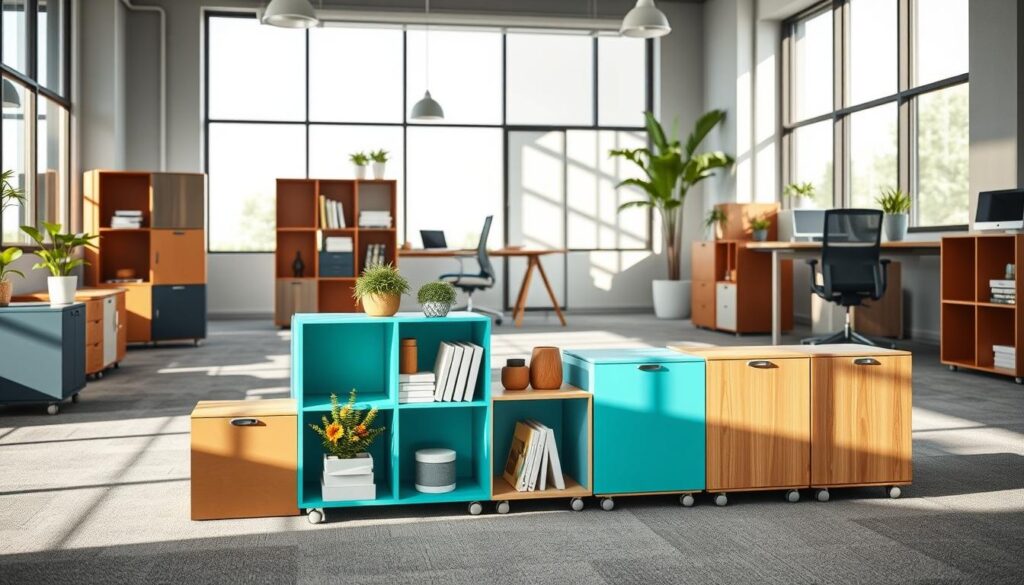
Make use of underused corners and wall space
A compact shelf grid reclaims dead areas near doorways, odd wall runs, and corners. Keep daily tools at arm level, archive items higher, and store heavy boxes low to stay ergonomic and safe.
Support hybrid work changes with reconfigurable units
When work patterns shift, you don’t need new furniture. Move sections, swap bins, or stack units for a different layout on busy days. This setup speeds resets so your office looks professional fast.
- Keep daily items within reach.
- Use labeled bins for quick resets.
- Balance open and closed faces for a tidy look.
Flexibility only works if you choose the right size and the right mix of open faces versus bins. In the next section, you’ll learn how to pick the right unit for your room.
What to look for before you buy storage cubes for your workspace
Before you buy, take a quick room audit to avoid a bulky unit that crowds your workflow. Measure wall length, desk clearance, walking paths, and chair pull-back space so the room stays comfortable and safe.
Right-sizing your unit for your room
Count how many compartments you need and map them to wall runs or the back of a desk. Leave at least 30–36 inches for main walkways and 18–24 inches behind chairs.
Open shelves vs. bins for daily organization
Use open faces for binders, manuals, and items you grab often. Use closed bins for cables, stationery, and anything that creates visual clutter.

Durability, stability, and safe placement
Pick thicker panels, solid connectors, and level placement. Anchor taller units near traffic routes or when they double as a room divider.
Matching your décor and furniture style
Repeat one or two finishes—wood tone, white, or fabric texture—so the unit looks like part of the plan.
- Quick specs to compare: cube count, orientation, add-on doors/drawers, and bin compatibility.
Modular cube storage: top options for adaptable offices
Choose units by footprint and cubby count to match how you work and what you keep on hand. Below are clear options so you can pick by room size and inventory needs.
Compact double-cube units for small home offices
Why it works: A double-cube fits beneath a window or beside a desk. It adds quick storage without blocking light or dominating your video background.
Mid-size organizers for shared work areas
Where to use them: Use a 6–8 compartment organizer in team zones. Assign one or two cubes per person to cut down on miscellaneous pile-up.
Make-shift walls of 16 cubes for maximum shelving
What it does: A 16-cube wall becomes a single backbone for binders, labeled bins, and displays. It replaces multiple cabinets while keeping items easy to find.
- Shortlist by footprint: double (2), mid (6–8), full wall (16).
- Design tip: Start with one small unit and expand so your layout stays flexible.
- Placement note: Use a tidy 6–8 unit as a video-call backdrop; place larger runs off-camera for a calmer view.
Best cube organizer finishes for modern offices
Choosing the right surface transforms a practical shelf into a design feature. The finish you select affects feel, durability, and how well the unit fits your décor.
Wood finishes for warmth and a premium look
Wood reads warm and refined. Dark or mid-tone wood hides scuffs and pairs well with black metal legs, monitor arms, and task lighting.
Pros: durable, hides wear, looks premium. Cons: heavier and slightly harder to move.
Fabric shelves for a softer, lightweight feel
Fabric options feel softer and move easily. Fabric-compatible bins make layout changes fast and reduce overall weight when you reconfigure.
Pros: lightweight, quiet, comfy for home offices. Cons: can show stains and wear faster than solid surfaces.
White finish for clean, high-contrast design
White units create crisp contrast against darker walls. A solid white cube storage run reads minimal and helps color accents pop.
Use coordinated colors across bins, binders, and accessories so the organizer becomes a planned design element, not just storage.
- Wood: warm, durable — best for shared offices.
- Fabric: light and moveable — best for home setups.
- White: crisp and modern — best for high-contrast design.
Space-saving cube shelving ideas for small offices
In small offices, thinking upward wins back the floor you need for chairs and traffic. Use tall runs and narrow units so your main walking paths stay clear.
Vertical stacking to free up floor space
Stacking adds meaningful capacity without eating the room. Place heavier boxes on lower faces and keep files within easy reach. Avoid top-heavy piles to protect stability.
Use a slim shelf run that goes high rather than wide. That preserves seating and movement in tight footprints.
Under-desk and side-wall placement strategies
Fit a low unit under your desk for papers, peripherals, and bins that don’t block knee clearance.
Reserve under-desk storage for items you access often. Skip drawers that hit rolling chairs or block legroom.
For narrow rooms, push a short run along a side wall. This keeps walkways open and makes the layout feel less crowded.
- Prioritize height over width to save floor space.
- Keep heavy items low and daily items reachable.
- Use side-wall runs instead of central cabinets in tight corridors.
- Treat shelving as adaptable infrastructure you can move when your desk or gear changes.
Using cube storage as a room divider in a big workspace
Turn a long run of shelving into a purposeful divider that guides traffic and frames work zones. This approach defines focus areas, meeting corners, and supply zones without blocking light like a solid wall.
Creating sections for focus, meetings, and supplies
Use a low shelf run to separate quiet desks from a small meeting nook. One side can hold team supplies and office essentials while the opposite side stores active project materials.
Keeping sightlines open while adding storage
Open faces keep the room feeling connected. Place open cubes intermittently so light and sightlines pass through. This gives psychological separation without isolation.
Balancing both sides for a tidy, professional look
Face both angles with a planned mix of closed bins and visible shelving. Reserve a few open cubes for display items to soften the divider and support client-ready views.
- Simple organization: left for team gear, right for projects.
- Design tip: alternate open and closed faces for rhythm.
- Future-ready: rearrange the run as headcount or workflows change.
Open shelf cube storage for books, binders, and display items
A tidy open shelf acts like a mini-library that supports quick research and daily workflows. Use open faces to hold the manuals and guides you reference most so spines are visible and retrieval is instant.
Setting up a reference library for books and manuals
Group books by topic so you scan related titles in one sweep. Keep the most-used books at eye level and reserve one compartment for “in progress” reading.
Use consistent binders and subtle labels to make the run read like a system, not a pile. Mix vertical books with a few horizontal stacks to add visual rhythm and stability.
Showcasing a collection without visual clutter
Limit each cube to a small number of items—an award, a product sample, or a framed certificate plus one small accent. That keeps the display tidy and meaningful.
- Keep daily references visible and labeled.
- Mix vertical and horizontal stacks for balance.
- Use the shelf behind you on video calls to support your brand impression.
- Choose a single finish or palette to unify the collection.
- Consider one dedicated cube organizer for loose items and quick access.
Open runs pair well with a compact cube storage plan: they hold books and binders, highlight your collection, and make your workspace look professional on camera.
Bins and organizers that make cube units office-ready
Small bins turn open compartments into neat, office-ready stations that tame everyday clutter. They hide adapters, batteries, spare mouse pads, and other small items so your shelves read tidy and professional.
Fabric bins for cables, chargers, and small items
Fabric bins are an ideal pick for cable clutter. They’re lightweight, easy to pull from a shelf, and visually soften a grid of compartments.
Use one fabric bin per category—chargers, dongles, and cables—so everything has a home and looks uniform.
Labeling systems that keep teams organized
Adopt consistent naming and large, readable labels. Pick a shared rule for where new supplies go and keep a simple log for restocks.
- Assign categories by row (IT, Admin, Shipping) so anyone can find what they need.
- Use small trays or dividers inside bins to prevent “junk drawer” behavior.
- When shopping, compare bin sizes, handle style, and label-friendly fronts for the best cube storage fit.
Cube storage for decluttering a multi-purpose home office
Clear zones and simple rules prevent your work life from bleeding into family time in tight homes. Give each function a visible place so you stop leaving things on the couch or kitchen table.
Separating work items from home items
Assign one row of shelves for work and another for personal stuff. Keep a strict rule: nothing crosses categories without a deliberate decision. This reduces confusion in apartments and shared rooms.
Creating “drop zones” for mail and supplies
Use individual compartments in your cube storage as drop zones. Reserve one cube for incoming mail, one for outbound packages and returns, and one for daily supplies like pens and chargers.
Resetting your space fast at the end of the day
Adopt a five-minute routine with a simple organizer: file papers, bin loose receipts, and clear the desktop. Visible storage makes maintenance easier because when every item has a spot, you are less likely to make piles.
- Tip: Label cubes for quick sorting.
- Keep chargers and adapters in the same cube for fast access.
- Consistent habits link decluttering to better productivity and fewer lost items.
Color and design tips to make storage cubes a visual feature
Treat your shelving as a deliberate focal wall so it reads like design, not an afterthought. When you plan with intent, shelving supports brand, function, and visual calm.
Using contrast: solid white against a darker wall
Place a white run against a deep paint color to create clean, sharp edges that look modern on camera. A solid white fabric shelf reads crisp and bright when paired with charcoal or navy walls.
Creating a coordinated palette with office colors
Pick two to three repeat tones across bins, book spines, and small accents. Repeat these colors so the arrangement feels intentional and cohesive rather than random.
Mixing textures for a more intentional décor
Introduce wood grain, fabric bins, and metal accents to add depth. Limit décor to a few curated pieces so you keep visual noise low and retain a tidy, professional look.
- Choose true whites: check product photos for accurate color and consistent grain.
- Limit accents: use solid-color bins and repeat colors for order and calm.
- Look for options: confirm bin color availability and finish matches when buying a cube organizer.
Weathered wood cube storage for a farmhouse-chic office vibe
A weathered wood run brings natural texture that softens a workspace while staying professional. This look pairs easily with many décor palettes and adds an inviting layer to your office.
Pairing wood with metal and neutral textiles
Match weathered wood with black or brushed metal legs, handles, and lamp bases to add contrast. Use linen-look bins and gray rugs to keep the palette calm.
Keep lines clean: balance rustic grain with simple shapes so the room feels current and uncluttered.
Where this style fits best in your room
Place a wood run behind your desk for a warm backdrop, along a long wall that needs texture, or in a reading corner for relaxed focus.
- Aim to match or deliberately contrast flooring and furniture to avoid visual clash.
- Balance textured faces with a few closed compartments and neat bins.
- Check whether matching add-ons—doors, drawers, or bin colors—are available in the same finishes before you buy.
When you shop, confirm the product notes for finish options and one-line care tips so your new piece fits the room and your routine.
Cube storage in closets and supply areas
Turn a cramped closet into a predictable supply center that you can actually use every day. Start by clearing the floor and planning vertical zones so nothing becomes a forgotten pile.
Turning a closet into a compact office supply hub
Fit a small unit or a single cube storage run so shelves use the full height of the space. Place daily items at the front for quick access and bulk paper goods on lower faces to keep weight low.
Storing paper goods, tech accessories, and backups
Use labeled organizers and bins to separate cables, hubs, and chargers. Keep backups like toner and batteries on higher shelves and mark them clearly.
- Practical layout: daily supplies front, bulk paper low, backups high.
- Reserve one cube as a “Reorder” spot for empties or low-stock notes.
- Measure closet depth and door swing so the unit doesn’t block access or snag items.
When you set up this closet hub, you store inventory neatly and keep your main office calm and client-ready.
Modular cube storage setup layouts you can copy
Copyable shelving plans remove guesswork and help you arrange gear fast. Below are four layout recipes you can replicate in most offices and small studios.
Solo workstation layout with shelves and bins
Place one cube organizer beside your desk for daily items and files. Use a couple of labeled bins for cables and open shelves for active projects so you reach what you need in seconds.
Two-person shared office layout with divided storage
Split a run down the middle and assign each person distinct sections by function. Keep shared supplies in the center so both of you access common items without crossing piles.
Client-ready background wall using cube shelving
Mix books, one or two display pieces, and concealed bins behind you to keep the camera frame tidy. Balance open shelves and closed faces so the wall reads professional on video.
Creative studio layout for tools, materials, and samples
Reserve dedicated cubes for tools, materials, and current samples to prevent project sprawl. Leave one or two growth cubes empty so new work has a home immediately.
- Quick copy tip: map placement, then place heavy items low and daily items at arm level.
- Label faces clearly and keep a small toolkit in one accessible bin for repairs.
- Plan for one empty growth cube per major project to sustain order as work scales.
How to choose the right cube storage options for your budget
Think about how you actually use the space before you buy. Small tasks, light loads, and rare reconfiguration usually mean a basic organizer will meet your needs.
When a basic organizer is enough
Choose a simple unit for a solo home office or low-weight items. A basic organizer handles papers, small tech, and occasional shifts without extra cost.
When to upgrade materials and finishes
If the shelf will live in a shared office, hold heavy binders, or sit on camera, spend more for thicker panels, stable connectors, and premium finishes.
Planning for future expansion without replacing furniture
Pick a line that supports add-on cubes and compatible bins so you can grow by increments. That approach keeps your desk and filing furniture in place and avoids full replacement later.
- Cost logic: pay first for stability and durability, then upgrade look if budget allows.
- Compare: total cost per cube, included hardware, and ease of replacement parts.
- Buy tip: confirm matching finishes and add-on availability before purchasing the initial unit.
Where to shop and compare cube storage units in the United States
Start your shopping at retailers that let you filter by size, finish, and add-on compatibility so comparisons are quick. That saves time and helps you narrow down viable options before you compare prices.
What broad assortments usually include
Large US stores often group cabinets, bins, shelves, and cubbies so you can see full systems at once. This makes it easy to filter by footprint, weight capacity, and the number of compartments.
How to compare finishes, colors, and configurations fast
Use a short checklist when you review product pages:
- Number of cubes and whether the unit stacks vertically or runs horizontal.
- Bin compatibility and whether replacement bins are sold separately.
- Finish and color options to match your desk and wall.
- Dimensions, stated weight limits, and assembly method.
Tip: Target is a good example of a store with wide selections across styles and price points. You can test finishes and compare many options in one place.
Before you buy, scan shipping terms, return windows, and parts availability. Good systems work best when you can replace bins, add a unit later, or return a piece that doesn’t fit.
Conclusion
Small changes to how you arrange compartments can make your workspace feel larger and more focused.
Use this approach to blend practical organization with clean design so your pieces do more than hide clutter. A flexible solution keeps daily tools reachable and your background camera-ready.
Remember buying basics: right-sizing, the open-shelf vs. bin balance, stability, and finish coordination. These factors decide if a unit works for your workflow and lasts over time.
Best-use scenarios include small offices, shared work areas, room-divider runs, closet supply hubs, and client-ready backgrounds. A growable solution lets you add a double, a mid-size run, or a full 16-cube wall without replacing main furniture.
Next step: measure your space, pick a cube organizer configuration, and add bins and labels to lock in daily order. You’ll get a tidy, adaptable workspace that looks intentional every day.