
Understanding Cabinet Dimensions for Small Spaces
Accurately assessing the dimensions of a small rolling filing cabinet is extremely important to making sure it fits comfortably within your limited space. Start by measuring the height of the under desk storage area or any other designated spot where you plan to keep the cabinet.
Make sure to account for any obstructions, such as desk overhangs or low-hanging shelves. Next, measure the width and depth of the space to ensure the cabinet won’t stick out too far or block pathways.
It’s also a good idea to consider the cabinet’s maneuverability. Will you need extra space to roll it in and out easily?
Think about the clearance required for opening drawers fully without hitting nearby furniture or walls. When comparing cabinet dimensions, pay attention to both the external and internal measurements.
The external dimensions determine whether the cabinet will fit in your space, while the internal dimensions dictate how much storage capacity you’ll have. Don’t forget to factor in the height of the wheels, as they can add a few inches to the overall height of the cabinet.
Consider the shape of the cabinet as well. Some cabinets have a rectangular design, while others are more square or even slightly tapered. Choose a shape that best fits the contours of your space and maximizes storage efficiency.
If you plan to place the cabinet under your desk, make sure it doesn’t interfere with your legroom or ability to sit comfortably. Measure the height of your desk and compare it to the height of the cabinet to ensure a proper fit.
When in doubt, it’s always better to err on the side of caution and choose a cabinet that is slightly smaller than the available space. You can always find creative ways to fill extra space, but it’s much harder to make a cabinet fit if it’s too large.
These measurements will help you achieve the best small office organization possible.
Security Considerations: Locks and Confidentiality
For those handling sensitive documents, security is a paramount concern when choosing a rolling filing cabinet. Many cabinets come equipped with locking mechanisms to protect confidential information from unauthorized access.
Basic locks typically secure all drawers with a single key, while more advanced systems may offer individual drawer locks for enhanced security. Evaluate the type of documents you’ll be storing and the level of security you require.
If you handle highly sensitive information, consider a cabinet with a high-security lock or even a combination lock for added protection. Remember to keep keys in a secure location and avoid writing down the combination where it can be easily discovered.
Another aspect of confidentiality is the cabinet’s construction. Ensure that the drawers close tightly and that there are no gaps where documents could be viewed from the outside.
For added peace of mind, you might also consider placing the cabinet in a less visible area of your office or covering it with a screen or partition. A small rolling filing cabinet with a lock can be an integral part of your small office organization, giving you peace of mind.
Consider the material of the cabinet itself. Metal cabinets are generally more difficult to break into than plastic or wood cabinets. Look for cabinets with reinforced construction and tamper-resistant locks.
Think about the possibility of theft. While a locked cabinet can deter casual snooping, it may not be enough to stop a determined thief. Consider investing in a security system or alarm for your office to provide an additional layer of protection.
Regularly review your security procedures and update them as needed. Train your employees on the importance of confidentiality and the proper handling of sensitive documents.
By taking these security considerations into account, you can create a more secure and confidential work environment. This is an important aspect of small office organization.
Maximizing Storage Space Within the Cabinet
Even with a small rolling filing cabinet, there are several strategies you can employ to maximize storage space. Start by organizing your files into categories and labeling them clearly.
This will not only help you find documents quickly but also prevent unnecessary clutter from accumulating. Use file folders or hanging file folders to keep papers neatly organized and prevent them from sliding around.
- Use hanging file folders
- Implement color-coded labels
- Consolidate similar documents
- Digitize less-used documents
- Utilize drawer dividers and organizers
Consider using color-coded labels to further streamline your filing system. This visual aid can help you quickly identify specific categories or types of documents.
Regularly purge old or unnecessary documents to free up space. Scan and digitize documents that you don’t need to keep in hard copy, and store them electronically.
Utilize drawer dividers and organizers to separate different types of files or supplies. This can help you keep everything in its place and prevent items from getting lost or mixed up.
Consider using the top of the cabinet as an additional storage surface. You can place a small tray or basket on top to hold frequently used items, such as pens, paperclips, or notepads.
Think about using vacuum storage bags for documents or items that you need to keep but don’t access frequently. These bags can compress the contents and save a significant amount of space.
By implementing these strategies, you can make the most of your small rolling filing cabinet and keep your office organized and clutter-free. Effective small office organization makes a big difference.
Rolling Filing Cabinets and Ergonomics
While often overlooked, ergonomics play a significant role in the usability of a rolling filing cabinet, especially in a small office setting. Choose a cabinet with a height that allows you to easily access the contents without bending or straining.
Ideally, the top of the cabinet should be at or slightly below your desk height to minimize reaching. The placement of the cabinet is also crucial for ergonomic considerations.
Position it within easy reach of your workstation to avoid excessive twisting or stretching. If you frequently access the cabinet, consider placing it on the same side as your dominant hand to minimize unnecessary movements.
Look for cabinets with smooth-rolling wheels to reduce the effort required to move them. Investing in a small rolling filing cabinet that promotes good posture and minimizes strain can contribute to a more comfortable and productive work environment.
Ensure the portable file cabinet can be accessed without disrupting your natural workflow and causing discomfort.
Consider the handle design of the drawers. Choose handles that are easy to grip and don’t require excessive force to open or close the drawers. Ergonomic handles can reduce strain on your wrists and hands.
If you spend a lot of time working at your desk, consider a cabinet with adjustable height. This will allow you to customize the height of the cabinet to perfectly match your desk and chair, promoting better posture and reducing strain on your back and neck.
Think about the lighting in your office. Make sure the area around the cabinet is well-lit to prevent eye strain when searching for files or supplies. A small desk lamp can be a helpful addition.
By paying attention to these ergonomic details, you can create a more comfortable and efficient workspace. This improves not only your small office organization but also your well-being.
Maintaining Your Rolling Filing Cabinet
Proper maintenance is essential to prolong the life of your rolling filing cabinet and keep it functioning smoothly. Regularly clean the exterior of the cabinet with a damp cloth to remove dust and grime.
For metal cabinets, apply a rust-resistant coating periodically to prevent corrosion. Check the wheels regularly and lubricate them if they become stiff or squeaky.
Tighten any loose screws or bolts to ensure the cabinet remains stable and secure. Avoid overloading the drawers, as this can strain the wheels and cause the cabinet to become difficult to move.
Periodically inspect the locking mechanism and lubricate it if necessary to ensure it functions properly. By following these simple maintenance tips, you can keep your small rolling filing cabinet in top condition and enjoy its benefits for years to come.
Taking good care of your under desk storage will help you to stay organized.
Clean the inside of the drawers periodically to remove dust, dirt, and debris. This will help keep your files and supplies clean and prevent them from becoming damaged.
If you spill something inside the cabinet, clean it up immediately to prevent stains or odors. Use a mild detergent and a damp cloth to wipe away the spill, and then dry the area thoroughly.
Consider using drawer liners to protect the bottom of the drawers from scratches or stains. Drawer liners can also add a touch of style and personality to your cabinet.
Regular maintenance not only prolongs the life of your cabinet but also ensures it continues to function smoothly and efficiently. This makes small office organization much easier.
Creative Uses Beyond Filing: Repurposing Your Cabinet
A small rolling filing cabinet doesn’t have to be limited to just storing files; it can also serve other creative purposes in your small office. Consider using it as a mobile workstation by placing a small tabletop on top.
This can provide a convenient surface for your laptop, printer, or other office equipment. You can also use the drawers to store office supplies, books, or personal items.
In a craft room, a rolling filing cabinet can be used to store and organize art supplies, tools, and project materials. The mobility of the cabinet allows you to easily move your supplies to wherever you’re working.
Some people even repurpose rolling filing cabinets as bedside tables or small dressers in bedrooms with limited space. With a little imagination, a portable file cabinet can be transformed into a versatile storage solution that meets a variety of needs.
It can really add to your small office organization if you use it wisely.
Use it as a charging station by drilling a hole in the back of a drawer to run charging cables through. This keeps cords organized and out of sight.
Turn it into a rolling bar cart by adding a handle and some bottle holders. This is a fun and functional way to repurpose an old filing cabinet.
Create a mobile library by filling the drawers with books and magazines. This is a great way to keep your reading material organized and easily accessible.
The possibilities are endless when it comes to repurposing a rolling filing cabinet. Let your creativity guide you and find new and innovative ways to use this versatile storage solution. This helps to keep your under desk storage organized.
Conclusion
Choosing the right small rolling filing cabinet can significantly improve the functionality and organization of your small office. By carefully considering the key features, materials, dimensions, and security aspects, you can find a cabinet that perfectly fits your needs.
Remember to prioritize ergonomics and maintain the cabinet properly to ensure its longevity. With the right portable file cabinet, you can maximize your under desk storage, keep your documents secure, and create a more efficient and comfortable workspace.
A well-organized office is a productive office. A rolling filing cabinet is a great tool to help you achieve that.
So take the time to research your options and choose a cabinet that meets your specific needs and preferences. You’ll be glad you did!
Ultimately, the right small rolling filing cabinet can be a game-changer for your small office. It will really help your small office organization.
In today’s world of compact living, maximizing space is essential. A small rolling filing cabinet offers an ideal solution for home offices where every square inch counts.
These mobile storage units provide the functionality of a traditional filing cabinet without the bulk, making them perfect for small office organization. Deciding on the best one requires careful consideration of your specific needs and the available space.
This article will guide you through the key features, types, and security aspects of portable file cabinet options. By understanding these factors, you can make an informed decision and choose a rolling filing cabinet that perfectly fits your under desk storage requirements.
Why Choose a Rolling Filing Cabinet for a Small Office?
Rolling filing cabinets offer a unique blend of convenience and space-saving design, making them an excellent choice for small offices. Unlike stationary cabinets, these units can be easily moved around, allowing you to reconfigure your workspace as needed.
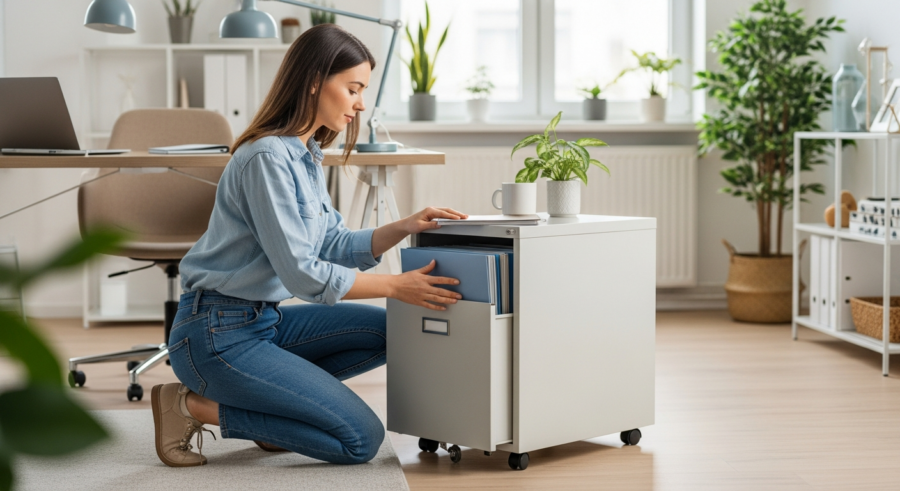
This flexibility is particularly valuable in multi-purpose rooms or shared spaces where your office setup might need to be adjusted frequently. A small rolling filing cabinet can be tucked away under desk storage when not in use, freeing up valuable floor space.
Another advantage is their accessibility. You can position the cabinet right next to your desk while working and then roll it to a storage area when you’re done for the day.
This ease of movement also simplifies cleaning and maintenance, as you can easily access the area behind and underneath the cabinet. For those with limited mobility, a portable file cabinet on wheels can significantly improve accessibility to important documents and supplies.
Consider how much time you spend looking for documents. A rolling file cabinet nearby can drastically reduce the amount of time spent searching.
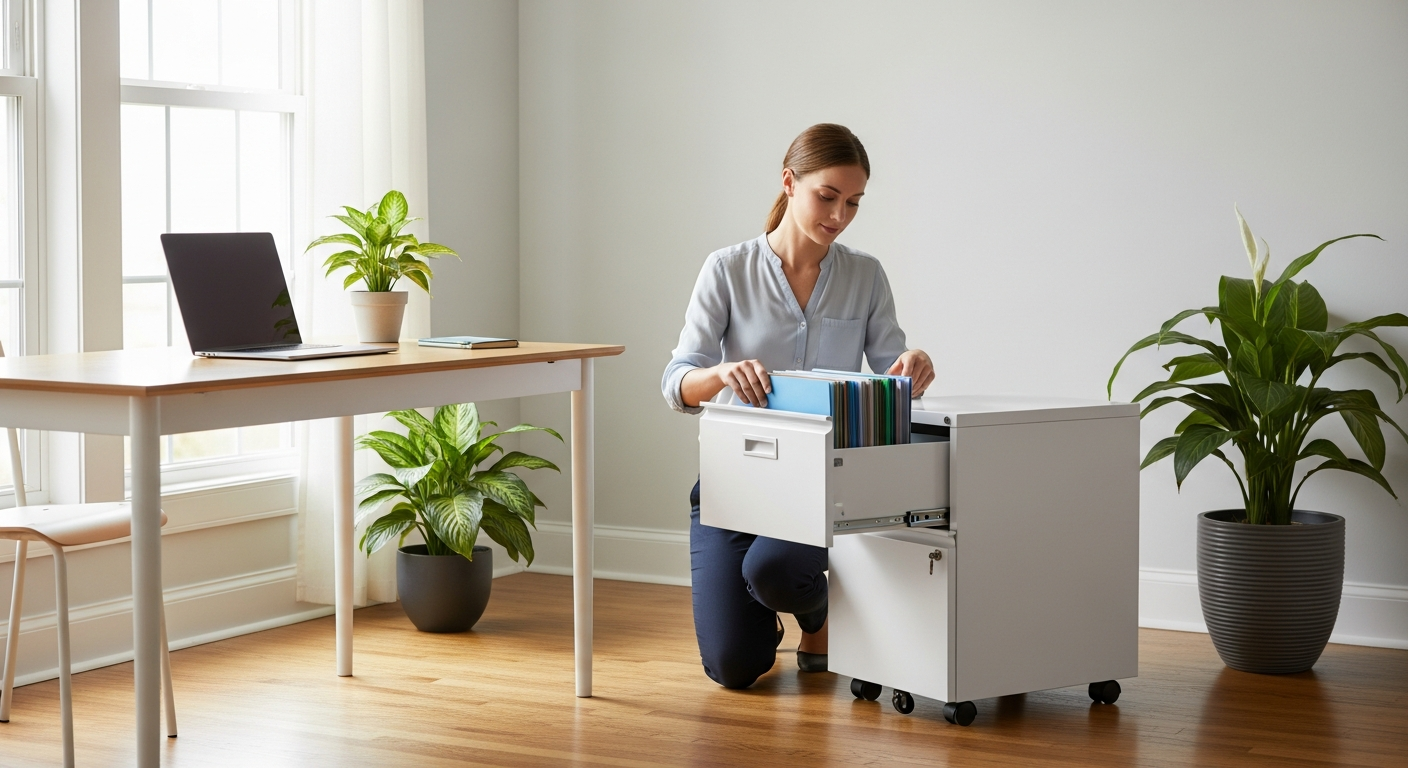
Furthermore, the ability to relocate the cabinet makes it easy to adapt to changing office layouts or even move it to a different room altogether. This adaptability is a huge benefit for growing businesses or individuals who frequently rearrange their workspace.
The compact design and mobility of these cabinets make them a practical and efficient storage solution for any small office environment. They really do make small office organization much easier.
Key Features to Look for in a Rolling Filing Cabinet
When selecting a small rolling filing cabinet, several key features should be considered to ensure it meets your specific needs. The size of the cabinet is, of course, a primary factor, especially if you have limited under desk storage space.
Measure the available area carefully to determine the maximum dimensions your cabinet can occupy. Pay attention to the height, width, and depth to avoid any unpleasant surprises upon delivery.
The number and type of drawers are also crucial considerations. Determine whether you need standard file drawers, smaller drawers for office supplies, or a combination of both.
Consider the type of files you need to store, such as letter, legal, or A4 size, and ensure the drawers are compatible. The build quality and materials used are also important for durability and longevity.
Look for cabinets made from sturdy materials like steel or reinforced plastic. The quality of the wheels is another important factor, as they will determine how smoothly the cabinet rolls and how well it holds up to repeated movement.
Examine the drawer slides to ensure they operate smoothly and quietly. Full-extension drawers allow you to access the entire contents of the drawer, while partial-extension drawers may leave some files hidden in the back.
Consider the weight capacity of each drawer, especially if you plan to store heavy files or supplies. A small rolling filing cabinet with reinforced drawers will better withstand the weight and prevent sagging or damage.
Finally, think about the style and aesthetics of the cabinet. Choose a design that complements your existing office furniture and reflects your personal taste.
A well-chosen cabinet can not only provide practical storage but also enhance the overall look and feel of your workspace. This is a key element to small office organization.
Types of Rolling Filing Cabinets: Metal vs. Plastic vs. Wood
Rolling filing cabinets are available in various materials, each offering distinct advantages and disadvantages. Metal cabinets, typically made of steel, are known for their durability and strength.
They can withstand heavy use and are less likely to be damaged compared to other materials. Plastic cabinets are lightweight and often more affordable, making them a popular choice for budget-conscious buyers.
| Material | Pros | Cons |
|---|---|---|
| Metal (Steel) | Durable, strong, secure | Heavier, can be more expensive, may rust |
| Plastic | Lightweight, affordable, moisture-resistant | Less durable, can look cheap, less secure |
| Wood | Aesthetically pleasing, can be sturdy | More expensive, susceptible to moisture damage, heavier |
| Wood Composite (MDF) | Affordable, can mimic wood appearance | Less durable than solid wood, susceptible to moisture |
Wood cabinets offer a more aesthetically pleasing look and can blend seamlessly with existing office furniture. However, they tend to be more expensive and may require more maintenance to prevent damage from moisture or scratches.
Consider your budget, the overall style of your office, and the level of durability you require when choosing the material for your small rolling filing cabinet. Each material has its own set of advantages for small office organization.
Metal cabinets are often the most secure option, especially if they come with a locking mechanism. They are also resistant to fire, which can be a crucial consideration for storing important documents.
Plastic cabinets, while less durable, are a good choice for storing items that are not particularly heavy or sensitive to moisture. They are also easy to clean, making them a practical option for messy environments.
Wood cabinets can add a touch of elegance to your office, but they require more care and are not as resistant to damage as metal or plastic. Consider the humidity levels in your office before choosing a wood cabinet, as excessive moisture can cause warping or cracking.
Ultimately, the best material for your rolling filing cabinet will depend on your individual needs and preferences. Weigh the pros and cons of each option carefully before making a decision to ensure it fits your under desk storage.
Understanding Cabinet Dimensions for Small Spaces
Accurately assessing the dimensions of a small rolling filing cabinet is extremely important to making sure it fits comfortably within your limited space. Start by measuring the height of the under desk storage area or any other designated spot where you plan to keep the cabinet.
Make sure to account for any obstructions, such as desk overhangs or low-hanging shelves. Next, measure the width and depth of the space to ensure the cabinet won’t stick out too far or block pathways.
It’s also a good idea to consider the cabinet’s maneuverability. Will you need extra space to roll it in and out easily?
Think about the clearance required for opening drawers fully without hitting nearby furniture or walls. When comparing cabinet dimensions, pay attention to both the external and internal measurements.
The external dimensions determine whether the cabinet will fit in your space, while the internal dimensions dictate how much storage capacity you’ll have. Don’t forget to factor in the height of the wheels, as they can add a few inches to the overall height of the cabinet.
Consider the shape of the cabinet as well. Some cabinets have a rectangular design, while others are more square or even slightly tapered. Choose a shape that best fits the contours of your space and maximizes storage efficiency.
If you plan to place the cabinet under your desk, make sure it doesn’t interfere with your legroom or ability to sit comfortably. Measure the height of your desk and compare it to the height of the cabinet to ensure a proper fit.
When in doubt, it’s always better to err on the side of caution and choose a cabinet that is slightly smaller than the available space. You can always find creative ways to fill extra space, but it’s much harder to make a cabinet fit if it’s too large.
These measurements will help you achieve the best small office organization possible.
Security Considerations: Locks and Confidentiality
For those handling sensitive documents, security is a paramount concern when choosing a rolling filing cabinet. Many cabinets come equipped with locking mechanisms to protect confidential information from unauthorized access.
Basic locks typically secure all drawers with a single key, while more advanced systems may offer individual drawer locks for enhanced security. Evaluate the type of documents you’ll be storing and the level of security you require.
If you handle highly sensitive information, consider a cabinet with a high-security lock or even a combination lock for added protection. Remember to keep keys in a secure location and avoid writing down the combination where it can be easily discovered.
Another aspect of confidentiality is the cabinet’s construction. Ensure that the drawers close tightly and that there are no gaps where documents could be viewed from the outside.
For added peace of mind, you might also consider placing the cabinet in a less visible area of your office or covering it with a screen or partition. A small rolling filing cabinet with a lock can be an integral part of your small office organization, giving you peace of mind.
Consider the material of the cabinet itself. Metal cabinets are generally more difficult to break into than plastic or wood cabinets. Look for cabinets with reinforced construction and tamper-resistant locks.
Think about the possibility of theft. While a locked cabinet can deter casual snooping, it may not be enough to stop a determined thief. Consider investing in a security system or alarm for your office to provide an additional layer of protection.
Regularly review your security procedures and update them as needed. Train your employees on the importance of confidentiality and the proper handling of sensitive documents.
By taking these security considerations into account, you can create a more secure and confidential work environment. This is an important aspect of small office organization.
Maximizing Storage Space Within the Cabinet
Even with a small rolling filing cabinet, there are several strategies you can employ to maximize storage space. Start by organizing your files into categories and labeling them clearly.
This will not only help you find documents quickly but also prevent unnecessary clutter from accumulating. Use file folders or hanging file folders to keep papers neatly organized and prevent them from sliding around.
- Use hanging file folders
- Implement color-coded labels
- Consolidate similar documents
- Digitize less-used documents
- Utilize drawer dividers and organizers
Consider using color-coded labels to further streamline your filing system. This visual aid can help you quickly identify specific categories or types of documents.
Regularly purge old or unnecessary documents to free up space. Scan and digitize documents that you don’t need to keep in hard copy, and store them electronically.
Utilize drawer dividers and organizers to separate different types of files or supplies. This can help you keep everything in its place and prevent items from getting lost or mixed up.
Consider using the top of the cabinet as an additional storage surface. You can place a small tray or basket on top to hold frequently used items, such as pens, paperclips, or notepads.
Think about using vacuum storage bags for documents or items that you need to keep but don’t access frequently. These bags can compress the contents and save a significant amount of space.
By implementing these strategies, you can make the most of your small rolling filing cabinet and keep your office organized and clutter-free. Effective small office organization makes a big difference.
Rolling Filing Cabinets and Ergonomics
While often overlooked, ergonomics play a significant role in the usability of a rolling filing cabinet, especially in a small office setting. Choose a cabinet with a height that allows you to easily access the contents without bending or straining.
Ideally, the top of the cabinet should be at or slightly below your desk height to minimize reaching. The placement of the cabinet is also crucial for ergonomic considerations.
Position it within easy reach of your workstation to avoid excessive twisting or stretching. If you frequently access the cabinet, consider placing it on the same side as your dominant hand to minimize unnecessary movements.
Look for cabinets with smooth-rolling wheels to reduce the effort required to move them. Investing in a small rolling filing cabinet that promotes good posture and minimizes strain can contribute to a more comfortable and productive work environment.
Ensure the portable file cabinet can be accessed without disrupting your natural workflow and causing discomfort.
Consider the handle design of the drawers. Choose handles that are easy to grip and don’t require excessive force to open or close the drawers. Ergonomic handles can reduce strain on your wrists and hands.
If you spend a lot of time working at your desk, consider a cabinet with adjustable height. This will allow you to customize the height of the cabinet to perfectly match your desk and chair, promoting better posture and reducing strain on your back and neck.
Think about the lighting in your office. Make sure the area around the cabinet is well-lit to prevent eye strain when searching for files or supplies. A small desk lamp can be a helpful addition.
By paying attention to these ergonomic details, you can create a more comfortable and efficient workspace. This improves not only your small office organization but also your well-being.
Maintaining Your Rolling Filing Cabinet
Proper maintenance is essential to prolong the life of your rolling filing cabinet and keep it functioning smoothly. Regularly clean the exterior of the cabinet with a damp cloth to remove dust and grime.
For metal cabinets, apply a rust-resistant coating periodically to prevent corrosion. Check the wheels regularly and lubricate them if they become stiff or squeaky.
Tighten any loose screws or bolts to ensure the cabinet remains stable and secure. Avoid overloading the drawers, as this can strain the wheels and cause the cabinet to become difficult to move.
Periodically inspect the locking mechanism and lubricate it if necessary to ensure it functions properly. By following these simple maintenance tips, you can keep your small rolling filing cabinet in top condition and enjoy its benefits for years to come.
Taking good care of your under desk storage will help you to stay organized.
Clean the inside of the drawers periodically to remove dust, dirt, and debris. This will help keep your files and supplies clean and prevent them from becoming damaged.
If you spill something inside the cabinet, clean it up immediately to prevent stains or odors. Use a mild detergent and a damp cloth to wipe away the spill, and then dry the area thoroughly.
Consider using drawer liners to protect the bottom of the drawers from scratches or stains. Drawer liners can also add a touch of style and personality to your cabinet.
Regular maintenance not only prolongs the life of your cabinet but also ensures it continues to function smoothly and efficiently. This makes small office organization much easier.
Creative Uses Beyond Filing: Repurposing Your Cabinet
A small rolling filing cabinet doesn’t have to be limited to just storing files; it can also serve other creative purposes in your small office. Consider using it as a mobile workstation by placing a small tabletop on top.
This can provide a convenient surface for your laptop, printer, or other office equipment. You can also use the drawers to store office supplies, books, or personal items.
In a craft room, a rolling filing cabinet can be used to store and organize art supplies, tools, and project materials. The mobility of the cabinet allows you to easily move your supplies to wherever you’re working.
Some people even repurpose rolling filing cabinets as bedside tables or small dressers in bedrooms with limited space. With a little imagination, a portable file cabinet can be transformed into a versatile storage solution that meets a variety of needs.
It can really add to your small office organization if you use it wisely.
Use it as a charging station by drilling a hole in the back of a drawer to run charging cables through. This keeps cords organized and out of sight.
Turn it into a rolling bar cart by adding a handle and some bottle holders. This is a fun and functional way to repurpose an old filing cabinet.
Create a mobile library by filling the drawers with books and magazines. This is a great way to keep your reading material organized and easily accessible.
The possibilities are endless when it comes to repurposing a rolling filing cabinet. Let your creativity guide you and find new and innovative ways to use this versatile storage solution. This helps to keep your under desk storage organized.
Conclusion
Choosing the right small rolling filing cabinet can significantly improve the functionality and organization of your small office. By carefully considering the key features, materials, dimensions, and security aspects, you can find a cabinet that perfectly fits your needs.
Remember to prioritize ergonomics and maintain the cabinet properly to ensure its longevity. With the right portable file cabinet, you can maximize your under desk storage, keep your documents secure, and create a more efficient and comfortable workspace.
A well-organized office is a productive office. A rolling filing cabinet is a great tool to help you achieve that.
So take the time to research your options and choose a cabinet that meets your specific needs and preferences. You’ll be glad you did!
Ultimately, the right small rolling filing cabinet can be a game-changer for your small office. It will really help your small office organization.