
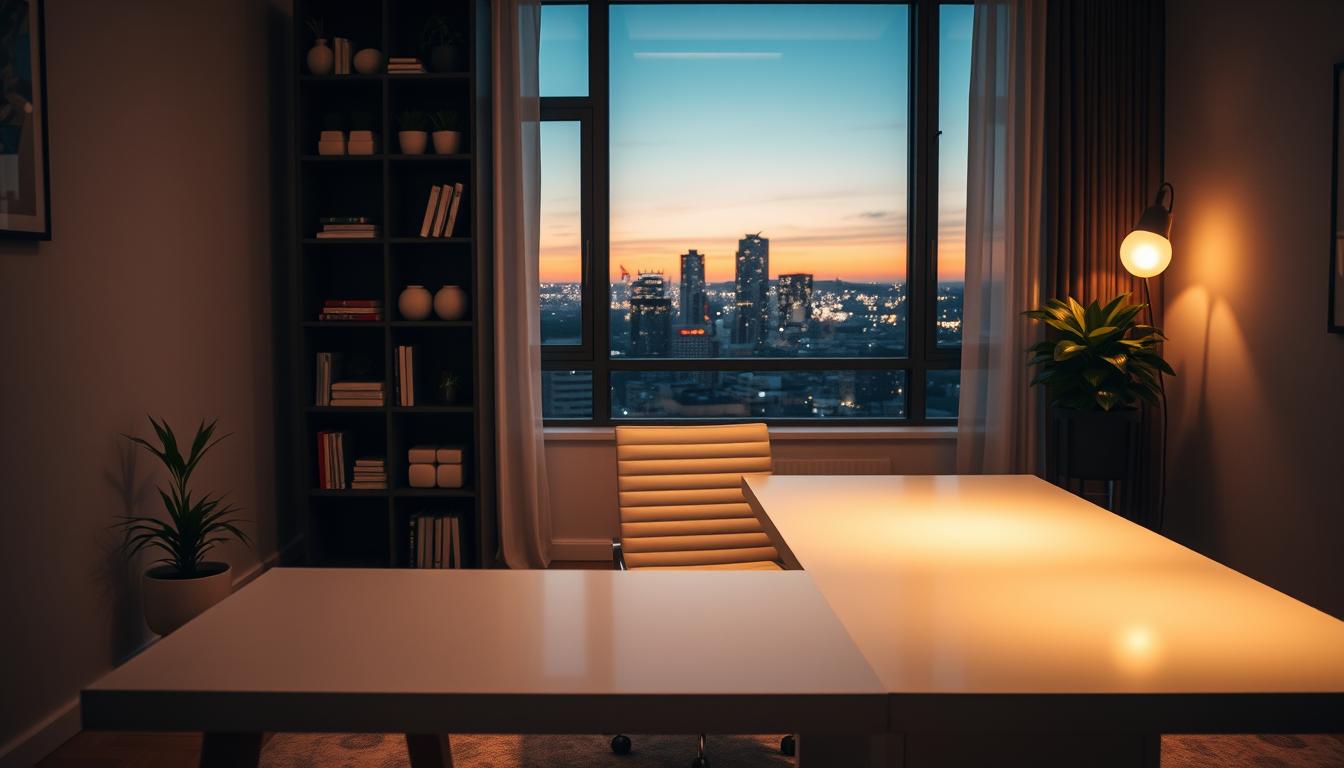
You need a place to get work done that doesn’t make your home feel like a job. A hidden office is a workspace that works fully by day and visually disappears by night. When your desk stays in sight, you keep thinking about tasks. Concealed setups help you reset and relax.
Good designs close lids, tuck cables away, or use furniture that doubles as storage. Firms like TG Studio and ADAM Architecture show how a console behind a sofa or a tidy cabinet can turn a desk into a piece of living-room furniture.
This article gives practical solutions you can use in an apartment, open-plan house, or shared room. Expect actionable office ideas for bedrooms, micro-spaces, and storage-first moves that cut daily friction.
After-hours concealment means tidy surfaces, hidden cables, and intentional furniture so your home reads like home once you log off. You’ll get grounded examples from Studio Indigo and 2LG Studio to guide simple, adaptable setups.
Why a Hidden Home Office Helps You Log Off After Work
Creating a clear visual break between work and living areas helps your brain switch from task mode to rest. You don’t need a room with doors to set that boundary. A screen, curtain, or cabinet can act like an invisible door and mark the end of your working day.
In open-plan living, visible laptops, cables, and papers keep your mind alert. Tucking those items away reduces low-level stress and makes your home feel like home again.
Create separation when you don’t have a door
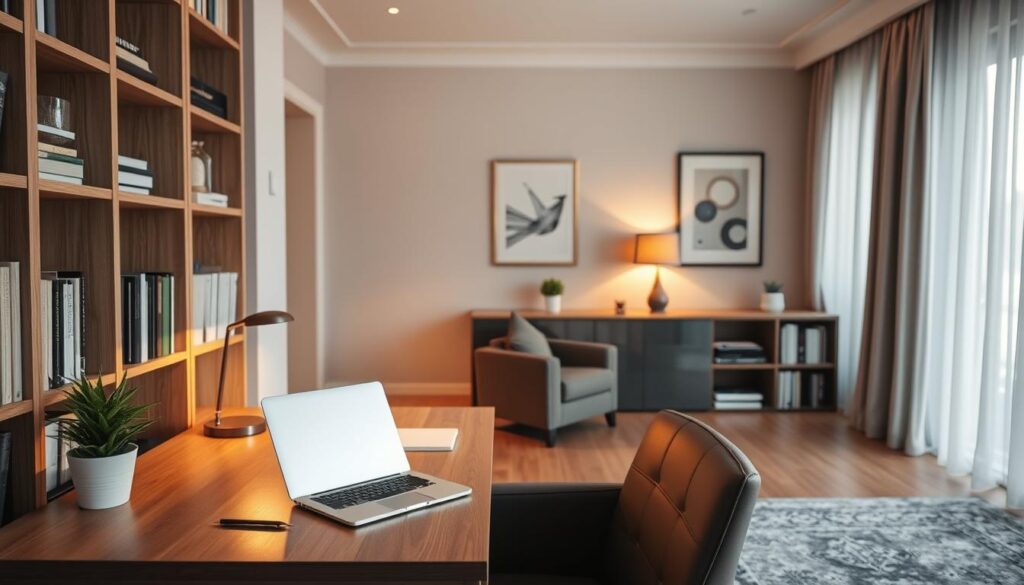
Use a slim partition, sliding panel, or furniture back to define a zone. Physically closing that zone signals to you — and to guests — that work is over.
Reduce visual clutter and background stress
When papers and cables disappear, you stop seeing unfinished tasks. That makes relaxation easier and cuts the daily cleanup you’d otherwise dread.
Sustain hybrid routines and respect light
Zoning supports flexible schedules: your workspace is ready when you need it and out of sight when you don’t. Prioritize task lighting and plan for borrowed light if the area lacks a window.
Quick checklist for your needs:
- Defined boundary you can close
- Simple reset routine at end of time
- Storage for every essential so the area vanishes fast
Plan Your Disappearing Workspace: Location, Light, and Privacy
Choose a spot that fits how you work. Map when you take calls, need quiet, and require outlets. That helps you pick an alcove, closet, corner, or under-stairs area that won’t block traffic or daily life.
Pick the right area
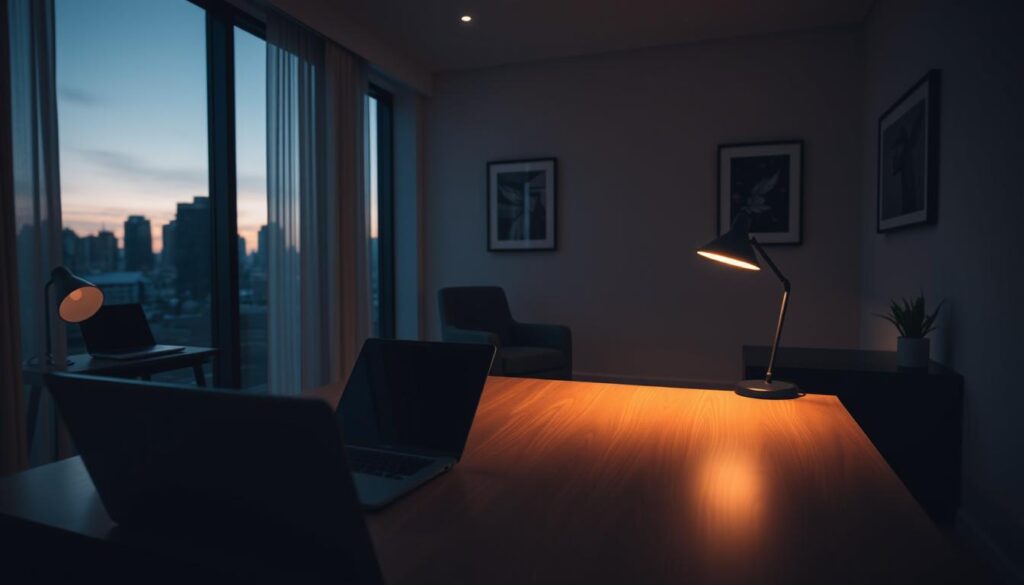
Evaluate each room option—living room, bedroom, kitchen edge—by noise, proximity to power, and whether you can visually close it after work. A small desk in a low-traffic corner often beats a central placement that never disappears.
Borrow and manage light
For windowless spots, use glazed interior walls or small interior windows to pull daylight from adjacent rooms. Add task lighting on the wall and keep sightlines clear so the space reads as intentional, not improvised.
Privacy and a quick reset
Install sliding doors for a built-in feel, curtains for renter-friendly flexibility, or screens for fast coverage. Design a daily reset with a hidden power strip, a dedicated cable path, and a cupboard for the router and supplies.
- Mount shelves thoughtfully on a single wall to save floor space.
- Plan lighting above the desk, not behind you, for comfort.
- Use a sliding desk or shallow drawers to tuck everything away quickly.
Hidden office concepts for Shared Spaces Like the Living Room
In shared living areas, a work surface should read as furniture so your home stays calm after hours. Make choices that let the desk act like a table or console when you’re done for the day.
Console table behind the sofa
Use a slim console table behind the sofa as a discreet desk that reads like furniture. TG Studio favors a narrow table with a generous sill for paperwork by day and sculptural styling by night.
Cabinet or armoire in an alcove
Fit a closed-front cabinet or armoire into an alcove. A pull-out desktop gives you workspace when needed; shut the doors and the room looks tidy and uncluttered.
Pull-across screen for instant concealment
A freestanding pull-across screen hides your workspace in seconds. It’s renter-friendly, needs no construction, and keeps the living room guest-ready with minimal fuss.
“Broken-plan” separation with sliding doors
Character-rich sliding doors create a clear boundary and add design interest. They save space versus hinged doors and let you close off the work end at night for better living rhythms.
- Choose a chair that tucks fully under the table.
- Keep a small desktop organizer for daily essentials.
- Build a short end-of-day routine so the space disappears reliably.
Bedroom-Friendly Hideaway Office Ideas That Don’t Disrupt Rest
A bedroom can host a tidy work nook that disappears into the room’s style at the end of the day. Place a scaled desk in an alcove for laptop work and quick correspondence so the area never overwhelms the room. Keep surfaces clear and stash electronics every night to protect your rest.
Tuck a small desk into an alcove for focused work
An alcove desk gives you a compact home office that reads as part of the bedroom when closed. Choose a slim desk that fits the niche and keep lighting soft so the space feels intentional, not like a separate work zone.
Choose a bureau-style or antique secretary to hide clutter
A bureau or secretary folds shut and makes papers vanish. Studio Indigo’s Melissa Hamilton used a hand-painted chinoiserie bureau as a private study piece that stays beautiful when closed. That approach keeps your home calm at night.
Use mirrored furniture to make the desk read like a dressing table
Mirrored desks, such as OKA’s Versailles style, visually read as a vanity. This trick keeps the bedroom look cohesive while still letting you use the desk for work when you need it.
Set one focal piece and stash essentials quickly
Let one piece — a chair, art, or the desk — stand out so the setup feels curated. Use a nightstand or a deep drawer to stash items and cables at log-off time.
- Set bedroom rules: clear surfaces, conceal electronics, and avoid a constant “work” look.
- Pick furniture that closes or disguises the desk for a fast reset.
- Scale the desk to the room so the home still feels restful each evening.
Micro-Spaces That Work Hard: Closet Offices, Under-Stairs, and Slide-Out Desks
Small nooks can become powerful work hubs when you plan them to disappear after hours. Use shallow furniture, task lighting, and a simple reset routine so the area reads as part of your home when you log off.
Build a cloffice that shuts away at the end of the day
Choose the closet zone, add a shallow desk, and fit a light on the wall. Keep cables tidy and ensure doors close so the office area truly vanishes.
Carve out an under-stairs niche
Paint the niche to match the hall and add a clean wood surface. This creates a compact workstation that won’t crowd foot traffic.
Install a slide-out desk with storage beneath
TG Studio’s slide-out idea gives you a full desk when you need it, then tucks away to free floor space while keeping storage accessible.
Convert a shelf into a wall-mounted desk
Anchor a sturdy shelf, keep a practical depth for a laptop, and remove the chair at day’s end to “erase” the workspace visually.
- Near a kitchen or side corridor: plan for noise, protect surfaces, and add storage so the desk won’t become a dumping ground.
- Quick guide: choose a cloffice for concealment, under-stairs for unused architecture, slide-out for tiny footprints, shelf-desks for renter-friendly ways.
Storage-First Design Moves That Keep Your Desk Surface Clear
Start by making storage the priority so your work surface can clear in seconds. That principle makes a home office feel like a living room when you log off.
Choose desks with built-in drawers and shelves
Look for a desk with shallow drawers and integrated shelves to stop surface creep. Built-ins give chargers, notebooks, and headsets a consistent place so the table stays tidy.
Go vertical with floating shelves and cabinets
Use wall-mounted shelves and cabinets to free the desktop. Vertical storage keeps supplies off the desk and makes a small room feel calmer.
Use concealed compartments for plugs and gear
Hide plugs, a small printer, paperwork, and your router behind cupboard doors or in a wire-holed compartment. Flower Michelin–style cupboards and Dormy House solutions show how cabling can vanish.
Pick a standalone hideaway cabinet and stay flexible
When you need full concealment, choose a purpose-built cabinet with double-hinged doors, adjustable shelving, and a pinboard backing. For changing needs, add a foldable, wall-mounted, or standing desk option so your workspace adapts without clutter.
- Storage-first principle: dedicate a spot for daily items.
- What to look for: drawers, depth, and pull-out shelves.
- Flexible options: foldaway desks and cabinets for fast resets.
Conclusion
The best home setups let work happen by day and let living reclaim the space by night. This approach makes your home office fully functional, then uses concealment and storage to restore your living space for rest.
You don’t need a dedicated office space to work from home. A console in the living room, a bedroom alcove, a cloffice or an under-stairs niche can all be reliable solutions. Slide-outs and cabinets hide gear fast.
Make a daily reset: clear the desk, stash items, close doors or screens, and switch off task light. Good design—right light, vertical storage, and furniture that reads as living—helps you stick with hybrid schedules.
Action plan: pick one overlooked area, choose one concealment method, add one storage upgrade, and commit to a five-minute end-of-day tidy so work stops on time.