
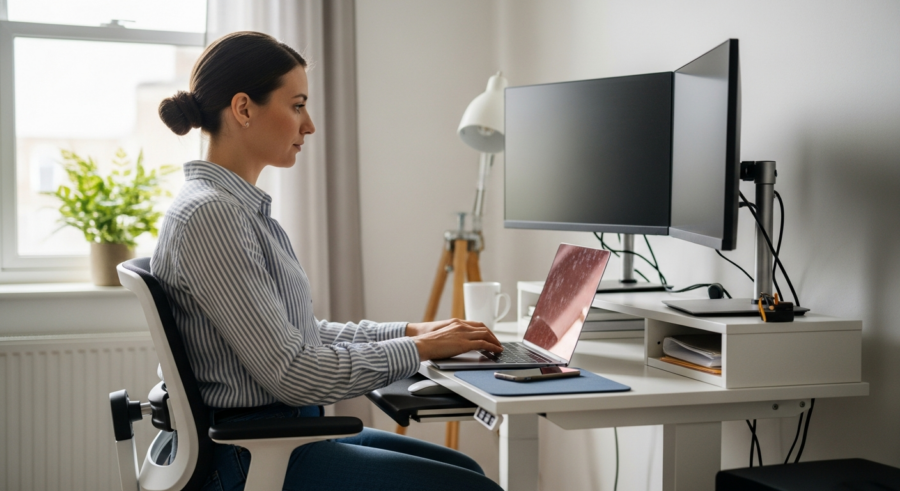
Creating an efficient and comfortable home office in a small space can be a challenge. However, prioritizing ergonomics is essential for your well-being and productivity. An ergonomic desk setup small space is possible with the right adjustments and considerations.
This guide will walk you through setting up an ergonomic desk setup small space. We’ll cover everything from monitor height to keyboard placement, ensuring you maintain good posture and prevent strain.
By implementing these tips, you can transform even the tiniest corner into a workspace that supports your health and enhances your focus. Let’s get started on creating your ideal ergonomic desk setup small space.
The Importance of Ergonomics in a Small Workspace
Ergonomics is the science of designing and arranging workplaces to fit the people using them. This is especially important in small home offices where space is limited and discomfort can quickly arise.
Ignoring ergonomics can lead to a variety of health issues, including back pain, neck strain, carpal tunnel syndrome, and eye fatigue. These problems can significantly impact your productivity and overall quality of life.
Investing in an ergonomic desk setup small space is an investment in your long-term health and well-being. By optimizing your workspace, you can minimize physical strain and maximize your comfort, even in a confined area.
Implementing ergonomic principles doesn’t have to be expensive or complicated. Simple adjustments, like proper monitor height and keyboard placement, can make a huge difference in preventing discomfort and promoting good posture.
Think of your workspace as a long-term project. Continually evaluate and adjust your setup to ensure it meets your evolving needs and preferences.
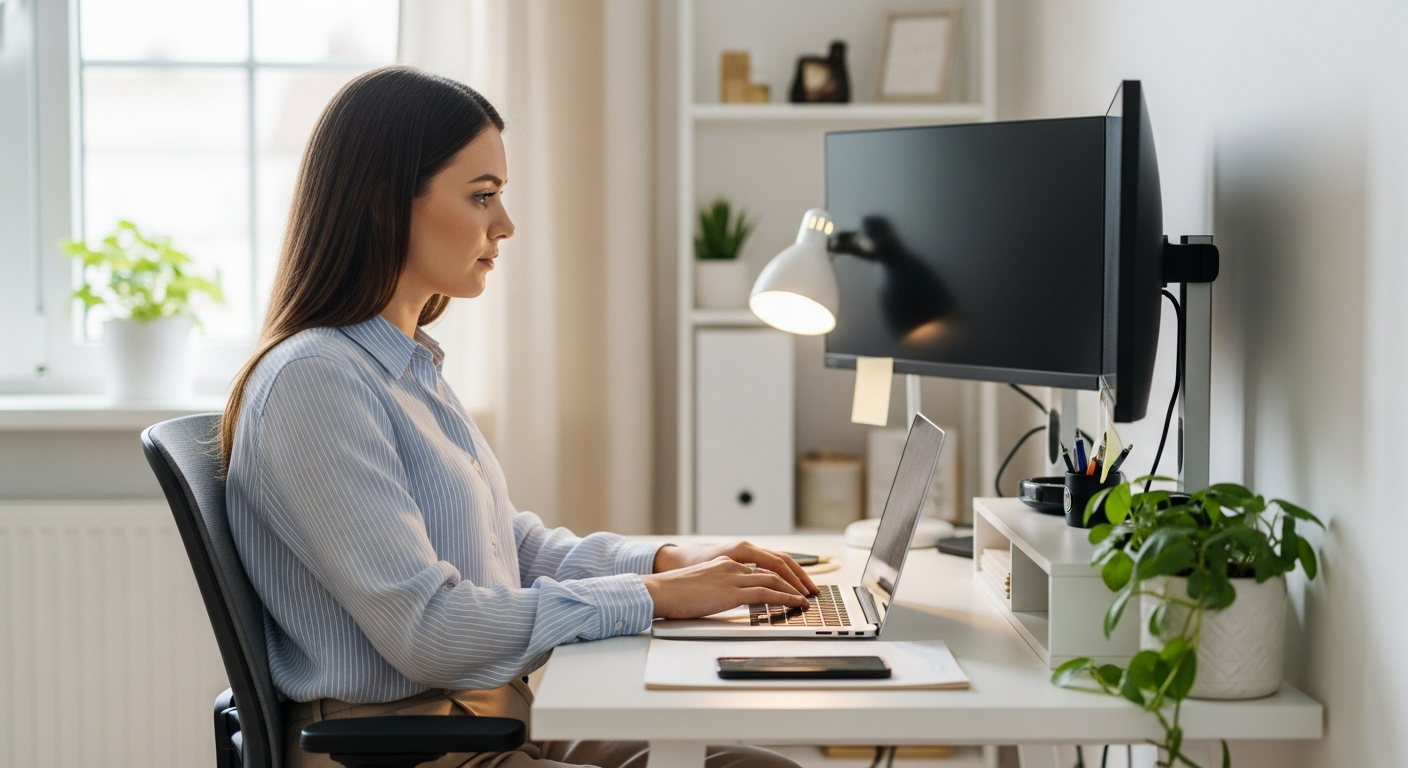
Even small changes can have a significant impact on your comfort and productivity. Don’t underestimate the power of a well-designed ergonomic desk setup small space.
Consider the long-term benefits of prioritizing ergonomics. Preventing health issues now can save you time, money, and discomfort in the future.
Remember that ergonomics is not a one-size-fits-all solution. Experiment with different setups and adjustments to find what works best for your individual needs and body type.
Monitor Height and Placement: Protecting Your Neck and Eyes
The placement of your monitor is crucial for maintaining good posture and reducing strain on your neck and eyes. Ideally, the top of your monitor screen should be at or slightly below eye level.
This positioning allows you to look slightly downward, which is the most comfortable position for your neck. If your monitor is too low, you’ll find yourself hunching forward, leading to neck and upper back pain.
If your monitor is too high, you’ll be tilting your head back, which can cause neck stiffness and headaches. Use a monitor stand or adjustable arm to achieve the correct height for your ergonomic desk setup small space.
The distance of your monitor from your eyes is also important. A good rule of thumb is to position the monitor an arm’s length away, ensuring you can comfortably see the entire screen without straining.
Consider using a monitor arm that allows for easy adjustments throughout the day. This flexibility can help you adapt to different tasks and maintain optimal viewing angles.
If you use multiple monitors, position them so that the primary monitor is directly in front of you. Secondary monitors should be placed to the side, angled slightly inward to minimize neck rotation.
Pay attention to the font size and screen resolution. Ensure that the text is large enough to read comfortably without squinting, further enhancing your ergonomic desk setup small space.
Regularly clean your monitor screen to reduce glare and improve visibility. Dust and fingerprints can contribute to eye strain, so keeping the screen clean is essential.
Keyboard and Mouse Placement: Reducing Strain
Proper keyboard and mouse placement is essential for preventing wrist and arm pain. Your keyboard should be positioned directly in front of you, with your elbows bent at a 90-degree angle.
Your wrists should be straight and relaxed, not bent upward or downward. If your keyboard is too high, you’ll be forced to bend your wrists upward, which can lead to carpal tunnel syndrome.
| Component | Ideal Placement | Benefits |
|---|---|---|
| Keyboard | Directly in front of you | Reduces wrist strain |
| Mouse | Close to the keyboard | Minimizes reaching |
| Wrist Rest | Under the keyboard and mouse | Provides support and cushioning |
| Ergonomic Mouse | Vertical or trackball | Promotes natural hand position |
Your mouse should be placed close to your keyboard, so you don’t have to reach too far. This minimizes strain on your shoulder and arm, contributing to a more comfortable ergonomic desk setup small space.
Consider using a keyboard tray to achieve the correct height and angle for your keyboard. A keyboard tray can be particularly helpful if your desk is too high.
Experiment with different types of keyboards and mice to find what feels most comfortable for you. Ergonomic keyboards and mice are designed to promote a more natural hand and wrist position.
Use wrist rests to provide support and cushioning for your wrists while typing and using the mouse. Wrist rests can help prevent pressure points and reduce the risk of carpal tunnel syndrome.
Regularly clean your keyboard and mouse to prevent the build-up of dirt and grime. A clean workspace promotes better hygiene and can also improve the performance of your equipment.
Chair Adjustment: Finding the Right Support
Your chair is the foundation of your ergonomic desk setup small space. A good ergonomic chair should be adjustable, allowing you to customize the height, backrest, and armrests to fit your body.
Start by adjusting the seat height so that your feet are flat on the floor or supported by a footrest. Your knees should be bent at a 90-degree angle, and your thighs should be parallel to the floor.
The backrest should provide lumbar support, helping to maintain the natural curve of your lower back. Adjust the backrest height and angle to ensure it fits snugly against your lower back, promoting good posture.
Your armrests should be adjusted so that your elbows are bent at a 90-degree angle and your shoulders are relaxed. Avoid setting the armrests too high, as this can cause shoulder tension, making the ergonomic desk setup small space less effective.
If your chair doesn’t have adequate lumbar support, consider using a separate lumbar support cushion. This can provide additional support and help maintain the natural curve of your spine.
Ensure that your chair has a stable base and smooth-rolling casters. This will allow you to move around your workspace easily without straining your back.
Take the time to adjust your chair properly each day before you start working. A few minutes spent adjusting your chair can make a big difference in your comfort and productivity.
Consider the material of your chair. Breathable materials, such as mesh, can help prevent overheating and keep you comfortable during long work sessions, enhancing your ergonomic desk setup small space.
Taking Breaks: Preventing Fatigue
No matter how well-designed your ergonomic desk setup small space is, it’s essential to take regular breaks. Prolonged sitting can lead to fatigue and discomfort, even with the best posture.
The Pomodoro Technique suggests working in focused 25-minute intervals followed by a 5-minute break. During these breaks, get up, stretch, and walk around to improve circulation and reduce muscle stiffness.
- Stand up and stretch every 30 minutes
- Walk around for a few minutes each hour
- Do simple neck and shoulder exercises
- Look away from your screen to rest your eyes
- Stay hydrated by drinking water regularly
Use your breaks to refocus your mind and avoid burnout. Stepping away from your work can actually increase your productivity by allowing you to return with a fresh perspective.
Set reminders on your computer or phone to prompt you to take regular breaks. This can help you stay on track and avoid getting too absorbed in your work.
Use your breaks to do something enjoyable, such as listening to music, reading a book, or chatting with a friend. This can help you relax and recharge before returning to work.
Consider using a break management app to help you schedule and track your breaks. These apps can provide reminders and suggestions for activities to do during your breaks, optimizing your ergonomic desk setup small space.
Don’t underestimate the power of a short nap during your break. A 20-minute nap can improve alertness and cognitive function, making you more productive when you return to work.
Incorporating Movement: Staying Active While Working
Incorporating movement into your workday can help combat the negative effects of prolonged sitting. Even small amounts of activity can make a big difference in your energy levels and overall well-being.
Consider using a standing desk or a desk converter to alternate between sitting and standing throughout the day. Standing can improve your posture, increase circulation, and burn more calories than sitting.
If a standing desk isn’t feasible, try incorporating small exercises into your routine. Do calf raises while waiting for your coffee to brew, or perform some stretches during phone calls to maximize your ergonomic desk setup small space.
You might also consider using a balance board or a stability ball as a chair. These options engage your core muscles and promote better posture, adding movement to your workday.
Walk around your home or office during phone calls or meetings. This can help you stay active and engaged while still participating in work-related activities.
Use a pedometer or fitness tracker to monitor your daily step count. Set a goal for yourself and try to increase your activity level each day, further enhancing your ergonomic desk setup small space.
Consider investing in a treadmill desk or a stationary bike desk. These options allow you to work while walking or cycling, providing a more significant workout during your workday.
Join a fitness class or go for a walk or run during your lunch break. This can help you break up your workday and get some exercise, improving your overall health and well-being.
Optimizing Lighting and Reducing Glare
Proper lighting is crucial for reducing eye strain and creating a comfortable workspace. Natural light is ideal, but if that’s not available, use a combination of ambient and task lighting.
Position your desk so that natural light comes from the side, rather than directly in front or behind you. Direct sunlight can cause glare on your screen, leading to eye fatigue and headaches.
Use adjustable task lighting to illuminate your work area without creating harsh shadows. A desk lamp with a flexible arm allows you to direct the light where you need it most, enhancing your ergonomic desk setup small space.
Consider using blue light filters on your monitor and glasses to reduce eye strain. These filters can help minimize the effects of prolonged screen exposure, especially in the evening.
Adjust the brightness and contrast settings on your monitor to reduce eye strain. Experiment with different settings to find what feels most comfortable for you.
Use window blinds or curtains to control the amount of natural light entering your workspace. This can help you reduce glare and create a more comfortable environment.
Consider using an anti-glare screen protector on your monitor. This can help reduce reflections and improve visibility, especially in brightly lit environments, improving your ergonomic desk setup small space.
Regularly clean your light fixtures to ensure they are providing adequate illumination. Dust and grime can reduce the brightness of your lights, making it harder to see.
Decluttering and Organizing Your Workspace
A cluttered workspace can be distracting and stressful, impacting your focus and productivity. Take the time to declutter and organize your desk, keeping only the essentials within reach.
Use desk organizers, drawers, and shelves to store items you don’t need immediately. A clean and organized workspace promotes a sense of calm and control, enhancing your ability to concentrate on your work.
Consider using vertical storage solutions to maximize space in your small home office. Wall-mounted shelves and organizers can keep items off your desk, creating a more open and airy feel, essential for an ergonomic desk setup small space.
Regularly declutter your desk and file away papers to prevent build-up. A few minutes of tidying each day can make a big difference in maintaining a clean and organized workspace.
Implement a filing system for important documents and papers. This will help you quickly locate what you need and prevent your desk from becoming cluttered, optimizing your ergonomic desk setup small space.
Use cable management solutions to keep cords and cables organized and out of the way. Tangled cords can be a safety hazard and can also make your workspace look cluttered.
Consider using a label maker to label drawers, shelves, and containers. This will help you quickly identify what’s inside and keep your workspace organized.
Designate a specific area for each type of item, such as pens, paperclips, and notebooks. This will help you stay organized and prevent items from getting lost, enhancing your ergonomic desk setup small space.
Personalizing Your Space for Comfort and Motivation
While ergonomics are essential, it’s also important to personalize your workspace to make it comfortable and motivating. Add elements that inspire you and make you feel good while you work.
Incorporate plants to bring a touch of nature indoors and improve air quality. Studies have shown that plants can reduce stress and increase productivity, making them a great addition to any home office, especially an ergonomic desk setup small space.
Display artwork, photos, or inspirational quotes that resonate with you. These visual cues can boost your mood and keep you motivated throughout the day, helping you stay focused on your tasks.
Choose comfortable and supportive accessories, such as a wrist rest or a footrest, that enhance your ergonomic setup. Small touches can make a big difference in your overall comfort and well-being.
Add a comfortable blanket or throw to your chair for extra warmth and coziness. This can make your workspace feel more inviting and relaxing, supporting your ergonomic desk setup small space.
Use essential oil diffusers to create a pleasant and calming atmosphere. Certain scents, such as lavender and chamomile, can help reduce stress and improve focus.
Play your favorite music or listen to podcasts while you work. Music can help you stay focused and motivated, while podcasts can provide entertainment and education.
Create a vision board to display your goals and aspirations. This can serve as a constant reminder of what you’re working towards and help you stay motivated, enhancing your ergonomic desk setup small space.
Conclusion
Setting up an ergonomic desk setup small space is crucial for your health and productivity. By following these guidelines, you can create a workspace that supports good posture, reduces strain, and enhances your focus.
Remember to prioritize monitor height, keyboard placement, chair adjustment, and regular breaks. With a few simple adjustments, you can transform even the tiniest corner into a comfortable and efficient home office, supporting your well-being and success.
Continually assess and refine your ergonomic setup to ensure it meets your evolving needs. Ergonomics is an ongoing process, not a one-time fix.
Don’t hesitate to seek professional advice from an ergonomist or healthcare provider. They can provide personalized recommendations and help you address any specific concerns, optimizing your ergonomic desk setup small space.