


You have large backstock in a tight condo and need a clear, realistic plan that keeps your living space safe and follows building and local rules. This guide shows how to protect walkways, avoid blocked doors, and stop odor or moisture problems before they start.
Good bulky item management means tidy, accessible storage and fast exit routes when storage stops making sense. You’ll get a two-track approach: smart in-home storage for bulk you still need, and quick pickup or collection services when it’s time to remove things.
The right choice depends on timing, condition, and category — this week vs. next month, usable vs. broken, appliances vs. furniture vs. bagged debris. You’ll also learn condo-specific areas — entryways, balconies, and shared zones — and how to use them without visual clutter or safety risks.
Remember: the line between keep and waste moves over time. An item can become garbage, a donation, or a recycling candidate as you reassess. This advice is US-focused because curb rules, collection windows, and service fees vary by city and can change what you do on a given day.
Assess Your Backstock Items Before You Store Anything
Start by taking a quick inventory so you know exactly what you have and what needs to go. A short scan prevents hall blockage and helps you plan staging for pickup or longer-term storage.

Sort by “keep, donate, recycle, garbage”
Use a four-bin rule: keep, donate, recycling, garbage. Work in small zones and move fast. This reduces waste and the volume you have to store.
Identify accepted waste and next actions
Many US programs call out appliances, sofas, mattresses, chairs, refrigerators, washers, and recreation gear as bulky waste. Check local rules so you don’t misclassify something and miss a free collection option.
Quick decision filter and debris checklist
- If you haven’t used it in a year and it’s hard to store, mark it for donation or disposal.
- Decide if each item is for reuse, resale, or staging for pickup—each path needs different prep.
- Look for hidden debris: loose parts, hardware, broken boards, and packaging. Bag or box these to prevent mess.
- If your building requires you to request a special pickup or service before curb placement, schedule it and prioritize staging before collection day.
Once you know what stays and what goes, you can pick the smallest-footprint storage plan that keeps your condo functional and safe.
Bulky item management Strategies for Small Condo Storage
Design a compact backstock plan that keeps one small zone tidy and ready for quick removal. Set simple rules so storage never spreads into living areas and walkways stay clear.
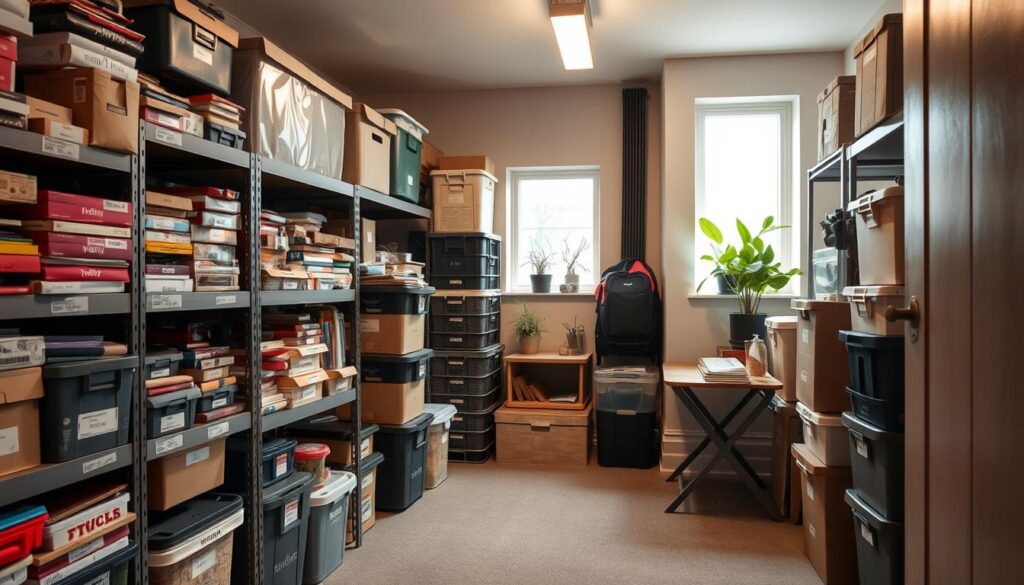
Create a single backstock zone and label clearly
Choose one wall, closet bay, or shelf and mark its footprint with tape. Keep the zone strict: if it grows, remove what you can.
Labeling: use category tags like “donate,” “sell,” or “pickup,” add a deadline (“by Friday”), and note small contents (“TV hardware”). Clear labels stop constant re-opening of boxes.
Use vertical space and protect surfaces
Store light, large pieces vertically—flattened cardboard, cushions, and folded chairs. Anchor tall stacks and avoid vents or sprinklers.
Stage heavy appliances on cardboard, moving blankets, or sliders to protect floors and walls. Keep appliances upright unless the maker allows tipping.
Break down, containerize, and control moisture
Disassemble sectional pieces and entertainment centers when possible. Many municipal fees favor broken-down units and bagged solid waste counts differently, so collapse what you can to lower pickup costs.
- Bag like materials together to simplify collection and avoid split bags turning into garbage.
- Seal sharp debris and keep one material type per bag when possible.
- Keep stored goods off concrete, leave airflow gaps, and avoid water-risk areas under HVAC lines or near balcony doors to prevent odor and mold.
Finally, if removal is scheduled in a few days, keep the zone accessible and avoid re-stacking. That makes pickup or service fast and less stressful.
Maximize Hidden Condo Storage Areas Without Creating Clutter
Identify safe, short-term storage zones that keep your condo tidy and your scheduled collection day on track. Use the entry or hallway as a temporary staging lane only when you can keep a clear walking path and full door swing. Tie the staging window to your pickup or collection schedule so items don’t linger.
Entry and hallway staging
Keep a one- or two-day limit for anything staged in corridors. Protect walls with blankets or cardboard and never block mailboxes, elevators, or fire egress. Label stacks with the scheduled pickup day and the type of waste or debris inside.
Balcony and patio considerations
Outdoor storage exposes goods to sun, rain, and wind. Lightweight packaging can scatter, and HOAs often restrict balcony storage. Use weatherproof covers and confirm rules before using the patio for bulk or long-term holding.
Ask your property manager before you stage
Confirm approved storage spots, elevator reservations, and loading-dock rules. Ask customer service about special collection windows and curbside timing—many cities forbid curb placement before 5:00 p.m. the day prior and require items out by 6:00 a.m. on collection day.
- Staging etiquette: protect surfaces, keep like items together, label “scheduled pickup,” and remove loose debris.
- Shared spaces should never be obstructed; coordinate with the building to avoid fines or missed collection.
When Storage Isn’t Worth It: Collection, Pickup, and Recycling Options in the United States
If a large possession interferes with daily life or safety, it’s time to consider pickup or disposal. You want clear next steps so the space and stress disappear fast.
Request special curbside collection for goods too large for your gray residential garbage cart. Many US programs require you to schedule the collection before placing things at the curbside. Call or use your county web portal to request a pickup and confirm accepted materials.
Timing, fees, and examples
Expect a narrow collection day window. In many cities you should not place waste out before 5:00 p.m. the day prior and must have it by 6:00 a.m. on collection day. Remove containers by the following morning.
- Typical fees: $30–$50 per pickup, depending on size and type.
- Example prices: mattresses and broken-down furniture are often lower; refrigerators, washers, dryers, and water heaters command higher fees.
Alternatives and checklist
Self-haul to a county solid waste facility can be cheaper if you have a vehicle and help. Otherwise, use a private pickup service for heavy lifting and same-day options.
- Call customer service: confirm pickup days, acceptance rules, and prep needs.
- Ask about broken-down requirements and curbside placement timing.
- Prioritize donation, then recycling, then proper disposal to cut landfill waste.
Conclusion
Close the loop by treating each large possession as a short-term project with a deadline.
Summarize your process: assess items, set a strict backstock footprint, use hidden storage on purpose, and shift to removal when storage stops paying off. Keep each step small and dated so stacks don’t become permanent clutter.
Quick checklist you can act on today: label your zone, break down one large item, bag one category of debris, and schedule your next pickup. Match this plan to local collection rules and the collection day window so you don’t risk fines or missed service.
Treat every bulky item as either usable storage, a donation, or scheduled solid waste removal. If you’re unsure about acceptance, pricing, or timing, pick one service channel—city/county or private—and confirm details before you move anything.