
You want a compact setup that helps your posture and keeps you focused. Modern designs lean into active sitting to boost ergonomics during long desk hours. This guide contrasts a minimalist stool with more supportive active designs so you can pick what fits your body and routine.
What to expect: we define alternative office seating, compare posture and comfort, and test stability and real use in tight rooms. You’ll get clear criteria—height range, footprint, and weight capacity—plus on-body signals like pressure points and fatigue.
We’ll evaluate Move Stool, Variable Kneeling Chair, Saddle Chair, and other options so you can narrow choices fast. Think about limited floor area, narrow pathways, shared rooms, and the need to tuck a chair away when you’re done.
By the end, you’ll know whether a minimalist perch or an active-sitting chair suits your work blocks. Use the specs and feel-based cues here to shop smarter for a small space that supports your health and focus.
Why non-traditional seating is trending in small US workspaces right now
Tight floor plans and hybrid schedules are changing how you pick what to sit on during the workday. You need a solution that fits a small room, supports posture, and keeps you alert through long stretches at your desk.
Long hours at a desk and the real-world impact on your body
Spending the same position for many hours can cause stiffness, bad posture, and lower energy. Makeshift setups—like dining chairs or low stools—often worsen pressure on your hips and lumbar region.
Why “standing isn’t enough” without movement variety
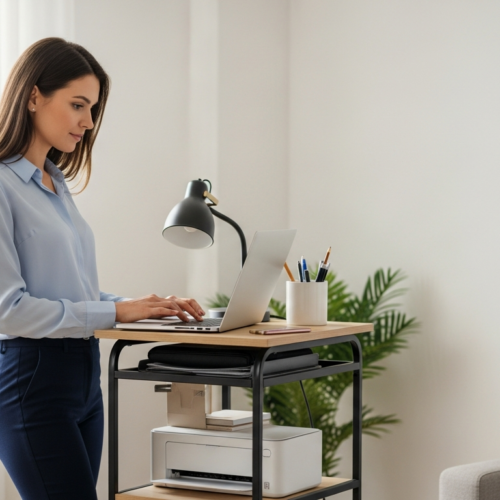
A survey of 7,300 American workers found that standing jobs can link to higher heart disease risk than sitting jobs. That shows standing alone won’t solve the problem; you need to change positions and add micro-movement throughout the day.
How active sitting supports circulation, energy, and focus
Active sitting encourages small posture shifts and subtle core engagement while you stay at your desk. Designs like the Variable Kneeling Chair and Move Stool promote steady micro-movements that help circulation and sustain focus.
- Compact homes and hybrid schedules raise demand for compact, ergonomic options.
- Long unbroken sitting sessions reduce comfort and productivity.
- Mixing sitting, standing, and movement beats standing-only routines.
- Active designs aim for better circulation, steadier energy, and improved focus.
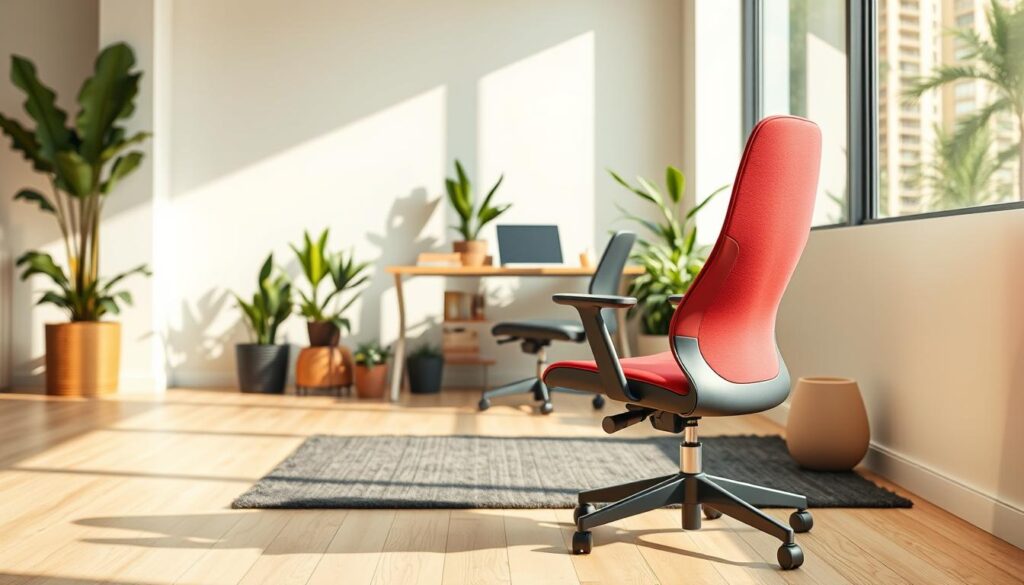
Next, we’ll compare how stools and active designs change posture, spine alignment, and pressure points so you can pick what suits your space and work style.
Stools vs. active seating: what changes in your posture, spine alignment, and comfort
Different non-traditional seats shift weight and motion, and that changes how your lower back feels. Understanding those shifts helps you pick a position that limits back pain and keeps posture steady.
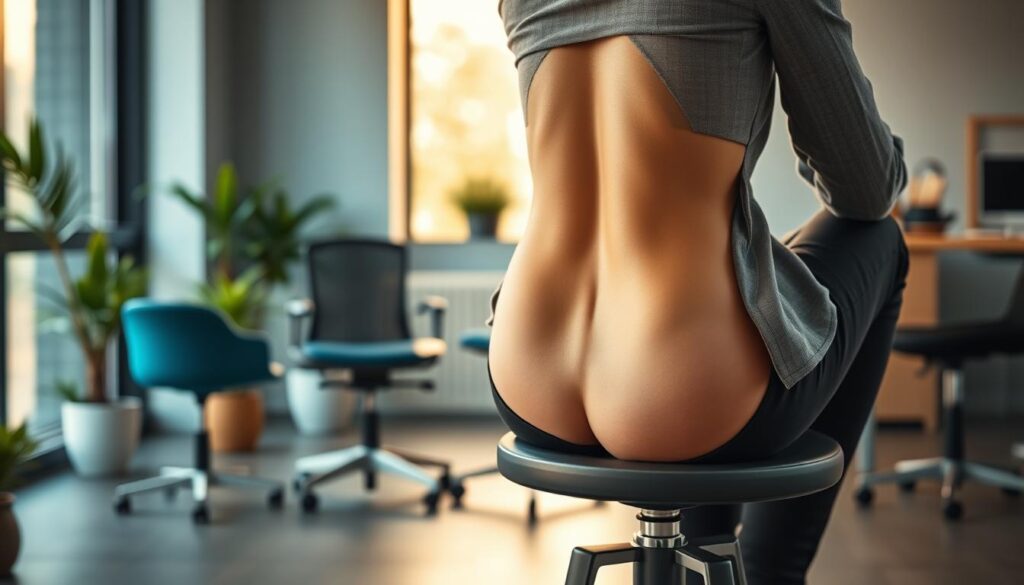
Backless vs. supported designs and how they affect your lower back
Backless options make you sit taller and engage your trunk. That can improve posture briefly but may tire your back if height or shape is wrong.
Supported active chairs, like the Variable Kneeling Chair, split weight between seat and knee pads to reduce pressure on the lumbar spine. That helps spinal alignment and lowers the risk of long-term back pain.
Open hip angle, pelvic tilt, and neutral spine basics
An open hip angle tilts your pelvis forward and often supports a neutral spine. The Saddle Chair encourages this forward pelvic tilt to keep the spine’s natural curve.
When alignment feels right, your core muscles work without strain and your shoulders relax. That is the neutral position you want for long work blocks.
Pressure points to watch: shins, hips, and lumbar spine
Check for hot spots in the first week: shins with kneeling models, sit bones on narrow or hard seats, and the lumbar region if you slump or over-arch.
Movement profiles: rocking, swaying, swiveling, and micro-adjustments
The Move Stool promotes subtle sway and micro-shifts for circulation. The kneeling design allows gentle rocking and pivoting, which aids alignment but can stress shins if overused.
- Lower back: support or weight distribution reduces strain.
- Position changes: active designs make it easier to shift without standing.
- Comfort: means stable alignment over time, not just softness.
Alternative office seating: the key ergonomic features you should prioritize
When space is tight, prioritize ergonomic basics that keep your body comfortable through the day. Focus on what changes how you sit at your desk and what will last over time.
Height adjustability to match your desk or standing desk
Pick an adjustable height range that lines your elbows with the desk surface. If you use a standing desk sometimes, you need a wider height span or pneumatic lift for quick changes.
Seat shape and tilt for better weight distribution
Flat seats spread load differently than contoured or saddle shapes. A contoured, cushioned seat reduces sit-bone pressure and improves comfort during long use.
Base design and stability for safe daily movement
The base matters: rounded bases let you sway and engage core muscles. A predictable base gives secure reach and leaning without tipping.
Materials that matter: breathable mesh, foam cushioning, durability
Breathable mesh keeps you cool; dense foam keeps its shape. Check stitching, frame welds, and lift mechanisms as durability signals.
Weight capacity, footprint, and portability for small spaces
Confirm weight capacity and measure the footprint before you buy. Lightweight, portable models like the Move Stool combine height adjustability, a rounded base, and a contoured seat to fit tight rooms.
- Priority checklist: correct desk height, stable base, contoured seat, durable materials, compact footprint.
- Choose height based on your desk type to reduce shoulder and back strain.
- Match seat shape to your top use: long blocks favor contoured or saddle designs for less pressure.
Think about real-world time use: will you switch seats, adjust height often, or rely on one chair all day? Let that answer guide your final choice.
The Move Stool: a compact stool option designed to keep you moving
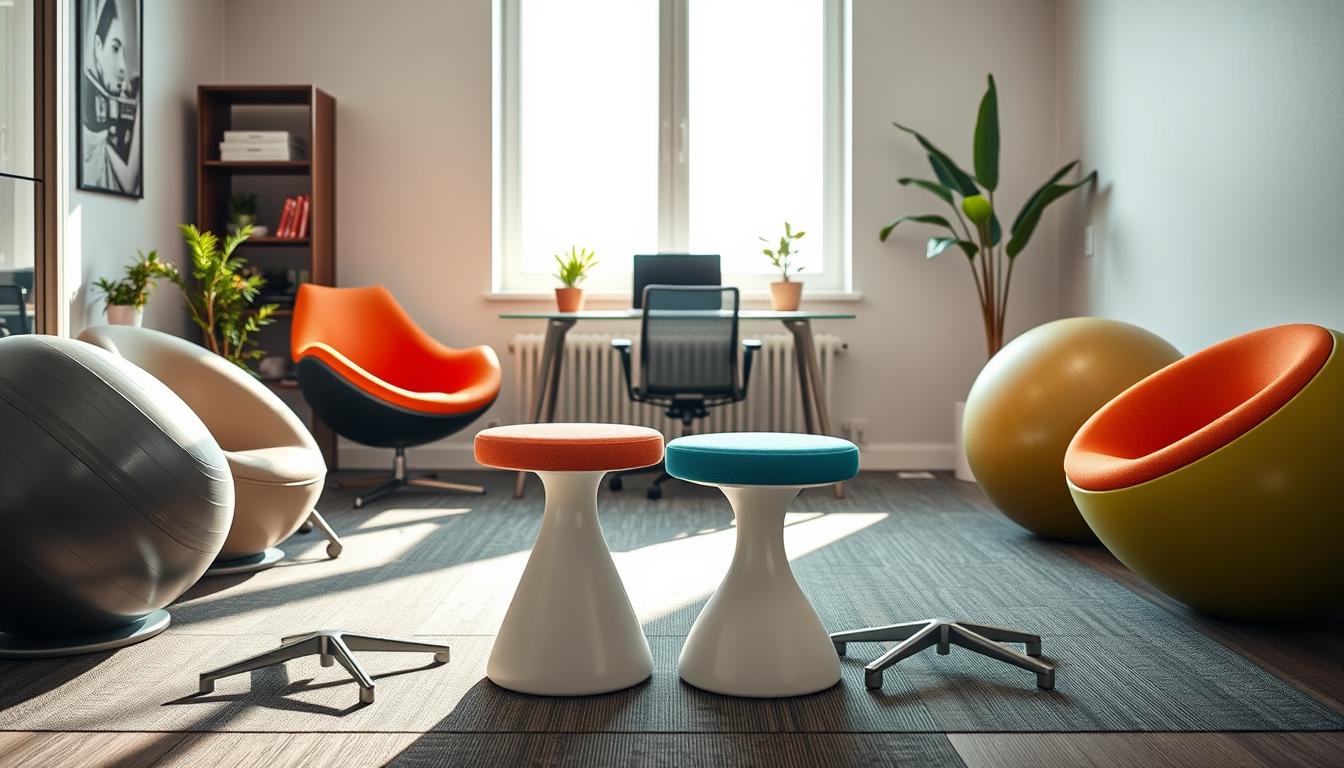
The Move Stool is a lightweight, minimalist option that fits tight spaces and encourages subtle motion. Its rounded base lets you shift, sway, and rock while you remain at your desk.
How the rounded base encourages active sitting and core engagement
The rounded base differs from a standard stool by enabling controlled swaying. That motion promotes active sitting and helps you engage core muscles through small stabilizing actions, not workouts.
When a minimalist stool works best in tight layouts
This option is ideal if you need a seat that tucks away, pulls out quickly, and won’t dominate a small room. Use it for short-to-medium work blocks, quick emails, creative bursts, or as a second chair you rotate into during the day.
What to look for: contoured seat, stability, and height range
Buyer checklist:
- Contoured seat for pressure relief and long-use comfort.
- Predictable base stability so movement feels safe.
- Enough height range to match your desk or a standing desk.
- Lightweight build and compact footprint for flexible use.
Expect a short learning curve as your core adapts to added movement. Over a few days, you’ll find a way to balance mobility and comfort for focused work.
The Variable Kneeling Chair: active sitting support for posture and lower back strain
A kneeling design shifts how your weight sits, trading hip load for support across the seat and knee pads. This weight distribution reduces direct pressure on the pelvis and can ease lower back strain during focused work blocks.
How kneeling chairs distribute weight between the seat and knee pads
The core mechanic: the seat and knee rests share the load so your hips carry less of your body weight. That forward-leaning position lightly engages core muscles and lets small shifts and rocking improve comfort over short bursts of time.
What research suggests about lumbar curvature and alignment
Studies and reviews focus on lumbar curvature and spinal alignment. Findings suggest kneeling can encourage a more neutral spine compared with slumping, though results vary and are not a medical guarantee.
Comfort considerations for knees, shins, and longer sitting time
Padding quality matters: thin knee pads concentrate pressure on shins and can create pain. Break in use gradually—start with short sessions and rotate positions to avoid stiffness and circulation issues.
Who should avoid a kneeling position or limit daily hours
If you have knee problems, shin sensitivity, or circulation concerns, limit hours on a kneeling chair or avoid it. Fit the height so your hips and torso feel supported and your keyboard reach keeps you from collapsing forward.
- Quick tips: use kneeling chair sessions as part of a rotation.
- Adjust so elbows align with the desk and your back stays neutral.
- Stop if you notice persistent pain or worsening back pain.
The Saddle Chair: a stool-like chair that promotes spinal alignment
Choosing a saddle seat shifts your center of gravity forward and helps maintain a natural spinal curve during tasks. The Branch Saddle Chair uses this shape to encourage a forward pelvic tilt that eases pressure on the lower back.
How the saddle seat supports pelvis position and reduces pressure on your back
The saddle opens your hip angle and nudges the pelvis into a more neutral position. That tilt helps keep your spine aligned and reduces load on the lower back.
Adjustable height, tilt, and swivel for access around your workspace
Look for adjustable height, seat tilt, and a 360-degree swivel. These controls let you reach shelves, printers, and screens without twisting your torso. The mobility adds practical support in tight layouts.
Best-use scenarios beyond home offices, including healthcare settings
People who want a stool-like freedom with guided pelvic positioning tend to prefer a Saddle Chair. Clinicians, technicians, and lab staff use this style because it improves reach and keeps the body upright during short to medium tasks.
- Watch the first week for inner-thigh comfort and seat width fit.
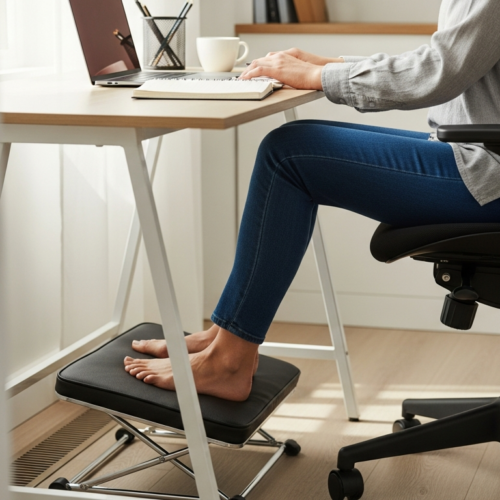
- Consider a footrest if your desk sits high.
- Expect reduced pressure on sit bones compared with flat stools.
Other desk chair alternatives worth considering for small spaces
C
Beyond stools and kneeling designs, several compact setups give you useful trade-offs in comfort and motion.
Ergonomic stools with pneumatic height adjustment
Pneumatic stools let you change desk height fast. That quick adjust helps when you alternate between tasks or users and keeps elbows aligned with your desk.
Balance ball chairs
Ball chairs can engage core muscles and add gentle movement. They often lack fine height control, which can hurt desk alignment and distract you during focused work.
Gaming chairs and a more traditional backrest
If you want style plus a supportive backrest, gaming chairs are a practical option. They mimic an office chair feel while giving a bolder design and longer-session comfort.
Zero-gravity workstations
For severe back pain, zero-gravity setups maximize comfort and pressure relief. Expect higher cost and a bigger footprint, so reserve this option for specific medical needs.
Balance boards and short squatting breaks
Use a balance board for active standing or add 15–20 minute squatting bursts to break long sitting stretches. These ways add movement without swapping your chair.
- Compare costs, footprints, and learning curves before you commit.
- Think about how each option fits your desk, daily use, and space.
How to match your seating choice to your desk setup and available space
Before you buy, measure your desk and the path around it. A quick check prevents a chair that looks right but feels wrong in use.
Desk height, monitor position, and elbow support alignment
Set your desk so your elbows rest near a 90–110° angle. That keeps shoulders relaxed and reduces strain on your neck and back.
Adjust height until your forearms sit parallel to the desk surface and your monitor top is at eye level. This maintains alignment during long work sessions.
Small footprint wins: what to measure before you buy
Measure the available depth under the desk and the clearance behind your chair. Note drawer swings, rug edges, and bedside furniture.
- Depth under the desk (inches)
- Clearance behind for swiveling or rolling
- Width next to drawers or a bed to ensure easy access
When wheels help and when a stationary base is safer
Wheels add mobility if you shift between tasks or shared stations. They work best on hard floors or a protective mat.
A stationary or rounded base improves stability for active designs and lowers tip risk. Choose based on weight capacity and how you plan to use the chair.
Practical tips: pick a model that stores easily, protects flooring, and won’t block walkways in shared rooms. Match height and base to your desk for reliable daily support.
What to test before you buy: comfort, support, and real-world usability
Try the seat in conditions that mimic your typical workday to spot issues early. A short hands-on session shows how a chair handles the small stresses of real use.
How to do a sit test that reveals pressure and posture issues
Sit for 20–30 minutes and note where you feel pressure first. Check sit-bone hotspots, shin strain, and whether your back starts to round.
If your shoulders creep forward or your posture changes after 15 minutes, that model may not give lasting support.
Adjustments you’ll actually use during a normal workday
Focus on three controls: height, seat tilt, and simple angle adjustment. These changes matter most and are easy to use between tasks.
Avoid complex levers you’ll ignore after a week. Choose a design with predictable controls you’ll use daily.
Reading reviews for durability, learning curves, and long-term comfort
Scan reviews for notes on squeaks, wobble, padding breakdown, and how long comfort lasts. Pay attention to how people describe the learning time and real-day use.
Budget and value signals: warranty length, materials, and build quality
Look for multi-year warranties, breathable mesh or dense foam, and solid bases with listed weight capacity. These are the best signals of value and long-term support.
- Quick checklist: 20–30 minute sit test, spot pressure points, try height and tilt, read long-term reviews.
- Value cues: warranty length, materials, base stability, and clear weight specs.
Match your choice to how you work each day. If you stand often or switch tasks, prioritize quick height changes and proven back support to avoid back pain over time.
Conclusion
Choose a seat that keeps you moving and fits your daily routine, not just your room. The right chair for a small space supports your spine, eases lower back strain, and adds subtle movement without stealing floor space.
Use stools when you need a tiny footprint, quick perching, and easy portability. Pick guided active options when you want more structured support for posture and long blocks of sitting.
Remember: standing alone won’t solve fatigue. Mix sitting, standing, and short walks through the day to preserve comfort and reduce pressure.
Start by measuring your space, confirm height compatibility with your desk, then match the movement profile and level of support to your work style. Test models and rotate between positions so your final choice pays off in daily use.