


In today’s world, where energy conservation is becoming increasingly important, understanding your lighting options is essential. Choosing the right bulbs can save you money and reduce your environmental impact.
This article will explore the world of energy efficient lighting options, focusing on how to make informed decisions for your home office. You’ll discover the benefits of LED lighting and how it compares to traditional incandescent and halogen bulbs.
We’ll also discuss how to choose the correct wattage and lumens for your needs, along with tips for maximizing energy efficiency. By the end, you’ll have a solid understanding of how to illuminate your workspace while minimizing energy consumption.
Understanding Energy Efficiency in Lighting
Energy efficiency in lighting refers to using less energy to produce the same amount of light. This is typically measured by lumens per watt (lm/W), which indicates how efficiently a light bulb converts electricity into visible light.
The higher the lumens per watt, the more energy efficient the bulb is. Switching to more efficient lighting can significantly reduce your energy consumption and lower your electricity bill.
Traditional incandescent bulbs are notoriously inefficient, converting only a small percentage of electricity into light, with the rest being lost as heat. Halogen bulbs are a slight improvement, but still pale in comparison to modern LED lighting.
Understanding these differences is the first step in making informed choices about your home office lighting. By focusing on energy efficient lighting options, you can create a brighter, more sustainable workspace.
Energy efficiency isn’t just about the type of bulb; it’s also about how you use your lighting. Consider using dimmer switches to adjust the brightness levels based on your needs and the time of day.
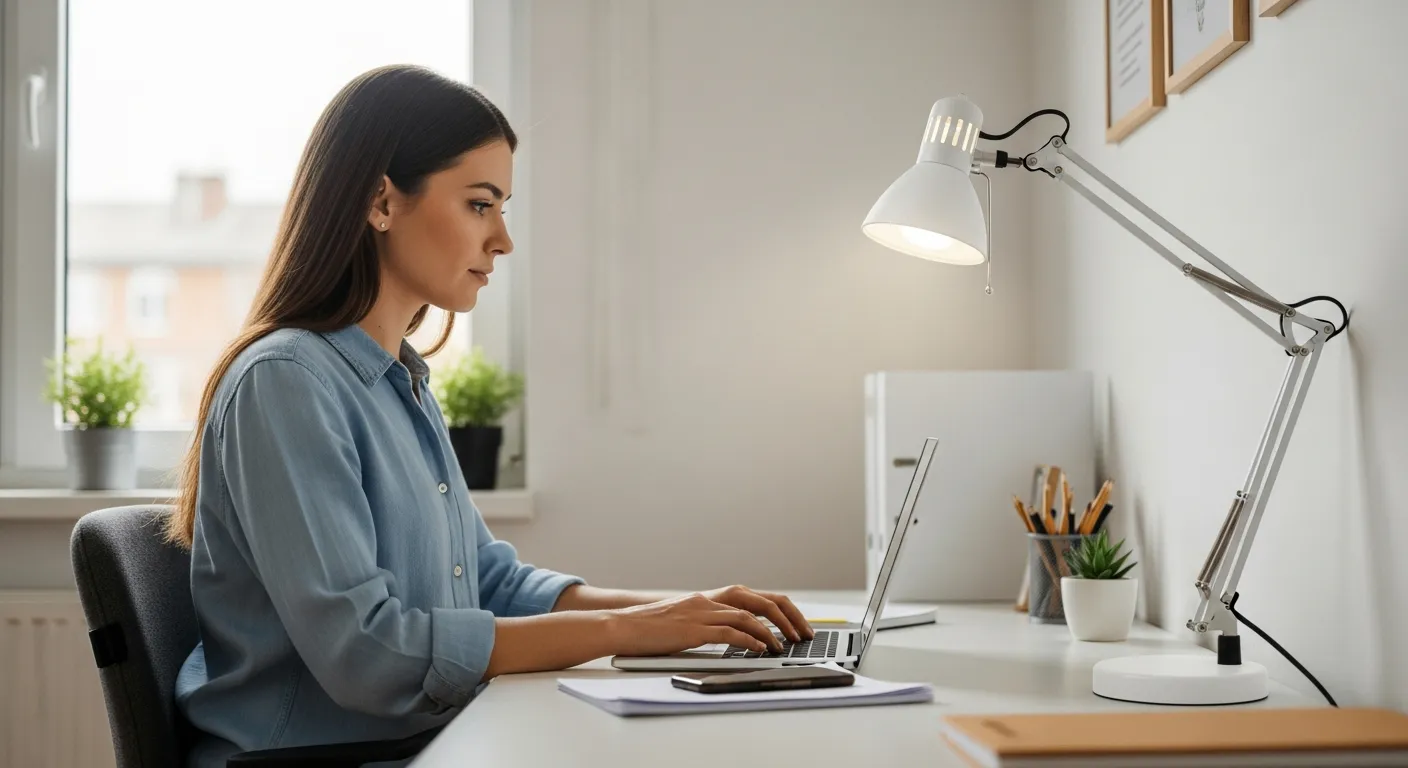
Regularly cleaning your light fixtures can also improve their efficiency. Dust and grime can block light, forcing you to use more energy to achieve the desired brightness.
Another factor is the placement of your light fixtures. Strategically positioning lamps and overhead lights can maximize the use of available light and reduce the need for additional energy consumption.
By considering these factors, you can further enhance the energy efficiency of your home office lighting. Small changes in your habits and setup can lead to significant savings over time.
LED Lighting: The Gold Standard
LED (Light Emitting Diode) lighting has emerged as the gold standard in energy efficiency. LED lights use up to 75% less energy and last much longer than incandescent bulbs.
They also offer a variety of color temperatures, allowing you to customize the ambiance of your home office. LED lighting is more expensive upfront, but the long-term savings make them a worthwhile investment.
One of the key advantages of LED lighting is its longevity. A typical LED bulb can last for 25,000 to 50,000 hours, compared to 1,000 hours for an incandescent bulb.
This means fewer replacements and less maintenance, saving you time and money. LED lights also produce very little heat, which can help reduce your air conditioning costs during the summer months.
The versatility of LED lighting extends beyond just energy savings and lifespan. LEDs are available in a wide range of shapes, sizes, and styles, making them suitable for various applications.
You can find LED bulbs for desk lamps, overhead fixtures, and even decorative lighting. This allows you to maintain a consistent lighting scheme throughout your home office while maximizing energy efficiency.
Furthermore, LED technology is constantly evolving, with new innovations emerging regularly. This means that LED lighting is becoming even more efficient and affordable over time.
By choosing LED lighting for your home office, you are investing in a technology that is both environmentally friendly and economically sound. It’s a win-win situation for both you and the planet.
Comparing LED to Other Bulb Types
When considering energy efficient lighting options, it’s helpful to compare LED lighting to other common bulb types. Incandescent bulbs are the least efficient, converting only about 5% of their energy into light.
Halogen bulbs are slightly better, but still only convert about 10-20% of their energy into light. LED bulbs, on the other hand, can convert up to 80% of their energy into light, making them far more efficient.
| Bulb Type | Energy Efficiency (Lumens per Watt) | Lifespan (Hours) | Typical Cost |
|---|---|---|---|
| Incandescent | 10-17 | 1,000 | Low |
| Halogen | 16-24 | 2,000-4,000 | Medium |
| LED | 80-100+ | 25,000-50,000 | High |
| CFL | 50-70 | 8,000-15,000 | Medium |
Compact fluorescent lamps (CFLs) were once considered a good alternative to incandescent bulbs. While they are more efficient than incandescent bulbs, they are still less efficient than LEDs and contain mercury, which requires special disposal.
LEDs offer a superior combination of energy efficiency, longevity, and environmental friendliness. They are also more durable and less susceptible to damage than CFLs.
Another advantage of LEDs is their ability to be dimmed without affecting their lifespan or color temperature. This is not always the case with other bulb types.
When making your lighting choices, consider the overall performance and environmental impact of each bulb type. LEDs are the clear winner in terms of energy efficiency and long-term value.
Choosing the Right Wattage and Lumens
Choosing the right wattage and lumens is crucial for achieving the desired brightness in your home office. Wattage measures the amount of energy a bulb consumes, while lumens measure the amount of light it produces.
In the past, we relied on wattage to determine brightness, but with energy efficient lighting options like LEDs, lumens are a more accurate indicator. For a home office, you’ll typically want between 400 and 800 lumens per light fixture.
This provides enough light for tasks like reading, writing, and working on a computer. The specific wattage you need will depend on the type of bulb you choose.
For example, an LED bulb that produces 800 lumens might only require 10 watts, while an incandescent bulb would require 60 watts to produce the same amount of light. Consider the size of your office when deciding on the number of fixtures.
Think about the specific tasks you perform in your home office when determining the appropriate lumen output. If you do a lot of detailed work, you may need more lumens to ensure adequate visibility.
Conversely, if you primarily use your office for reading or less visually demanding tasks, you may be able to get away with fewer lumens. It’s also important to consider the color of your walls and furniture, as darker colors absorb more light.
In a darker room, you may need more lumens to achieve the same level of brightness as in a lighter room. Experiment with different lumen levels to find what works best for your individual needs and preferences.
Don’t be afraid to try different combinations of light fixtures and bulb types to create the perfect lighting scheme for your home office. The goal is to create a comfortable and productive workspace that meets your specific needs.
Color Temperature and Its Impact
Color temperature, measured in Kelvin (K), significantly impacts the ambiance and functionality of your home office. Lower Kelvin values (2700-3000K) produce a warm, yellowish light, which is ideal for creating a cozy and relaxing atmosphere.
Higher Kelvin values (4000-5000K) produce a cool, bluish-white light, which is better for focus and productivity. For a home office, a color temperature of around 4000K is generally recommended.
This provides a balanced light that is bright enough for tasks but not too harsh on the eyes. You might consider using different color temperatures for different areas of your office.
For example, a warmer light might be suitable for a reading nook, while a cooler light is better for your desk area. Experiment to find what works best for your personal preferences and work style.
The color temperature of your lighting can also affect your circadian rhythm, which regulates your sleep-wake cycle. Exposure to blue light in the evening can disrupt your sleep, so it’s best to avoid using cool-toned lighting before bed.
Consider using warmer-toned lighting in the evening to promote relaxation and prepare your body for sleep. Some smart bulbs even have the ability to automatically adjust their color temperature throughout the day, mimicking the natural changes in sunlight.
This can help regulate your circadian rhythm and improve your overall well-being. Pay attention to how different color temperatures affect your mood and productivity, and adjust your lighting accordingly.
Creating a lighting scheme that supports your natural sleep-wake cycle can have a positive impact on your health and performance. Experiment with different color temperatures to find the perfect balance for your home office.
Exploring Smart Lighting Options for Energy Savings
Smart lighting offers even greater control over your energy consumption and lighting preferences. Smart bulbs can be controlled remotely via a smartphone app or voice assistant, allowing you to adjust brightness, color temperature, and even set schedules.
This can be particularly useful for a home office, where your lighting needs may vary throughout the day. You can also use smart lighting to automate your lighting based on occupancy, turning lights off when you leave the room.
- Automated schedules
- Remote control via smartphone
- Voice assistant integration
- Occupancy sensors
- Energy monitoring
Smart lighting systems can also provide valuable insights into your energy consumption patterns. By tracking your usage, you can identify areas where you can further reduce your energy consumption.
Many smart lighting systems integrate with other smart home devices, such as thermostats and security systems. This allows you to create a more automated and energy efficient home environment.
For example, you can set your lights to automatically dim when your thermostat is set to a lower temperature. Or, you can set your lights to turn on automatically when your security system detects motion.
The possibilities are endless, and the benefits of smart lighting extend far beyond just energy savings. Smart lighting can also enhance your comfort, convenience, and security.
The Role of Natural Light
Natural light is the best source of illumination for any workspace, offering numerous benefits for both your physical and mental health. Maximize natural light by positioning your desk near a window and keeping blinds or curtains open during the day.
However, it’s essential to manage glare and direct sunlight, which can cause eye strain and discomfort. Use sheer curtains or blinds to diffuse the light and prevent harsh shadows.
Consider adding plants to your office space, as they can help filter the light and create a more pleasant atmosphere. A well-lit space can significantly boost your mood and productivity.
When natural light is limited, supplement it with energy efficient lighting options to maintain consistent brightness throughout the day. Layering your light sources is an effective way to achieve a balanced and comfortable lighting scheme.
Think about the direction your windows face when planning your office layout. South-facing windows provide the most consistent natural light throughout the day.
East-facing windows provide bright morning light, while west-facing windows provide warm afternoon light. North-facing windows provide the most diffused and consistent light, but may not be as bright as other orientations.
Consider using light-colored paint on your walls and ceilings to reflect more natural light into the room. Mirrors can also be used to bounce light around the space and create a brighter atmosphere.
By maximizing the use of natural light, you can reduce your reliance on artificial lighting and create a more inviting and productive workspace. Natural light is a valuable asset that should be carefully considered when designing your home office.
Tips for Maximizing Energy Efficiency
Beyond choosing the right bulbs, there are several other ways to maximize energy efficiency in your home office. Make it a habit to turn off lights when you leave the room, even if it’s just for a few minutes.
Use task lighting to focus light where you need it, rather than relying on overhead lighting to illuminate the entire space. Regularly clean your light fixtures to ensure they are operating at their optimal brightness.
Dust and dirt can reduce the amount of light emitted, requiring you to use more energy to achieve the same level of illumination. Consider using dimmer switches to adjust the brightness of your lights based on your needs.
This allows you to save energy when you don’t need full brightness and create a more comfortable working environment. Take advantage of natural light whenever possible, and supplement with energy efficient lighting options when needed.
Install occupancy sensors in your home office to automatically turn off the lights when no one is present. This is a simple and effective way to save energy without having to think about it.
Use timers to automatically turn lights on and off at specific times of the day. This can be useful for creating a consistent lighting schedule and preventing lights from being left on unnecessarily.
Consider using a power strip with a master switch to turn off all of your electronic devices at once when you’re not using them. This can help reduce standby power consumption, which can account for a significant portion of your energy bill.
By implementing these simple tips, you can significantly reduce your energy consumption and save money on your electricity bill. Every little bit helps, and over time, these small changes can make a big difference.
Understanding Rebates and Incentives
Many utility companies offer rebates and incentives for purchasing energy efficient lighting options. Check with your local utility provider to see what programs are available in your area.
These rebates can help offset the initial cost of LED lighting and make it even more affordable. Some programs offer discounts on specific types of bulbs, while others provide rebates for upgrading multiple fixtures.
Take advantage of these opportunities to save money and reduce your environmental impact. Government agencies and non-profit organizations also offer resources and information on energy efficient lighting options.
These resources can help you make informed decisions and find the best lighting solutions for your home office. By exploring these incentives, you can make your transition to energy efficient lighting even more cost-effective.
Don’t forget to check with your state and federal governments for additional rebates and tax credits. These programs can further reduce the cost of energy efficient lighting and other energy-saving upgrades.
Some retailers also offer instant rebates on energy efficient lighting products. Keep an eye out for these promotions when shopping for new bulbs and fixtures.
Be sure to read the fine print of any rebate or incentive program to ensure that you meet all of the eligibility requirements. Some programs may require you to purchase specific types of bulbs or fixtures, or to have a professional installation.
By taking the time to research and apply for available rebates and incentives, you can significantly reduce the cost of upgrading your home office lighting and start saving money right away.
Long-Term Cost Savings
The initial cost of energy efficient lighting options, particularly LED lighting, can be higher than traditional bulbs. However, the long-term cost savings are significant.
LED bulbs last much longer, reducing the frequency of replacements and saving you time and money. They also consume less energy, resulting in lower electricity bills.
Over the lifespan of an LED bulb, the energy savings can easily outweigh the initial cost difference. Consider the total cost of ownership, including the purchase price and the energy consumption, when making your lighting decisions.
By investing in energy efficient lighting options, you can save money in the long run and reduce your environmental footprint. These savings can add up over time, making energy efficient lighting a smart financial choice.
To further illustrate the long-term cost savings, consider this example: replacing a 60-watt incandescent bulb with a 10-watt LED bulb. The LED bulb will use 83% less energy and last up to 25 times longer.
Over the lifespan of the LED bulb, you could save hundreds of dollars in electricity costs and replacement bulbs. These savings can be even greater if you replace multiple bulbs throughout your home office.
In addition to the direct cost savings, energy efficient lighting can also increase the value of your home. Many homebuyers are willing to pay more for homes that are equipped with energy efficient features.
By investing in energy efficient lighting, you can not only save money but also increase the resale value of your property. This makes energy efficient lighting a smart investment for both your wallet and your future.
Conclusion
Choosing energy efficient lighting options for your home office is a smart decision that benefits both your wallet and the environment. LED lighting offers significant advantages over traditional incandescent and halogen bulbs, including lower energy consumption and longer lifespan.
By understanding the differences between bulb types, choosing the right wattage and lumens, and taking advantage of smart lighting and natural light, you can create a comfortable and energy efficient workspace. Remember to explore rebates and incentives to make your transition even more affordable.
Embrace the opportunity to transform your home office into a haven of productivity and sustainability. Every small step you take towards energy efficiency contributes to a brighter future for all.
By making informed choices about your lighting, you can create a workspace that is both comfortable and environmentally responsible. It’s a win-win situation that benefits you, your community, and the planet.
So, take the time to explore your options, experiment with different lighting schemes, and discover the power of energy efficient lighting. Your home office will thank you for it.


