

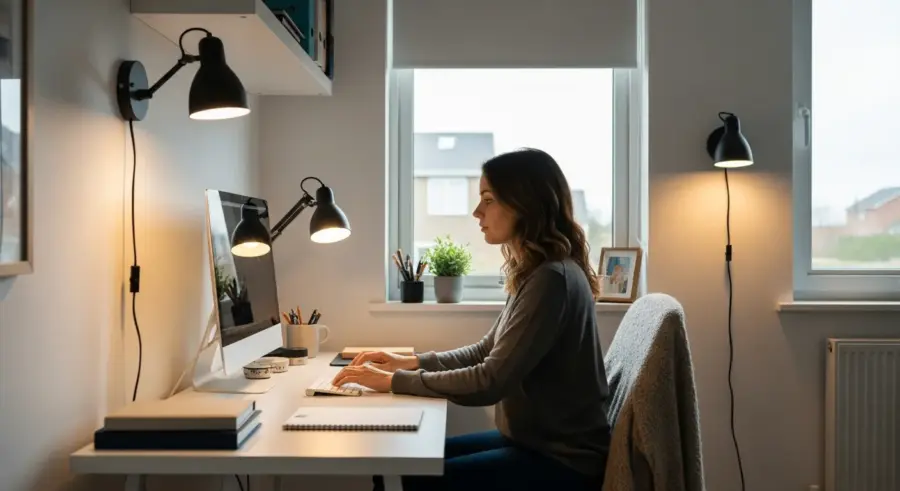
Overhead lighting is a staple in most homes, providing general illumination for a room. However, the standard ceiling fixture isn’t always the best choice, especially in smaller spaces where creativity is key.
If you’re looking for alternatives to traditional overhead lighting, you’re in the right place. There are plenty of ways to brighten your space with style and functionality using overhead lighting alternatives.
This article will guide you through some creative overhead lighting alternatives, including recessed lighting, track lighting, and pendant lights. We’ll also explore how to combine different lighting techniques to create the perfect ambiance for your small space home office setup.
Why Consider Alternatives to Traditional Overhead Lighting?
Traditional overhead lighting, often a single bulb or a basic fixture, can be underwhelming and unflattering. It tends to cast harsh shadows and create a flat, uninteresting light that doesn’t do much for the room’s aesthetics.
In a small space, this can be even more pronounced, making the room feel smaller and less inviting. Overhead lighting alternatives offer a chance to customize your lighting to suit your specific needs and style.
By choosing the right lighting, you can transform a dull room into a cozy and productive workspace. You can use lighting to highlight certain areas, create a mood, or even make a small room appear larger.
Plus, many overhead lighting alternatives are more energy-efficient than traditional options. This can save you money on your electricity bill and reduce your environmental impact.
Traditional overhead fixtures often lack character and can feel dated. Modern alternatives provide a chance to express your personal style and enhance the overall design of the room. This is especially important in a home office, where you want to create an inspiring and comfortable environment.
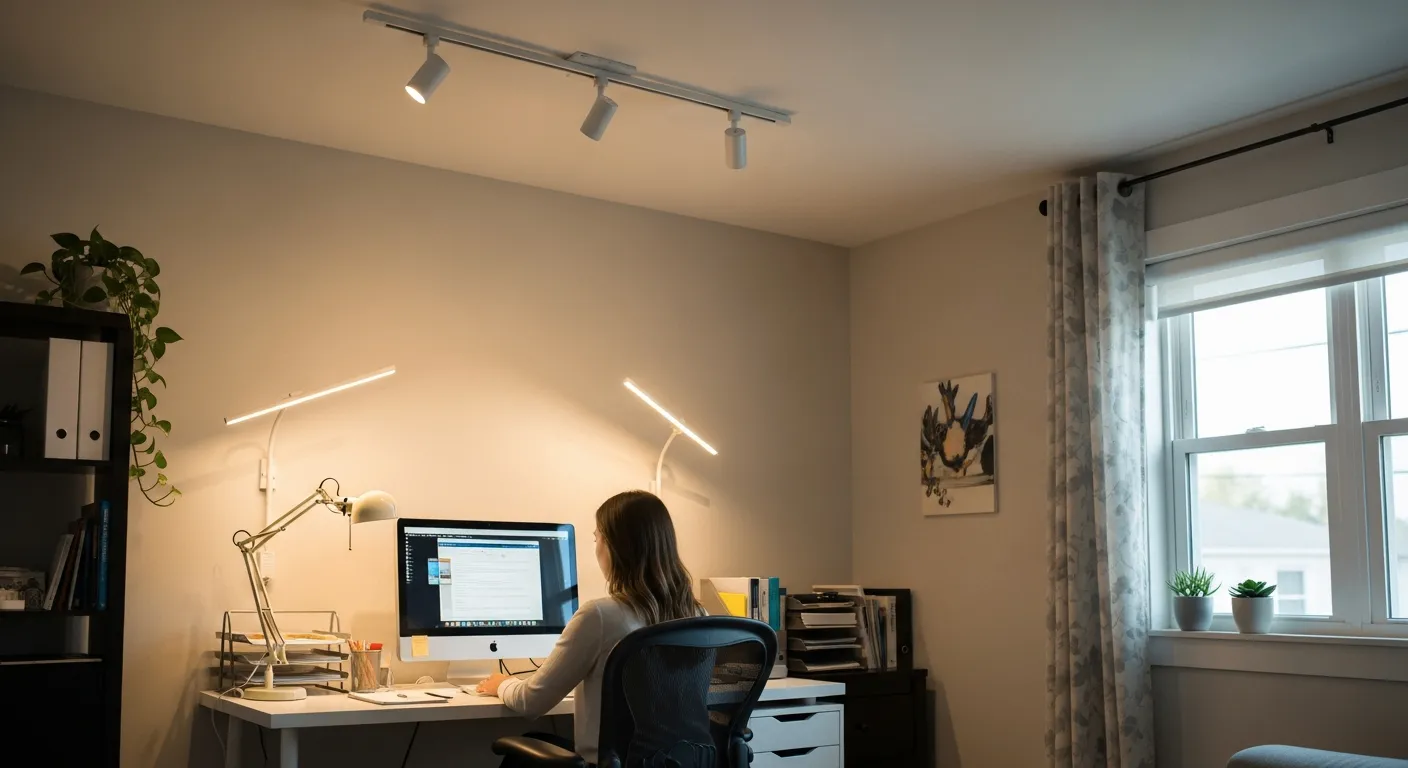
Furthermore, traditional lighting can be inflexible. It typically provides a single source of light that cannot be easily adjusted to suit different tasks or moods. Alternatives like track lighting and dimmable fixtures offer much greater control over the lighting levels and direction.
Consider the impact of shadows. A single overhead light can create harsh shadows that make it difficult to see clearly and can cause eye strain. Well-planned lighting alternatives can minimize shadows and create a more balanced and comfortable visual environment.
Finally, think about the long-term benefits. Investing in energy-efficient and stylish lighting alternatives can increase the value of your home. It can also improve your overall quality of life by creating a more pleasant and functional living space.
Recessed Lighting: Sleek and Modern
Recessed lighting is a popular choice for those seeking a clean, modern look. These lights are installed directly into the ceiling, creating a flush, seamless appearance.
This can be especially beneficial in small spaces, as it doesn’t take up any visual space. Recessed lighting is a great way to provide general illumination without the bulk of traditional fixtures.
| Type of Recessed Lighting | Best Use | Considerations |
|---|---|---|
| Standard Recessed Lights | General illumination | Requires sufficient ceiling space |
| Shallow Recessed Lights | Low-clearance ceilings | May have limited bulb options |
| Adjustable Recessed Lights | Highlighting artwork or specific areas | Can be more expensive than standard options |
| Wet-Rated Recessed Lights | Bathrooms or damp environments | Must be properly sealed and installed |
When planning your recessed lighting, consider the spacing and placement of the fixtures. You’ll want to ensure that the light is evenly distributed throughout the room and that there are no dark spots.
Also, think about the type of bulbs you’ll be using. LED bulbs are a great choice for recessed lighting, as they are energy-efficient and long-lasting.
One key advantage of recessed lighting is its ability to blend seamlessly into the ceiling. This creates a minimalist aesthetic that is perfect for modern homes. The unobtrusive design helps to make a small room feel more spacious and open.
Recessed lighting can also be used to create different lighting effects. By using dimmers, you can adjust the brightness of the lights to create a more intimate or energetic atmosphere. This versatility makes recessed lighting a great choice for any room in the house.
When installing recessed lighting, it’s important to consider the insulation in your ceiling. You’ll want to choose recessed lights that are IC-rated, which means they are safe to be installed near insulation. This will help prevent fires and ensure that your lights operate safely.
Another consideration is the trim of the recessed lights. Trims come in a variety of styles and finishes, so you can choose one that complements your decor. Some trims are designed to be more decorative, while others are more functional.
Finally, think about the color temperature of the bulbs you’ll be using. Warmer color temperatures (around 2700K) create a cozy and inviting atmosphere, while cooler color temperatures (around 5000K) are better for task lighting.
Track Lighting: Flexible and Adjustable
Track lighting is another excellent overhead lighting alternative, especially for those who value flexibility. This type of lighting consists of a track mounted to the ceiling, with multiple light fixtures attached to it.
The individual lights can be adjusted and aimed in different directions, allowing you to customize the lighting to suit your needs. This is particularly useful in a home office, where you may need to adjust the light depending on the task at hand.
Track lighting is also a great way to highlight specific areas or features in your room. You can use it to showcase artwork, illuminate a bookshelf, or focus light on your desk.
There are many different styles of track lighting available, from sleek and modern to more traditional designs. This makes it easy to find a track lighting system that complements your decor.
When installing track lighting, be sure to consider the length of the track and the number of lights you’ll need. You’ll also want to think about the type of bulbs you’ll be using and the overall wattage of the system.
The adjustability of track lighting makes it ideal for spaces that serve multiple purposes. You can easily reposition the lights to focus on different areas as needed. This is particularly useful in a home office that also functions as a guest room or entertainment space.
Track lighting is also relatively easy to install. Most systems come with detailed instructions and can be installed by a homeowner with basic electrical knowledge. However, if you are not comfortable working with electricity, it’s always best to hire a qualified electrician.
Consider the type of track lighting system that is best suited for your needs. There are two main types: line-voltage and low-voltage. Line-voltage systems operate on standard household voltage, while low-voltage systems require a transformer to reduce the voltage.
Low-voltage systems are generally more energy-efficient and offer a wider range of lighting options. However, they are also more expensive to install. Line-voltage systems are more affordable but may not be as versatile.
Finally, think about the aesthetic of the track lighting system. Choose a system that complements your decor and adds to the overall style of your room. There are many different styles of track lighting available, from sleek and modern to more industrial designs.
Pendant Lights: Adding Style and Focus
Pendant lights are a stylish and versatile overhead lighting alternative. These lights hang from the ceiling, typically suspended by a cord, chain, or rod.
They come in a wide variety of styles, sizes, and materials, making it easy to find one that complements your decor. Pendant lights can be used to provide general illumination, task lighting, or accent lighting.
In a small space home office setup, pendant lights can be particularly useful for providing focused light over your desk. A single pendant light can create a cozy and inviting workspace.
Multiple pendant lights can be used to create a more dramatic and stylish effect. Consider hanging a row of pendant lights over a long desk or table.
When choosing pendant lights, be sure to consider the height of your ceiling. You’ll want to ensure that the lights are hung at a comfortable height and that they don’t obstruct your view.
Pendant lights are a great way to add a touch of personality to your home office. With so many different styles available, you can easily find one that reflects your personal taste. From minimalist designs to more ornate fixtures, there’s a pendant light for every style.
Consider the size of the pendant light in relation to the size of your desk or table. A large pendant light can be overwhelming in a small space, while a small pendant light may not provide enough light. Choose a size that is proportionate to the surrounding furniture.
The material of the pendant light can also have a significant impact on the overall look and feel of your room. Glass pendant lights create a bright and airy atmosphere, while metal pendant lights add a touch of industrial chic. Fabric pendant lights can soften the light and create a more cozy ambiance.
Think about the type of bulb you’ll be using in your pendant light. LED bulbs are a great choice for pendant lights, as they are energy-efficient and long-lasting. They also come in a variety of color temperatures, so you can choose one that suits your needs.
Finally, consider the hanging mechanism of the pendant light. Some pendant lights hang from a cord, while others hang from a chain or rod. Choose a hanging mechanism that is appropriate for the height of your ceiling and the style of your room.
Combining Different Lighting Techniques
One of the best ways to create a well-lit and visually appealing space is to combine different lighting techniques. This approach allows you to layer light, creating depth and dimension.
By using a combination of general, task, and accent lighting, you can create a space that is both functional and aesthetically pleasing. General lighting provides overall illumination for the room.
- Recessed lighting for overall brightness
- Track lighting to highlight artwork
- Pendant lights for task lighting over a desk
- Table lamps for ambient light
- Floor lamps to fill dark corners
Task lighting provides focused light for specific tasks, such as reading or working. Accent lighting is used to highlight certain features or create a mood.
For example, you might use recessed lighting to provide general illumination, pendant lights over your desk for task lighting, and track lighting to highlight artwork on the walls. This combination of overhead lighting alternatives will create a well-lit and visually interesting space.
Layering light is a key principle in interior design. It involves combining different types of lighting to create a balanced and harmonious effect. By layering light, you can create a space that is both functional and aesthetically pleasing.
Consider the color temperature of the different light sources you are using. Mixing different color temperatures can create a jarring effect. It’s generally best to stick to a consistent color temperature throughout the room.
Think about the placement of your light fixtures. You’ll want to ensure that the light is evenly distributed throughout the room and that there are no dark spots. Use a combination of overhead lighting alternatives, table lamps, and floor lamps to achieve this effect.
Don’t be afraid to experiment with different lighting techniques. The best way to find what works best for you is to try different combinations and see what you like. Consider the overall mood you want to create and choose lighting techniques that support that mood.
Remember to consider the functionality of your space. Different areas of your home office may require different types of lighting. For example, you may need brighter light for working on your computer and dimmer light for reading or relaxing.
Planning Your Lighting Layout
Before you start installing any new lighting, it’s important to plan your lighting layout. This will help you ensure that you have the right amount of light in the right places.
Start by assessing your needs and identifying the areas where you need the most light. Consider the tasks you’ll be performing in the space and the overall mood you want to create.
Next, think about the different types of overhead lighting alternatives that would work best in your space. Consider the size of the room, the height of the ceiling, and your personal style.
Once you have a good idea of the types of lighting you want to use, create a lighting plan. This can be a simple sketch or a more detailed diagram.
Be sure to indicate the placement of each fixture and the type of bulb you’ll be using. This will help you visualize the final result and ensure that you have everything you need before you start installing.
Consider the existing architectural features of your space. Take note of windows, doors, and other elements that may affect the natural light in the room. This will help you determine how much artificial light you need to supplement the natural light.
Think about the placement of your furniture. You’ll want to ensure that your lighting is positioned to illuminate your furniture and create a comfortable and inviting space. Avoid placing light fixtures directly above seating areas, as this can create glare and discomfort.
Consider the different zones in your home office. You may have a work zone, a reading zone, and a relaxation zone. Each zone may require different types of lighting. Plan your lighting layout accordingly.
Think about the wiring in your space. You’ll need to ensure that you have enough electrical outlets and that your wiring is up to code. If you are not comfortable working with electricity, it’s always best to hire a qualified electrician.
Finally, consider your budget. Lighting can be expensive, so it’s important to set a budget before you start planning your lighting layout. There are many affordable lighting options available, so you can create a well-lit space without breaking the bank.
Considering Color Temperature
Color temperature is a crucial aspect of lighting that greatly influences the ambiance of a room. Measured in Kelvins (K), it determines whether the light appears warm (yellowish) or cool (bluish).
For a home office, a balanced color temperature is generally recommended. A range of 3000K to 4000K provides a neutral white light that’s bright enough for focus but not too harsh for extended periods.
Warmer temperatures (2700K-3000K) are more suitable for relaxation areas, whereas cooler temperatures (4000K-5000K) are better for task-oriented spaces. You should consider adjusting the color temperature to suit your personal preference.
When choosing bulbs for your overhead lighting alternatives, pay attention to the Kelvin rating. LED bulbs often provide adjustable color temperatures, making them a versatile option.
The color temperature of your lighting can significantly impact your mood and productivity. Warmer light can create a cozy and relaxing atmosphere, while cooler light can promote alertness and focus. Choose a color temperature that is appropriate for the tasks you’ll be performing in your home office.
Consider the color temperature of your computer screen. If your computer screen has a cool color temperature, you may want to choose bulbs with a similar color temperature to avoid eye strain. Many computers have settings that allow you to adjust the color temperature of the screen.
Think about the time of day. You may want to use warmer light in the evening to create a more relaxing atmosphere and cooler light during the day to promote alertness. Some smart lighting systems allow you to automatically adjust the color temperature of your lights based on the time of day.
Experiment with different color temperatures to see what you prefer. There is no one-size-fits-all answer when it comes to color temperature. What works best for one person may not work best for another. Try different color temperatures and see what makes you feel the most comfortable and productive.
Remember to be consistent with your color temperature throughout the room. Mixing different color temperatures can create a jarring effect and make your space feel less cohesive. Stick to a consistent color temperature for all of your light fixtures.
The Importance of Dimming Options
Having dimming options for your overhead lighting alternatives can significantly enhance the versatility of your space. Dimmers allow you to adjust the brightness of the lights, creating different moods and adapting to various tasks.
In a home office, you might want bright light for focused work and dimmer light for relaxation. Dimming options are particularly useful for recessed lighting and pendant lights, where the brightness can sometimes be overwhelming.
When installing dimmers, make sure they are compatible with the type of bulbs you are using. LED bulbs require specific dimmers designed for LED technology to prevent flickering or buzzing.
Smart home systems often offer advanced dimming controls. These controls allow you to schedule lighting changes or adjust the brightness remotely.
Dimming options can also save you energy. By dimming your lights, you can reduce your electricity consumption and lower your energy bills. This is especially beneficial if you use your home office frequently.
Consider the placement of your dimmers. You’ll want to place them in convenient locations where you can easily reach them. Think about where you’ll be sitting or standing when you want to adjust the brightness of your lights.
Think about the different types of dimmers that are available. There are rotary dimmers, slide dimmers, and touch dimmers. Choose a dimmer that is easy to use and that complements your decor.
Consider the dimming range of your dimmers. Some dimmers allow you to dim your lights down to almost complete darkness, while others only allow you to dim them down to about 50% brightness. Choose a dimmer with a dimming range that meets your needs.
Finally, consider the cost of dimming options. Dimmers can range in price from a few dollars to several hundred dollars. Set a budget before you start shopping for dimmers and choose options that fit within your budget.
Conclusion
There are many creative overhead lighting alternatives that can transform your small space home office setup. By considering recessed lighting, track lighting, and pendant lights, you can create a space that is both functional and stylish.
Don’t be afraid to experiment with different combinations of overhead lighting alternatives and techniques to find what works best for you. With a little planning and creativity, you can create the perfect lighting scheme for your small space.
Remember that lighting is an essential element of interior design. It can affect your mood, productivity, and overall well-being. Take the time to plan your lighting carefully and choose options that are both functional and aesthetically pleasing.
By implementing the tips and ideas discussed in this article, you can create a small space home office that is both well-lit and visually appealing. Embrace the opportunity to transform your workspace into a haven of productivity and inspiration.
Ultimately, the best lighting scheme is one that meets your individual needs and preferences. Don’t be afraid to break the rules and create a space that is uniquely yours. Enjoy the process of experimenting with different lighting techniques and finding what works best for you.


