


You gain flexible, add-on storage that moves where work happens instead of forcing a room redesign. A tiered cart lets you organize supplies, tools, and paperwork so they stay within reach during busy shifts.
Think of this as choosing a small system that fits your workflow. On a product page you will compare tier counts, drawers, bins, trays, and shelves to match load and movement needs.
Tiered design matters. Vertical shelving increases capacity without widening the footprint. That helps when floor space is tight or areas are shared.
When you shop, focus on what you store and how often you move it. Daily rounds need different caster and shelf spacing than occasional staging.
Later sections will cover casters, shelf spacing, stability, materials, and specialty options like plan organizers or charging units. This guide ties to real office life: hot-desking, shared printers, rotating projects, and distant supply closets.
Why tiered and rolling carts work for flexible office organization
A tiered rolling unit gives you instant infrastructure where work happens, without changing your floorplan. You add a storage cart to a busy station today and move it tomorrow as priorities shift. This avoids costly furniture swaps or facility changes.
Set up simple arm’s reach zones: top tier for daily tools like labels and pens, middle for refills, and bottom for bulk paper or boxed supplies. A rolling cart becomes a portable supply hub that keeps desks clear and supplies visible.
In shared areas—copy rooms, mail zones, project bays—the rolling utility cart reduces trips back and forth. Team members pull what they need from a single mobile station and return items at the end of the shift.

- Quiet moves: pick soft wheels and park in a low-traffic corner to cut noise and disruption.
- Cross-over use: the same approach works in a home office or living room for family supplies.
- Business wins: faster restocking, fewer misplaced items, and less clutter on work surfaces.
Mobile storage carts that fit your workflow
Select a rolling option that mirrors how your team works, so supplies travel with projects. Start by matching form to function: open shelves for quick grabs, drawers for small parts, and trays or bins for visual sorting.
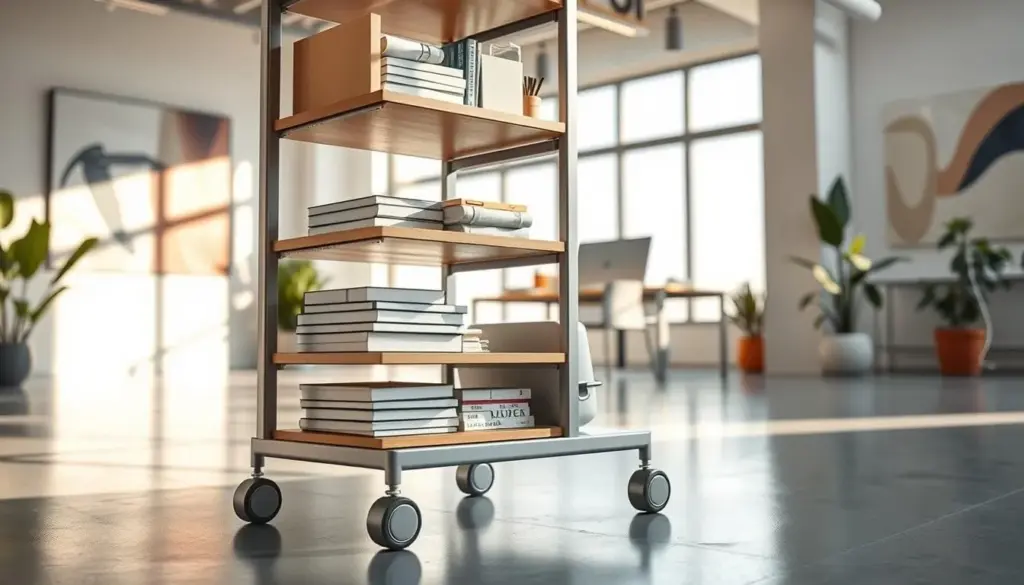
Rolling utility cart options for everyday office supplies
A rolling utility cart keeps printer paper, toner, mail supplies, and breakroom restocks together. You can push it to a busy zone for refills and park it under a counter when not in use.
Rolling storage carts with drawers for tools, parts, and small items
Choose drawer units when you handle fasteners, chargers, or small tools. Drawers reduce spills and stop items from migrating between teams. Wire drawer carts (24″ W x 45″ H; 1 bay; 4 drawers) are a common, durable choice.
Organizer cart setups for craft rooms, makerspaces, and admin teams
An organizer cart with color-coded plastic trays helps you build kits and keep standards across rooms. Label sections for easy pick-and-return and use an organizer cart for training or event prep.
Rolling shelves for heavier loads and bulk storage
For boxes, cases, or many reams of paper, rolling shelves move bulk safely. Pick metal frames for heavy duty and plastic storage components when you want lightweight, easy-to-clean trays.
- Match style to task: open-shelf utility cart for supplies, drawer units for small parts, bin systems for visual sorting.
- Durability note: metal frames hold more; plastic parts wipe clean.
Key features to compare before you buy a storage cart
Start with the parts that touch the floor and the load: those choices determine how the unit moves and how much it safely carries.
Cart wheels and caster quality
Choose high-quality cart wheels for quiet glides and reliable transitions over carpet, tile, and thresholds. Soft tread reduces noise in open-plan areas and eases movement on uneven floors.
Locking casters are essential if you push and park daily. Brakes prevent drifting when someone grabs supplies, especially on slight inclines.
Shelf count, tier spacing, and 3-tier rolling designs
Think in tiers: a 3-tier rolling unit separates active items from backups while keeping a compact footprint. Adjust spacing so tall boxes fit on one level and hand tools sit on another.
Open shelves, bins, trays, and wire drawers
Open shelves give fastest access. Bins help visual inventory. Trays swap kits in seconds. Wire drawers combine containment with airflow and visibility.
Load needs and stability
Match frame capacity to your heaviest loads—some rolling shelves support up to 1,000 lbs. Keep heavy items low and centered to reduce tipping when you move through doorways.
- Buyer checklist: caster type, locking brakes, tier count, format (shelf/bin/tray/drawer), and rated capacity.
- Reality check: the unit should glide, park cleanly, and stay organized after repeated moves.
Materials and finishes for modern offices, schools, and back-of-house storage
Material choice shapes how a unit performs day after day in high-use areas.
Steel frames with a powder coat finish resist scuffs and keep a tidy look in client-facing zones. Common office-friendly colors include Black, Off-White, and Gray Mist. These tones help you match desks and shelving so the space feels cohesive.
Steel and powder-coat options
Choose metal frames when you need durability and long life. Powder-coated metal fights chips and holds up in high-traffic corridors.
Plastic trays and color coding
Plastic components are lightweight and easy to wipe clean after spills. Jet Black, Light Gray, Royal Blue, and Sunshine Yellow make color-coding simple.
Use an office school organizer system to assign colors by department or grade. Deep trays (for example, 16.75″ W x 12.25″ D x 6″ H) hold bulk items; shallow inserts split small supplies for quick access.
Work surfaces for specialized needs
White ESD tops appear on select cantilever and adjustable models. They support electronics handling and reduce static risk in labs and repair bays.
- Why finish matters: powder coat reduces repainting; plastic storage parts speed cleaning.
- Design tip: match black, off-white, or gray mist to maintain a professional look.
- Practical result: an office or school organizer setup leads to faster resets, fewer missing items, and easier restocking.
Popular rolling cart styles and what they’re best for
Pick the right rolling style so your team spends time working, not hunting supplies. Below are the most bought options, with quick notes on who benefits most from each.
Metal shelves on wheels for high-capacity transport and staging
Metal rolling shelves (example: 36″ W x 18″ D x 70″ H) move boxed supplies and project materials as a single load. You can park them near a work zone for staging and quick access.
Heavy duty shelving for bulk loads up to 1,000 lbs
Choose heavy duty shelving on wheels (example: 60″ W x 24″ D x 68.25″ H) when you need true load capacity. These are ideal for facilities, production support, and back-of-house staging.
Rolling book carts for libraries and media centers
Double-sided book units (36″ W x 42″ H) offer adjustable shelves and fast turns during high circulation days. They keep mixed sizes neat and let staff reshelf with fewer trips.
Wire drawer carts and drawer cart systems for sortable storage
Drawer cart systems are best when many small categories need separation. Wire drawers give visibility and containment for parts, kits, or repair tools.
Bin carts for replenishment and visual inventory
Bin systems speed pick-and-pack and make restocking predictable. A two-shelf, 10-bin model (bin size 6.625″ W x 12.5″ D x 5″ H) works for small-volume needs.
For higher throughput, consider a larger rolling storage bin unit (example: 78″ W x 18″ D with 12 bins).
Tray and tote units for fast swaps and grab-and-go kits
Tray systems (example: 22″ W x 18″ D x 29.25″ H; six trays) and tote carts let you build grab-and-go kits for admin or craft work. They reduce handling steps and keep supplies organized by task.
- Quick match guide: metal rolling shelves for staging; heavy duty shelving for bulk; book carts for circulation; drawer rolling storage for sortable parts; bin and tote systems for replenishment and kits.
- Buying tip: size units to aisle width and doorways so you move full loads without trouble.
Specialty mobile storage for documents, devices, and regulated supplies
When your items are unusually large, valuable, or regulated, a purpose-built unit often outperforms a general option. Specialty units keep fragile plans flat or rolled, secure shared devices, and control access to medical kits while still letting you move them where work happens.
Plan organizers and wire racks for drawings
Choose compartment-based organizers for rolled plans. Options include 12- and 20-compartment plan file organizers and lightweight corrugated models for architects and engineers.
Wire blueprint racks (for example, 21″ W x 14.25″ D x 31.75″ H) separate rolls so drafts stay readable and undamaged during reviews.
Tablet charging units with 16 bays
A 16-bay charging unit (31.5″ W x 39.25″ H) centralizes devices for check-in/check-out. It reduces cable clutter, makes audits faster, and keeps devices secure while you move them to meeting rooms or classrooms.
Medical cabinets and procedure units on wheels
Look for 20″ W x 27″ D x 42″ H cabinets with glass doors and electronic locks or procedure carts with stainless tops and smooth-rolling casters.
Electronic locks add accountability for regulated supplies and let you keep point-of-care mobility without sacrificing control.
- When to pick specialty: oversized paper, high-value tablets, or regulated medical items.
- Cross-over use: these units also organize scrapbook paper, craft tools, or office kits at home or in a school workroom.
- Quick benefit: safer handling, faster workflows, and clearer accountability.
How to choose the right size, capacity, and configuration for your space
Start by measuring the path and the parking spot so the unit fits without fuss. Confirm aisle width, doorway clearance, turning radius, and where the cart will live—under counters, beside copiers, or in a closet.
Match width, depth, and height to real openings
Use product examples to visualize fit: a blueprint rack (21″ W x 14.25″ D x 31.75″ H) slides into narrow spots. Metal shelves on wheels (36″ W x 18″ D x 70″ H) need taller clearances. Heavy duty shelving (60″ W x 24″ D x 68.25″ H) requires wider aisles.
Plan around what you store
Paper and office school supplies work best on open tiers for quick grabs. Tools and small parts need drawers or drawer inserts to keep items tidy. For craft kits, use bins and trays for color-coded organization.
Decide on adjustable shelves versus fixed tiers
Adjustable shelves suit changing inventory—binders one month, boxes the next. Fixed tiers simplify repeatable kits and make set-ups predictable.
- Place heavy items low and frequently used items at mid-level.
- Pick a utility cart for light refills, step up to rolling storage with drawers for sortable parts, or choose a heavier frame for high capacity and stability.
Conclusion
The best rolling utility option blends easy movement, clear organization, and long-term durability. Choose the unit that supports daily refills, project staging, device check-in, or paper transport so work happens faster and shared zones stay tidy.
Compare the essentials: prioritize smooth casters for reliable mobility, pick open tiers or drawers and bins for the organization style you need, and select frames and finishes that hold up day after day. Narrow choices by use case, then by size and capacity, then by tier and configuration.
Keep in mind pricing may not always appear due to MAP rules. If a price is hidden, add the item to your cart to view the lower site price with no obligation. Now pick the rolling storage cart that keeps your most-used supplies near, moves smoothly, and stays organized after repeated daily use.


